
Green Hills of Africa
Posted: August 25, 2026 Filed under: writers Leave a commentAfter reading True at First Light by Ernest Hemingway, I read his earlier “fictional memoir,” The Green Hills of Africa, which is similar, in the same way that he dramatizes the personalities of the African safari staff; his wife (the second); the safari’s “white hunter,” Philip Percival, who, in both books is Hemingway’s mentor and faux father figure; and several of the native Africans, who by the second book have become distinct characters who play off Hemingway’s persona. In Green Hills, that persona is embarrassingly raw, petty, vindictive, rude and child-like, along with his admirable traits which are dominated by uncanny, acute observation, his precision of language, emotions, and his stated goal of creating an effective, dramatic story out of presumable truth and reality. He clearly succeeds.
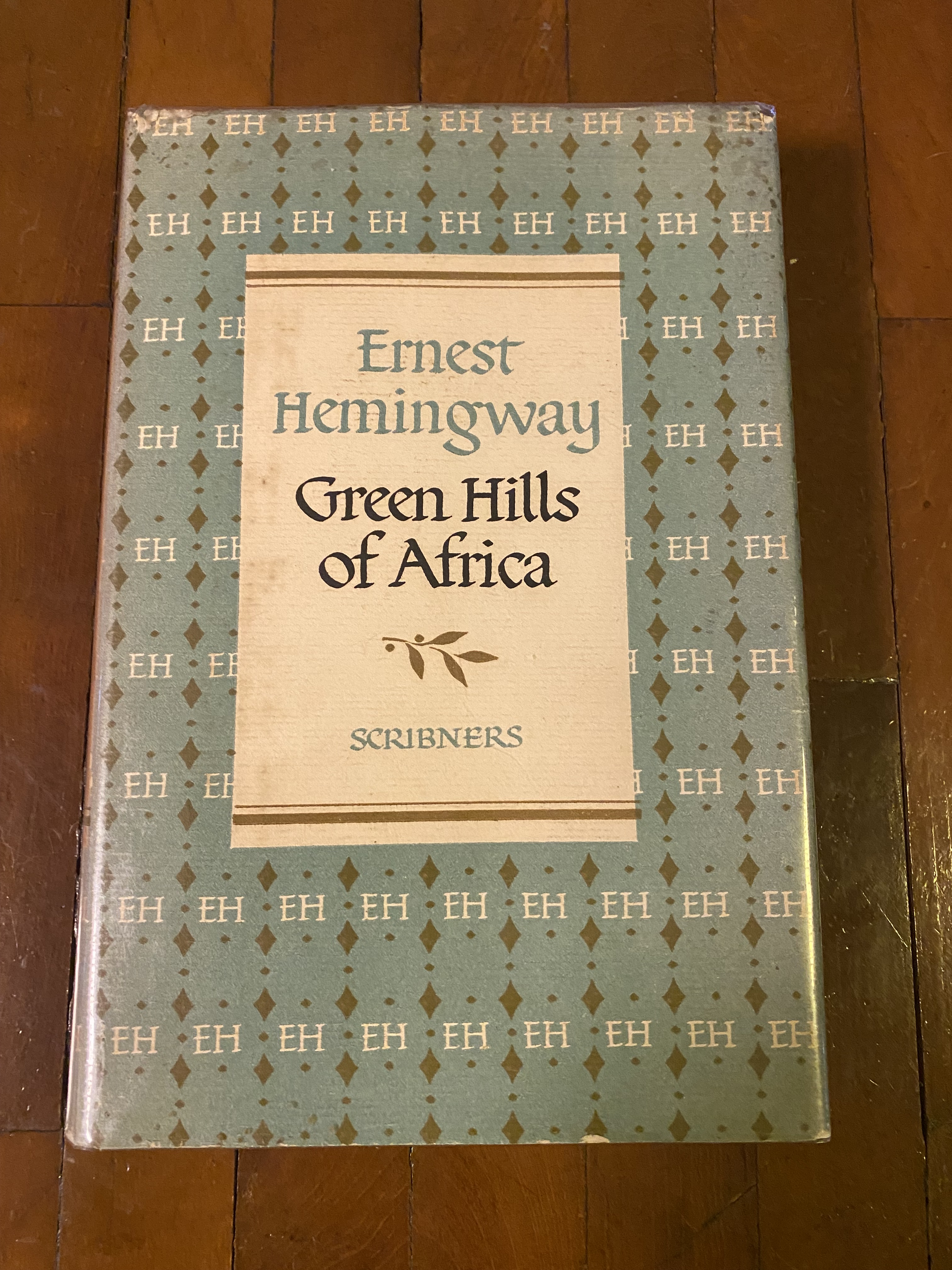
The two African books set a later standard for similar approaches by Norman Mailer and Truman Capote, who clearly took the two Hemingway memoir books as models for so-called nonfiction “novels.” Among Hemingway’s best traits in both of his books is that he does not withhold his genuinely repulsive traits, along with other characters’, and he skewers himself repeatedly, which you can only admire.
The later Hemingway — next on my list is his Islands in the Stream –has put together a series of books that further extend is mythological persona and creates a body of work that belies early criticisms and shows a much more sensitive and domestic side to his life.
As Edmund Wilson said these later Hemingway books will certainly assume greater prominence as time goes by.

