
Language Disguises Thought: Koan For The Day
Posted: May 24, 2015 Filed under: Uncategorized Leave a comment
Wittgenstein plays the banjo.
4.002 Language disguises the thought; so that from the external form of the clothes one cannot infer the form of the thought they clothe, because the external form of the clothes is constructed with quite another object than to let the form of the body be recognised – Ludwig Wittgenstein from the Tractatus
Revealing Look at Stand-up Comedy in China
Posted: May 23, 2015 Filed under: people, states of mind, writing Leave a comment This essay looks at comedians in China and how the US nurtured Joe Wong, a Chinese comedian who is a big star now in his native land.
Inspired Graphic Art For The True Reader
Posted: May 23, 2015 Filed under: books, people, poetry, states of mind, writing Leave a comment
Capturing sameness in the line.
Here’s the illustration by artist Hannah K. Lee for The New York Times‘ book review of Harold Bloom’s The Daemon Knows (a link can be found below this…). The book and the illustration are infused with capital A art. Read Lee’s illustration with the writers and poets in mind, and you will see what I mean.
Thomas Merton On An Image
Posted: May 13, 2015 Filed under: articles, buddhism, Buddhism Zen, states of mind, writing | Tags: Merton on photography, thomas merton in Asia 1 Comment
Mount Kangchenjunga from Darjeeling
Thomas Merton, during his Asian pilgrimage, waited for days to see and photograph Mount Kanchenjunga, but it was covered by clouds. His visual sense was acute. In Conjectures of a Guilty Bystander, he wrote: “Nothing resembles substance less than its shadow [words, drawings…]. To convey the meaning of something substantial you have to use not a shadow but a sign, not the imitation but the image. The image is a new and different reality, and of course it does not convey an impression of some object, but the mind of the subject: and that is something else again.” I discuss his pilgrimage and his photography in an essay under “On the Record,” which is listed in the column on the right. Merton died in Bangkok in December 1968.
Tea With Harold Bloom, & His 45th Book
Posted: May 7, 2015 Filed under: books, people, writing | Tags: harold bloom sums up, harold bloom's 45th book, the critic-sage of America Leave a comment
 Amy Bloom writes: “I scan the latest tower of books in front of me on the dining-room table, not even bothering with the stacks listing toward the far end, where Jeanne’s laptop sits, ready for her correspondence and Harold’s dictation.
“Some of today’s stack: Dialogue on Poetry and Literary Aphorisms, by Friedrich Schlegel (“Very important to me”); Elizabeth Bishop, by Colm Tóibín (“That very well-done novel on Henry James, very good”); The Poetry of Kabbalah, by Peter Cole; Jewish Cryptotheologies of Late Modernity, by Agata Bielik-Robson (“Splendid lady”); Nothing to Declare, by Henri Cole (“Very good. The best poet of his generation”); Shakespeare’s Horses, by Joseph Harrison (“My pupil. Next to Henri Cole.”), and multiple books by authors I expect to see: Hans Jonas, Gershom Scholem, Friedrich Hölderlin.
“Then there is a pile of stuffed animals on the living-room couch that belong not to their grown sons but to Jeanne and Harold. I ask, and he tells me, happily. “Well, there’s Valentina, the ostrich, named after Valentinus, second-century author of The Gospel of Truth; she presides…” For the article, click here.
Ralph Waldo Emerson On Sentences, Time, Words
Posted: May 3, 2015 Filed under: Uncategorized | Tags: r.w.emerson on language Leave a comment – “This thought being spoken in a sentence becomes by
mere detachment falsely emphatic.”
– “An American complained that he didn’t have enough
time, and was told by the Indian chief Red Jacket, ‘Well,
I suppose you have all there is.'”
– “Every sentence has some falsehood of exaggeration because the infinite diffuseness refuses to be epigrammatized – the world to be shut in a word.”
Cherry Blossoms
Posted: April 29, 2015 Filed under: Uncategorized | Tags: sakura Leave a comment
Detail from Kumoi Cherry Trees (Kumoi sakura) by Yoshida Hiroshi, 1926.
Haiku By Issa
Posted: April 16, 2015 Filed under: Uncategorized | Tags: Haiku poetry, Issa, spiders Leave a comment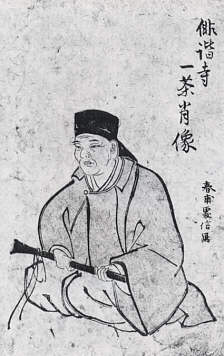
Don’t worry, spiders,
I keep house
casually.
– Issa
Schopenhauer On Religion and Morality
Posted: April 12, 2015 Filed under: Buddhism Zen, people, states of mind | Tags: religion, Schopenhauer, Zen metaphysics Leave a comment
Religion: A Dialogue, from the Essays of Arthur Schopenhauer
Demopheles: However that may be, I wanted to remind you that you should look at religion more from the practical than from the theoretical side. Personified metaphysics may be the enemy of religion, but all the same personified morality will be its friend. Perhaps the metaphysical element in all religions is false; but the moral element in all is true. This might perhaps be presumed from the fact that they all disagree in their metaphysics, but are in accord as regards morality.
Philalethes: Which is an illustration of the rule of logic that false premises may give a true conclusion.
For me, this creates a strong basis for Zen metaphysics as an approach to religious/spiritual morality, while leaving the mystery of evil, morality and good unexplained.
My Journal’s 5-Year Anniversary
Posted: April 11, 2015 Filed under: writing | Tags: m. john harrison Leave a comment The writer M. John Harrison’s blog,The Ambient Hotel, which I found late on the night of April 9, 2010, inspired me to start this journal. His blog’s name is the conceit of a writer, suggesting a secret place meant to be the terrain of a circle of real, or imaginary, friends, all content to be off to the side in their own private, fulfilling worlds. Harrison is a writer who has carved out a personal world of characters and landscapes. He’s called a science fiction writer, but that description isn’t enough. His worlds are of the present and the past, and of the future.He is also a gifted photographer and his pictures regularly grace his website, along with news of his writing, his books, and his acclaim. In Climbers, he wrote well about one of his youthful passions, mountain climbing. A Facebook video of him reading his short story, Entertaining Angels Unawares, is here. He reads beautifully.
Here’s my first post on the journal: “In the beginning was the word. Someone actually wrote that down or said it for the first time somewhere sometime, and it’s a powerful perception still defying understanding, expressed most rigorously by Wittgenstein when he said something to the effect, ‘Language confuses meaning,’ as if, on the other hand, meaning doesn’t confuse language. At any rate, we’re here as we are, no doubt, partly as a result of words, spoken, written and unsaid, and we’re now forever awash, swamped, drowned, awed by them all, but still dry inside where from it all arises and passes away. This will do fine as my first post. But for this…I want to say that M. John Harrison is responsible, unknowingly, for me starting this internet journal. I saw a review he published, I think, in The Guardian, or somewhere like that. Its urgency rattled me so I looked him up, found his brilliant blog, and henceforth birthed this journal. Thanks, Mike.”
 the roy hamric journal