A Manifesto For The Future
Posted: January 17, 2015 Filed under: articles, books, people | Tags: A manifesto for the technological future, leon wieseltier's humanism Leave a comment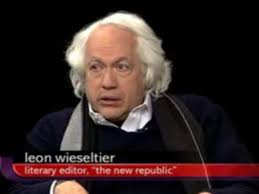 The former critic of the old New Republic, Leon Wieseltier, has written a beautify essay in the current New York Book Review. It’s a cogent assessment of the force of technology on culture and the human soul. More significantly, it’s a prescription for a response and a plea for understanding, patience and perseverance, and most importantly a continued allegiance to humanism, which offers the only hope to counteract the negative implications of a neutral technology that’s open to misuse (think calls to perpetuate physical violence). I was optimistic, looking at the long view, after I read this. Wieseltier, who I talked with briefly one day in Larry McMurtry’s bookstore in Archer City, Texas, (I told him how much I admired his New Republic work; reply: “Thanks…you’re too kind,”) wrote an enduring masterpiece, Kaddish, which sprang from the death of his father in the 60s. Among other things, it’s a plea for reading and continued study, a searching out for a way to lead a sustained, rich, meaningful life. He continues to offer a way through troubled times. Take your time reading this. It will steady troubled and despairing souls.
Here’s the essay.
Robert Stone Dies; Our Moral Existentialist
Posted: January 11, 2015 Filed under: books, fiction, people, writing | Tags: robert stone: our Graham Greene Leave a comment To: The Committee of Responsibility
The first sentences in Dog Soldiers:
“There was only one bench in the shade and Converse went for it, although it was already occupied. He inspected the surface for unpleasant substances, found none, and sat down. Beside him he placed the oversize briefcase he’d been carrying; it’s handle shone with the sweat of his palm. He sat facing Tu Do Street, resting one hand across the case and raising the other to check the progress of his fever. It was Converse’s nature to worry about his health.”
Robert Stone, the award-winning novelist known for “A Flag for Sunrise” and “Dog Soldiers,” has died. He was 77. Stone’s literary agent said Stone died Saturday at his home in Key West, Florida. The cause was chronic obstructive pulmonary disease.
The Bitter Southerner: Great Website
Posted: January 2, 2015 Filed under: music, photography, places, writing 1 Comment
There are many good online websites, but The Bitter Southerner is a big cut above all the rest. The site has a literary slant and down-home naturalness with a big tip of the hat to the cultural past and the cutting edge present. It pays tribute to the legacy, creativity and energy of the southern US. For the site, go here.
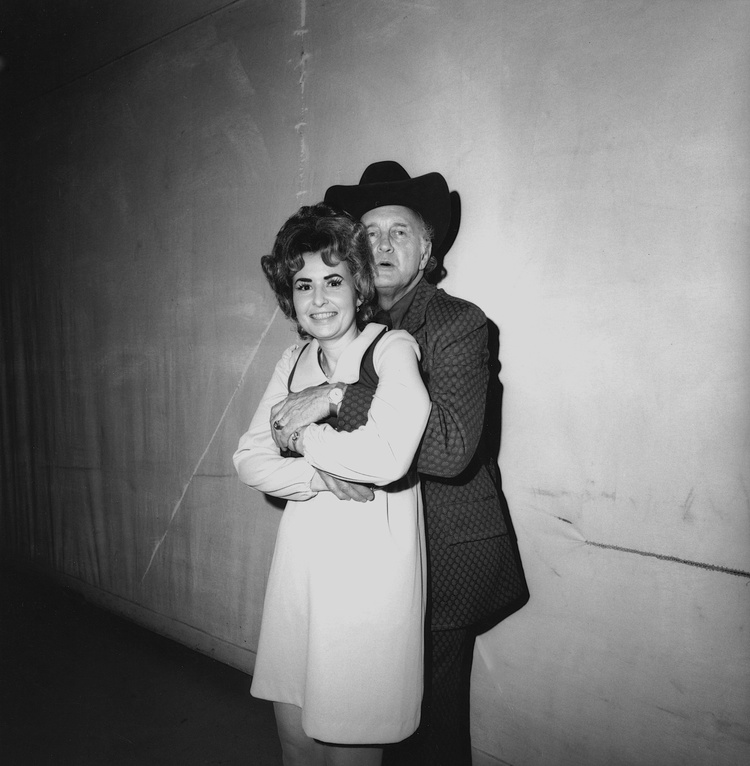
To go right to some good stories go here. Here’s a taste from a current photography essay: Bluegrass legend Bill Monroe and a fan backstage.
More Bedside Books
Posted: December 31, 2014 Filed under: books, buddhism, fiction, people, poetry, reviews | Tags: Buddhism in medieval China, lawrence osborne's novel as autobiography, philip larkin's poetry and fiction, thomas mcguane's most American essay Leave a comment
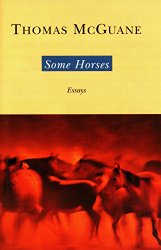 Thomas McGuane has never received anything less than the highest praise as a novelist, short story writer and essayist. I’ve read him since his first novel, picked up at a remainder bin. For me, his essays shine brightest. With an essay, you can’t leave the writer’s side. In a novel or story, you trail along with the characters with an ear cocked for the pyrotechnics of the writer’s voice. The essays spotlight McGuane’s unique voice, his sensibility, in a way fiction cannot allow. A Sporting Chance, his first collection, and his other nonfiction books The Longest Silence: A Life in Fishing and Some Horses are examples of the most personal art. My hand reaches out for them often.
An essay in Some Horses, titled On The Road Again, takes on one of the most anti-intuitive subjects imaginable for a first-class writer who has been called an heir to Hemingway. The topic? A long drive with his wife in a pickup truck, pulling a just-bought 38-foot horse trailer with special built-in, mini-living quarters, around a great circle of the West. In this quintessential American home-on-wheels, christened a “Horseabago,” he writes, “We simply pictured ourselves at one end, and Delta, Sassy, Zip and Lena, in the other, and wheels underneath.” After a few pages, you’re assured of his mastery to take on this tale, and carry it to sublime heights. His sensibility, or whatever it is that frees words to rise above themselves into something approximating quotidian reality, is on full display.
 A Girl In Winter is British poet Philip Larkin’s second novel. The book is the story of a 16-year-old European girl, her country is never named, who is prematurely mature and intellectual. She accepts an invitation to visit a young English boy and his family. She falls in love with the boy, but they lose touch. Six years later, she returns to Britain as a war refugee.
It’s a remarkable psychological portrait, in the vein of Larkin’s poetry, which is nihilistic, in almost stoic celebration of the ordinary, unexceptional, ultimately disappointing bits that give life its bitter taste.
What’s most interesting to me is Larkin’s very deep minutia describing the meeting of Katherine and Robin, in which he uses the sort of details that belie someone – meaning Larkin – who runs away from life, from the desire to understand others’ in hope to better understand themselves. Larkin’s austere poetry, even in its most gorgeous sensibility, keeps life at bay, at a safe distance that cannot disappoint, while this novel shows Katherine as a person who is probing and open to understanding, or trying to understand, the complexities of other souls. That she and Robin are ultimately unable to capture any of the romantic shavings that surround all lives, even if ungrasped, is all the more tragic. Larkin’s poems couldn’t display such depth of tragedy because he wrapped them in a polished shell of art, singular gems that, no matter their content, bespoke excellence even in the face of tragedy. The novel shows whereof the poems arose.
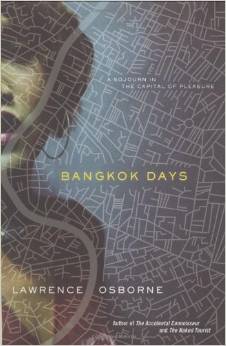 Bangkok Days by Lawrence Osborne is the best novel about Bangkok ever written. But, for clarification, it’s written and marketed as a nonfiction account of the author’s life in the city. The book reeks of novelization with the first-person author surrounded by a cast of fiction-like foils (and at least one real person) who capture the spirit and ambiance of the most sensuous, textured, layered city in the world.
Osborn, the author of the recent Ballad of a Small Player, which is set in the casinos of Macau, excels at romantic, slightly desperate characters and settings full of people who recognize each other for their individual élan in the face of life’s fragility. They are people who are unwilling to give up the fight for life and feeling. That such people in unusual numbers are drawn to Bangkok is no accident. Osborn’s tale of living in Bangkok displays a colorful subset of people of the city who refuse to forsake the quixotic in return for sleek, cosmetic urban wallpaper. The book serves equally well as a novel or one man’s guide to Bangkok, suggesting how to absorb and live within its refreshing disparities.
The Buddhist Conquest of China: The Spread and Early Adaptation of Buddhism in Early Medieval China by E. Zurcher.
This work of high scholarship looks at the social and cultural factors that led to the eventual adoption of Buddhist principles and practice in Chinese culture. It brilliantly captures the chaotic nature of how Buddhist principles were scattered piecemeal over two centuries by Buddhist monks and lay parties that included foreigners, the Chinese gentry, the court, and the intelligentsia. The beauty is the thousands of details it shares about monks and others from late 300AD through the fourth century. It was a perilous time of ferment, and it would be 200 years, in the Tang Dynasty, before Buddhism took on a more recognisable, coherent form eventually leading to the distinct Chinese Buddhist doctrine that we know today. It underscores the cultural fragmentation and difficulties a foreign doctrine of religion has in finding a place in a totally separate and distinct culture, with a different language and already established theories of religion, cosmology and metaphysics. Not surprisingly, the difficulty of transplanting a “foreign” religion, even one with obvious parallels in Chinese religious writings, is manifest throughout this work. It helps put in context the subsequent official elimination of Buddhist temples and practice in revolutionary China, when viewed from the rocky path that Buddhism walked in medieval times.
For a PDF copy of Zurcher’s book, go here.
Wittgenstein’s riddle of life
Posted: December 23, 2014 Filed under: articles, books, people, states of mind, writing | Tags: natural science, the Tao of Wittgenstein, wittgenstein as poet, wittgenstein's silence Leave a comment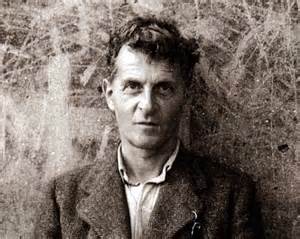
The magnificent ending of Ludwig Wittgenstein’s Tractatus Logico Philosophicus:
…The solution of the riddle of life in space
and time lies outside space and time.
(It is not problems of natural science which have to be
solved.)
6.432 How the world is, is completely indifferent for what is higher.
God does not reveal himself in the world.
6.4321 The facts all belong only to the task and not to its performance.
6.44 Not how the world is, is the mystical, but that it is.
6.45 The contemplation of the world sub specie aeterni is its contemplation
as a limited whole.
The feeling of the world as a limited whole is the mystical
feeling.
6.5 For an answer which cannot be expressed the question too cannot
be expressed.
The riddle does not exist.
If a question can be put at all, then it can also be answered.
6.51 Scepticism is not irrefutable, but palpably senseless, if it would
doubt where a question cannot be asked.
For doubt can only exist where there is a question; a question
only where there is an answer, and this only where something
can be said.
6.52 We feel that even if all possible scientific questions are answered,
the problems of life have still not been touched at all. Of course
there is then no question left, and just this is the answer.
6.521 The solution of the problem of life is seen in the vanishing of
this problem.
(Is not this the reason why men to whom after long doubting the sense
of life became clear, could not then say wherein this sense consisted?)
6.522 There is indeed the inexpressible. This shows itself; it is the
mystical.
6.53 The right method of philosophy would be this. To say nothing
except what can be said, i.e. the propositions of natural science,
i.e. something that has nothing to do with philosophy: and then
always, when someone else wished to say something metaphysical,
to demonstrate to him that he had given no meaning to
certain signs in his propositions. This method would be unsatisfying
to the other—he would not have the feeling that we
were teaching him philosophy—but it would be the only strictly
correct method.
6.54 My propositions are elucidatory in this way: he who understands
me finally recognizes them as senseless, when he has climbed out
through them, on them, over them. (He must so to speak throw
away the ladder, after he has climbed up on it.)
He must surmount these propositions; then he sees the world
rightly.
7 Whereof one cannot speak, thereof one must be silent.
More Dreams
Posted: December 17, 2014 Filed under: buddhism, states of mind, writing | Tags: subconscious, zen dreams Leave a comment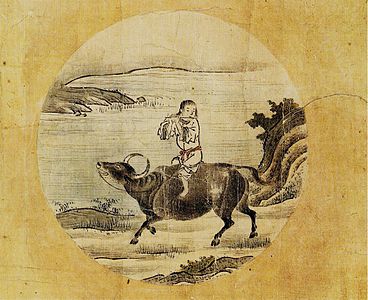
Water Buffalo
March 23, 1989
Poet Bob Trammel, his girlfriend, Allison, and I are in a house that extends over a riverbank on a swiftly flowing river. Through a window, I see a larger-than-life water buffalo swimming against the current toward the house. My first thought is that the buffalo is so big it will crash into the house and sweep it into the river. I watch in amazement as the water buffalo clambers up the almost vertical riverbank, defying gravity. Before I can tell Trammel what’s happening, the buffalo is walking on the roof of the house. Each step is loud, and I think it’s trying to crush the house. I ask Bob if he knows what’s happening. He seems unconcerned, and I think: He doesn’t hear me or the buffalo – I may be dreaming.
I look out the window again, and more water buffalo are swimming toward the house. I must confront the largest buffalo. She exudes great power, but I feel I can tame her. I jump into the river, swim over, and scramble onto her back. Then she turns and begins swimming to the other side of the river. On the riverbank, she turns into a normal, calm water buffalo, and I slide off onto the ground.
Dreams
Posted: December 14, 2014 Filed under: articles, buddhism, states of mind | Tags: the subconscious, zen dreams Leave a commentTwo Dreams:
Roxy Pays a Visit
Jan. 9, 1989
 My friend, the writer Roxy Gordon, and I are standing beside each other, watching life-sized skeletons dancing in the air. The sounds of rattling bones surround us. Suddenly, I turn into an owl, and I hoot three times deeply, hoo, hoo, hoo. Then I’m awake in my bed, and I’m still hooting in the dark. Who, who, who?
Fly Me to the Moon
May 27, 1989
I’m in a small room talking with a monk. He doesn’t want to answer my questions. He’s called away and leaves me alone in the house. I look through the rooms for books, poems or writing of any type to read. I find a magazine and some old books about stars. I see a scroll painting sticking out from under the monk’s bed. I feel cheap and phony for nosing around behind his back.
Then the monk returns, and we are standing outside in the dark. There’s a threat of danger from somewhere, and the monk says, okay. Suddenly, we’re flying through the vast, cold sky with the moon on our right. We fly through space until we suddenly enter heaven. We turn around and fly faster, downward toward Earth. Then a spacecraft is shooting at us. The monk creates a cloud cover to enter Earth’s atmosphere undetected. Suddenly, I notice several hundred babies are flying behind us and they are in our care — all pure and ready to be born.
When we land on Earth, the babies disappear, and I say, “Be careful, they’ll try to get you.” Then I’m back in the monk’s room. We’re aware someone is searching for us, and we have to leave.
Hello To The Beginning of Time
Posted: December 2, 2014 Filed under: articles, places, time, space | Tags: beginning of the universe, beginning of time picture, the big bang picture, the universe is born 1 Comment What did Van Gogh know and how did he know it? This is the latest picture (sort of) of the beginning of the universe, taken of a patch of sky showing the temperature and polarization of cosmic microwaves from the end of the Big Bang, as reflected by dust swirling in the magnetic field of the Milky Way. The story from The New York Times is here. (Credit European Space Agency)
Clive James on ‘Philip Larkin: Life, Art and Love’
Posted: November 24, 2014 Filed under: articles, books, people, photography, poetry | Tags: larkin biography, Larkin love life, larkin self-portrait, philip larkin poetry, Whitsun Weddings Leave a comment
Note the high humour here. This portrait was likely taken by Larkin himself using a timer on the camera.
Philip Larkin comes under the scalpel again, but this time the hand is friendly. The book, Philip Larkin – Life, Art and Love, takes a look what’s become a focal point of the great poet’s life and work: his seemingly banal Life as a librarian (I never shared that view – library work is richly rewarding for the literary inclined), his Art, which suffered tragic abuse when several critics and higher journalists blurred the picture by noting some seemingly racist and sexist language in his collected letters followed by a respected biography noting the same thing. And along with all that, his secretive Love life was exposed, which came as a shock and added spice to the staid picture he had painted of himself as a bored, suburban bachelor in a staid, middle class town.
Life, Art and Love are given a therapeutic scrubbing in this book, returning him to the shelf of normal, healthy souls who chose to live their life in semi-seclusion and not in the public eye. After all, Larkin’s true charm came from presenting himself as being un-Byron and un-Shelley, and, yet, he is, for our time, as great as the greatest British poets.
Larkin’s steadfast champion over the years, Clive James, gives the book high marks for setting the record straight and throwing water on whatever fainting spells caused the sniping in the first place.
Don’t Cry For Me, Billy
Posted: November 21, 2014 Filed under: Uncategorized | Tags: cliff potts, eliot kastner, harry dean stanton, indepdendent Western movie Leave a comment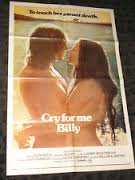
Cliff Potts plays opposite his wife in the film. She runs around naked in most of the movie when not covered by a blanket or his shirt.
This is an independent Western shot in the early 70s with two worthy performances by Cliff Potts, who is terrifically good in this movie but whose career never reached the heights he seemed capable of, and Harry Dean Stanton. It was produced by Elliot Kastner, who did some interesting independent films. He produced Tom McGuane’s modern revisionist Western, Rancho Deluxe, and the hilarious classic, Missouri Breaks (great dialogue).
The story is stark, the dialogue is scarce, but good, and the villains are a troop of US Army cavalry who hunt down an Indian girl and rape her. Earlier, Potts’ character befriends the girl and they fell in love. After witnessing the rape, he sets out to revenge her death. He’s a convincing gunslinger who meets the fate of a lot of gunslingers: he’s shot in the back. Harry Dean appears in key scenes at the beginning and end. Good performances by James Gannon (who stared in several Sam Shepard plays) and others. It was a time when a lot of talent was underused in Hollywood, and this film shows what can be done on a small budget when in the hands of good filmmakers.
Some critics faulted the filmmakers for not having a “payoff” for viewers at the end. The girl is raped, dies, and the hero is shot dead. That’s real storytelling. The film fails because you want a happy ending? Spare me…
 the roy hamric journal