
Updike Redux
Posted: April 20, 2014 Filed under: books, fiction, people, writing Leave a comment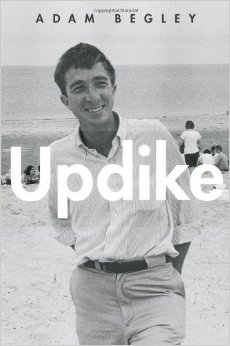
Our suburban Henry Miller
John Updike’s literary stock, amazingly, fluctuates up and down. He was our disguised, suburban Henry Miller. He wasn’t interested in becoming a persona in his work, but he opened up the eroticism of the 60s and 70s. Some critics and writers rate him below his peers, usually citing his lack of angst, the jewel-like prose, and the ease with which his massive body of 26 novels, 18 short story collections, 12 collections of poetry, 4 children’s books, and 12 collections of non-fiction flowed from his pen. His fictional landscape has no peer, covering as it does detailed reports of American, white middle-class consciousness. His public persona and mild manners were camouflage for a deeply romantic, sexually aroused soul, which Adam Begley captures in a new biography, Updike. Also, here’s an interview with Begley, whose book has received tremendous reviews. I can’t wait for a volume of Updike letters. Updike clearly deserved the Nobel Prize for Literature, but, alas, for many people in the literary game it takes decades to see the true meaning of a writer’s work. Unfortunately, he, Mailer and Roth were not honoured, but their work, along with Bellow’s, will stand with the books of the earlier American greats: Hemingway, Faulkner, Fitzgerald… The last century of American literature overflowed with great writers who showed us America.
Begley is good on Updike’s prose style: “Aside from his enormous talents and Protestant work ethic, Updike’s defining characteristic is his signature style, which he owes to his desire to be a graphic artist, and to his stunningly visual memory. Like Proust, like Nabokov and like Henry Green, all of whom influenced him, Updike wrote sentences that work through the precise meeting of visual detail and verbal accuracy.”
See also this essential review of Begley’s biography, and Updike’s persona, by Louis Menand in The New Yorker here.
Wash Away Sins: Songkran
Posted: April 19, 2014 Filed under: photography, places, sight seeing Leave a comment
Songkran: A festival celebrating the traditional Thai New Year, held in April, and marked by the throwing and sprinkling of water on young and old. Festive banners marking the Chinese Zodiac, a scheme and systematic plan of future action that relates each year to an animal and its reputed attributes based on a 12-year cycle.
IPhone photograph
The Mekong: Two For One
Posted: April 11, 2014 Filed under: photography, places, sight seeing Leave a comment
The Mekong River near Chiang Khong. Laos is on the far shore. Photograph by Roy Hamric
Joshu’s Dog in East Texas
Posted: April 10, 2014 Filed under: buddhism, places, sight seeing 2 Comments Photograph copyright Roy Hamric
Does a dog have Buddha nature?
This is a matter of life and death.
If you say yes or no,
You lose your mind and body!
– Mumon
Ry Cooder’s No-Border Music
Posted: April 6, 2014 Filed under: music, people 1 Comment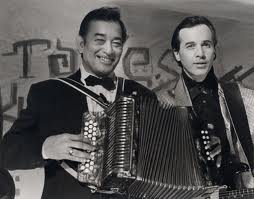
Flaco Jimenez and Ry Cooder
Ry Cooder has a mystical connection to Tex-Mex border music and his original songs and themes for movies such as Paris, Texas; The Border and Alamo Bay raised the visual images to another level. Here’s a live concert he did with Flaco Jimenez and others at the Catalyst in Santa Cruz in 1987. It’s not Tex-Mex, but it sorta is; it’s not rock, but it sorta is; it’s not soul, but it sorta is; it’s not gospel, but it sorta is, it’s not blues, but it sorta is, it’s not folk, but it sorta is. It’s no-border music, everything together guided by Cooder’s sense of what drives music at a fundamental level. Flaco is wide open in this concert: you can see him feeling the music.
The lyrics to Across the Borderline (from The Border, staring Jack Nicholson) are great (Buddhist/Zen) poetry. Here’s Cooder’s version of Across the Borderline, and Freddy Fender’s version (who sang it in the movie) and the lyrics:
There’s a land, so I’ve been told / Every street is paved with gold / And it’s just across the borderline / And when it’s time to take your turn / Here’s a lesson you must learn / You could lose more than you ever hope to find / And when you reach the broken promised land / Every dream slips though your hand / Then you’ll know it’s too late to change your mind / ‘Cause you pay the price to come this far / Just to wind up where you are / And you’re still just across the borderline / Up and down The Rio Grande / A thousand foot prints in the sand / Reveal the secret no one can define / The river flows on like a breath / In between our life and death / Tell me who the next to cross the borderline / And when you reach the broken promised land / Every dream slips through your hand / Then you’ll know it’s too late to change your mind / Cause you pay the price to come this far / Just to wind up where you are / And you’re still just across the borderline
Thank you John Dycus for reminding me about Cooder’s amazing work and recommending this concert film by Les Banks.
Are You Ready For Tex-Mex Music?: Doug Sahm
Posted: April 5, 2014 Filed under: people, states of mind, time, space Leave a comment
Bob Dylan and Doug Sahm
It’s a good day to spark some neurons.
Listen to this concert by the late great Doug Sahm, Freddy Fender, Augie Meyers and Flaco Jimenez, The Texas Tornados.
Peter Matthiessen’s New Novel
Posted: April 3, 2014 Filed under: books, buddhism, people Leave a comment
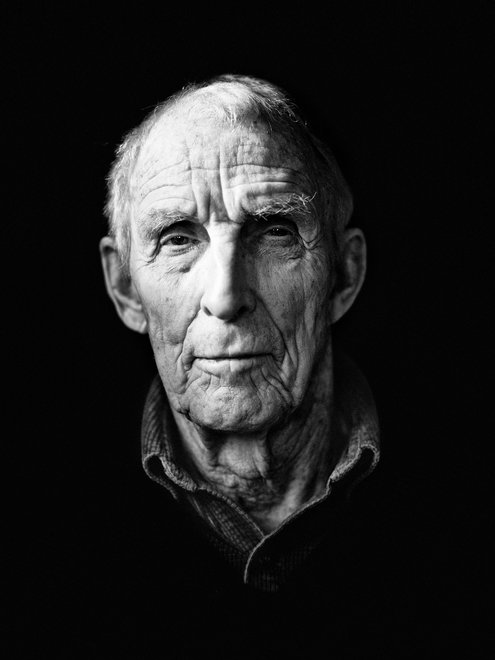
In Paradise, the name of Peter Matthiessen’s new novel, will be released soon, and it could be the last book in his one-of-a-kind outpouring of fiction and nonfiction. A beautiful tribute to him in The New York Times magazine can be found here.
Photograph copyright Damon Winter/The New York Times
Red Pine Has Two New Books Coming Out
Posted: April 2, 2014 Filed under: books, buddhism, people, poetry Leave a comment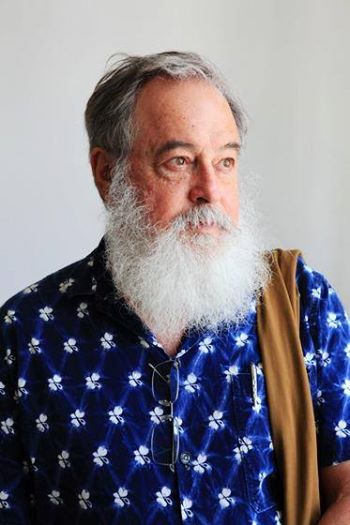
Red Pine has two new books coming out in the next couple of years, in addition to Yellow River Odyssey which will be released sometime this summer. The first is based on the poems of Stonehouse, and the second, Finding Them Gone, is the story of his pilgrimage to the graves of Chinese poets. Both will be published by Copper Canyon Press.
William Empson: Let it Go
Posted: March 30, 2014 Filed under: people, poetry, states of mind Leave a comment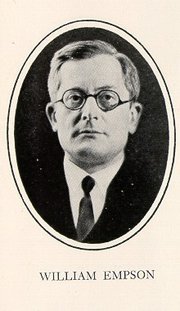
Let It Go
It is this deep blankness is the real thing strange.
The more things happen to you the more you can’t
Tell or remember even what they were.
The contradictions cover such a range.
The talk would talk and go so far aslant.
You don’t want madhouse and the whole thing there.
– William Empson
Collin Cotterill’s Novels Set in Laos
Posted: March 28, 2014 Filed under: people, places, reviews, writing Leave a commentAn earlier version of this review originally appeared in The Bangkok Post on January 29, 2008.
By Roy Hamric
 Not many novels are set in Laos these days, but Colin Cotterill is fast changing that with his series of crime novels set in the former Southeast Asian kingdom. The first novel begins just after Laos fell to the Pathet Lao Communists in 1975.
The unlikely hero, Dr. Siri Paiboon, is a sharp-witted, 72-year-old former jungle surgeon and Communist Party member. He’s surrounded by a cast of loveable characters. He wants to be left alone in his old age, but, to his chagrin, he’s appointed the national coroner of Laos – which really means he’s the only coroner in Laos. A unique twist is Siri’s ability to commune with powerful spirits who dwell in Laos, one of whom has entered his body.
The novels’ tone – read colourful, warm and smart – hit a home run with The New York Times’ reviewer, who called his first book “a perfect balance between the modern mysteries of forensic science and the ancient mysteries of the spirit world”; The Washington Post reviewer said it was “an impressive guide to a little known culture”; Entertainment Weekly cooed “magically sublime, tragically funny”; and Kirkus Reviews called the series, “an embarrassment of riches.”
For Cotterill, who lives in a small village south of Bangkok on the coast of Thailand, it’s been a rollercoaster ride, with each novel followed by glowing reviews – a writer’s dream come true. His gift as a novelist is that he makes it all look so easy. The fluid prose, the intricate plotting, the exotic Laotian setting and the earthy, wry, characters are all far superior to the average crime novel – or almost any novel for that matter.
Before his Siri novels, he apprenticed himself by writing two novels that were published only in Thailand. They were flops, in terms of attracting readers. Evil in the Land Without (2001) and Pool and Its Role in Asian Communism (2002) earned “a total of about $500 in royalties,” he said. Little did he know that international success was waiting just around the corner.
To find an agent for the first Laotian novel, “The Coroner’s Lunch,” he sent a short letter and a few pages of the first chapter to 120 US agents. He got several nibbles. Then an email appeared from a New York agent who asked to see the manuscript. He wrote back, “I can sell this for you.” Suddenly, it felt like fate had adopted him. Before long, he had a contract with Soho Press for a series. “I think getting published is a quirk of fate – getting to the right person at the right time,” he said, in his typical, self-effacing way.
Other novels in the series include Thirty-three Teeth, Disco for the Departed, Anarchy and Old Dogs, Curse of the Pogo Stick (“That’s my Hmong book.”), Slash and Burn and The Woman Who Wouldn’t Die.
Born in Wimbledon on the outskirts of London, he arrived in Southeast Asia in the early 1980s and started a series of NGO jobs, at one point working with refugees from Burma, Laos and Vietnam. He met a circle of Laotian ex-royalist and refugees who had vivid stories about the Communists, the fate of ordinary Laotians, the ethnic groups and the mass education and propaganda campaigns.
In 1990, Cotterill joined a Unesco project, working with the Laotian government to train English teachers at a college in Pakse, where he lived for two years. “It’s different to live in Laos and know what’s really happening,” he said. He learned, for instance, that one group of Laotians who wanted to study English used an East German language textbook, requiring them to first learn German to learn how to speak English. His notebooks filled up with stories, anecdotes and character details. But then he tripped up badly, ending up on the wrong side of a dispute with the military over who should be allowed to take English training classes.
“I went out of the country, then found out the government wouldn’t let me back in,” he said. “I didn’t really know who to blame. It took me a little while to get over it.” Starting in 1994, he began revisiting the country. “Every time I went, I thought, ‘I’m going to write about this.'”
In the late autumn of each year, he goes to Koh Samui to write a first draft of a new Siri novel in about four weeks. “I don’t like to know where the story is really going,” he said. “I know some of the things that occurred during the year I’m going to write about, so I get a few ideas and then just put Siri into a situation and ask, ‘How do we get out of this?'”
The spirit world plays a key role in each novel. Spirits are engaged in a sort of Manachean battle, inflicting their power for good or bad on lowly humans.
Within Cotterill’s exotic, mysterious world looms every-present bureaucracy, Communism, corpses and death. For Siri, death is but the beginning of the story. He uses his brain like a scalpel to cut through the mysteries of strangulation, stabbings, shootings, drownings, poisonings—and possessions.
On the serious side, one feels the crushing weight Communism has had on one of the most gentle, sublime cultures in the world. Siri is determined – what else is there to do? – to undermine the Communist ideologues whose mission is to discourage free-thinking and individual initiative––the exact traits possessed by Siri’s flesh-and-blood gang.
Another pleasure is Cotterill’s ability with dialogue. Many readers have commented that it’s the first time they feel as if they are hearing the way Asians really talk and think. “I had to defend the way my characters talk,” said Cotterill, who speaks Thai and Laotian. “If I have a character call someone a ‘bubblehead,’ well, there’s no exact Laotian equivalent for that English expression, but there are many similar Laotian expressions, so I feel I’m actually giving a closer approximation of the way my characters really talk.”
Cotterill has drawn cartoons and illustrations since he was a child, and he still enjoys working as an illustrator and cartoonist. He published a cartoon book, “Ethel and Joan Go to Phuket,” in Thai, and his unique website features his drawing.
“I write very visually,” he said. “I’m walking through the scenes with the characters. I’m seeing the characters, the weather, the land. I think I write more as an artist than as a writer.”
Two unpublished non-Siri novels sit on his desk; One is set in New York and Vietnam in 1952; the other is a contemporary thriller set in Chiang Mai involving the search for a 13th-century buried treasure.
 the roy hamric journal