
For Charles Dukes
Posted: October 9, 2012 Filed under: people, poetry, states of mind, writing Leave a commentRiding the Wind
In my dream
you gave me your
Book of Poems
and said,
“Read this one:”
The wind was Love
and what the was was
was was.
Lester Bangs was one great writer
Posted: September 5, 2012 Filed under: articles, books, people Leave a comment
Lester Bangs
I just finished Lester Bang’s Psychotic Reactions and Carburetor Dung, which I’ve heard touted for years, and – well – tout away folks, because it’s one fine piece of rock ‘n roll literature. Edited by Greil Marcus, the sub-title is probably Marcus’: “The work of a legendary critic: Rock ‘n roll as literature and literature as rock ‘n roll”– it couldn’t be said any better than that. Lester died young, age 33, in 1982. Fundamentalist upbringing. Then became a student of excess, or at least obsession with creativity and giving people a way forward through the fog. One thing he knew how to do in spades – keep it real, and at all cost don’t fall for fan claptrap or think that gifted performers were different from the average person. They just had a particular talent. How he knew what he knew at such a young age is also the sign of a particular talent.
He wrote for Cream, the Village Voice and other publications. This collection covers his favorite bands (he couldn’t write about anything else, but things he liked ferociously): Elvis, Sun Records, Lou Reed, the Clash, the Blues, bands and singers I’d never heard of, and much, much more. What’s best is that he’s never writing just about music, he’s always writing about creativity, the Muse, artistic integrity, the scummy nature of most big rock stars and bands, the miracle of creative integrity, and himself, surely the most vivid writer-self to come through in a long, long time. He surveyed the field and he told himself, seriously, I think, he was the best of the breed writing for magazines during his time. I think he was close, very close.
Surely, Hunter Thompson’s early writing trumped Lester’s output by far, both in seriousness of topics and literary style. Lester stopped writing too early to really compare the two, certainly, but Lester’s seminal talent was the search for where the Muse lives, the ability to root for seriousness of purpose (even among the deranged), a concern for moral values, the ability to thrash away for more abundance in life. He knew how the lives of musicians were honey to the young. His music was his politics as politics was Hunter’s music.
Anyway, you can’t compare geniuses – they both were, so let’s just say we’re dealing with two of the finest social critic-reporters we had at the end of the last century.
Finding Now
Posted: August 27, 2012 Filed under: buddhism, places, poetry, time, space, writing 3 CommentsFinding Now
Well, yes – exactly – that is the problem.
All travelers experience it
at each step on the Way. Is it
here, there, up, down,
backwards, forwards, all around,
or somewhere else? How are we to know,
if it doesn’t tell us so?
We all have our maps, but they are the
artifacts rubbing our noses in it.
My worn map I drew myself. I traced
a line from Birchman Street in Fort Worth
through dark caves as a Boy Scout, to Saigon
(and flowing dresses) to Ubon and
Thailand’s temples to Third Street in Denton –
a college town – to Dallas (there’s the dead president)
to Arlington to Thailand again and Laddawan – to Denton
(the college town again) to Waco – a crazy town –
to Alpine and the airy Big Bend where I met and lost
so many friends, to here and now in Chiang Mai.
Ok, just breathe deep and let go.
That’s as close as I can get to it.
Henri Cartier-Bresson’s birthday
Posted: August 23, 2012 Filed under: people, photography, sight seeing, states of mind 1 Comment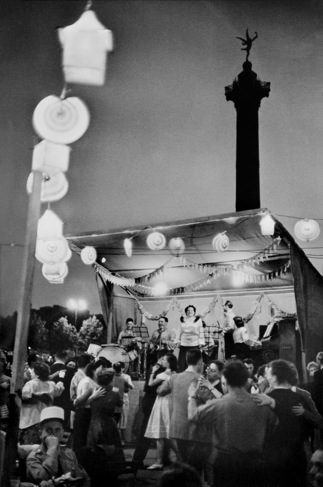
Bastille Day Ball, Place de la Bastille square, Paris, France, 1952. Bresson taught many of us how to see everyday scenes as not so ordinary. It all had to do with his ability not to see the “subject” but the subjects. There’s been no one quite like him. He could do his art in all situations, wherever he found himself. Truly an extraordinary artist.
Bedside Books
Posted: August 18, 2012 Filed under: articles, books Leave a comment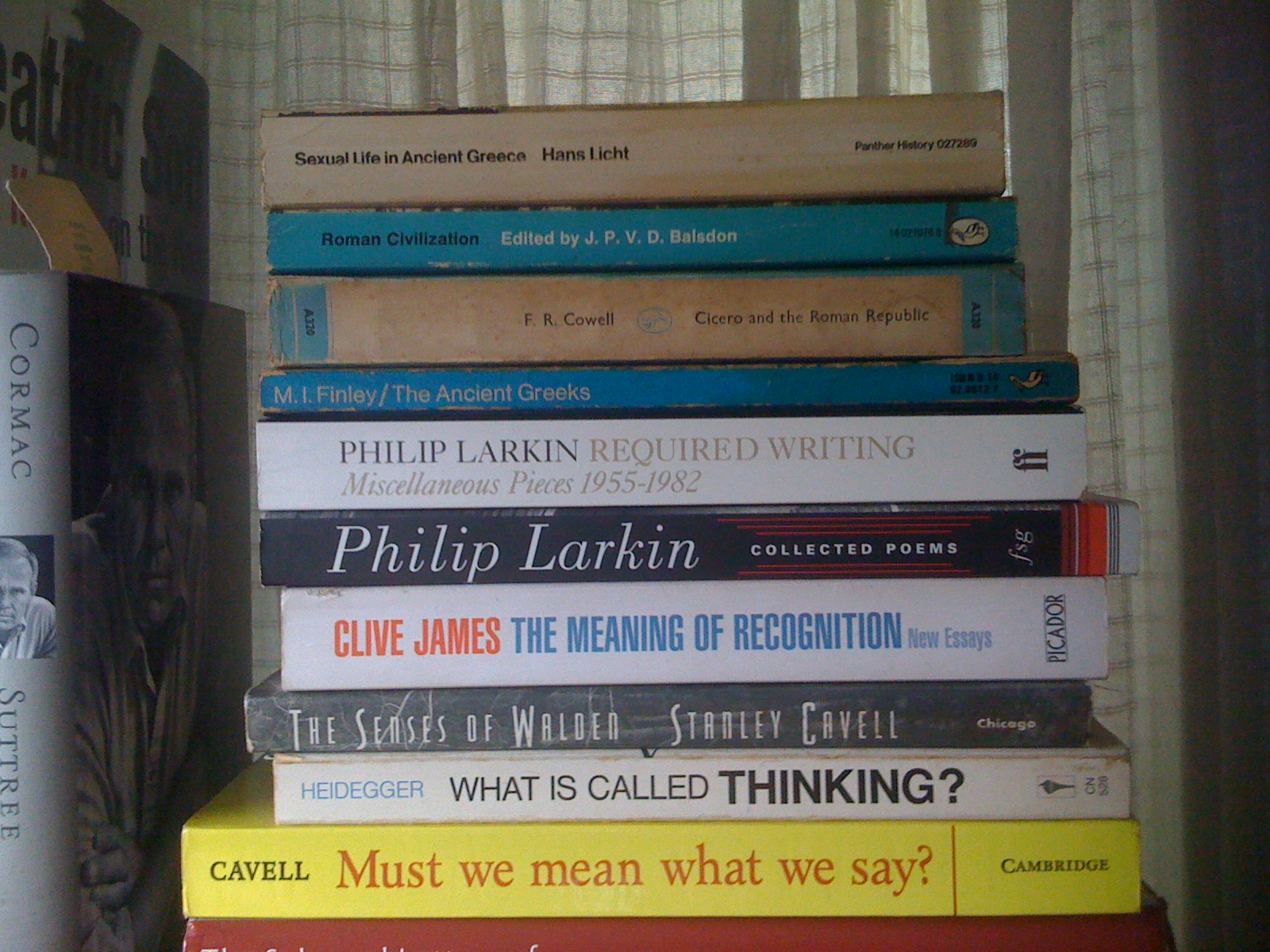
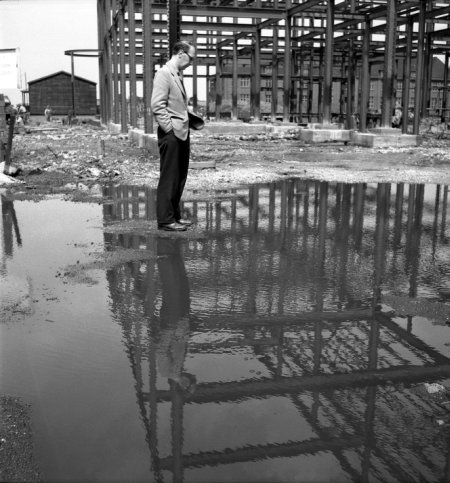
Philip Larkin took this self-portrait using the camera’s timer.
Required Reading by Philip Larkin: This collection of essays on poetry and literature, memories of his early life, and a sampling of his jazz writing clearly, in my mind at least, yokes Larkin with William Empson, or at least one aspect of Empson – their closely shared hard-minded approach to literary criticism. While they shared a fundamental view about naturalism and literary value, they expressed themselves totally differently and yet somehow, in the end, one comes out feeling the same about both men as writers and thinkers. Empson builds his cases on detailed exegesis while Larkin springs to the same spot without strewing a trail of literary shavings. What would have been the chemistry had they been in the same room? Would Larkin’s stoical nature have shrunk before Empson’s bizarre mental gymnastics? Would it have been a stoical and epicurean stand-off, or would they have smiled at the circularity of their approach, declaring a truce at some ground-zero level? Larkin covers a surprising amount of personal ground in these essays: Oxford, his days as a small town librarian, a great range of poetic esthetics, a surprising amount about Hardy (one of his favorites); it also includes his Paris Review interview and a long Guardian interview; all in all, very satisfying for a Larkin fan.
Roman Civilization edited by J.P.V.D. Balsdon: This collection of topics by scholars in the field underscores the profound influence of Roman law, administration and engineering on the modern world. While the Romans created little in the fields of literature, theater, philosophy or science, because of the earlier overdetermined brilliance of the Greeks, they did leave the world with a monumental gift: for a few golden centuries they were able to hold the competing forces of society together enough to show the world that the lower strata of society could be organized in such a way to benefit society at large without the two extremes and the middle wrecking the system. How much the daily openness of Rome itself and the intermingling of all classes of people contributed to the essence of Roman sensibilities is an interesting question. It was the antithesis of what’s happening in the US now, as partisans pollute the public discourse, which too often is in the hands of short-sighted nitwits with no practical sense. Classical Rome surely had its rogues, partisans, revolutionaries, privateers, all ready to raid the public coffers, or topple a government, but it also had exceptionally great legal minds, some military geniuses, and, more importantly, some great practical minds adroit in the art of compromise.
Cicero and the Roman Republic by F.R. Cowell: This is the book to read for an insight into how a great civilization unravels slowly over centuries. Cicero was, of course, an emblematic legal and literary figure in Rome. Cicero was profoundly influenced by the Golden Age of Rome two hundred years prior to his birth. A contemporary of Caesar, he clearly saw the loss of the Republic coming, he tried to stave it off, he acquiesced in many ways (a victim of his personality), and finally he paid for the failures of both Rome and himself with his life at the hands of assassins. He was an advocate of the sensible management of economic and political affairs to benefit the grand idea of “the people,” a belief that opens itself up to specious attacks from opportunistic figures on both the left and the right, the one-eyed partisans. Cowell is very wise. He pinned the tail on the donkey here, revealing what’s happening right now in the US political system and society. He probes the serious questions: were the defects in the faulty machinery of government, an unsound economic system, were the laws and courts unjust, all producing discontent, “or did the trouble spring from some deeper cause, traceable perhaps to some fundamental change in men’s attitudes toward life.? If so, was it a matter of alteration of social relationships between one class and another, between rich and poor, between the old families and fashionable society on the one hand and the unknown ‘common man’ on the other…Beyond all these possible sources of weakness was there a failure of old religious and moral beliefs and a decay of old habits that had in the last resort been the true source of the vitality of the State?” It’s been said repeatedly in history, Rome fell not because of an external enemy but to internal forces it had once subdued but could no longer control.
The Ancient Greeks by M. I. Finley: From whence did Rome spring? In many ways, from Greece, the civilization that was the other side of the Roman coin. In some ways, this book parallels the work of Cowell, taking you deep into the internals of Greek society, culture and the essence of the lives of emblematic figures. You are left with the knowledge that Greece was simply many countries trying to act as one, something it could only obtain with an exceptionally strong leader, such as Alexander, who was a Macedonian, and who relied primarily on his own generals rather than surrounding himself with Greeks. Finley is wonderful on Greek philosophy, Socrates, science, sculpture, Athens, Sparta and stoicism. In spite of its brevity, this work should be read last in any study of Greek life, because its insights and conclusions carry such great weight. I am already eager to reread it.
Sexual Life in Ancient Greece by Hans Licht: What an education you receive about Greece by looking at the role of the human figure in Greek culture, marriage, sex, prostitutes, religion, the role of love between men, women and various combinations thereof. Never has a country had such a wide open sexual culture; sex was a component of so much of Greece’s religious life, if not on the surface, then embedded in the ritualistic practices. Simply put, there were almost no taboos in Greek sexual life, and the higher courtesans offered intellectual companionship as well as physical pleasure to their client/s. The elite courtesans rose to the highest ranks as close associates of political leaders, scientists, philosophers and the artists of the day. Licht was a prodigious researcher with an encyclopedic grasp of Greek literature and visual arts, and he uses his skills so thoroughly that you receive a detailed survey of the literary and visual arts and how sexuality was used by writers and artisans in portraying Greek life. This book can’t be ignored; its exacting scholarship is far from prurient. If equal studies were done for other major civilizations, history would make more sense, but such a corrective is unlikely to come at this late date. One shivers at the prudery of most Western countries today. One sees how Freud mined Greek thought and scholarship in assembling his theories of sexuality. The role of hetairae, or female prostitutes, through the scholarly skills of Licht, are given a well-deserved central place in Greek society, a place they have rarely shared in societies before or since.
Jim Harrison poem: River IV
Posted: August 11, 2012 Filed under: people, poetry, states of mind Leave a commentWere it not for the new moon
my sky would collapse tonight
so fed by the waters of memory.
– The last line in River IV from Songs of Unreason by Jim Harrison
– The first five lines of Love from Songs of Unreason by Jim Harrison:
Love is raw as freshly cut meat,
mean as a beetle on the track of dung.
It is the Celtic dog that ate its tail in a dream.
It chooses us as a blizzard chooses a mountain.
It’s seven knocks on the door you pray not to answer.
gary snyder interview: know nature
Posted: July 29, 2012 Filed under: articles, books, buddhism, people Leave a comment
A Gary Snyder interview I did more than a year ago that appeared in the The Kyoto Journal #76 issue in July 2012 is here.
For Dead Tom Copeland
Posted: July 22, 2012 Filed under: buddhism, people, poetry 1 CommentI found your clear, plastic ruler
between the pages of a book
I bought for $2. Oriental poetry.
The Way.
Your straight lines in black, red and green,
the stars and brackets marking
the words of Li Po that fired your mind.
From the margins your ideas rise so clear.
“Do nothing – not nothing to do.”
Text and notes joining here and now
in my mind, measuring, marking
studying the way Li Po and you and me
joined mind to Mind.
Martin Amis: ‘What a country!’
Posted: July 5, 2012 Filed under: books, people Leave a comment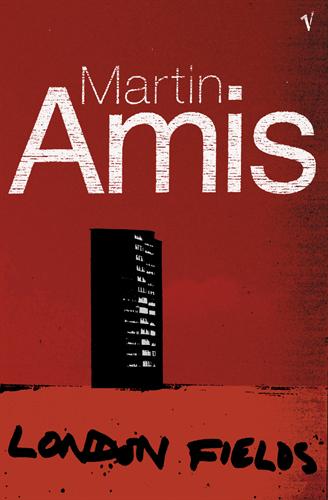
There’s been a rash of stories about British novelist Martin Amis and his move to Brooklyn, which isn’t surprising to anyone who has followed his career. When Kingsley Amis was teaching at Princeton for one year when Martin was a child, on Christmas Kingsley gave his son a present of firecrackers. “What a country!” thought young Martin. For a full lineup of interviews over the years and lots of other good information, his official website is here. Amis is now in the hometown of Whitman, Miller and Mailer.
Jack’s Bongo Car
Posted: June 9, 2012 Filed under: photography Leave a comment
A painted section on Jack’s Bongo Car
 the roy hamric journal