
Denis Johnson’s new novella
Posted: September 17, 2011 Filed under: books, people, writing Leave a comment
photograph by Cindy Johnson
Denis Johnson has a new novella, Train Dreams. An excellent review by Anthony Doerr says it might be the most powerful story and writing he’s published. That makes you pause because how can you better perfection in almost everything Johnson’s published, but you know what he means. Here’s a quote from the review that makes a nice point, reminding me of why Jim Harrison’s novellas are so powerful:
“In an 1842 review of Nathaniel Hawthorne’s Twice Told Tales, Edgar Allan Poe said that apart from poetry, the form most advantageous for the exertion of ‘highest genius’ was the short prose narrative, whose length he defined as taking ‘from a half-hour to one or two hours in its perusal.’ Novels, Poe argued, were objectionable because they required a reader to take breaks.
“’Worldly interests intervening during the pauses of perusal,’ he wrote, ‘modify, annul or counteract, in a greater or less degree, the impressions of the book.’ Because you have to stop reading novels every now and then — to shower, to eat, to check your Twitter feed — their power weakens.
Short stories and novellas on the other hand offer writers a chance to affect readers more deeply because a reader can be held in thrall for the entirety of the experience. They offer writers, in Poe’s phrasing, ‘the immense force derivable from totality.’”
Reading Stonehouse
Posted: August 3, 2011 Filed under: books, buddhism, poetry Leave a comment Stonehouse, the Zen hermit poet of 14th century China, writes so simply his wisdom often escapes the reader who is tangled up in the flow of words and images. Translated by Red Pine, the book remains a classic.
Look for the real and it becomes more distant/ try to end delusions and they just increase/ followers of the Way have a place that stays serene/ when the moon is in the sky it’s reflection is in the waves
Bedside Books
Posted: July 24, 2011 Filed under: books, buddhism, people, reviews 1 Comment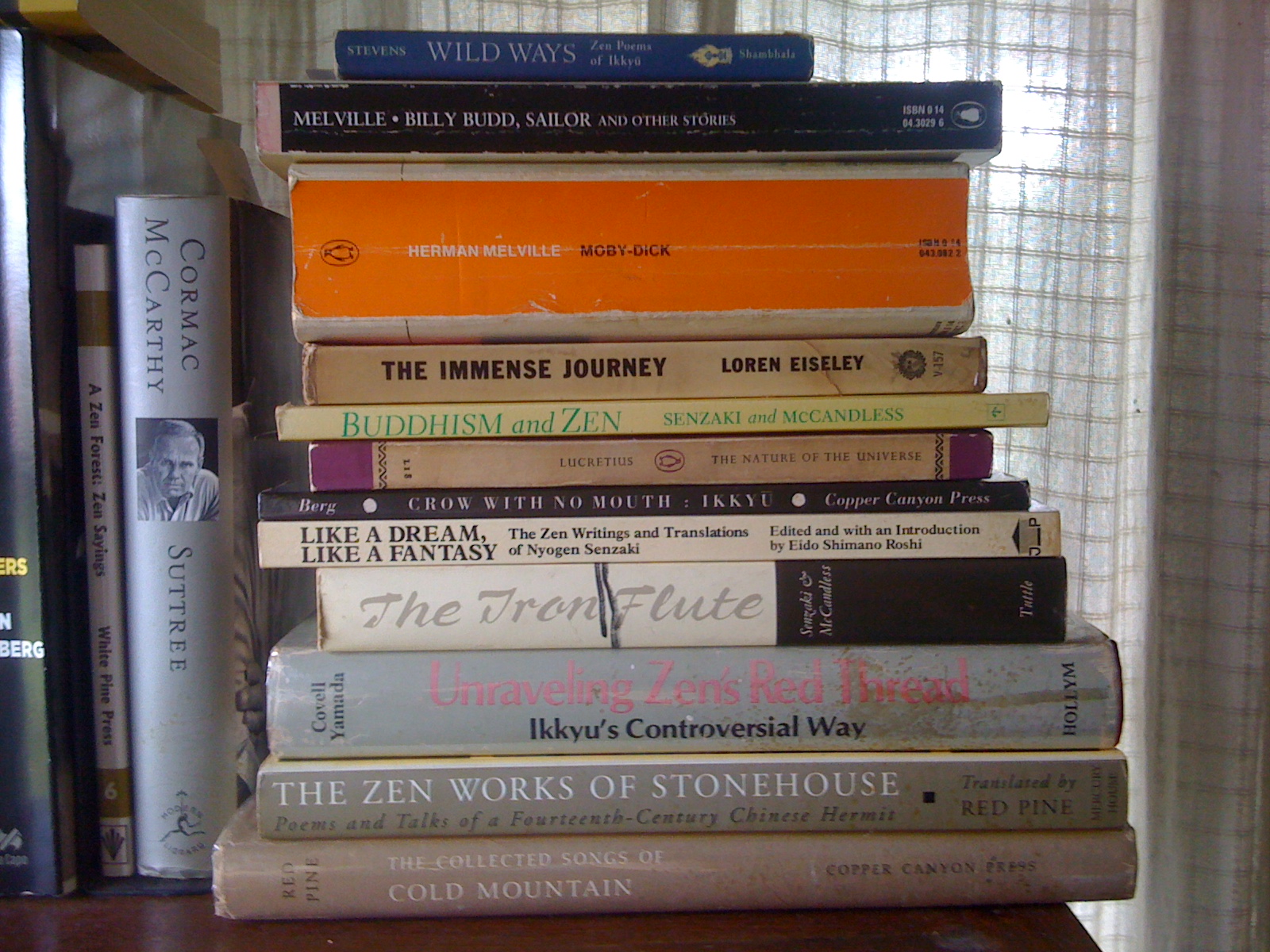
I haven’t read much in Zen for the past year, because I had over read. It’s ok to read too much Zen starting out because there’s a need to be filled, to be satiated, a lot of history and people to absorb and put into place. Afterwards, moderate careful re-reading is called for to check your new perceptions against old feelings and understanding. As we get older, all re-reading quickly becomes less satisfying or more rewarding––it’s a test of earlier states of mind.
Like a Dream, Like a Fantasy by Nyogen Sensaki (1876 to 1958) is a fruitful return to one of the most enigmatic and admirable Zen men in America. His Japanese mother died at his birth in Russia (his father may have been Chinese). He was adopted by a Japanese monk-Kegon scholar and raised in monasteries in Japan where he eventually rejected “Cathedral” Zen. The clue to his subsequent vagabond wanderings from Japan to San Francisco to Los Angeles (to the Heart Mountain World War II internment camp in Wyoming) is his growing up without knowing his mother or father. He felt most comfortable losing himself in anonymity, disappearing, but his calling was Zen and he always had a group of Zen students attending his “floating” zendo; he supported himself in humble odd jobs and donations from students. He was quietly teaching Zen in the 30s-40s when there were no Zen teachers in the US. A beautiful poet, he wrote a poem each year dedicated to his teacher-mentor, Soen Shaku, which he read in a talk he would give in a rented auditorium. Other Zen greats who were kindred spirits and friends were D.T. Suzuki and Soen Nakagawa. There are at least four or five key books of his writings in English besides LDLF: Buddhism and Zen and The Iron Flute, where he comments on 100 Zen koans are highly recommended. See also Zen Flesh, Zen Bones by Reps which contains more of his essays.
The Zen Works of Stonehouse translated by Red Pine. Subtitle: Poems and talks of a 14th Century Zen Master. Stonehouse (born 1272), a largely unknown Zen-hermit-poet before Red Pine’s book, ranks alongside Han-shan as the two exemplar hermit-poets of China. The reason is simple: he wrote a fully shaped, free verse picture of his life in the mountains, an unsentimental summing up, and his clear voice takes you into his daily routine. Autobiography underrates the accomplishment.
The Poems of Cold Mountain translated by Red Pine; Writen sometime between 600 to 900 A.D., Han-shan epitomizes the free-spirited, go-my-own way Zen life. Stories about him and his buddy Pick-Up who worked in the kitchen of the Kuo Ch’ing Monastery abound for their exploits as crazy talking, carefree misfits.
The Nature of the Universe by Lucretius. I’m totally deficient in reading Greek and Latin writers and philosophers so after reading about Lucretius’s shaping influence on critic Harold Bloom this book caught my eye at the neighborhood used bookstore, plus it’s a beautiful 1955 copy of a Penguin Classic with a purple-bordered cover.
Unraveling Zen’s Red Thread by Covell and Yamada. Ikkyu was one of the premier Zen men of Japanese popular culture who is known for his iconoclastic life among the wine shops and ladies of the night, all well documented in his tangy poems. This reading, including Crow With No Mouth translated by Berg and Wild Ways by Stevens, seems to have let me down. Maybe it’s related to a fundamental loss in the movement of his particular language from Japanese to English. I’m far less taken in by his mind and perceptions, and that’s a loss because I’m fascinated by his life.
William Empson, Philip Larkin
Posted: June 25, 2011 Filed under: books, people, poetry 1 Comment This evening I heard Philip Larkin in William Empson’s voice (Larkin followed Empson, of course):
Empson: The heart of standing is you cannot fly.
Harold Bloom talks about this back and forth influence that writer’s share. This is from Empson’s Let It Go:
It is this deep blankness is the real thing strange.
The more things happen to you the more you can’t
Tell or remember even what they were.
Jan Reid’s Comanche Sundown
Posted: June 21, 2011 Filed under: books, fiction, people, reviews 5 CommentsComanche Sundown, Jan Reid’s new historical novel, is, as some reviewers have written, a masterpiece of imagination and prose, capturing a time in the nation when Quanah Parker, a half-breed, and his unexpected friend, a black cowboy named Bose Ikard, himself a son of a slave owner, lived life on the Texas plains fighting the Union Army and watching the old ways disappear. Quanah’s epitaph on his grave at the Parker family plot at the Fort Sill Cemetery in Lawton, Oklahoma:
:
Resting Here Until Day Breaks
And Shadows Fall and Darkness Disappears is
Quanah Parker Last Chief of the Comanches
Born 1852
Died Feb. 23, 1911

Bedside books
Posted: June 9, 2011 Filed under: books, fiction, people, poetry, writing 2 Comments
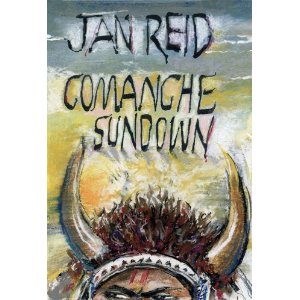 Jan Reid’s Comanche Sundown is a beautifully imagined novel with two real-life quintessential Americans at its core, the Comanche half-blood chief Quanah Parker and a half-blood black named Bose Ikard, the son of his slave-owning father. This book should be a contender for the National Book Award and the Pulitzer Prize. It’s in the ranks of Cormac McCarthy’s All the Pretty Horses, Thomas Berger’s Little Big Man, E.L. Doctorow’s Welcome to Hard Times and Larry McMurtry’s Lonesome Dove. Quanah and Bose are blood brothers engaged in living their lives as men at a pivotal moment in history when Whites are turning the Comanche ranging ground into cattle country. The story is also an intoxicating tale of the Indian women who shared their lives. The novel puts flesh on two real-life figures and their time, not so long ago. Reid’s re-imagining of the Comanche way of life and Quanah’s shamanistic aura and fearlessness is a masterful feat of story-telling. His recent biography of Doug Sahm, the Texas Tex-Mex rocker, is also a good one for the road. His The Bullet Meant for Me defies easy description. It’s an autobiography of a writer who took a pistol shot in the stomach that passed on to lodge against his spine––paralyzing him for months until he regained the partial use of his legs: bracingly tough-minded, inspiring, beautifully written, a portrait of an artist in mid-flight who refused to go down for the count. In Comanche Sundown, he’s written a masterpiece on the richness and tragedy of frontier life.
Clive James’s Cultural Amnesia is encyclopedic in scope, his summing up of a lifetime of reviewing, 851 pages that cover a daunting range of literature with a particular nod to European writers, historical and modern. The more I read James the more I’m reminded of his rare qualities, the mind of a poet blended naturally with the hard-earned wisdom of someone at home on the streets, who can’t and doesn’t want to put literature behind academic walls but keeps it rooted at the forefront of lived life, as it was when it was created by writers struggling with the temper of their time. He writes with the assurance of someone who knows that literature, poetry and the lives of writers can teach truths far beyond the esthetic sublime.
Harold Bloom’s The Anatomy of Influence just came in the mail. What can I say. I love what his critics find irritating about his prose, the quick-wrapped lightning illuminations that fearlessly strike at the quick of a writer’s essence. If they would only accept that Bloom is a Jewish mystic writing not so much from a historical view but from a point of revelation, they wouldn’t be so vexed by his approach. He’s the most inspired, broadly visionary critic in American history, and his books will rest on a shelf reserved for uniquely American writers, close beside the three mentors who gave him the courage to be himself––Emerson, Thoreau and Whitman.
Larry McMurtry’s Hollywood and Literary Life. I always fall for McMurtry’s quirky nonfiction voice. What I like about these two memoirs, the first was Books, is their lack of personal or literary pretension, his tendency to dodge any serious discussion in mid-course and go off to eat a burger and fries or some such ordinary undertaking. I know underneath it all is a reader and storyteller of the first magnitude, but taking himself too seriously in these memoirs isn’t in his nature. At any rate, the memoirs feel honest. They have a diary feel by a diarist who knows pretension is the kiss of death.
Theroux-Naipaul shake hands
Posted: June 3, 2011 Filed under: books, fiction, people Leave a comment
paul theroux
Talk about social media, the ubiquitousness of cameras and instant communication: Paul Theroux and V.S. Naipaul unexpectedly encountered each other at a literary festival in England, which led to a long handshake and a smiling exchange. Here’s a post of the video. I’ve always admired Theroux’s “Sir Vidia’s Shadow” for its evocation of their early encounter in Malawi and the unknowable, dramatic course friendships can take. Here’s part of the post on The Book Bench:
“Talk about being in the right place at the right time: Reza Aslan was at the Hay Festival last weekend, where he gave a talk about his latest project—the gorgeous, comprehensive “Tablet and Pen: Literary Landscapes from the Modern Middle East,” a collection of Middle Eastern essays, fiction, and poetry from the past hundred years in English translation—and was in the green room when Paul Theroux and V. S. Naipaul had their encounter. Aslan happened to be taking a video with his phone, when, to his surprise, Theroux approached Naipaul and offered his hand. Aslan put it on his Twitter feed (@rezaaslan): “Holy Cow! I caught first face-to-face reconciliation of Paul Theroux & VS Naipaul. Magical moment.”
Harold Bloom: the uncommon reader
Posted: May 20, 2011 Filed under: books, people Leave a comment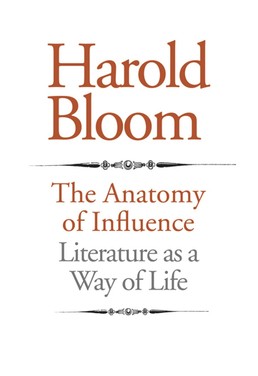 For a beautiful appreciation and clear dissection of Harold Bloom’s career as America’s most gifted literary critic and poet of the sublime influence of like-minded writers, click here. By Sam Tanenhaus, editor of The New York Times Book Review. Bloom’s new book, The Anatomy of Influence, is a summation of his early and latter work, focusing on the esthetic links, sometimes not readily apparent, that bind the pantheon of Western writers together, with the centerpiece his great hero Shakespeare. Bloom has two more books in the works, one a look at the Bible as literature, narrative storehouse and infuence called “The Shadow of a Great Rock: A Literary Appreciation of the King James Bible” due in September. He also has begun work on his next, “Evening of the Imagined Land: Achievements in American Literature.”
To see a video of an extraordinarily vibrant Bloom, now 80, talking to Tanenhaus and reciting poetry, click here.
For a beautiful appreciation and clear dissection of Harold Bloom’s career as America’s most gifted literary critic and poet of the sublime influence of like-minded writers, click here. By Sam Tanenhaus, editor of The New York Times Book Review. Bloom’s new book, The Anatomy of Influence, is a summation of his early and latter work, focusing on the esthetic links, sometimes not readily apparent, that bind the pantheon of Western writers together, with the centerpiece his great hero Shakespeare. Bloom has two more books in the works, one a look at the Bible as literature, narrative storehouse and infuence called “The Shadow of a Great Rock: A Literary Appreciation of the King James Bible” due in September. He also has begun work on his next, “Evening of the Imagined Land: Achievements in American Literature.”
To see a video of an extraordinarily vibrant Bloom, now 80, talking to Tanenhaus and reciting poetry, click here.
Kerouac wrote Dharma Bums in this house
Posted: May 14, 2011 Filed under: books, people, places Leave a comment
Jack Kerouac lived in this house with his mother in Orlando, Florida, for a little more than one year. While there, in a burst of memory-writing he wrote Dharma Bums. The house is now a writer’s retreat and is maintained by a nonprofit group that needs funds. For a nice story on the house and group by Carolyn Kellogg , click here. To hear Kerouac sing Ain’t We Got Fun, click here. Thanks, Carolyn Kellogg.
bedside books
Posted: May 7, 2011 Filed under: books Leave a comment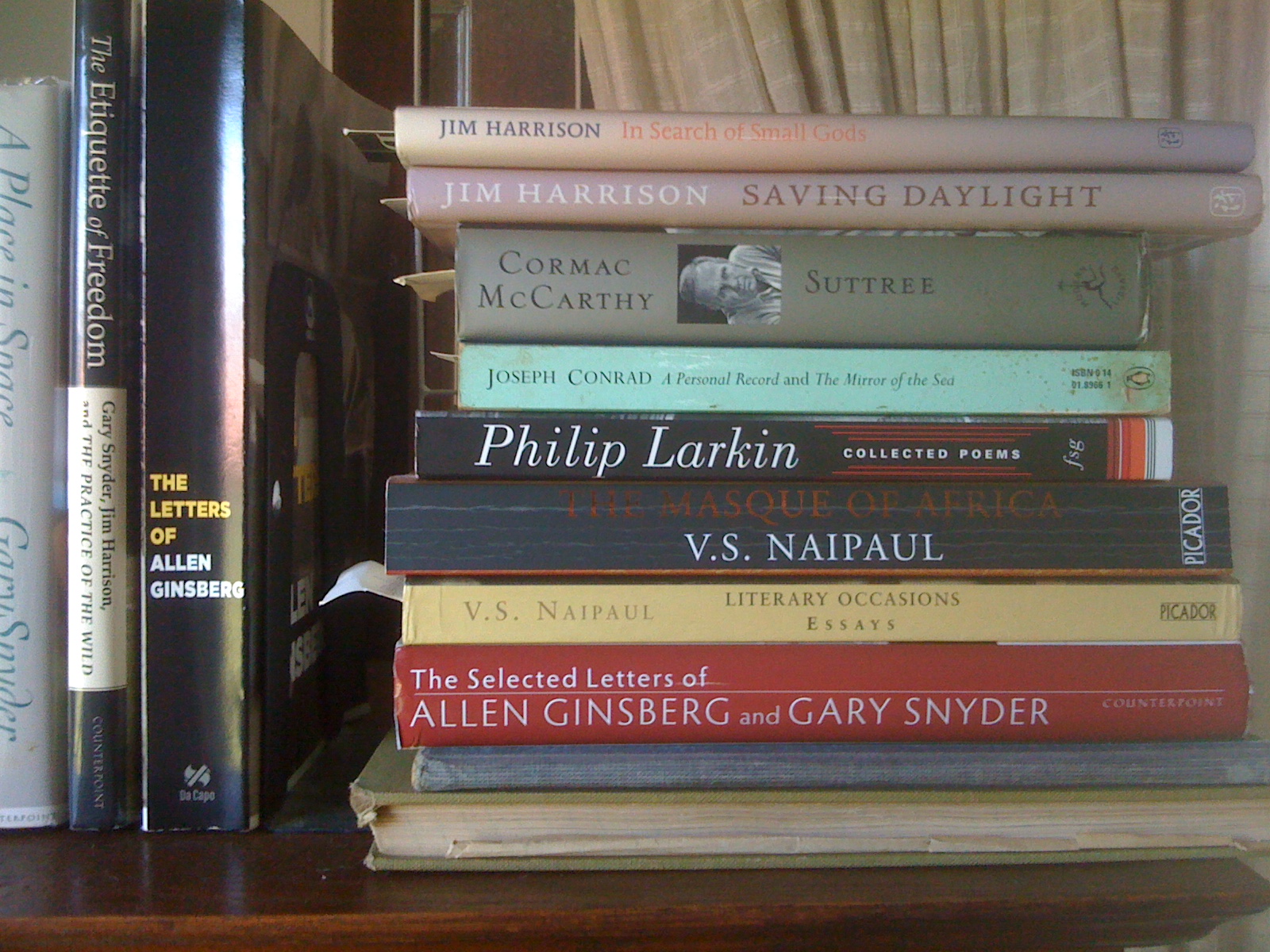
Cormac McCarthy’s Suttree is his most fulsome, flowery language, so different from his Bible-influenced rhythms in Blood Meridian, yet full of the darkness, the basso seriousness––his homage to Joyce and Shakespeare in counterpoint to his Meridian homage to Job and the Manicheans.
Jim Harrison’s poetry voice has taken up permanent residence in my head, and I keep wanting to hear more of his inspired conversation with himself. I’m rereading, probably forever, his last two: Saving Daylight and In Search of Small Gods. His genius is knowing what’s right there in his mind is his art. But sensing what’s right there is the art of consciousness and craft.
The Selected Letters of Allen Ginsberg and Gary Snyder are a testament to friendship and literature, spanning their whole lives; there’s no similar relationship in American letters. So filled with respect and helpfulness; an example of two bodhisatvas at work. Ginsberg’s restraint and intellectual rigor is on show, a really deeply compassionate man. Snyder’s exemplary life is a serious marker of sensible living when the world is falling apart around you.
Naipaul’s The Mask of Africa, a travelogue on African religion, is a shallow, egotistical failure; his first. The quirky aspects of his life and voice took over; it’s too indulgent; the writing begs for an editor. Where was Robert Silver when he needed him?
Philip Larkin’s Collected Poems are like funny, sad, beautiful fish shining in clear water.
Conrad’s voice in A Personal Record sounds like a polished recording. You wonder at the raw, vast distance between that voice and the sea and sun, the palm tress, the tropical nights of his youth. It’s the parlor room version of some great stories. He should have inhabited the Whitmanesque “I,” but it was foreign to his nature. The ladies were always in the room.
 the roy hamric journal