
James Wood profile
Posted: December 22, 2012 Filed under: books Leave a comment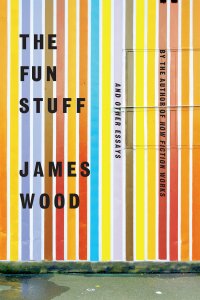
Here is a profile of James Wood. The piece compares him to Edmund Wilson, talks about his new collection of essays and reviews and explores his early childhood and literary life. Wood is a staff writer at The New Yorker and a visiting lecturer at Harvard University. His books include How Fiction Works, as well as two essay collections, The Broken Estate and The Irresponsible Self, and a novel, The Book Against God, all published by FSG.
Bedside books
Posted: December 2, 2012 Filed under: articles, books, people Leave a comment The Woman of Andros: This third novel by Thornton Wilder, following his first, The Cabala, and the second, The Bridge of San Luis Ray, seems more inspired than either of the first two, as brilliant as they are. Wilder stands separate from the other great artists of his era: Fitzgerald, Hemingway, Faulkner, etc., as if Wilder himself was from another era, a time not so much American as universal.
I’ve read his first four novels now and his selected letters (the fourth novel: The Ides of March). It’s uncanny how Wilder produced so many good novels (not to mention America’s greatest play, Our Town) with so little visible struggle; they rolled off his pen while he was holding down significant teaching jobs. They seemed to come from the clouds rather than from underneath his feet.
The Woman of Andros, Chrysis, is a hetaera (prostitute) on a backwater Greek island several centuries before the Christian era begins. She is one of the educated, artistic, deeply spiritual hetaerae who served as mentors or companions to the leading men of the times and as a muse or inspiration to educated youth. She is officially ostracized by the women on the island because of the all-male banquets she holds in her house, where men are introduced to the works of the leading Greek poets and playwrights, as well as the arts of love, but at the same time she dominates the community’s attention because of her beauty, independence and commanding physical presence.
She has turned a part of her home into a refuge for outcasts – the sick and the strays of life. She dreams of being a part of a living community of love and compassion at the highest planes of selflessness. Pamphilus, the only son of a prominent villager, fathers a baby out of wedlock with Chrysis’s younger sister. The questions faced by Pamphilus, his family and the other “respectable” citizens of the island expose the imprisoning strictures of culture and social class.
Like the lives of many people in those times, Chrysis’ journey is suddenly cut short, but it lives on briefly in the life of her sister whose own life is then stopped cold with little warning.
A handful of otherwise anonymous lives are made flesh and brought to a fullness, reflecting the soul’s search to find higher meaning and safety in our chaotic world of chance and suffering.
Wilder wrote with full confidence from a place accessible to very few artists.
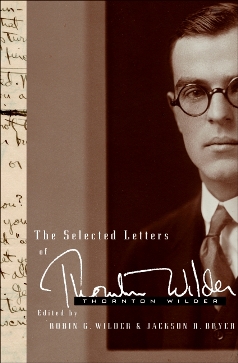 The Selected Letters of Thornton Wilder: I think it’s possible to make a case that Wilder learned to observe life and to write by writing letters; he came out of a milieu and a family that saw letter writing as essential to keep the family closely bound together. Letter writing was seen as a mark of seriousness and discipline. The book’s first letter was written to his grandmother at age 12 in 1909. It wasn’t unusual for Wilder to write dozens of letters each day from his earliest years, each one particular and well crafted. Letter writing was a must for Wilder’s large family, who seldom lived all together at the same place.
His letters are wide ranging and with Wilder’s early worldwide fame, he had easy access to the elite in literature, the theater and other arts. Early correspondents included Fitzgerald, Hemingway, Gertrude Stein (with whom he shared a close bond), a host of actors, directors and theater people, and perhaps most importantly his parents and siblings with whom he kept in constant touch throughout his life, offering glimpses of his inner life and travels. Wilder was a constant traveler who needed new places where he could work. He was constantly searching out different locales – France, Italy, Germany, Mexico, New Mexico, Arizona, the Texas coast, East Coast spas during off season, as a passenger on a freighter or ocean liner – places where he felt some kinship or charged freedom that allowed his writing to flow.
What comes out of the letters is Wilder’s well-balanced life and the seeming ease in which he created his novels and plays. He experienced almost no inner turmoil or wrenching emotional setbacks. He must be at the top of the list of the least affected creative artists that America has ever produced. Amazingly, none of his work rings hallow. It was written to last – grounded in compassion and hope – serious books written to help lighten the burden of life’s struggles.
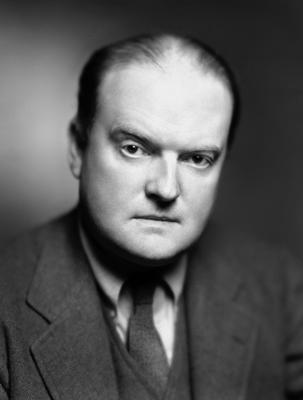 The Shores of Light and Classics and Commercials: By Edmund Wilson. Clive James, in an essay on Edmund Wilson, said something to the affect that as America’s pre-eminent, creative literary critic, Wilson was still new and it is still impossible to assess his greatness and impact on his times. However, it is possible to say these two collections which cover the Golden Years of modern American letters from the 1920s, 30s to 40s are essential to any judgment. Wilson, unlike a Harold Bloom, was a working journalist-critic (for much of his life for The New Republic and The New Yorker) and as such his influence was cumulative and immediate. For a real understanding of America’s radicalism and workers’ movement and how the literature of the times was affected, Wilson is essential.
His highest art is found in The Wound and The Bow and Axel’s Castle, yet both sprang from honing his ideas in magazine work, much like Clive James’ own career as a critic-journalist of the highest order. At the same time, this collection is a running commentary on the artists who illuminated the first half of the century and who to some extent have passed out of the scene except among specialists: Cummings, Upton Sinclair, Elinor Wylie, Firbank, Mencken, Dos Passos, Wilder, Strachey, Stein, Bernard De Voto, Edna St. Vincent Millay and others. It’s easy to forget or to have never known their value and impact, but going back and reading Wilson’s verdicts is charged with the vibrancy of those hugely creative decades of the 20s and 30s. From the 40s, one can feel the power of Van Wyck Brooks, John O’Hara, Saroyan, Steinbeck, Alexander Woolcott, Katherine Anne Porter, Paul Rosenfeld, Glenway Wescott and so many others. Reading Wilson on Hemingway and Fitzgerald is to understand their uniqueness and immediacy in ways now often closed from view.
Wilson was able to write so intelligently about the contemporary writers of his day because of his deep grounding in Early Greek and European works, and the collections include assessments of earlier masters.
James’ essay centers on Wilson’s own poetry and creative writing. You can see it here. But for Wilson’s true value as a critic, see these two collections and a third, The Bit Between My Teeth, which covers the 1950s and 60s.
Bedside books
Posted: November 11, 2012 Filed under: books, fiction, people, writing Leave a comment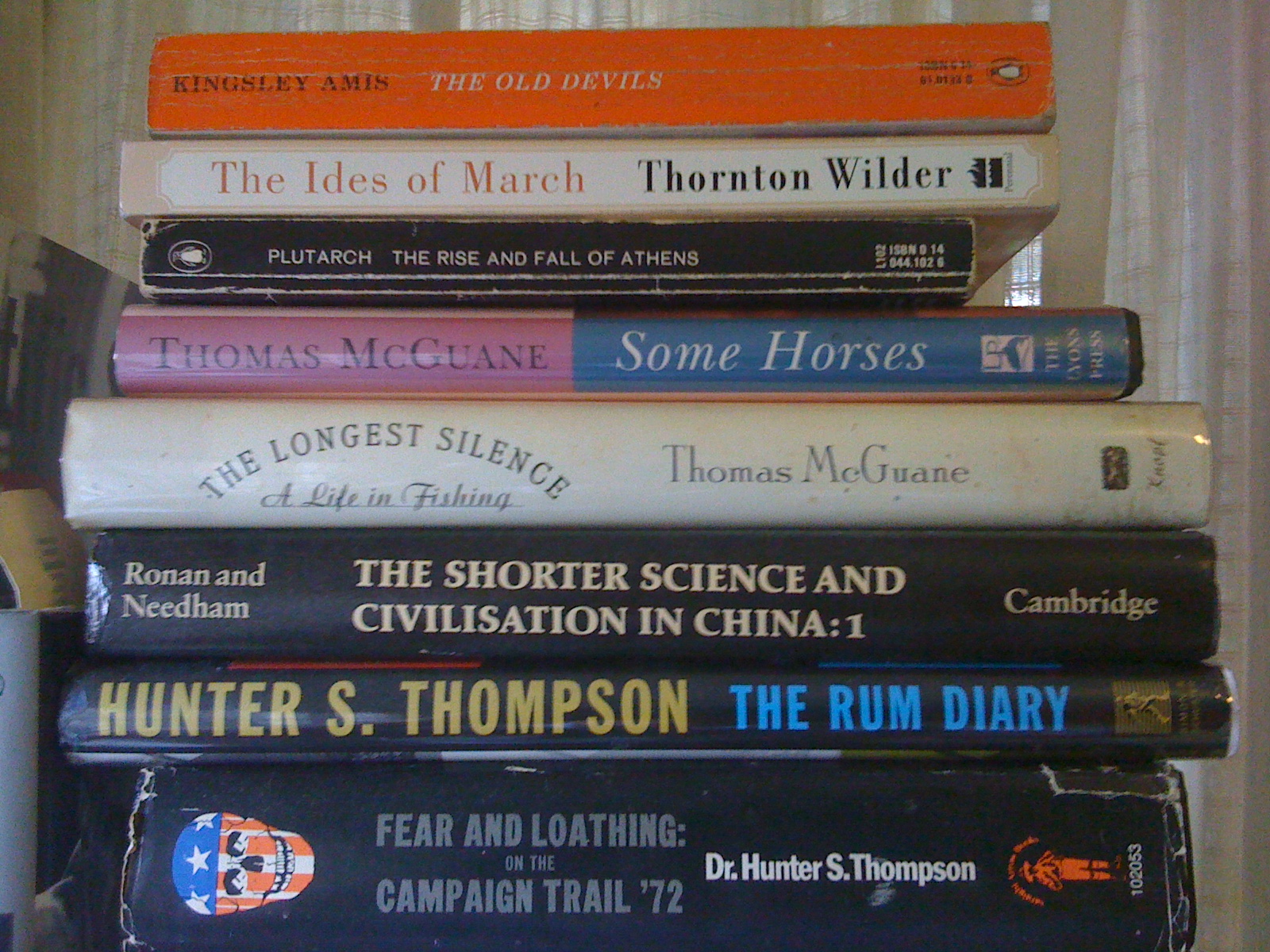
The Shorter Science and Civilization of China: 1 by Ronan and Needham: This is the condensed version of Needham’s classic history of China, starting at the beginning and focusing on the foundations of China’s developing religions.
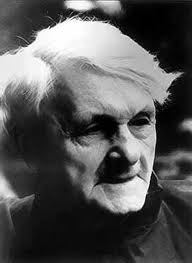
Joseph Needham
Needham is a story in himself. Wikipedia says: “Under the Royal Society‘s direction, Needham was the director of the Sino-British Science Co-operation Office in Chongqing from 1942 to 1946. During this time he made several long journeys through war-torn China and many smaller ones, visiting scientific and educational establishments and obtaining for them much needed supplies. His longest trip ended in far west in Xinjiang at the caves in Dunhuang at the end of the Great Wall where the first printed copy of the Diamond Sutra was found. The other long trip reached Fuzhou on the east coast, returning across the Xiang River just two days before the Japanese blew up the bridge at Hengyang and cut off that part of China. In 1944 he visited Yunnan in an attempt to reach the Burmese border. Everywhere he went he purchased and was given old historical and scientific books, which he shipped back to England through diplomatic channels and were to form the foundation of his later research. He got to know Zhou Enlai and met numerous Chinese scholars, including the painter Wu Zuoren, and the meteorologist Zhu Kezhen who later sent crates of books to him in Cambridge, including the 2,000 volumes of the Gujin Tushu Jicheng encyclopedia, a comprehensive record of China’s past.” The personal side: he remained married to his wife but had a Chinese “second wife” who lived on the same road in Cambridge as his wife for decades, with her knowledge, and whom he married after the death of his wife.
The Ides of March by Thornton Wilder: I’m now a dedicated Thornton Wilder fan. This historical novel is an imaginative recreation of the period before Caesar’s assassination told through the eyes of Caesar, his rivals, Cleopatra, Catullus, Cicero, conniving aristocratic women, famous actresses, Anthony and others. Wilder was a lifelong student of Classical Rome, and he inhabits the voices of his characters, weaving their stories, letters, diary entries and experiences together to recreate the life of Rome as effectively as we’re ever likely to experience it. I ordered his two other novels of the period, The Cabbala, and The Woman of Andros, plus his selected letters. A nice side story: Wilder spent a year and half in Douglas, Arizona, living anonymously, savoring the life of the local people, especially the nightlife and bar crowd that would cross the border to Agua Prieta at closing hour to continue the fun. It was a roisterous version of Our Town.

Douglas, Arizona, circa the period of Wilder’s sojourn
The Rum Diary by Hunter Thompson: His first novel, written at age 22, but delayed publication until not long before his suicide, is a revealing look at the well-spring of his talent. The novel is a solid piece of work and depending on the extent of later revision, a mystery as to why it wasn’t published earlier. Had it been published earlier, it might have done what he predicted at the time in a letter to a friend: it would, “in a twisted way,” do for the Caribbean what The Sun Also Rises did for Europe. Paul Kemp, age 35, is a vagabond journalist looking for a place to settle in, who sees the odd assortment of journalist has beens at the Puerto Rican newspaper that’s hired him sight unseen as what he secretly feared: a near crazy house mirroring the pretense, posing and fakery in the island’s culture at large. But, he can do his own good work anywhere, and he finds the odd misfits help keep his interests alive. A love triangle is handled realistically. The writing shows off his exuberant, tabloid-comic book adjectives, and his later trademark joy in exaggeration, satire and humor leavened by sharply outlined characters and scenes with a relentless pace.
The Longest Silence by Thomas McGuane: This is vintage McGuane essays on fishing, while framing his well-known descriptive talents. His personal and family life slowly unfold as the essays pile up, revealing a man at a slight remove from his children, who see his obsessions to know and to master his various interests with risible disinterest. If McGuane has a religion, it’s fishing and horses. He invests his fishing quest (South America, Iceland, Ireland, Canada, Mexico, Michigan, Montana and other locales) with all the hyper-sensory mystery surrounding Nature and the self, especially the mandatory attainment of accepting the outcome – win, lose or draw. It’s fishing as a source of the sublime, the unexpected, the inability to know anything concrete or take away anything that gives anyone an edge during the next roll of the dice. Nothing to take away to use again, except the relish to continue the quest and savor the experience. That’s a lot.
Some Horses by Thomas McGuane: I followed up with more essays by McGuane on his other passion: horses and competitive quarter horse roping. He says some years he won more prize money at roping competitions than he earned through his novels. His essay on Buster Welch, a West Texas quarter horse trainer, is worth the price of admission. The kernel of McGuane’s talent has always rested on his untouchable American traits.
The Old Devils by Kingsley Amis: This is the best description of old age I’ve ever read. It could as well be called The Old Friends. Really brilliant. It’s the first novel I’ve read by Martin Amis’s father. Wonderful dialogue and roguishness, with women characters fully the equal of his men characters. In fact, compared to the women, the men remain rather vague, except for Alun Weaver, an ex-TV celebrity who’s retired and become a professional Welshman eager to rejoin a group of old chums soaked in afternoon cocktails and sodden binges. His wife, Rhiannon, is the strongest – and most mysterious – character in the book. Death hangs over it all. Kingsley understands how to let the mask of humor slip to reveal desperate pathos, but life goes on thanks to the guise of British manners. The book celebrates the wear and the endurance that long friendships demand, and as death encircles everyone, why a momentary solace counts for all.
More dream poetry
Posted: October 27, 2012 Filed under: articles, books, people, poetry, writing Leave a commentAfter posting my dream poem (below this post), I was reading in Edmund Wilson’s The Shores of Light and enjoying immensely his hard edged judgements and wise takes on the likes of Hemingway, Thornton Wilder, Gertrude Stein, H.L. Mencken, Sherwood Anderson, W. H. Auden, Elinor Wylie, Edna S. Vincent Mallay, E.E. Cummings, Henry Miller, D.H. Lawrence and other writers of that era when American letters were finding a new footing. Wilson, besides his literary critcism, was a prolific writer on cultural life for The New Republic, and he captured the fleeting fervor surrounding communism and its prominence in American life during that era, which now seems the musings of a different civilization entirely.
Anyway, in the book I was surprised to see an essay on Dream Poetry.
Wilson wrote about dreams that produced poetry, citing examples, the most prominent of course was Coleridge’s Kubla Khan, which is said to have come to him in an opium-induced dream state. Most dream poetry is not high art, of course, and is in fact touched by an other wordly whimsy.
Wilson recorded one of his dream poems:
The human heart if full of leaks;
The human head is full of vapors.
The crows disband: the mandrake shrieks;
The scandal was in all the papers.
And this from an anonymous poet:
It’s white to be snow,
It’s cold to be ice,
It’s windy to blow,
And it’s nice to be nice.
And one by E.M. Forster:
I will put down Hastings, you shall see
Companion to India as a boat gnawed.
Forster’s is closer to most dream poetry, I think, in which the dreamer feels that the “as a boat gnawed” is touched by genius, only to awaken, recall the words, and shake his head in wonderment.
I wish Wittgenstein would have taken an interest in this phenomenon of language produced in a dream, rather than action stories, states of feelings, fantasies, etc.
Lester Bangs was one great writer
Posted: September 5, 2012 Filed under: articles, books, people Leave a comment
Lester Bangs
I just finished Lester Bang’s Psychotic Reactions and Carburetor Dung, which I’ve heard touted for years, and – well – tout away folks, because it’s one fine piece of rock ‘n roll literature. Edited by Greil Marcus, the sub-title is probably Marcus’: “The work of a legendary critic: Rock ‘n roll as literature and literature as rock ‘n roll”– it couldn’t be said any better than that. Lester died young, age 33, in 1982. Fundamentalist upbringing. Then became a student of excess, or at least obsession with creativity and giving people a way forward through the fog. One thing he knew how to do in spades – keep it real, and at all cost don’t fall for fan claptrap or think that gifted performers were different from the average person. They just had a particular talent. How he knew what he knew at such a young age is also the sign of a particular talent.
He wrote for Cream, the Village Voice and other publications. This collection covers his favorite bands (he couldn’t write about anything else, but things he liked ferociously): Elvis, Sun Records, Lou Reed, the Clash, the Blues, bands and singers I’d never heard of, and much, much more. What’s best is that he’s never writing just about music, he’s always writing about creativity, the Muse, artistic integrity, the scummy nature of most big rock stars and bands, the miracle of creative integrity, and himself, surely the most vivid writer-self to come through in a long, long time. He surveyed the field and he told himself, seriously, I think, he was the best of the breed writing for magazines during his time. I think he was close, very close.
Surely, Hunter Thompson’s early writing trumped Lester’s output by far, both in seriousness of topics and literary style. Lester stopped writing too early to really compare the two, certainly, but Lester’s seminal talent was the search for where the Muse lives, the ability to root for seriousness of purpose (even among the deranged), a concern for moral values, the ability to thrash away for more abundance in life. He knew how the lives of musicians were honey to the young. His music was his politics as politics was Hunter’s music.
Anyway, you can’t compare geniuses – they both were, so let’s just say we’re dealing with two of the finest social critic-reporters we had at the end of the last century.
Bedside Books
Posted: August 18, 2012 Filed under: articles, books Leave a comment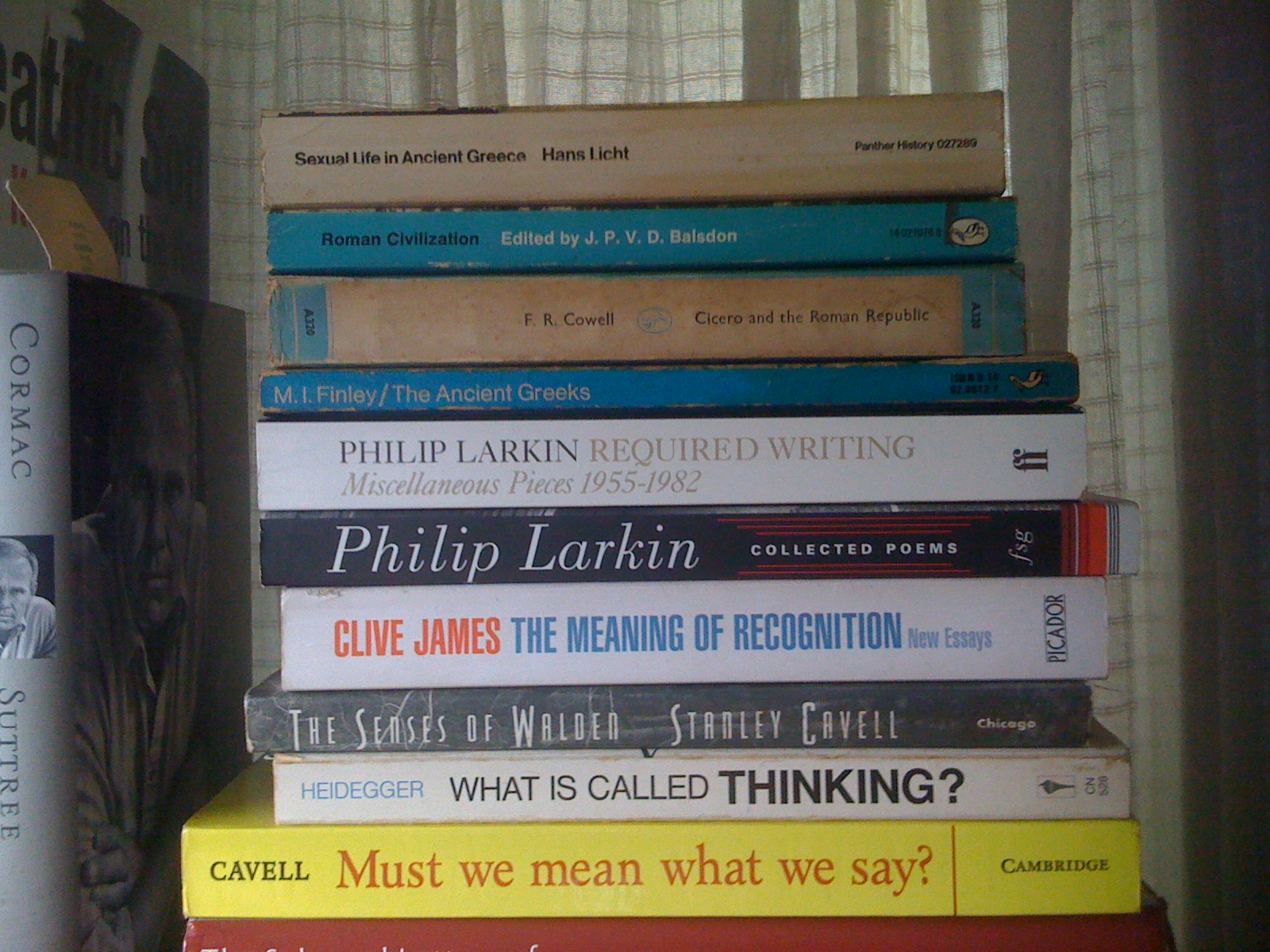
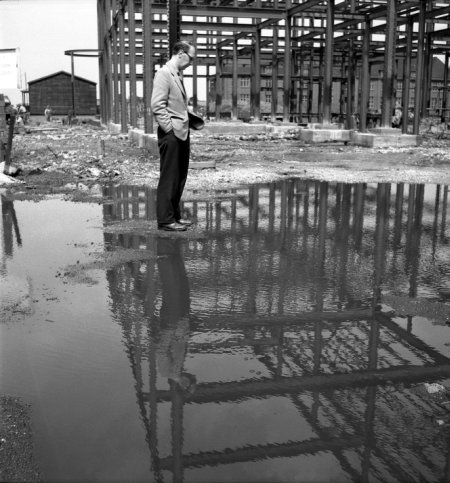
Philip Larkin took this self-portrait using the camera’s timer.
Required Reading by Philip Larkin: This collection of essays on poetry and literature, memories of his early life, and a sampling of his jazz writing clearly, in my mind at least, yokes Larkin with William Empson, or at least one aspect of Empson – their closely shared hard-minded approach to literary criticism. While they shared a fundamental view about naturalism and literary value, they expressed themselves totally differently and yet somehow, in the end, one comes out feeling the same about both men as writers and thinkers. Empson builds his cases on detailed exegesis while Larkin springs to the same spot without strewing a trail of literary shavings. What would have been the chemistry had they been in the same room? Would Larkin’s stoical nature have shrunk before Empson’s bizarre mental gymnastics? Would it have been a stoical and epicurean stand-off, or would they have smiled at the circularity of their approach, declaring a truce at some ground-zero level? Larkin covers a surprising amount of personal ground in these essays: Oxford, his days as a small town librarian, a great range of poetic esthetics, a surprising amount about Hardy (one of his favorites); it also includes his Paris Review interview and a long Guardian interview; all in all, very satisfying for a Larkin fan.
Roman Civilization edited by J.P.V.D. Balsdon: This collection of topics by scholars in the field underscores the profound influence of Roman law, administration and engineering on the modern world. While the Romans created little in the fields of literature, theater, philosophy or science, because of the earlier overdetermined brilliance of the Greeks, they did leave the world with a monumental gift: for a few golden centuries they were able to hold the competing forces of society together enough to show the world that the lower strata of society could be organized in such a way to benefit society at large without the two extremes and the middle wrecking the system. How much the daily openness of Rome itself and the intermingling of all classes of people contributed to the essence of Roman sensibilities is an interesting question. It was the antithesis of what’s happening in the US now, as partisans pollute the public discourse, which too often is in the hands of short-sighted nitwits with no practical sense. Classical Rome surely had its rogues, partisans, revolutionaries, privateers, all ready to raid the public coffers, or topple a government, but it also had exceptionally great legal minds, some military geniuses, and, more importantly, some great practical minds adroit in the art of compromise.
Cicero and the Roman Republic by F.R. Cowell: This is the book to read for an insight into how a great civilization unravels slowly over centuries. Cicero was, of course, an emblematic legal and literary figure in Rome. Cicero was profoundly influenced by the Golden Age of Rome two hundred years prior to his birth. A contemporary of Caesar, he clearly saw the loss of the Republic coming, he tried to stave it off, he acquiesced in many ways (a victim of his personality), and finally he paid for the failures of both Rome and himself with his life at the hands of assassins. He was an advocate of the sensible management of economic and political affairs to benefit the grand idea of “the people,” a belief that opens itself up to specious attacks from opportunistic figures on both the left and the right, the one-eyed partisans. Cowell is very wise. He pinned the tail on the donkey here, revealing what’s happening right now in the US political system and society. He probes the serious questions: were the defects in the faulty machinery of government, an unsound economic system, were the laws and courts unjust, all producing discontent, “or did the trouble spring from some deeper cause, traceable perhaps to some fundamental change in men’s attitudes toward life.? If so, was it a matter of alteration of social relationships between one class and another, between rich and poor, between the old families and fashionable society on the one hand and the unknown ‘common man’ on the other…Beyond all these possible sources of weakness was there a failure of old religious and moral beliefs and a decay of old habits that had in the last resort been the true source of the vitality of the State?” It’s been said repeatedly in history, Rome fell not because of an external enemy but to internal forces it had once subdued but could no longer control.
The Ancient Greeks by M. I. Finley: From whence did Rome spring? In many ways, from Greece, the civilization that was the other side of the Roman coin. In some ways, this book parallels the work of Cowell, taking you deep into the internals of Greek society, culture and the essence of the lives of emblematic figures. You are left with the knowledge that Greece was simply many countries trying to act as one, something it could only obtain with an exceptionally strong leader, such as Alexander, who was a Macedonian, and who relied primarily on his own generals rather than surrounding himself with Greeks. Finley is wonderful on Greek philosophy, Socrates, science, sculpture, Athens, Sparta and stoicism. In spite of its brevity, this work should be read last in any study of Greek life, because its insights and conclusions carry such great weight. I am already eager to reread it.
Sexual Life in Ancient Greece by Hans Licht: What an education you receive about Greece by looking at the role of the human figure in Greek culture, marriage, sex, prostitutes, religion, the role of love between men, women and various combinations thereof. Never has a country had such a wide open sexual culture; sex was a component of so much of Greece’s religious life, if not on the surface, then embedded in the ritualistic practices. Simply put, there were almost no taboos in Greek sexual life, and the higher courtesans offered intellectual companionship as well as physical pleasure to their client/s. The elite courtesans rose to the highest ranks as close associates of political leaders, scientists, philosophers and the artists of the day. Licht was a prodigious researcher with an encyclopedic grasp of Greek literature and visual arts, and he uses his skills so thoroughly that you receive a detailed survey of the literary and visual arts and how sexuality was used by writers and artisans in portraying Greek life. This book can’t be ignored; its exacting scholarship is far from prurient. If equal studies were done for other major civilizations, history would make more sense, but such a corrective is unlikely to come at this late date. One shivers at the prudery of most Western countries today. One sees how Freud mined Greek thought and scholarship in assembling his theories of sexuality. The role of hetairae, or female prostitutes, through the scholarly skills of Licht, are given a well-deserved central place in Greek society, a place they have rarely shared in societies before or since.
gary snyder interview: know nature
Posted: July 29, 2012 Filed under: articles, books, buddhism, people Leave a comment
A Gary Snyder interview I did more than a year ago that appeared in the The Kyoto Journal #76 issue in July 2012 is here.
Martin Amis: ‘What a country!’
Posted: July 5, 2012 Filed under: books, people Leave a comment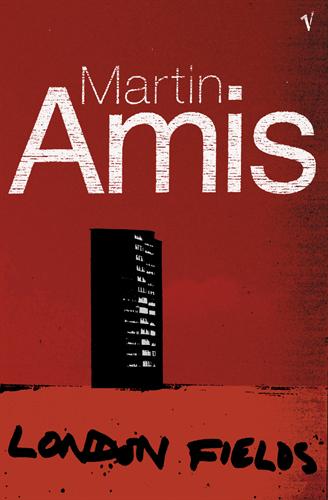
There’s been a rash of stories about British novelist Martin Amis and his move to Brooklyn, which isn’t surprising to anyone who has followed his career. When Kingsley Amis was teaching at Princeton for one year when Martin was a child, on Christmas Kingsley gave his son a present of firecrackers. “What a country!” thought young Martin. For a full lineup of interviews over the years and lots of other good information, his official website is here. Amis is now in the hometown of Whitman, Miller and Mailer.
Bedside Books
Posted: June 8, 2012 Filed under: books, fiction, people Leave a comment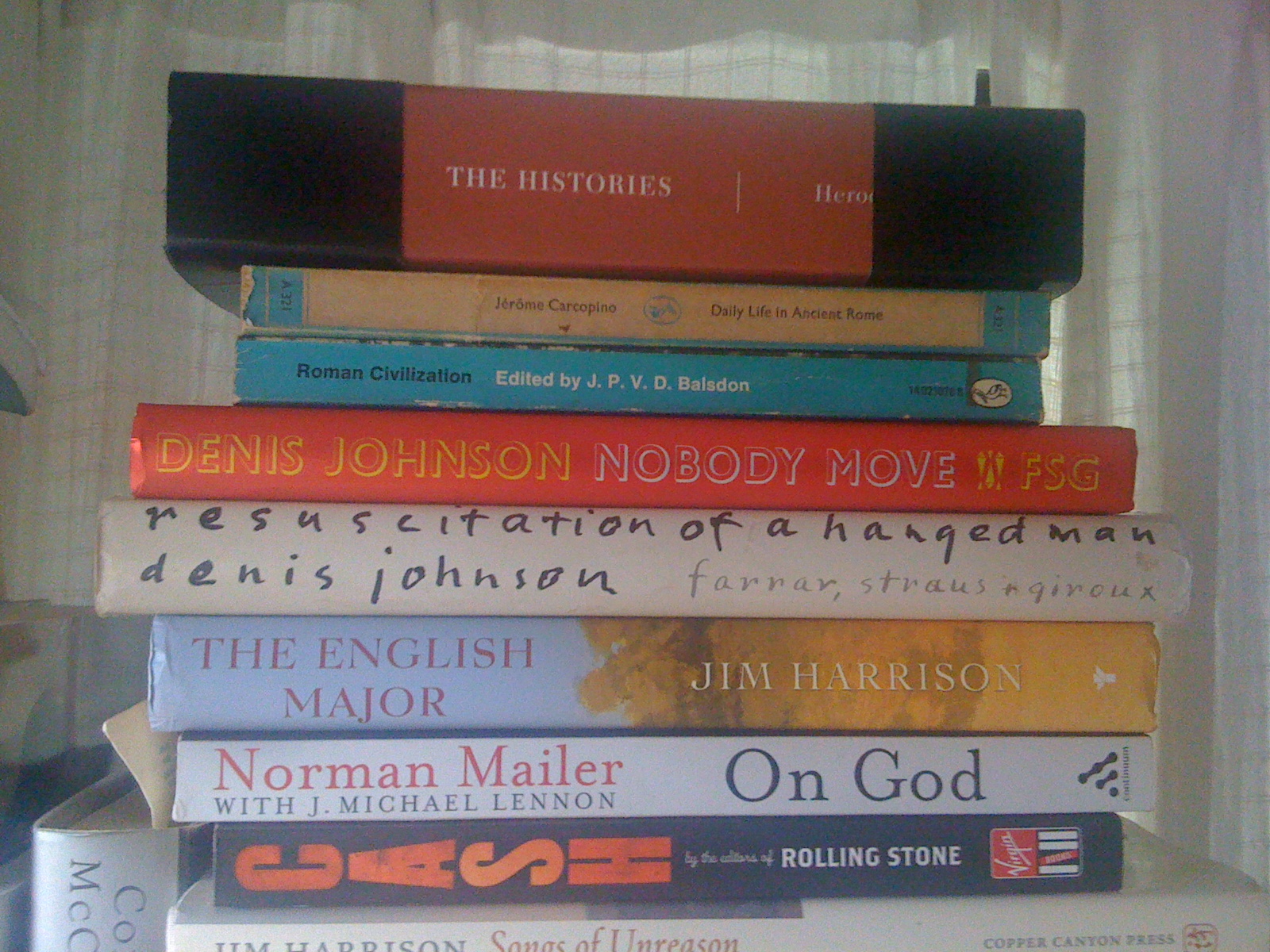
Nobody Move & Resuscitation of a Hanged Man by Denis Johnson – Both of the men in these two novels are specialties of Johnson: flawed souls who could fall apart in uncountable ways because their lives have been lived on the other side of normal sensibility for too long. In Nobody Move, a darker than dark crime noir, Jimmy Luntz discovers he can pull the trigger – kill people. He’s taken up by Anita, “another class of person,” a woman way too good for him, a rare beauty, an American Indian who has entered the world of the “other” people. That means both us and a world we can’t see, but she can. She has stunning beauty masking strength, a real aphrodisiac. She talks to spirits. She is braver than brave. She sees into Jimmy’s soul and figures what the hell, he’ll keep her alive for a while longer or die trying. This is Johnson in a stripped down prose, non-stop action, real suspense, everything – as always in his writing – charged and alive. There couldn’t be a better dark jaunt with two desperate, fascinating losers. Real fear – or is it empathy – arose when I read this tale. Of course, you want to rescue Anita, you don’t want her to go away, but…this is crime noir in spades. Good stuff involving bikers and people who collect money for gamblers and loan sharks and drug dealers. Oh, yes, Luntz sings in a Barbershop Chorus. It’s set around Bakersfield, California, and the Feather River – need I say more. Ok, more…at the end, we’re not sure if Anita dies. They might reunite, but they’ve been, as some say, through a grinder turned by some very bad people.
In Resuscitation of a Hanged Man, Leonard English drives into Provincetown on Cape Cod to start a job as a radio disk jockey and private detective with no experience in either. Men on the street are wearing skirts. He falls for Leanna, a beautiful gay woman he’s assigned to follow, and she’s attracted by his deep communion with God, or what God might radiate if He wanted to bring people to his side, as Lenny might say. Lenny has saintly, apocalyptic visions in which the entire world is charged with God’s spirit, which ultimately leads him to shoot the hat off the local Catholic bishop, or so he imagines. This is Johnson loading up the deck with opposing symbols: sexuality, faith, love and reality. In another life, Leonard must have followed Moses into the desert and enjoyed every minute of it. Normal life in other words is sorely lacking all around, a big disappointment if God is real. He can’t decide. Why all the waiting around? To survive, Leonard has focused his attention on attention itself, and he’s wired into everything around him save for the ability to live a normal life. Again, this is a type of character that Johnson can do better than anyone. At some point, Johnson discovered that he could write about the feelings of consciousness, not the normal feelings consciousness produces but the feeling of feelings themselves. Hard to explain, but I’ve often felt drunk or stoned when reading Johnson as he gets into the mind of these type of people, and I guess that’s the highest tribute I could pay him (no pun there, right?). I’m included in a place few writers can create. I’m not sure if it erases literature and exposes life or if life is erased exposing the power of words. Johnson’s ability to handle people who experience spiritual feelings reminds me of Norman Mailer, another writer who treated spirituality and God with real seriousness. I’ve also just finished On God, a conversation with Mailer with promptings by J. Michael Lennon. It would have been something to have brought Mailer and Johnson together to talk about some of these matters and how they can play out in people’s lives. Mailer was a Manichean gnostic; Johnson, I think, is probably religious in the sense that he is drawn to the mystery, or else he’s in deep as a practicing born-again Christian. Both men shun religion in the hands of institutions, as well-intentioned as some of them are, but we know from history many have not been well-intentioned as they went forward. Mailer speaks revealingly of the role of ceremony. Johnson has pegged the disturbed fringes, and the loners, as where the most inspired God-seekers reside. That reminds me of Updike’s Lillies of the Field, which has a wonderful section on people who ban together in search of God, as in Waco, Texas, many years ago, one of a long list of apocalyptic callings.
The English Major by Jim Harrison – Back to Jim Harrison again, and in this novel he’s on a roving romp. The character Cliff (as in fallen off) is who Denis Johnson’s flawed lost souls would be if they could get a ticket to a normal life. Cliff gets by. A normal guy, not brilliant, but smarter than most, not full of himself because he’s had too much of a normal life, lacking in a wide range of experiences which he’s now ready to rectify because he finds himself recently divorced and free to wither away or flourish at 60 years old. Is it too old to live out some fantasies? No way…he’s soon driving across America with a former high school student he taught some 20 years ago. His ambition is to travel to all the states and to rename them and their state bird. It’s a grand, large project and Cliff carries it off with aplomb while Harrison drops his perennial wisdom gems for over preened souls: get out of your chair, eat something different, roll the dice of life and double down till you win or understand something valuable. Harrison has perfected a style that rests partially on his non-stop ability to unfurl the discursive in-the-moment workings of Cliff’s mind. Cliff, it turns out, has been selling himself too cheap, and there’s a glimmer toward the end that at 60 he still has something to offer younger, attractive women, but that intimation is left as is, and he rolls back to where he started in life, into his mother and grandmother’s abandoned home, an adventure ended that has shown him he’s ready to knock on new doors, and he’s not nearly the same person as when he set out. Being on the road is a good thing indeed.
Daily Life in Ancient Rome by Jerome Carcopino – We leave the Roman consuls and dictators behind in this wonderful book of daily life in the Roman Republic in the second century A.D. This is a type of history that we need more of, as my friend Red Pine says, taking us to the places where significant things occurred. It’s one thing to read about the exploits of the grand names of Roman history and quite another to read about the non-exploits of the nameless in history, where most history really takes place. To read the story of Rome’s evolution as a city, the nature of its streets, its apartments, its shops, its public baths, the theater, the public forums, the nature of education, prostitution, marriage, sexuality, religion, the morning routine after awakening, breakfasts and the evening meals, the nature of clothing, the look of the sleeping quarters, the kitchen, it all adds up to create a living backdrop where the betrayals and bravery of the Roman elite are played out. It brings far away quite close.
Red Pine in New York Review of Books
Posted: May 30, 2012 Filed under: books, buddhism, people, poetry Leave a comment Red Pine, aka Bill Porter, has a couple of new books underway in various stages of completion. An article in the New York Review of Books runs down his latest activities, including the receipt of a Guggenheim grant, which is so well deserved.
In the NYRB article, he was asked by a Chinese man to explain what is Zen:
“Zen is like a cup of tea,” he replied “On one level you can see the teacup and you can admire it. You can look at the tea and admire it and its flavor. But then you have to drink it. When you drink it you have the real cup of tea. But what is it? It’s gone: it’s the memory of the taste, the sensation in your mouth.
“China has a great Olympics program but not everyone in China should train for six hours a day. Likewise, being a hermit is not for everyone. It’s like spiritual graduate school.
“You spend most of your time chopping firewood and hauling water. This becomes part of your practice. Many people go in the spring and leave in the autumn. They don’t have the spiritual practice to sustain them during the winter.
“A man, somewhat perplexed, stood up: “You are a westerner, of course, and in the United States Christianity is the main religion. But you practice Buddhism. Can you explain why?”
“Porter paused for a few seconds, sensing that the man might be one of China’s burgeoning ranks of Christians. Then he said, “Christianity asks you to believe in things that you can’t see: that there’s a god, that he had a son and so on. In Buddhism there is that too—there’s a paradise and so on. But in Zen Buddhism it’s mainly about your mind and your heart. You believe in something that is in your heart. That is something not abstract but real.”
Porter has completed a book on the Silk Road, and he’s working on another travel book about early Chinese poets.
 the roy hamric journal