
Lincoln portrait by Matthew Brady
Posted: May 16, 2011 Filed under: people, photography Leave a comment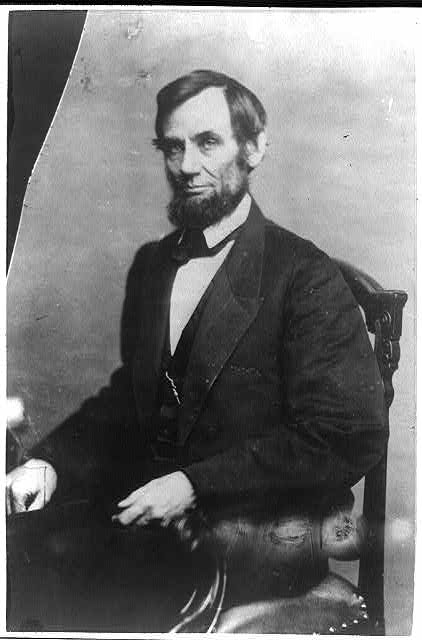
Portrait taken by an assistant to Matthew Brady
Walt Whitman in Specimen Days: “Probably the reader has seen physiognomies (often old farmers or sea captains) that, behind their homeliness, or even ugliness, held superior points so subtle, yet so palpable, making the real life of their faces almost as impossible to depict as a wild perfume or fruit taste, or a passionate tone of the living voice — and such was Lincoln’s face, the peculiar color, the lines, the eyes, the mouth. Of technical beauty it had nothing — but to the eye of a great artist it was a rare study, a feast and fascination.”
Kerouac wrote Dharma Bums in this house
Posted: May 14, 2011 Filed under: books, people, places Leave a comment
Jack Kerouac lived in this house with his mother in Orlando, Florida, for a little more than one year. While there, in a burst of memory-writing he wrote Dharma Bums. The house is now a writer’s retreat and is maintained by a nonprofit group that needs funds. For a nice story on the house and group by Carolyn Kellogg , click here. To hear Kerouac sing Ain’t We Got Fun, click here. Thanks, Carolyn Kellogg.
Thomas Merton’s photograph of God
Posted: May 13, 2011 Filed under: buddhism, people, photography Leave a comment
Thomas Merton named this photograph “The Sky Hook,” but he wrote, “It is the only known picture of God.” See my essay Thomas Merton: Looking Through the Window in the On the Record listing.
getting to know you, getting to know all about you
Posted: May 11, 2011 Filed under: articles, people, states of mind Leave a comment Getting to know, or thinking that you know, anyone is not easy, particularly so in a different culture where it can be a mysterious and often frustrating experience. A philosopher of language, Ludwig Wittgenstein knew it was normal for most people to go around believing that they understood what other people were saying simply because of the words they used, but he also knew that really understanding what anyone says is a difficult task that requires work and thought. Especially so in dealing with people whose background or culture is vastly different, truly foreign. At one place he says:
One human being can be a complete enigma to another. We learn this when we come into a strange country with entirely strange traditions; and, what is more, even given a mastery of the country’s language. We do not understand the people. (And not because of not knowing what they are saying themselves.) We can not find our feet with them.
The word in German that was translated as “feet” actually employs an idiom that literally says: We can not find ourselves in them. Of course, we can’t find ourselves in anyone period, but his point underscored the dangers of assuming you understand correctly or were understood correctly, or that everyone is feeling, seeing, agreeing or disagreeing based on the same perceptions or assumptions and even if they were, words and language have to be used with as much simplicity, precision, patience and humility as we can muster.
Ian McEwan on Updike
Posted: May 4, 2011 Filed under: books, fiction, interviews, people Leave a commentMcEwan was interviewed on some of his favorite books, and he launched into an appreciation of John Updike. He’s called him ‘the greatest novelist writing in English at the time of his death’.
Interviewer: What is it about Updike that deserves that praise?

Rabbit At Rest
McEwan: Great sentence-maker; extraordinary noticer; wonderful eye for detail; great fondler of details, to use Nabokov’s phrase. Huge comic gift, finding its supreme expression in the Bech trilogy. A great chronicler, in the Rabbit tetralogy, of American social change in the 40 years spanned by those books. Ruthless about women, ruthless about men. (Feminists are wrong to complain. There’s a hilarious streak of misanthropy in Updike). He reminds us that all good writing, good observation contains a seed of comedy. A wonderful maker of similes. His gift was to render for us the fine print, the minute detail of consciousness, of what it’s like in a certain moment to be another person, to inhabit another mind. In that respect, Angstrom will be his monument.
And it goes on…click here to read the full interview.
Thoreau’s koan
Posted: April 25, 2011 Filed under: buddhism, people, states of mind Leave a comment
“I long ago lost a hound, a bay horse and a turtle dove, and am still on their trail. Many are the travelers I have spoken to concerning them, describing their tracks and what calls they answered to. I have met one or two who have heard the hound and the tramp of the horse and even seen the dove disappear behind a cloud, and they seemed as anxious to recover them as if they had lost them themselves.”
lunch with Harold Bloom
Posted: April 22, 2011 Filed under: articles, books, interviews, people Leave a comment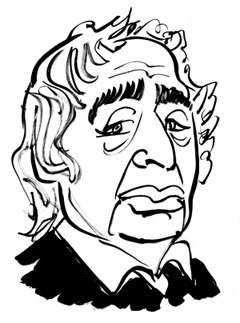
At 80, critic Harold Bloom says he should have departed this world seven times by now, but thank goodness he hasn’t. His 39th book, The Anatomy of Influence: Literature as a Way of Life (published this month by Yale), is due out now. For a dash of Bloomian spirit, see this lunchtime interview in Vanity Fair, click here. Along with Stanley Cavell, Bloom is the best guide to Emerson that we have, and he calls Emerson, in this interview, the “best mind ever to come out of America.”
Where does good come from?
Posted: April 20, 2011 Filed under: people, states of mind Leave a comment The biologist, E. O. Wilson, is ready to launch another revolution in understanding how humans are made up and why they do what they do. Currently, he’s convinced that genetic predisposition (DNA) drives humans to form groups and that altruistic acts that could even threaten one’s own survival are a result of DNA, rather than a product of the reigning biological theory of “kin survival,” which says humans make altruistic sacrifices for kin in a self-interested way, i.e. to preserve those closest to them. A fierce fight is developing, which takes us into the heart of whether morality is somehow embedded in the human instinct, or not. What’s at stake here is the old issue of nature vs nurture; is morality in some way a part of our genetic DNA make up or is it culturally derived? There are a lot of slippery slopes, but I’m betting on Wilson. For a good article summarizing the issues involved, click here.
from the Edge
Posted: April 17, 2011 Filed under: articles, people Leave a commentThe Edge website: Here’s a sample of the quality of input re: the nuclear disaster in Japan:
The Nuclear Accident in Japan & Systemic Risk
J. DOYNE FARMER Chaos Theory Pioneer; McKinsey Professor, Sante Fe, Institute; Co-Founder, former Co-President of The Prediction Company
 “The prognosis for nuclear accidents based on simple historical extrapolation is disturbing. After roughly 14,000 cumulative years of nuclear plant operation, we have now had three major accidents. If we ramp up nuclear power by a factor of ten, which is necessary to make a significant contribution to mitigate global warming, we will increase from the 442 reactors that we currently have to about 5000. Historical extrapolation predicts that we should then expect an accident of the magnitude of the current Japan disaster about once a year.
“But I don’t trust the historical method of estimating. Three events are unlikely to properly characterize the tails of the distribution. My personal choice for a really nasty nuclear scenario goes as follows: Assume the developed world decides to ramp up nuclear power. The developing world will then demand energy independence and follow suit. For independence you need both reactors and fuel concentrators. There will be a lot of debate, but in the end the countries with stable governments will get them. With a fuel concentrator the waste products of the reactor can be used to make weapons grade fuel, and from there making a bomb is fairly easy. Thus, if we go down the path of nuclear expansion, we should probably assume that every country in the world will eventually have the bomb. The Chernobyl disaster killed the order of ten thousand people: A nuclear explosion could easily kill a million. So all it will take is for a “stable government” to be taken over by the wrong dictator, and we could have a nuclear disaster.
“I’m not an actuary, so you shouldn’t trust my estimates. To bring the actuaries into the picture, anyone who seriously advocates nuclear power should lobby to repeal the Price-Anderson Act, which requires U.S. taxpayers to shoulder the costs of a really serious accident. The fact that the industry demanded such an act suggests that they do not have confidence in their own product. If the act were repealed, we would have an idea what nuclear power really costs. As it stands, all we know is that the quoted costs are much too low.
“Danger is not the only property that makes nuclear power exceptional. Even neglecting the boost in cost that would be caused by repeal of the Price-Anderson Act, the cost curve for nuclear power is remarkable. My group at the Santa Fe Institute has collected data on the cost and production of more than 100 technologies as a function of time. In contrast to all other technologies, the cost of nuclear power has roughly remained constant for 50 years, despite heavy subsidies. This cannot be blamed entirely on the cost of safety and regulation, and after Japan, is anyone really willing to say we shouldn’t pay for safety? In contrast, during the same period solar power has dropped by a factor of roughly a hundred, making its current cost roughly equal to nuclear. Wind power is now significantly cheaper than nuclear. Solar will almost certainly be significantly cheaper than nuclear within a decade, roughly the time it takes to build a nuclear plant.”
Let’s hope the disaster in Japan puts the stake through the heart of the nuclear power plant industry. General Electric should be working now to dominate the solar, wind and wave energy systems of the future, because that’s clearly the road we’re going down from now on. People simply will no longer trust the folks who say nuclear engineering is fail safe, when failure, probable failure, has such dire consequences, not to mention Farmer’s realistic fear about the problem of nuclear waste and how it can be reprocessed to build atomic weapons.
john jeremiah sullivan
Posted: April 2, 2011 Filed under: books, people, writing Leave a comment JJS, that would be John Jeremiah Sullivan, writes about DFW, that would be David Foster Wallace’s posthumous novel The Pale King, read Death coming for our spirits, in an essay in GQ that hits the target and goes right through it to the other side, leaving you with some certainty that DFW, who is often called a “generational writer,” (which underrates his importance), has been deciphered, but of course that’s creating another fiction, and this is sounding a bit like DFW so check out the essay here, because it’s a watermark in appreciation. The bits about Cormac McCarthy are interesting, as if DFW saw him as his polar opposite, a writer trying to create mountains in a sea of sand. In sections of the uncompleted novel, DFW pays homage to McCarthy’s high-art prose style, or he recognizes its usefulness in shrouding everything in nobility. The photograph shows DFW’s jottings on a book from his library, which is now in the DFW collection at the University of Texas.
 the roy hamric journal