
Dylan’s Speech On Songwriting
Posted: March 21, 2015 Filed under: music, people, writing Leave a comment
Dylan accepting his award, standing beside Jimmy Carter.
Bob Dylan gave a revealing speech in February when he accepted the MusicCares award, discussing how he approached songwriting, how songs might come to him, authenticity, influences, and his original journey into greatness. The transcribed speech is here:
“I’m glad for my songs to be honored like this. But you know, they didn’t get here by themselves. It’s been a long road and it’s taken a lot of doing. These songs of mine, they’re like mystery stories, the kind that Shakespeare saw when he was growing up. I think you could trace what I do back that far. They were on the fringes then, and I think they’re on the fringes now. And they sound like they’ve been on the hard ground.
“I should mention a few people along the way who brought this about. I know I should mention John Hammond, great talent scout for Columbia Records. He signed me to that label when I was nobody. It took a lot of faith to do that, and he took a lot of ridicule, but he was his own man and he was courageous. And for that, I’m eternally grateful. The last person he discovered before me was Aretha Franklin, and before that Count Basie, Billie Holiday and a whole lot of other artists. All noncommercial artists.
“Trends did not interest John, and I was very noncommercial but he stayed with me. He believed in my talent and that’s all that mattered. I can’t thank him enough for that. Lou Levy runs Leeds Music, and they published my earliest songs, but I didn’t stay there too long.
“Levy himself, he went back a long ways. He signed me to that company and recorded my songs and I sang them into a tape recorder. He told me outright, there was no precedent for what I was doing, that I was either before my time or behind it. And if I brought him a song like “Stardust,” he’d turn it down because it would be too late.
“He told me that if I was before my time — and he didn’t really know that for sure — but if it was happening and if it was true, the public would usually take three to five years to catch up — so be prepared. And that did happen. The trouble was, when the public did catch up I was already three to five years beyond that, so it kind of complicated it. But he was encouraging, and he didn’t judge me, and I’ll always remember him for that.
“Artie Mogull at Witmark Music signed me next to his company, and he told me to just keep writing songs no matter what, that I might be on to something. Well, he too stood behind me, and he could never wait to see what I’d give him next. I didn’t even think of myself as a songwriter before then. I’ll always be grateful for him also for that attitude.
“I also have to mention some of the early artists who recorded my songs very, very early, without having to be asked. Just something they felt about them that was right for them. I’ve got to say thank you to Peter, Paul and Mary, who I knew all separately before they ever became a group. I didn’t even think of myself as writing songs for others to sing but it was starting to happen and it couldn’t have happened to, or with, a better group.
“They took a song of mine that had been recorded before that was buried on one of my records and turned it into a hit song. Not the way I would have done it — they straightened it out. But since then hundreds of people have recorded it and I don’t think that would have happened if it wasn’t for them. They definitely started something for me.
“The Byrds, the Turtles, Sonny & Cher — they made some of my songs Top 10 hits but I wasn’t a pop songwriter and I really didn’t want to be that, but it was good that it happened. Their versions of songs were like commercials, but I didn’t really mind that because 50 years later my songs were being used in the commercials. So that was good too. I was glad it happened, and I was glad they’d done it.
“Purvis Staples and the Staple Singers — long before they were on Stax they were on Epic and they were one of my favorite groups of all time. I met them all in ’62 or ’63. They heard my songs live and Purvis wanted to record three or four of them and he did with the Staples Singers. They were the type of artists that I wanted recording my songs.
“Nina Simone. I used to cross paths with her in New York City in the Village Gate nightclub. These were the artists I looked up to. She recorded some of my songs that she [inaudible] to me. She was an overwhelming artist, piano player and singer. Very strong woman, very outspoken. That she was recording my songs validated everything that I was about.
“Oh, and can’t forget Jimi Hendrix. I actually saw Jimi Hendrix perform when he was in a band called Jimmy James and the Blue Flames — something like that. And Jimi didn’t even sing. He was just the guitar player. He took some small songs of mine that nobody paid any attention to and pumped them up into the outer limits of the stratosphere and turned them all into classics. I have to thank Jimi, too. I wish he was here.
“Johnny Cash recorded some of my songs early on, too, up in about ’63, when he was all skin and bones. He traveled long, he traveled hard, but he was a hero of mine. I heard many of his songs growing up. I knew them better than I knew my own. “Big River,” “I Walk the Line.” “How high’s the water, Mama?”
I wrote “It’s Alright Ma (I’m Only Bleeding)” with that song reverberating inside my head. I still ask, “How high is the water, mama?”
“Johnny was an intense character. And he saw that people were putting me down playing electric music, and he posted letters to magazines scolding people, telling them to shut up and let him sing. In Johnny Cash’s world — hardcore Southern drama — that kind of thing didn’t exist. Nobody told anybody what to sing or what not to sing. They just didn’t do that kind of thing. I’m always going to thank him for that. Johnny Cash was a giant of a man, the man in black. And I’ll always cherish the friendship we had until the day there is no more days.
“Oh, and I’d be remiss if I didn’t mention Joan Baez. She was the queen of folk music then and now. She took a liking to my songs and brought me with her to play concerts, where she had crowds of thousands of people enthralled with her beauty and voice.
“People would say, “What are you doing with that ragtag scrubby little waif?” And she’d tell everybody in no uncertain terms, “Now you better be quiet and listen to the songs.” We even played a few of them together. Joan Baez is as tough-minded as they come. Love. And she’s a free, independent spirit. Nobody can tell her what to do if she doesn’t want to do it. I learned a lot of things from her. A woman with devastating honesty. And for her kind of love and devotion, I could never pay that back.
“These songs didn’t come out of thin air. I didn’t just make them up out of whole cloth. Contrary to what Lou Levy said, there was a precedent. It all came out of traditional music: traditional folk music, traditional rock ‘n’ roll and traditional big-band swing orchestra music.
“I learned lyrics and how to write them from listening to folk songs. And I played them, and I met other people that played them back when nobody was doing it. Sang nothing but these folk songs, and they gave me the code for everything that’s fair game, that everything belongs to everyone.
“For three or four years all I listened to were folk standards. I went to sleep singing folk songs. I sang them everywhere, clubs, parties, bars, coffeehouses, fields, festivals. And I met other singers along the way who did the same thing and we just learned songs from each other. I could learn one song and sing it next in an hour if I’d heard it just once.
“If you sang “John Henry” as many times as me — “John Henry was a steel-driving man / Died with a hammer in his hand / John Henry said a man ain’t nothin’ but a man / Before I let that steam drill drive me down / I’ll die with that hammer in my hand.”
“If you had sung that song as many times as I did, you’d have written “How many roads must a man walk down?” too.
To continue, click here.
Bedside Books
Posted: March 20, 2015 Filed under: articles, books, people, states of mind | Tags: Alcibiades, Empress Theodora, Greek and Roman history Leave a commentTwo more books completed on the classical world of Greece and Rome: Celebrity in Antiquity: From Media Tarts to Tabloid Queens by Robert Garland; Duckworth, 2006.
With the growth of cities and states, renown was bestowed on those who stood out in various ways: by the exercise of power, their beauty, their role as soldiers, their exploits on fields of sports or survival in physical contests of strength, their ability to speak or do science or philosophy, or their virtue. In the Greek and Roman worlds, such people were fodder for books, pamphlets, broadsides, letters, graffiti, statues and paintings. Garland is adept at capturing the traits of such figures, their characters, and making deft comparisons to present day celebrities. He firmly establishes the premise that history does repeat itself over and over, and, yes, we learn nothing from it, or too little to make a difference.
Caesar (circa 50 BC) was the Great Populist of his era, a genius at rallying the plebs, the lower classes, who looked to him as their patron, who protected them from the equestrian class, the “equities,” (think political, financial power brokers). He was one of the first to write his own autobiography of military exploits (in a most generous light), though he cleverly used the third person. His assassins fled the city and country, while the people canonized him into posterity.

Alcibiades
Alcibiades (450 BC), a prominent Athenian statesman, orator, and general, was renown for his aristocratic charisma, his bad boy image, his bisexuality (as was Caesar), his lust for courtesans, his beauty (Plato said he proposition Socrates who turned him down), his lack of scruples, his scandals, his drinking in the morning, his style of effeminate dress, and the decoration of his military shield with the word “Eros.”
His private life became a subject of public obsession until finally he fell from grace, but not before setting a pattern of privilege – and public forgiveness – for people who possess an ability to hold the public eye through sheer force of talent, personality and presence.
Sports, the theater and the arts were the pathway for ordinary people to rise to celebrity status in the ancient world. To be the most successful actor, wrestler, runner, chariot driver, courtesan, or musician led to great wealth and fame.
The symbiosis between sports and entertainment celebrities and the elite and governing class was exemplified by the Emperor Nero, who lusted to be recognized as a sports and entertainment figure. Ruler of the world wasn’t enough.
Garland writes: “Such was Nero’s eagerness to acquire celebrity status that his portrait head on coins for the year AD 64 may actually have been influenced by the hairstyle of actors or charioteers…there was more to Nero’s craving for public attention than meets the eye, for it enabled him to present himself to his subjects as a popular idol. The goodwill of the plebs was in fact vital to him, as he received little support from the army, or from the senatorial class or the equestrian order.”
Sophists and philosophers, for a brief time, were celebrities. Many gave public symposia and workshops, making great sums of money. Socrates did not. But he attracted a fascinating number of followers, from both the aristocratic and lower classes, who attended his informal gatherings.
Alcibiades said: “Whenever I listen to him, my heart beats faster than a Corybant [a Whirling Dervish]…and I see that he has the same effect on many others.”
Another branch of charismatic celebrities that extends into the present day were the hucksters of every stripe and character. Alexander of Abonuteichos set up a lucrative, prosperous “oracle shrine” around 250 AD. Lucian scourged him as “equally adept in lying, guile, perjury, malice, plausibility, audaciousness, cunning, determination, con-artistry, and hypocrisy.” Alexander predicted the future, performed healings, and promised blessings in the hereafter after conveying secret mysteries.

Empress Theodora
The greatest show business celebrity ever to rise to the top was Theodora, who as a youth appeared in the theater performing sexual acts and was a notorious prostitute, yet she donned the royal purple robe to become Empress Theodora (circa 540 AD) after Emperor Justinian took her as his wife.
Her story was known throughout the classical world, and she had a devoted following of plebs much greater but akin to Eva Peron in her day. Theodora was a sexually liberated woman who used her beauty, wit – and intelligence – to rise above the rawest demimonde of poverty she was born into to be crowned empress. Justinian was devoted to her throughout his life.
Rome: The Autobiography edited by Jon E. Lewis; Robinson, 2010.
This is a rich collection of original writing by key figures, historians, aristocrats, literary artists of the day and common folk, ranging from 753 BC to 565 AD Why did these two cultures flower so grandly and others languish? I have no answer, and – other than platitudes and conjectures – neither does anyone else.
History is an amalgamation of discreet acts and lives that collectively extend beyond the individual and allow us to look at ourselves. Assembled wisely, it can tell us a story about human nature. Classical Greece and Rome offer us a story writ large over time. Take Socrates’ life, for example. It was exemplary, yet a judge and jury saw otherwise. Alcibiades was a compelling, clever sophist, out for himself. Socrates was a philosopher, out for the greater good.There’s a lesson in their lives.
In a vastly different way, China experienced equally admirable growth in governance and culture during the same period, but elsewhere there are no real comparisons, except for the Middle East (and I’m silent here, totally deficient to say anything about its history; an embarrassment considering the state of the world now). In an ideal world, reading Greek and Roman history would be a component of the moral dimension of public education, at first offered very simply, from the earliest grades, to more detailed study through high school. It provides a missing reality, devoid of myth. It prepares one to know the world as a dangerous stage, impossible to fathom only through the lens of contemporary culture.
On a larger scale, if one has to have a descriptive God, a sweeping take-away from my classical reading is the fitness – the absolute rightness – of the God described in the Old Testament. The God of the New Testament offers solace, but who or what is it? It offers much less in the way of a true picture of life on Earth. It’s little wonder the gods of the classical world were swept away by the God of the New Testament; people were grasping for a saving grace from the world they knew, which is our world too.
Listen to and look at the words and acts of the God of the Old Testament. He gives fair warning of what’s in store for the children of light. The Old Testament God appears as a worthy stage manager, preparing the audience for the tribulations of life. Reocurring themes of apocalypse are bows to human nature’s intractable flaws.
Even with the progress in standards of living, life on Earth can be Hell – or a constant struggle – for people during their brief time on the planet. Heaven, perhaps, for a lucky few. Some survive life’s journey more or less intact, but many are culled in the swirl of fate, trial, pain, despair, sorrow, and, for some – an eagerness to exit the travails.
Greek and Roman history tell us that material progress and technology – our cleverness – are not enough to provide happiness or change human nature. That should be enough of a cautionary warning for humankind to do much better than we’re doing, but it isn’t.
A Woman of Bangkok: Epigraph
Posted: March 18, 2015 Filed under: books, people, poetry, states of mind, writing | Tags: jack reynold's A Woman of Bangkok, Louis MacNeice, the white leopard of Bangkok, Vilai Leave a comment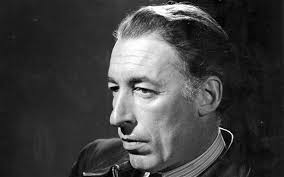
Louis MacNeice
The sunlight on the garden
Hardens and grows cold.
We cannot catch the minutes
Within its nets of gold.
When all is told
We cannot ask for pardon.
– The opening stanza of “The Sunlight On The Garden,” a poem by Louis MacNeice, used as the epigraph on Chapter I of A Woman of Bangkok by Jack Reynolds.
Robert Stone On Stephen Crane’s Red Universe
Posted: March 17, 2015 Filed under: articles, books, people, writing | Tags: " Stephen Crane's Red Universe, Crane's War Writing, Robert Stone as critic, Robert Stone looks at Crane's "Red Universe Leave a comment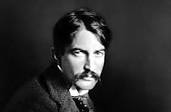
Upon Robert Stone’s recent passing, Madison Smartt Bell wrote at The New Yorker’s Page Turner blog that Stone “was one of the most widely read people [he had] ever met. . . . All his knowledge never settled into wisdom’s contentment—his streak of anger was too broad for that, and he learned all he knew in order to make art out of it, art with a furious energy.”
See Stone’s penetrating essay on Stephen Crane in Brick Magazine here.
Gary Snyder Talks About Kerouac
Posted: March 12, 2015 Filed under: articles, books, buddhism, people, writing | Tags: gary snyder, jack kerouac, snyder's days with Kerouac, the dharma bums in real life 7 CommentsHere’s a tender recollection of Jack Kerouac by Gary Snyder. It’s included in The Allen Ginsberg Project website, here, along with a video of the interview. The date and source of the interview was not given:

Kerouac in 1960.
“I only knew Jack (Kerouac) personally, in an intimate way, for those few months from the Fall of (19)55 to May of 1956 when I set sail for Japan. I never saw him again, and it was like a brief camp-out together when we shared that cabin in Marin County through the Spring of that year, practiced meditation together, talked Buddhists texts, wrote poetry and drank a lot of Tokaj – and then I left. At that time, all that Jack and I were doing together were practicing mountains, practicing wood-cutting, practicing flowers and birds and practicing Buddhist studies.
Interviewer: Does The Dharma Bums…Is that a really accurate story or is a lot of it made up?
GS: Some of it’s a novel, some of it reflects things that happened, but even the reflection is novel too, like (William) Burroughs would say.
Interviewer: Did you know he was going to write a book about you?
GS: Yeah, he told me, towards the end. He said, “I’m going to write a book about you, Gary, you’re going to be really famous!” – “Really?”
Interviewer: Do you think he had a sense of himself as being a major novelist. I mean as like a..
GS: Yes. I do, at that time even.
Interviewer: In what sense..?
GS: The clear sense of his skill, his power, his vocation, and his energy, and that there was something that he was going to be saying
Interviewer: In a way, there’s a funny kind of worship, you know, of what you represented.
GS: Well, he does that in the novel. He plays that in some of the other novels too, where he makes his first person singular into kind of a naive character that elicits information from people by pretending not to know (and he didn’t do that much with me in person, although, it’s true, he was real naive about some things.
Interviewer: What was.. what was..
GS: He didn’t really know what was involved in going back-packing and hiking and climbing. It was all new to him, but he was a quick learner. And he didn’t know much about nature, or that you could know about nature really, in its specific way. And so, spending some time on the Spring bird migrations and the many species that were coming through Marin County that year – five hundred a year come through Marin County on a Pacific fly-way – so we were checking off species as they came through that little shack and Jack really appreciated all that information.
…Like we were cutting some eucalyptus and splitting eucalyptus for fire-wood the stove and he was like a kid – learning how to start a chain-saw, how to handle a maul – same way as when we went back-packing. Oh, I was going to say, we did another trip too (besides to the High Sierra). We did a.. two-night maybe? camping trip, hiking right from Homestead Valley over Mount Tam. and camping out on the drainages on the north side of Mount Tamalpais..local places..and swinging around and coming back…
Interviewer: Was Kerouac really as frightened… there’s a thing where he..
GS: (shaking his head): Mm-mm
Interviewer: Oh, interesting.
GS: Well, that’s part of his story-telling.
Interviewer: Because he says, “I was a coward” – He says “I was the Buddha known as the coward. At least I have joy”, or something like that [editorial note – Kerouac’s actual line –“I realized I have no guts anyway, which I’ve long known. But I have joy.”]
GS: He likes to play with that. He’s an athlete.
Interviewer: Did you think of him as an intellectual?
GS: No. But well-read, to make the distinction. A very well-read person and a very sharp person with a critical acuity when he wished to employ it, but not like a practicing intellectual, which is a style, (that) is all it is…
GS: The Buddhist metaphor?
Interviewer: Yes
GS: Suffering, impermanence, the First Noble Truth – everything is impermanent and we must find our joy and our freedom in suffering – finally. He swung around through that, to the Buddhist understanding of that – and it’s all through his writing – and then settled back into, maybe, the more familiar comfort of Catholic metaphors…
Now you asked me “Did he seem very American?” and I said “Yes”, and you said “Why?”, and I was ruminating on how to answer that. He was in his physical health and strength, in his unconscious grace, in his child-like-ness, (which was real a lot of the time), in his openness to experiencing new things and learning new things, his paradoxical joy in a kind of freshness in the world (paradoxical, because at the same time he was aware of suffering and impermanence), and maybe all of that is sort of American – And a total absence in Jack of anything elite, or yuppie, or academic, or intellectual, or any of that posturing at all that we associate with learned people, middle-class white people. He was more like your aunt, you know, sitting at a table in the kitchen, or your grandma, sitting at a table in the kitchen, speaking in common-sense truths about orderliness and kindness, basic instructions, and so, very much like my old aunt from Texas, and easy to be with.

Kerouac’s desk in Florida in the house where he wrote The Dharma Bums, the story of his time with Snyder.
The Dewdrop World: Issa’s Classic Poem
Posted: March 3, 2015 Filed under: buddhism, people, poetry, states of mind | Tags: Buddhist duality, impermanence, Issa poems, letting go Leave a comment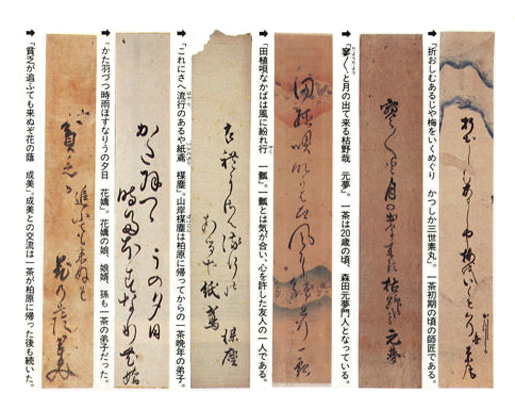
Haiku poems by Issa in his own calligraphy.
“The world of dew
is the world of dew.
And yet, and yet –”
– Kobayashi Issa, 1763-1827
Haiku By Issa, (1763–1827)
Posted: February 27, 2015 Filed under: buddhism, people, poetry, writing | Tags: Haiku poetry, Japanese poet Issa Leave a comment
Natural Circles, iPhone photograph by Roy Hamric
Mosquito at my ear –
does it think
I’m deaf?
James Fenton’s Paean to Mexico
Posted: February 26, 2015 Filed under: articles, books, people, poetry, writing | Tags: James fenton on writing, james fenton's paean to Mexico Leave a comment
Christopher Hitchens, James Fenton, Martin Amis, Paris 1979
Here is a beautiful prose poem by James Fenton on Mexico that celebrates attention to place, while also offering a primer on how to ignite creativity – always a solitary exercise. A friend reminds me of the story of Fenton riding on the top of a North Vietnamese army tank that breached the gates of the Presidential Palace during the fall of Saigon in 1975. Has any great poet had such a send-off story to mark the eve of their career? His experience in Vietnam and Cambodia from summer 1973 form sections of All the Wrong Places (1988), a collection of essays.
Chiang Mai Sketch II
Posted: February 24, 2015 Filed under: articles, buddhism, people, space 1 Comment2.
This is an excerpt from an unpublished travel book. copyright@roy hamric
“The guy has a chicken neck, soft rolls of fat under his chin, wispy white hair. He’s like a little boy in front of the most beautiful girl in the village. His eyes never leave me. He says go out, go to room. I think: Go out with this old animal or not?
“I tell myself again – Pai, if pay enough, never say no. I decide to test his money. A little bar-fly girl in a black and white school uniform flits by in her white sneakers, bouncing up and down like this to Proud Mary on the jukebox.
“I see that little girl likes you, I say, using my best smile. I help you. You want her? Only $60 dollar.
“He said the name of Jesus, the God. ‘No, honey. I like you. Don’t you want to go with me?’
“I want to go, I said, but I have to ask for a lot of money. I have to pay rent. I have two children.”
“My head was a broken plate from tequila the night before. After work all the dancers went to Mr. Spicy’s. The men went crazy buying us drinks. We had a lot of fun. Now I feel like dry shit.
“He says again, ‘Don’t you like me, darlin’? I need another tequila.’
“‘Me, too, I said. I start to feel better because that was my 74th drink this month. I make 65 drinks before the first twelve days of the month. Now the mamasan knows I work hard to make money. $1 a drink for me, and $3 for the bar.
“Then the old animal says he needs more tequilla to make his carrot grow. When I don’t understand what they say, I smile and laugh. ‘Me too,’ I said. One more dollar. He smiles and nods his head. Then Little Sue dropped her bikini top and waved it around the stage. Big cheers. Everybody clapped. I can’t do that. Embarrassed too much. Momasan walks around the dance floor, laughing: ‘Tomorrow, everything is 50 percent off,’ she says. ‘Not me,’ said Blue.
“Tomorrow night Blue and I go to the temple for Makha Bucha, about the Buddha talking to people. I will pray to take care of my mother and live to be old with my children.
“The old animal said, ‘Ok, put up or shut up.’ I know what shut up means so I stopped talking. Maybe he will buy me another drink.
“I told him, ‘You give me $100, Ok? We go now.’ That’s how I got the $30 to send to my mother this month. My mom’s in Burma in jail. Two more years. I need her with me. I’m a baby too, really. I need her close. I want to cry all the time.”
And the next night the temples filled with people. The moon was big and red like tens of millions of nights before on the full moon of the third lunar month. Pai and her two children prayed for her mother in Burma, and she prayed to have a good heart and be a good mother.
David Carr: RIP
Posted: February 13, 2015 Filed under: articles, books, people, writing | Tags: david carr was no Brian Williams Leave a comment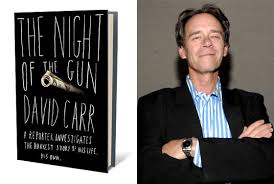

David Carr, 58, died on the job at The New York Times on Thursday. He was one of the great ones: no pretence, accurate, compassionate, humble. He knew his job as a journalist was not to be part of the story, but to serve the story through facts, from which a truth might be born in and of itself, or as part of a larger story pieced together from multiple sources. I haven’t read his autobiography, The Night of the Gun, which chronicled his drug addiction during the 1980s, but I’m sure it’s him, and it’s good. Here’s a link to media bistro with Carr talking about his first big break in journalism. Also see the other videos featuring Carr at this site.
 the roy hamric journal