
Bedside Books
Posted: March 20, 2015 Filed under: articles, books, people, states of mind | Tags: Alcibiades, Empress Theodora, Greek and Roman history Leave a commentTwo more books completed on the classical world of Greece and Rome: Celebrity in Antiquity: From Media Tarts to Tabloid Queens by Robert Garland; Duckworth, 2006.
With the growth of cities and states, renown was bestowed on those who stood out in various ways: by the exercise of power, their beauty, their role as soldiers, their exploits on fields of sports or survival in physical contests of strength, their ability to speak or do science or philosophy, or their virtue. In the Greek and Roman worlds, such people were fodder for books, pamphlets, broadsides, letters, graffiti, statues and paintings. Garland is adept at capturing the traits of such figures, their characters, and making deft comparisons to present day celebrities. He firmly establishes the premise that history does repeat itself over and over, and, yes, we learn nothing from it, or too little to make a difference.
Caesar (circa 50 BC) was the Great Populist of his era, a genius at rallying the plebs, the lower classes, who looked to him as their patron, who protected them from the equestrian class, the “equities,” (think political, financial power brokers). He was one of the first to write his own autobiography of military exploits (in a most generous light), though he cleverly used the third person. His assassins fled the city and country, while the people canonized him into posterity.

Alcibiades
Alcibiades (450 BC), a prominent Athenian statesman, orator, and general, was renown for his aristocratic charisma, his bad boy image, his bisexuality (as was Caesar), his lust for courtesans, his beauty (Plato said he proposition Socrates who turned him down), his lack of scruples, his scandals, his drinking in the morning, his style of effeminate dress, and the decoration of his military shield with the word “Eros.”
His private life became a subject of public obsession until finally he fell from grace, but not before setting a pattern of privilege – and public forgiveness – for people who possess an ability to hold the public eye through sheer force of talent, personality and presence.
Sports, the theater and the arts were the pathway for ordinary people to rise to celebrity status in the ancient world. To be the most successful actor, wrestler, runner, chariot driver, courtesan, or musician led to great wealth and fame.
The symbiosis between sports and entertainment celebrities and the elite and governing class was exemplified by the Emperor Nero, who lusted to be recognized as a sports and entertainment figure. Ruler of the world wasn’t enough.
Garland writes: “Such was Nero’s eagerness to acquire celebrity status that his portrait head on coins for the year AD 64 may actually have been influenced by the hairstyle of actors or charioteers…there was more to Nero’s craving for public attention than meets the eye, for it enabled him to present himself to his subjects as a popular idol. The goodwill of the plebs was in fact vital to him, as he received little support from the army, or from the senatorial class or the equestrian order.”
Sophists and philosophers, for a brief time, were celebrities. Many gave public symposia and workshops, making great sums of money. Socrates did not. But he attracted a fascinating number of followers, from both the aristocratic and lower classes, who attended his informal gatherings.
Alcibiades said: “Whenever I listen to him, my heart beats faster than a Corybant [a Whirling Dervish]…and I see that he has the same effect on many others.”
Another branch of charismatic celebrities that extends into the present day were the hucksters of every stripe and character. Alexander of Abonuteichos set up a lucrative, prosperous “oracle shrine” around 250 AD. Lucian scourged him as “equally adept in lying, guile, perjury, malice, plausibility, audaciousness, cunning, determination, con-artistry, and hypocrisy.” Alexander predicted the future, performed healings, and promised blessings in the hereafter after conveying secret mysteries.

Empress Theodora
The greatest show business celebrity ever to rise to the top was Theodora, who as a youth appeared in the theater performing sexual acts and was a notorious prostitute, yet she donned the royal purple robe to become Empress Theodora (circa 540 AD) after Emperor Justinian took her as his wife.
Her story was known throughout the classical world, and she had a devoted following of plebs much greater but akin to Eva Peron in her day. Theodora was a sexually liberated woman who used her beauty, wit – and intelligence – to rise above the rawest demimonde of poverty she was born into to be crowned empress. Justinian was devoted to her throughout his life.
Rome: The Autobiography edited by Jon E. Lewis; Robinson, 2010.
This is a rich collection of original writing by key figures, historians, aristocrats, literary artists of the day and common folk, ranging from 753 BC to 565 AD Why did these two cultures flower so grandly and others languish? I have no answer, and – other than platitudes and conjectures – neither does anyone else.
History is an amalgamation of discreet acts and lives that collectively extend beyond the individual and allow us to look at ourselves. Assembled wisely, it can tell us a story about human nature. Classical Greece and Rome offer us a story writ large over time. Take Socrates’ life, for example. It was exemplary, yet a judge and jury saw otherwise. Alcibiades was a compelling, clever sophist, out for himself. Socrates was a philosopher, out for the greater good.There’s a lesson in their lives.
In a vastly different way, China experienced equally admirable growth in governance and culture during the same period, but elsewhere there are no real comparisons, except for the Middle East (and I’m silent here, totally deficient to say anything about its history; an embarrassment considering the state of the world now). In an ideal world, reading Greek and Roman history would be a component of the moral dimension of public education, at first offered very simply, from the earliest grades, to more detailed study through high school. It provides a missing reality, devoid of myth. It prepares one to know the world as a dangerous stage, impossible to fathom only through the lens of contemporary culture.
On a larger scale, if one has to have a descriptive God, a sweeping take-away from my classical reading is the fitness – the absolute rightness – of the God described in the Old Testament. The God of the New Testament offers solace, but who or what is it? It offers much less in the way of a true picture of life on Earth. It’s little wonder the gods of the classical world were swept away by the God of the New Testament; people were grasping for a saving grace from the world they knew, which is our world too.
Listen to and look at the words and acts of the God of the Old Testament. He gives fair warning of what’s in store for the children of light. The Old Testament God appears as a worthy stage manager, preparing the audience for the tribulations of life. Reocurring themes of apocalypse are bows to human nature’s intractable flaws.
Even with the progress in standards of living, life on Earth can be Hell – or a constant struggle – for people during their brief time on the planet. Heaven, perhaps, for a lucky few. Some survive life’s journey more or less intact, but many are culled in the swirl of fate, trial, pain, despair, sorrow, and, for some – an eagerness to exit the travails.
Greek and Roman history tell us that material progress and technology – our cleverness – are not enough to provide happiness or change human nature. That should be enough of a cautionary warning for humankind to do much better than we’re doing, but it isn’t.
A Woman of Bangkok: Epigraph
Posted: March 18, 2015 Filed under: books, people, poetry, states of mind, writing | Tags: jack reynold's A Woman of Bangkok, Louis MacNeice, the white leopard of Bangkok, Vilai Leave a comment
Louis MacNeice
The sunlight on the garden
Hardens and grows cold.
We cannot catch the minutes
Within its nets of gold.
When all is told
We cannot ask for pardon.
– The opening stanza of “The Sunlight On The Garden,” a poem by Louis MacNeice, used as the epigraph on Chapter I of A Woman of Bangkok by Jack Reynolds.
The Dewdrop World: Issa’s Classic Poem
Posted: March 3, 2015 Filed under: buddhism, people, poetry, states of mind | Tags: Buddhist duality, impermanence, Issa poems, letting go Leave a comment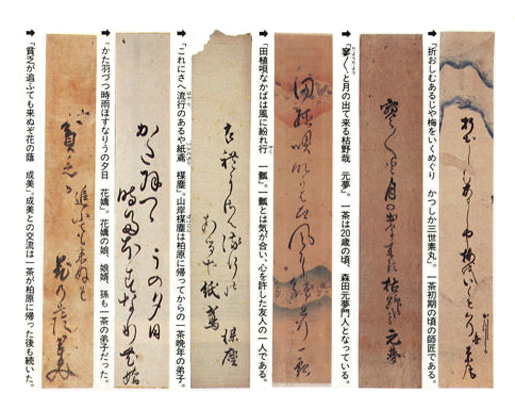
Haiku poems by Issa in his own calligraphy.
“The world of dew
is the world of dew.
And yet, and yet –”
– Kobayashi Issa, 1763-1827
Ajahn Chah On Meditation
Posted: February 17, 2015 Filed under: books, buddhism, states of mind, time, space | Tags: meditation advice, Thudong monks Leave a comment
When sitting in meditation, say, “That’s not my business” with every thought that appears. – From No Ajahn Chah
Lary Wallace’s Take On Stoicism
Posted: February 15, 2015 Filed under: articles, buddhism, states of mind, writing | Tags: stoicism and Buddhism, Stoicism begrudged place in philosophy Leave a comment
Epictetus
My friend Lary Wallace tackles why stoicism is largely misunderstood and not viewed as an early, elegant philosophy, a view I’ve come to share and ponder. The whereof probably stems from the early coupling of stoicism with Sparta and the fearsome emergence of the single-minded, nearly unconquerable Greeks of that era, who encouraged endurance in the face of physical hardship. Endurance translates to a honing of the will, or a view of the mind, of what Wallace calls “indifference.” That’s a really tricky term with shades akin to the Buddhist idea of “letting go,” a way to encourage non-attachment – again a tricky term.
When we’re in this area of Truths, deep understanding, words blur and it brings us to a place where truths slide around and through each other, a philosophical fusion. Anyway, Lary is, as usual, on target in his essay, which can be found here in Aeon, a new online cultural journal that’s one of the best serious websites going now. Look at it…
Dylan Sings American Classics
Posted: February 9, 2015 Filed under: articles, music, people, states of mind | Tags: Dylan and Sinatra, Dylan opens up the American song cannon, Dylan stands next to Sinatra, Shadows in the Night 1 CommentTypically, skepticism and misapprehension have greeted Dylan’s newest release, Shadows In The Night, based on one of Sinatra’s most enduring classic albums. 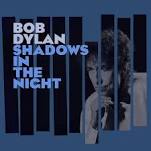 The lead in the New York Times said, “It’s not a joke.” What disservice…Mark my words: This album will live. Dylan’s recording of under appreciated, early Americana folk music, his own blues songs, and especially this album, which puts him beside Sinatra, the other most enduring singer of the 20th century, will eventually rest beside the best of Dylan’s work. As Dylan said about the recording: it “uncovers” the songs. More generous was this review in The Telegraph: “Dylan sings Sinatra? It shouldn’t work but Shadows In The Night is quite gorgeous, the sound of an old man picking over memories, lost loves, regrets, triumphs and fading hopes amid an ambient tumble of haunting electric instrumentation. It is spooky, bittersweet, mesmerisingly moving and showcases the best singing from Dylan in 25 years. The very concept seems outrageous, which is perhaps why Dylan’s management have been at pains to insist it is not a Sinatra tribute. One was a vocal giant with perfect mix of tone, technique and emotional expression. The other has a voice that David Bowie described as “like sand and glue,” (and that was intended as a compliment). They are artists we listen to for very different reasons. Shadows In The Night is a perfect blend of those heartbreaking classics, digging beneath self-pity to reveal deeper relationship truths.”
Ralph Waldo Emerson: Give All To Love
Posted: January 28, 2015 Filed under: people, poetry, states of mind Leave a comment
The first stanza of Emerson’s Give All To Love:
Give all to love;
Obey thy heart;
Friends, kindred, days,
Estate, good-fame,
Plans, credit and the Muse —
Nothing refuse.
Wittgenstein’s riddle of life
Posted: December 23, 2014 Filed under: articles, books, people, states of mind, writing | Tags: natural science, the Tao of Wittgenstein, wittgenstein as poet, wittgenstein's silence Leave a comment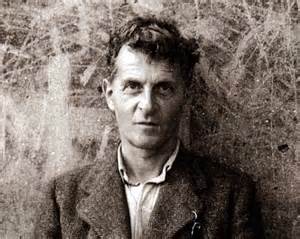
The magnificent ending of Ludwig Wittgenstein’s Tractatus Logico Philosophicus:
…The solution of the riddle of life in space
and time lies outside space and time.
(It is not problems of natural science which have to be
solved.)
6.432 How the world is, is completely indifferent for what is higher.
God does not reveal himself in the world.
6.4321 The facts all belong only to the task and not to its performance.
6.44 Not how the world is, is the mystical, but that it is.
6.45 The contemplation of the world sub specie aeterni is its contemplation
as a limited whole.
The feeling of the world as a limited whole is the mystical
feeling.
6.5 For an answer which cannot be expressed the question too cannot
be expressed.
The riddle does not exist.
If a question can be put at all, then it can also be answered.
6.51 Scepticism is not irrefutable, but palpably senseless, if it would
doubt where a question cannot be asked.
For doubt can only exist where there is a question; a question
only where there is an answer, and this only where something
can be said.
6.52 We feel that even if all possible scientific questions are answered,
the problems of life have still not been touched at all. Of course
there is then no question left, and just this is the answer.
6.521 The solution of the problem of life is seen in the vanishing of
this problem.
(Is not this the reason why men to whom after long doubting the sense
of life became clear, could not then say wherein this sense consisted?)
6.522 There is indeed the inexpressible. This shows itself; it is the
mystical.
6.53 The right method of philosophy would be this. To say nothing
except what can be said, i.e. the propositions of natural science,
i.e. something that has nothing to do with philosophy: and then
always, when someone else wished to say something metaphysical,
to demonstrate to him that he had given no meaning to
certain signs in his propositions. This method would be unsatisfying
to the other—he would not have the feeling that we
were teaching him philosophy—but it would be the only strictly
correct method.
6.54 My propositions are elucidatory in this way: he who understands
me finally recognizes them as senseless, when he has climbed out
through them, on them, over them. (He must so to speak throw
away the ladder, after he has climbed up on it.)
He must surmount these propositions; then he sees the world
rightly.
7 Whereof one cannot speak, thereof one must be silent.
More Dreams
Posted: December 17, 2014 Filed under: buddhism, states of mind, writing | Tags: subconscious, zen dreams Leave a comment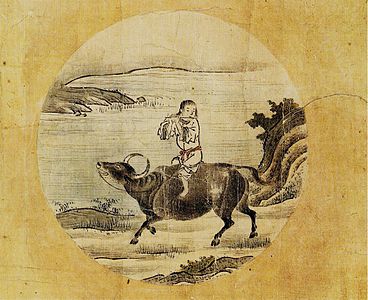
Water Buffalo
March 23, 1989
Poet Bob Trammel, his girlfriend, Allison, and I are in a house that extends over a riverbank on a swiftly flowing river. Through a window, I see a larger-than-life water buffalo swimming against the current toward the house. My first thought is that the buffalo is so big it will crash into the house and sweep it into the river. I watch in amazement as the water buffalo clambers up the almost vertical riverbank, defying gravity. Before I can tell Trammel what’s happening, the buffalo is walking on the roof of the house. Each step is loud, and I think it’s trying to crush the house. I ask Bob if he knows what’s happening. He seems unconcerned, and I think: He doesn’t hear me or the buffalo – I may be dreaming.
I look out the window again, and more water buffalo are swimming toward the house. I must confront the largest buffalo. She exudes great power, but I feel I can tame her. I jump into the river, swim over, and scramble onto her back. Then she turns and begins swimming to the other side of the river. On the riverbank, she turns into a normal, calm water buffalo, and I slide off onto the ground.
Dreams
Posted: December 14, 2014 Filed under: articles, buddhism, states of mind | Tags: the subconscious, zen dreams Leave a commentTwo Dreams:
Roxy Pays a Visit
Jan. 9, 1989
 My friend, the writer Roxy Gordon, and I are standing beside each other, watching life-sized skeletons dancing in the air. The sounds of rattling bones surround us. Suddenly, I turn into an owl, and I hoot three times deeply, hoo, hoo, hoo. Then I’m awake in my bed, and I’m still hooting in the dark. Who, who, who?
Fly Me to the Moon
May 27, 1989
I’m in a small room talking with a monk. He doesn’t want to answer my questions. He’s called away and leaves me alone in the house. I look through the rooms for books, poems or writing of any type to read. I find a magazine and some old books about stars. I see a scroll painting sticking out from under the monk’s bed. I feel cheap and phony for nosing around behind his back.
Then the monk returns, and we are standing outside in the dark. There’s a threat of danger from somewhere, and the monk says, okay. Suddenly, we’re flying through the vast, cold sky with the moon on our right. We fly through space until we suddenly enter heaven. We turn around and fly faster, downward toward Earth. Then a spacecraft is shooting at us. The monk creates a cloud cover to enter Earth’s atmosphere undetected. Suddenly, I notice several hundred babies are flying behind us and they are in our care — all pure and ready to be born.
When we land on Earth, the babies disappear, and I say, “Be careful, they’ll try to get you.” Then I’m back in the monk’s room. We’re aware someone is searching for us, and we have to leave.
 the roy hamric journal