
Are You Ready For Tex-Mex Music?: Doug Sahm
Posted: April 5, 2014 Filed under: people, states of mind, time, space Leave a comment
Bob Dylan and Doug Sahm
It’s a good day to spark some neurons.
Listen to this concert by the late great Doug Sahm, Freddy Fender, Augie Meyers and Flaco Jimenez, The Texas Tornados.
William Empson: Let it Go
Posted: March 30, 2014 Filed under: people, poetry, states of mind Leave a comment
Let It Go
It is this deep blankness is the real thing strange.
The more things happen to you the more you can’t
Tell or remember even what they were.
The contradictions cover such a range.
The talk would talk and go so far aslant.
You don’t want madhouse and the whole thing there.
– William Empson
Emerson’s scandalous ideas
Posted: March 14, 2014 Filed under: people, photography, poetry, states of mind, writing Leave a comment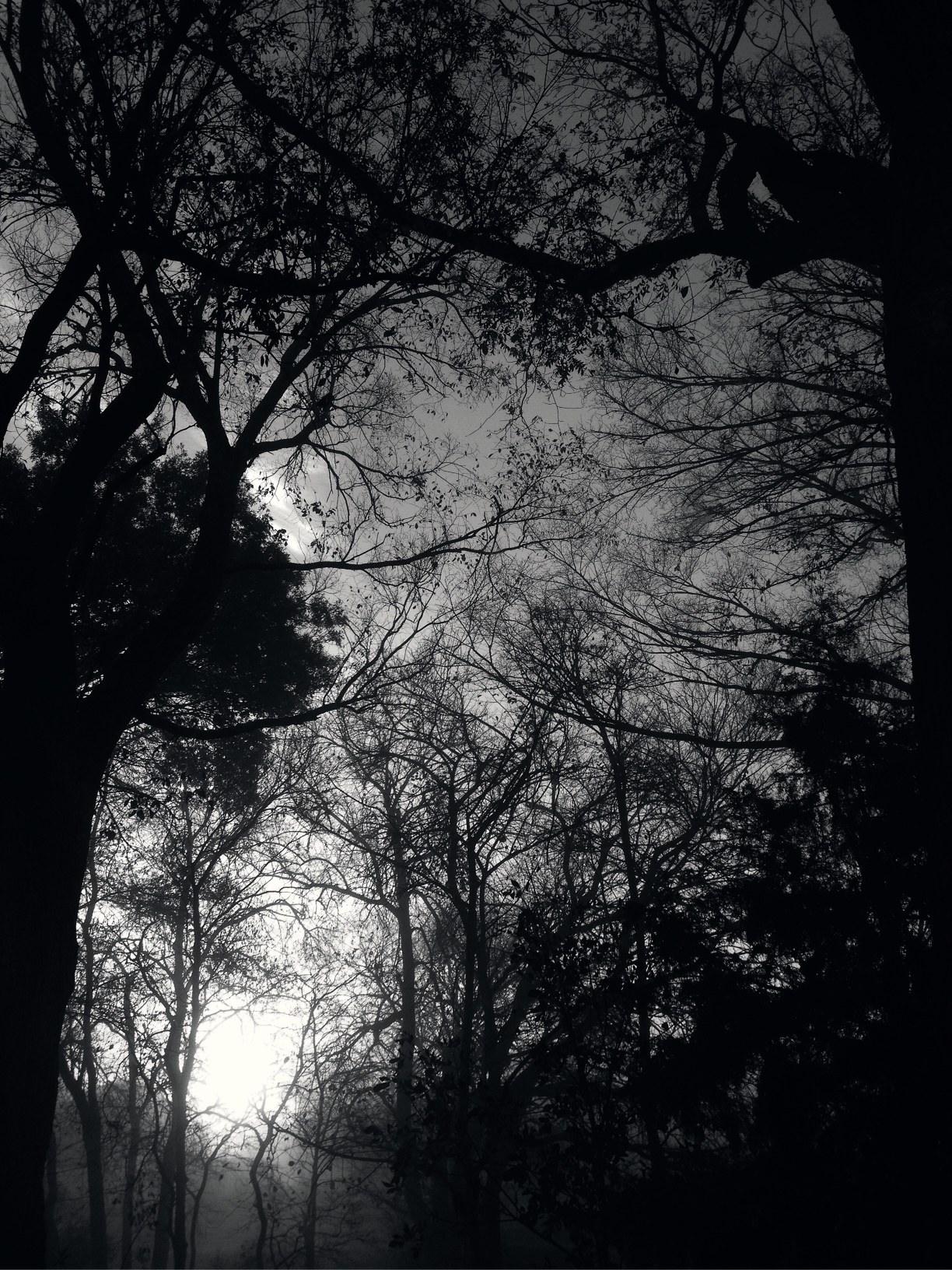
In The Woods; a photograph by Robert Crosby
Whoso walketh in solitude,
And inhabiteth the wood,
Choosing light, wave, rock, and bird,
Before the money-loving herd,
Into that forester shall pass
From these companions power and grace.
Emerson– Woodnotes II
Modern transcendental idealism, Emersonianism, for instance, also seems to let God evaporate into abstract Ideality. Not a deity in concreto, not a superhuman person, but the immanent divinity in things, the essentially spiritual structure of the universe, is the object of the transcendentalist cult. In that address to the graduating class at Divinity College in 1838 which made Emerson famous, the frank expression of this worship of mere abstract laws was what made the scandal of the performance. – William James, The Variety of Religious Experience
Blue in Kathmandu
Posted: February 21, 2014 Filed under: photography, places, sight seeing, states of mind Leave a comment
Kathmandu, Thursday, February 20, 2014; photograph by Brigitte Lueke; IPhone
William Gass: On Being Blue
Posted: February 19, 2014 Filed under: articles, books, people, states of mind, writing Leave a commentThe estimable The New York Review of Books has reissued William Gass’s On Being Blue, a philosophical romp through moods, colours and much more. Gass is a writer who, one hundred years from now, may emerge as one of the few contemporary writers whose work will enter the American canon. Here’s the NYRB description:
“On Being Blue is about everything blue—sex and sleaze and sadness, among other things—and about everything else. It brings us the world in a word as only William H. Gass, among contemporary American writers, can do.
Gass writes:
“Of the colors, blue and green have the greatest emotional range. Sad reds and melancholy yellows are difficult to turn up. Among the ancient elements, blue occurs everywhere: in ice and water, in the flame as purely as in the flower, overhead and inside caves, covering fruit and oozing out of clay. Although green enlivens the earth and mixes in the ocean, and we find it, copperish, in fire; green air, green skies, are rare. Gray and brown are widely distributed, but there are no joyful swatches of either, or any of exuberant black, sullen pink, or acquiescent orange. Blue is therefore most suitable as the color of interior life. Whether slick light sharp high bright thin quick sour new and cool or low deep sweet dark soft slow smooth heavy old and warm: blue moves easily among them all, and all profoundly qualify our states of feeling.”

Why Bodhidharma Came to China
Posted: February 13, 2014 Filed under: buddhism, photography, sight seeing, states of mind Leave a comment
The Setting Sun, copyright Robert Crosby
I’ll explain in detail
why Bodhidharma
came to China:
Listen to the evening
bell’s sound. Watch
the setting sun.
– From A Zen Forest: Zen
Sayings.
Tracking is the future of technology
Posted: February 6, 2014 Filed under: articles, interviews, people, states of mind 2 CommentsThe Edge, an idea-oriented collective of innovators and thinkers, has a new issue here.
It includes a 9,000-word interview with Kevin Kelly, one of the founders of Wired magazine. Kelly ranges across the future of technology, the good and the bad. He says technology is “telling me” it wants to track. I immediately nodded my head, and thought, “We are technology,” and we’re telling ourselves we want to track. Why, for more reasons that we can imagine, and I hope, on balance, it will be a positive phenomenon, and I hope I’m not being characteristically positive here.
Normal computer tracking capabilities (built into the Internet/computer system) and government surveillance are two separate issues, and each will require different answers and regulations to make them work positively within society.
Here’s Kelly on technology and tracking:
“How far will we share, when are we going to stop sharing, and how far are we going to allow ourselves to monitor and surveil each other in kind of a coveillance? I believe that there’s no end to how much we can track each other—how far we’re going to self-track, how much we’re going to allow companies to track us—so I find it really difficult to believe that there’s going to be a limit to this, and to try to imagine this world in which we are being self-tracked and co-tracked and tracked by governments, and yet accepting of that, is really hard to imagine.

Kevin Kelly
“…How does this work? How can we have a world in which we are all watching each other, and everybody feels happy? I don’t see any counter force to the forces of surveillance and self-tracking, so I’m trying to listen to what the technology wants, and the technology is suggesting that it wants to be watched. What the Internet does is track, just like what the Internet does is to copy, and you can’t stop copying. You have to go with the copies flowing, and I think the same thing about this technology. It’s suggesting that it wants to monitor, it wants to track, and that you really can’t stop the tracking. So maybe what we have to do is work with this tracking—try to bring symmetry or have areas where there’s no tracking in a temporary basis. I don’t know, but this is the question I’m asking myself: how are we going to live in a world of ubiquitous tracking?
“I call myself a protopian, not a utopian. I believe in progress in an incremental way where every year it’s better than the year before but not by very much—just a micro amount. I don’t believe in utopia where there’s any kind of a world without problems brought on by technology. Every new technology creates almost as many problems that it solves. For most people that statement would suggest that technology is kind of a wash. It’s kind of neutral, because if you’re creating as many problems as it solves, then it’s a 50/50 wash, but the difference in my protopian view versus, say, a neutral view is that all these new technologies bring new possibilities that did not exist before, including the new possibility of doing harm versus good.
 “One way to think about this is if you imagine the very first tool made, say, a stone hammer. That stone hammer could be used to kill somebody, or it could be used to make a structure, but before that stone hammer became a tool, that possibility of making that choice did not exist. Technology is continually giving us ways to do harm and to do well; it’s amplifying both. It’s amplifying our power to do well and our power to do harm, but the fact that we also have a new choice each time is a new good. That, in itself, is an unalloyed good—the fact that we have another choice and that additional choice tips that balance in one direction towards a net good. So you have the power to do evil expanded. You have the power to do good expanded. You think that’s a wash. In fact, we now have a choice that we did not have before, and that tips it very, very slightly in the category of the sum of good. …”
“Personally, I want to be optimistic, like Kelly, and see tracking, in spite of the current cultural dread, as becoming a force for positive good in culture and society. On balance, I want to believe it will somehow expand our possibilities for change that is good even though we can’t envision that at this moment – how that will take place. To do otherwise, is to fall into the Big Brother trap. It’s not that simple, and we shouldn’t reduce tracking to a dangerous rubric or else we help to create Big Brother rather than to see this as a technological moment which moves us into a new future that carries with it all the possibilities of good and bad, just as technology has done throughout history.
“That said, the tracking issue demands some immediate innovative codifications of principles that offer people choices, some protections, and some control over unbridled tracking. This need, of course, will be on-going in order to keep up with technology.
“The challenge is on the par with the long road of codifying democratic and human rights principles. It will take a lot of seriousness of purpose, work and time.”
Red Pine’s Canny Commentaries on Buddhist Sutras
Posted: January 10, 2014 Filed under: articles, buddhism, people, states of mind, writing Leave a comment
Red Pine hitching a ride in China. Photograph by Ted Burger
Red Pine’s probing and understanding of the major Buddhist sutras: The Heart Sutra, The Platform Sutra of the Sixth Patriarch, The Diamond Sutra and, the latest, The Lankavatara Sutra, in addition to his earlier translation and commentary on The Tao Te Ching continue to deepen. With each translation his commentaries have grown more profound, especially on how all the sutras, taken together, form a whole, offering an approach to the difficult metaphysics that bewitch people looking for the answer to life’s riddles.
Red Pine’s latest commentary on the Lankavatara Sutra is a good example of how he draws all the sutras together. For instance:
“Buddhism is concerned with suffering, which is the inevitable result of desire. But the real issue is the self, which is the cause of the desire, which is the cause of the suffering. In the centuries following the Buddha’s Nirvana, instructions centered around a trio of concepts designed to focus attention in such a way that the nonexistence of the self would become evident and the liberation from suffering would follow. These included the five skandas (form, sensation, perception, memory and consciousness), the twelve ayatanas (six powers and six domains of sensations), and the eighteen dhatus (the ayatanas with the addition of six forms of consciousness). These were three views of the same thing: our mind.
“The were simply different ways of dividing any given moment of awareness into a manageable matrix to demonstrate to anyone willing to wander around these matrices that they contained the universe of our awareness, its inside and its outside, and yet they contained no self. This was their function: to show practitioners that there was no self.
“While these three schemes dealt with the problem of the self, they didn’t help explain how we become attached to a self in the first place, and how we go from attachment to detachment to liberation. Hence, to these were added three more schemes, all of which play a much larger role in the Lankavatara Sutra than the previous trio. The three new schemes are the five dharmas, the three modes of reality, and the eight forms of consciousness.
“The five dharmas divide our world into name, appearance, projection, correction knowledge and suchness. The three modes of reality do the same thing with imagined reality, dependent reality, and perfected reality; and the eight forms of consciousness include the five forms of sensory consciousness, conceptual consciousness, the will or self-consciousness, and an eighth form known as repository consciousness, where the seeds from our previous thoughts, words and deeds are stored and from which they sprout and grow.
“As with earlier trios of concepts, these were designed to account for our awareness without introducing the self. But they had the advantage of also providing a look at how our worlds of self-delusion and self-liberation come about, how enlightenment works, how we go from projection of name and appearance to correct knowledge of suchness, how we go from an imagined reality to a perfected reality, how we transform our eightfold consciousness into Buddhahood.
“….But then the Lankavatara Sutra sets all these schemes aside in the interest of urging us to taste the tea for ourselves….Cup of tea or not, no one said it was going to be easy…”
He goes on to explain how the Lankavatara confounded his understanding for 35 years. Everyone’s approach may differ, but a good step would be to try the sutras in a sequence such as this: the Tao Te Ching, The Heart Sutra, The Platform Sutra, The Diamond Sutra and the Lankavatara Sutra.
Red Pine always offers good advice. His life has been devoted to translating these sutras to deepen his own understanding and wisdom.
Also, as his wisdom – and his humor – ripen, he becomes more humble. The mark of a real teacher
Time & Space
Posted: January 4, 2014 Filed under: buddhism, photography, states of mind, time, space Leave a comment
Saturday, 1:45 p.m., January 4, food for the spirits. iPhone
For Charles Dukes
Posted: October 9, 2012 Filed under: people, poetry, states of mind, writing Leave a commentRiding the Wind
In my dream
you gave me your
Book of Poems
and said,
“Read this one:”
The wind was Love
and what the was was
was was.
 the roy hamric journal