
getting to know you, getting to know all about you
Posted: May 11, 2011 Filed under: articles, people, states of mind Leave a comment Getting to know, or thinking that you know, anyone is not easy, particularly so in a different culture where it can be a mysterious and often frustrating experience. A philosopher of language, Ludwig Wittgenstein knew it was normal for most people to go around believing that they understood what other people were saying simply because of the words they used, but he also knew that really understanding what anyone says is a difficult task that requires work and thought. Especially so in dealing with people whose background or culture is vastly different, truly foreign. At one place he says:
One human being can be a complete enigma to another. We learn this when we come into a strange country with entirely strange traditions; and, what is more, even given a mastery of the country’s language. We do not understand the people. (And not because of not knowing what they are saying themselves.) We can not find our feet with them.
The word in German that was translated as “feet” actually employs an idiom that literally says: We can not find ourselves in them. Of course, we can’t find ourselves in anyone period, but his point underscored the dangers of assuming you understand correctly or were understood correctly, or that everyone is feeling, seeing, agreeing or disagreeing based on the same perceptions or assumptions and even if they were, words and language have to be used with as much simplicity, precision, patience and humility as we can muster.
to the future?
Posted: May 5, 2011 Filed under: articles, states of mind, time, space Leave a comment An institute affiliated with Oxford University is studying the future with the goal of making some fairly rational predictions of where humans might be in hundreds of thousands, millions and billions of years from now––not an easy task to be sure with no real guarantee that humans, at least as we know them, will continue to exist. An interesting article which sketches some possibilities can be found here, but first read the quotation below:
Only 0.01 percent of all species that have ever existed continue to do so. We happen to be one of them, for now. When Rees looked at the myriad ways in which the present is more perilous than the past in his 2003 book “Our Final Hour,” he set the odds of human extinction in the next century at 50 percent.
Bostrom, the Oxford philosopher, puts the odds at about 25 percent, and says that many of the greatest risks for human survival are ones that could play themselves out within the scope of current human lifetimes. “The next hundred years or so might be critical for humanity,” Bostrom says, listing as possible threats the usual apocalyptic litany of nuclear annihilation, man-made or natural viruses and bacteria, or other technological threats, such as microscopic machines, or nanobots, that run amok and kill us all.
Thoreau’s koan
Posted: April 25, 2011 Filed under: buddhism, people, states of mind Leave a comment
“I long ago lost a hound, a bay horse and a turtle dove, and am still on their trail. Many are the travelers I have spoken to concerning them, describing their tracks and what calls they answered to. I have met one or two who have heard the hound and the tramp of the horse and even seen the dove disappear behind a cloud, and they seemed as anxious to recover them as if they had lost them themselves.”
Where does good come from?
Posted: April 20, 2011 Filed under: people, states of mind Leave a comment The biologist, E. O. Wilson, is ready to launch another revolution in understanding how humans are made up and why they do what they do. Currently, he’s convinced that genetic predisposition (DNA) drives humans to form groups and that altruistic acts that could even threaten one’s own survival are a result of DNA, rather than a product of the reigning biological theory of “kin survival,” which says humans make altruistic sacrifices for kin in a self-interested way, i.e. to preserve those closest to them. A fierce fight is developing, which takes us into the heart of whether morality is somehow embedded in the human instinct, or not. What’s at stake here is the old issue of nature vs nurture; is morality in some way a part of our genetic DNA make up or is it culturally derived? There are a lot of slippery slopes, but I’m betting on Wilson. For a good article summarizing the issues involved, click here.
Zen sayings
Posted: March 6, 2011 Filed under: buddhism, poetry, states of mind Leave a comment
People use it
daily,
not knowing it.
––From A Zen Forest; ink drawing, butterfly, by Jim Crump
d.h. lawrence
Posted: February 20, 2011 Filed under: people, photography, states of mind, writing 1 Comment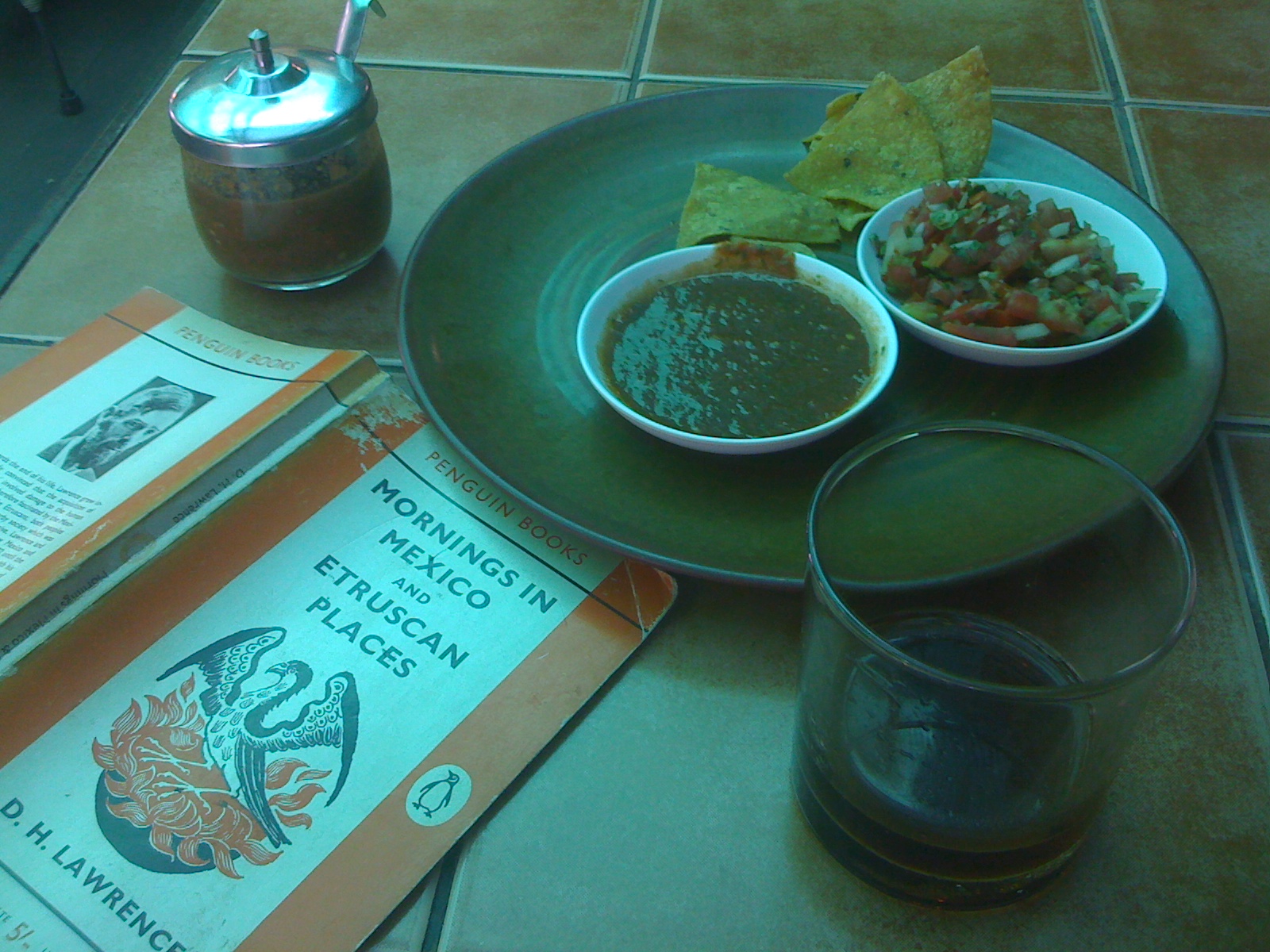
the phoenix on this Penguin cover makes it a classic (Iphone photograph)
I love dictionaries:
phoenix |ˈfēniks|noun (in classical mythology) a unique bird that lived for five or six centuries in the Arabian desert, after this time burning itself on a funeral pyre and rising from the ashes with renewed youth to live through another cycle.• a person or thing regarded as uniquely remarkable in some respect.
PHRASES rise like a phoenix from the ashes emerge renewed after apparent disaster or destruction.
ORIGIN from Old French fenix, via Latin from Greek phoinix ‘Phoenician, reddish purple, or phoenix.’ Phoenix 1 |ˈfēniks| |ˈfinɪks| |ˈfiːnɪks| Astronomya southern constellation (the Phoenix), west of Grus.• [as genitive ] ( Phoenicis |fēˈnīsis; -ˈnē-| |fɪˈniːsɪs|) used with a preceding letter or numeral to designate a star in this constellation :the star Delta Phoenicis.
ORIGIN Latin.Phoenix 2 |ˈfinɪks| |ˈfiːnɪks|the capital of Arizona; pop. 1,321,045. Its warm dry climate makes it a popular winter resort.
thinking of cold mountain
Posted: February 8, 2011 Filed under: buddhism, poetry, states of mind Leave a commentZen sayings
Posted: February 7, 2011 Filed under: buddhism, photography, poetry, states of mind, writing 2 Comments
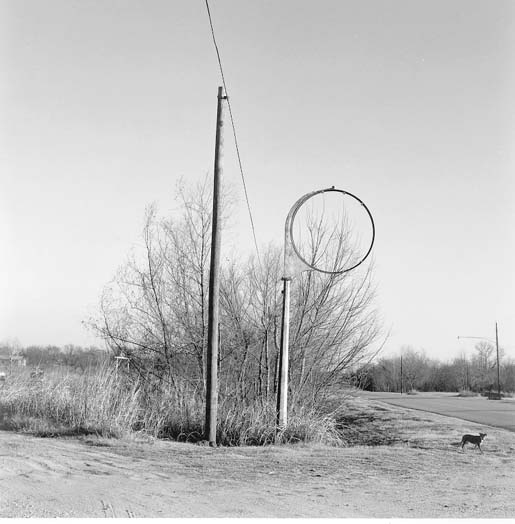
empty circle & dog (photograph Roy Hamric)
Looking
forward only,
Not knowing how
to look back.
– from A Zen Forest
the military & mindfulness
Posted: January 17, 2011 Filed under: articles, buddhism, states of mind Leave a commentA New York Times story today looked at the problem of US soldiers processing an overload of data and making split-second decisions which can save lives or mistakenly take lives.
The military is experimenting with training the soldiers in “mindfulness,” and its methods sound like a crude version of Vipasanna meditation techniques. I’m wondering if the military is aware of the parallels. If not, someone needs to clue the psychologists behind the training program in on one of the world’s oldest, proven techniques for increasing mindfulness.
Here’s a clip from the story, which is linked here.
“The military is trying novel approaches to helping soldiers focus. At an Army base on Oahu, Hawaii, researchers are training soldiers’ brains with a program called “mindfulness-based mind fitness training.” It asks soldiers to concentrate on a part of their body, the feeling of a foot on the floor or of sitting on a chair, and then move to another focus, like listening to the hum of the air-conditioner or passing cars.
“The whole question we’re asking is whether we can rewire the functioning of the attention system through mindfulness,” said one of the researchers, Elizabeth A. Stanley, an assistant professor of security studies at Georgetown University. Recently she received financing to bring the training to a Marine base, and preliminary results from a related pilot study she did with Amishi Jha, a neuroscientist at the University of Miami, found that it helped Marines to focus.”
Quotes from Gary Snyder on nature
Posted: December 24, 2010 Filed under: books, people, states of mind Leave a comment“It comes again to the understanding of the subtle but critical difference of meaning between nature and wild. Nature, they say, is the subject of science. Nature can be deeply probed, as in microbiology. The wild is not to be made subject or object in this manner; to be approached it must be admitted from within, as a quality intrinsic to who we are. Nature is ultimately in no way endangered; wilderness is. The wild is indestructible, but we might not see the wild.” The Practice of the Wild, page 181.
“To know the spirit of a place is to realize that you are a part of a part and that the whole is made of parts, each of which is whole. You start with the part you are whole in.” The Practice of the Wild, page 38.
“The pressures of growing populations and the powers of entrenched (but fragile, confused, and essentially leaderless) economic systems warp the likelihood of any of us seeing clearly. Our perception of how entrenched they are may also be something of a delusion.” The Practice of the Wild, page 36.
 the roy hamric journal