
My aunt’s painting
Posted: July 3, 2016 Filed under: photography, sight seeing, time and space, Uncategorized Leave a comment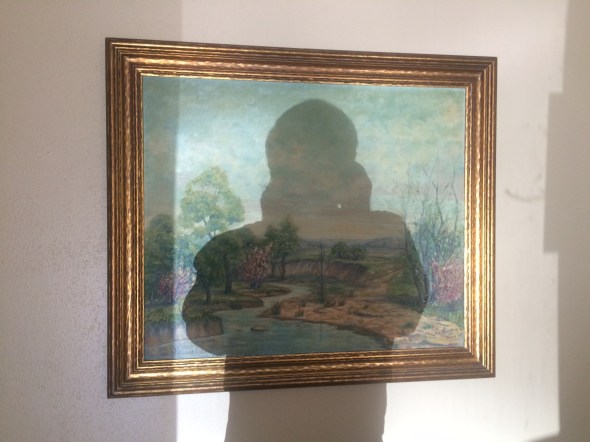
This painting, by Ava Milner Hamm, is one of my earliest memories, a landscape of country that starts west of Fort Worth. The painting was always in the two houses where I grew up. I have lived with it in sight (or memory) for all of my life. It always tells me I’m home.
Jim Harrison writes about Red Pine
Posted: May 9, 2016 Filed under: books, Buddhism Zen, poetry, writers Leave a comment
Red Pine, Stonehouse and Gary Snyder are mentioned in Jim Harrison’s new trilogy of novellas that was just released, The Ancient Minstrel:
“After attending and giving at least a hundred poetry readings he could remember only one that struck him as a hundred percent genuine and honest. A poet named, simply enough, Red Pine read from an ancient Chinese poet he had translated, called Stonehouse. Red Pine read with quiet integrity just what he translated. Usually after a reading he was in a private snit and needed a drink, but now he walked down and looked at the harbor, his spine still tingling. The other true exception was Gary Snyder. He never wanted Snyder’s readings to end.”
It
Posted: April 15, 2016 Filed under: Buddhism Zen, poetry, religion, states of mind Leave a comment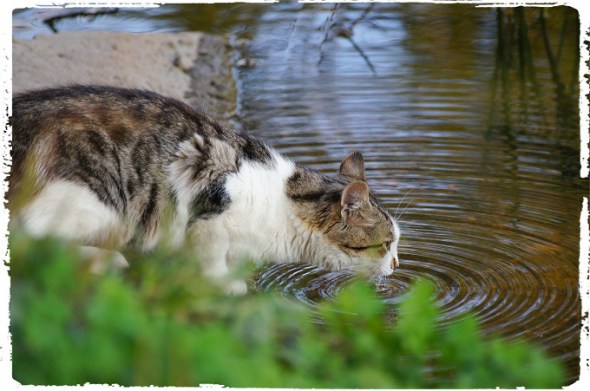
Photograph by Alex Markovich
It
Isn’t it it
Or is it it
Or is it it
It’s it isn’t
It.
Jim Harrison, RIP
Posted: March 27, 2016 Filed under: people, poetry, writing Leave a comment 
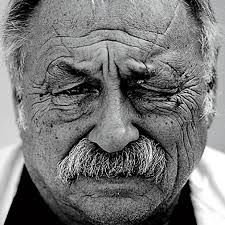
A great writer, Jim Harrison. died today at his casita in Patagonia, Arizona.
Soul
My spirit is starving.
How can it be fed?
Not by pain in the predictable future
nor the pain in the past
but understanding the invisible flower
within the flower that tells it what is,
the soul of the tree that does the same.
I don’t seem to have a true character
to discover, a man slumped on his desk
dozing at midafternoon… – From Dead Man’s Float
Palm Sunday, a moveable feast
Posted: March 25, 2016 Filed under: people, states of mind Leave a comment 
From Palm Sunday: An Autobiographical Collage by the clear-eyed Kurt Vonnegut. Palm Sunday, a moveable feast, was March 20 this year.
“What should young people do with their lives today? Many things, obviously. But the most daring thing is to create stable communities in which the terrible disease of loneliness can be cured.”
“Anyway—because we are readers, we don’t have to wait for some communications executive to decide what we should think about next—and how we should think about it. We can fill our heads with anything from aardvarks to zucchinis—at any time of night or day.”
“As for literary criticism in general: I have long felt that any reviewer who expresses rage and loathing for a novel or a play or a poem is preposterous. He or she is like a person who has put on full armor and attacked a hot fudge sundae or a banana split.”
“I believe that reading and writing are the most nourishing forms of meditation anyone has so far found. By reading the writings of the most interesting minds in history, we meditate with our own minds and theirs as well. This to me is a miracle.”
“Be aware of this truth that the people on this earth could be joyous, if only they would live rationally and if they would contribute mutually to each others’ welfare.
“This world is not a vale of sorrows if you will recognize discriminatingly what is truly excellent in it; and if you will avail yourself of it for mutual happiness and well-being. Therefore, let us explain as often as possible, and particularly at the departure of life, that we base our faith on firm foundations, on Truth for putting into action our ideas which do not depend on fables and ideas which Science has long ago proven to be false.”
“I chose cultural anthropology, since it offered the greatest opportunity to write high-minded balderdash.”
“Laughs are exactly as honorable as tears. Laughter and tears are both responses to frustration and exhaustion, to the futility of thinking and striving anymore. I myself prefer to laugh, since there is less cleaning up to do afterward.”
“Trust a crowd to look at the wrong end of a miracle every time.”
“I propose that every person out of work be required to submit a book report before he or she gets his or her welfare check.”
“Bertrand Russell declared that, in case he met God, he would say to Him, “Sir, you did not give us enough information.” I would add to that, “All the same, Sir, I’m not persuaded that we did the best we could with the information we had. Toward the end there, anyway, we had tons of information.”
“A society, on occasion, can be the worst possible describer of mental health.”
“I know at last what I want to be when I grow up. When I grow up I want to be a little boy.”
“Some of you might go out and kill Communists, but that is no longer a fashionable thing to do. And you wouldn’t be killing real Communists anyway. This country has fulfilled more of the requirements of the Communist Manifesto than any avowedly Communist nation ever did. Maybe we’re the Communists.”
James Newton, Soul Man
Posted: March 4, 2016 Filed under: people, poetry Leave a comment
A great soul and true friend, James Newton, died on February 12.

Daylight
Posted: February 27, 2016 Filed under: people, photography, poetry, time and space, writers Leave a comment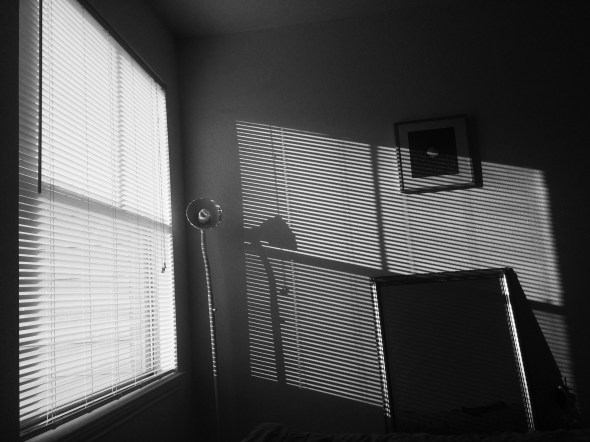
Did you notice the daylight today?
The days are short in December.
It comes before dark. Sometimes it passes
in a hurry to get someplace else
More friendly perhaps. Fiji maybe.
We become forgetful and miss it some days.
In March there were six different warblers
in one willow bush. What else could
you possibly want from daylight?
– Jim Harrison, Dead Man’s Float
Finger Snapping Time
Posted: February 21, 2016 Filed under: buddhism, people, photography, poetry, writers Leave a comment
Photograph of Blue Heron by Jesse Sublett
People can’t explain why they’re so crazy
The two evil birds on their faces
The three poison snakes in their hearts
One or another blocks their way
Making it hard to get hold of things
Lift your hand high and snap your fingers
Homage to the Buddha
– Poem #223 from The Collected Songs of Cold Mountain, translated from Chinese by Red Pine
Whitman’s personal record
Posted: February 4, 2016 Filed under: Uncategorized Leave a comment
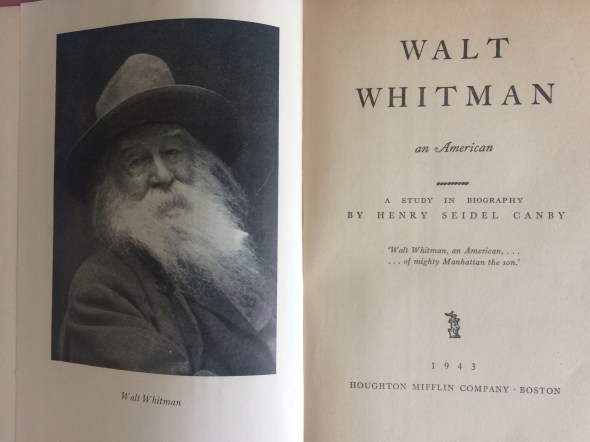
Walt Whitman, An American by Henry Seidel Canby, published in 1943, is an intimate look at the poet’s long struggle to create Leaves of Grass, which Emerson so famously hailed as the rising of a truly new American poet, of a type he had called for in his essays which urged readers to cast off European ways and forge a new consciousness based on the new American land and spirit. Canby is good on Whitman’s early life as a respected journalists and editor of several weeklies in Brooklyn and New York City where he cut a compelling figure among the writers and artists of the times. He was far ahead of his time, with a cunning understanding of publicity, a theatrical presence, and a sophisticated understanding of politics. He was viewed as a sophisticated political journalist who also had a flair for essays and portraits of people and events. All the while, his inner world, his meditative link with the unfolding of his daily experiences, was secretly putting down deep roots which around age 35 burst forth in epiphany-like awakenings, calling out the first poems celebrating himself:
From his notebook:
I am the poet of the body
And I am the poet of the soul…
I am the poet of reality
I say the earth is not an echo…
I am the poet of equality
I dilate you with tremendous breath
He saw himself as nothing less than a divine, incarnate prophet-teacher. He fully assumed the role – braving decades of public outcries of indecency because of his frankness (so tender and mild) when writing about sexual relations between women and men, the actual extent of which are shrouded in personal reticence. His service later in life as a volunteer hospital worker in Washington D.C. during the Civil War years stands out because it called forth and displayed his saint-like character. A touching moment: when Lincoln and Whitman confronted each other on several occasions, there seemed to have been a bow given my both men without an exchange of words.
The record he left of his volunteer service to the injured soldiers, Specimen Days, and his notebooks from that period, are a close second to his final, completed version of Leaves of Grass, which is now our national song of the 19th century America spirit (which, alas, lived and lives only in literature). Wth Emerson, Thoreau, Melville and Whitman we had a calling forth for an America which was never to be and four artful testaments to the causes of that failure: and yet, there is both an America which continues to live up to their ideals and an America which blusters along oblivious to the transcendence they called for to achieve a better human nature during our time on Earth. Even so, it was a bright era for American letters. Looking at Whitman’s life, you can’t help but see the link with Allen Ginsberg, a continuation of Whitman’s spirit and energy who lived in a time when the materialism and cynicism, foreseen by the 19th century writers, was firmly entrenched. It dominated Ginsberg’s time, but he did, indeed, Howl against it. Ginsberg’s public acceptance had obvious parallels to Whitman’s. A public misapprehension of his poetic style and widespread establishment shock at his unabashed homosexuality and willingness to assume a political role (something Whitman never did). And here we are, in hope, awaiting the emergence of another quartet of writers who will raise the banner in this century.
This is what you shall do
Posted: January 30, 2016 Filed under: books, people, poetry Leave a comment
“This is what you shall do; Love the earth and sun and the animals, despise riches, give alms to every one that asks, stand up for the stupid and crazy, devote your income and labor to others, hate tyrants, argue not concerning God, have patience and indulgence toward the people, take off your hat to nothing known or unknown or to any man or number of men, go freely with powerful uneducated persons and with the young and with the mothers of families, read these leaves in the open air every season of every year of your life, re-examine all you have been told at school or church or in any book, dismiss whatever insults your own soul, and your very flesh shall be a great poem and have the richest fluency not only in its words but in the silent lines of its lips and face and between the lashes of your eyes and in every motion and joint of your body.”
 the roy hamric journal