
the military & mindfulness
Posted: January 17, 2011 Filed under: articles, buddhism, states of mind Leave a commentA New York Times story today looked at the problem of US soldiers processing an overload of data and making split-second decisions which can save lives or mistakenly take lives.
The military is experimenting with training the soldiers in “mindfulness,” and its methods sound like a crude version of Vipasanna meditation techniques. I’m wondering if the military is aware of the parallels. If not, someone needs to clue the psychologists behind the training program in on one of the world’s oldest, proven techniques for increasing mindfulness.
Here’s a clip from the story, which is linked here.
“The military is trying novel approaches to helping soldiers focus. At an Army base on Oahu, Hawaii, researchers are training soldiers’ brains with a program called “mindfulness-based mind fitness training.” It asks soldiers to concentrate on a part of their body, the feeling of a foot on the floor or of sitting on a chair, and then move to another focus, like listening to the hum of the air-conditioner or passing cars.
“The whole question we’re asking is whether we can rewire the functioning of the attention system through mindfulness,” said one of the researchers, Elizabeth A. Stanley, an assistant professor of security studies at Georgetown University. Recently she received financing to bring the training to a Marine base, and preliminary results from a related pilot study she did with Amishi Jha, a neuroscientist at the University of Miami, found that it helped Marines to focus.”
Reading Cavell
Posted: October 19, 2010 Filed under: articles, books, people, states of mind, writing Leave a comment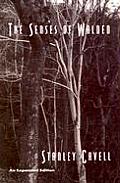 Stanley Cavell has created more ground breaking work on the importance of Thoreau’s and Emerson’s writing than anyone of his generation. Along with Walt Whitman, they are the core of original American thought and literature. Rereading Cavell’s The Senses of Walden, it’s uncanny how these three writers circle each other, while always pushing into new ideas that carry their own marks. Here’s an excerpt that connects Emerson and Thoreau with Heidegger, who was influenced by Emerson’s writing.
“As to the question of what may look like the direction of influence, I am not claiming that Heidegger authenticates the thinking of Emerson and Thoreau; the contrary is, for me, fully as true, that Emerson and Thoreau may authorize our interest in Heidegger… . Emerson’s and Thoreau’s relation to poetry [read writing] is inherently their interest in their own writing…I do not mean their interest in what we may call their poems, but their interest in the fact that what they are building is writing, that their writing is, as it realizes itself daily under their hands, sentence by shunning sentence, the accomplishments of inhabitation, the making of it happen, the poetry of it. Their prose is a battle, using a remark of Nietzsche’s, not to become poetry; a battle specifically to remain in conversation with itself, answerable to itself. Such writing takes the same mode of relating to itself as reading and thinking do, the mode of the self’s relation to itself, call it self-reliance. Then whatever is required in possessing a self will be required in thinking and reading and writing. This possessing is not––it is the reverse of––possessive; I have implied that in being an act of creation, it is the exercise not of power but of reception. Then the question is on what terms is the self received?
“The answer I give for Emerson here is a theme of his thinking that further stands it with the latter Heidegger’s, the thing Emerson calls ‘onward thinking,’ the thing Heidegger means in taking thinking as a matter of getting ourselves ‘on the way.’… . In “Circles,” Emerson invites us to think about the fact, or what the fact symbolizes, that every action admits of being outdone, that around every circle another circle can take its place… . What is the motive, the means of motion of this [constant] movement? How do we go on? (In Wittgenstein’s Philosophical Investigations, knowing how to go on as well as knowing when to stop, is exactly the measure of our knowing, or learning, in certain of its main regions or modes––for example, in the knowledge we have of our words. Onward thinking, on the way, knowing how to go on, are of course inflections or images of the religious idea of The Way, inflections which specifically deny that there is a place at which our ways end…)
“You may imagine the answer to the question how we move as having to do with power. But power seems to be the result…not the cause. I take Emerson’s answer to be what he means by ‘abandonment.’ The idea of abandonment contains what the preacher in Emerson calls ‘enthusiasm’ or the New Englander in him calls ‘forgetting ourselves,’ together with what he calls leaving or relief or quitting or release or shunning or allowing for deliverance, which is freedom (as in ‘Leave your theory as Joseph his coat in the hand of the harlot, and flee’ [Self-Reliance essay], together further with something he means by trusting or suffering (as in the image of the traveler––the conscious intellect, the intellect alone––who has lost his way [throwing] his reins on the horse’s neck, and [trusting] to the instinct of the animal to find his road [The Poet essay]… . Emerson’s perception of the moment is taken in hope, as something to be proven only on the way, by the way. This departure, such setting out, is, in our poverty, what hope consists in, all there is to hope for ; it is the abandoning of despair, which is otherwise our condition. (Quiet desperation Thoreau will call it; Emerson has said, silent melancholy.)
“What the ground of the fixated conflict between solipsism and realism should give way to––or between subjectivity and objectivity, or the private and the public, or the inner and the outer––is the task of onwardness… .
“In Heidegger: ‘The thanc means man’s inmost mind, the heart, the heart’s core, that innermost essence of man which reaches outward most fully and to the outermost limits.'(From What is Called Thinking). In Emerson: ‘To believe your own thought, to believe that what is true for you in your private heart, is true for all men––that is genius. Speak your latent conviction and it shall be the universal sense; for always the inmost becomes the outmost.’ (Self-Reliance)… .
“Then everything depends on your realization of abandonment. For the significance of leaving lies in its discovery that you have settled something, that you have felt enthusiastically what there is to abandon yourself to, that you can treat the others there are as those to whom the inhabitation of the world can now be left.”
Kyoto Journal’s biodiversity articles
Posted: October 11, 2010 Filed under: articles Leave a commentHere’s 10 take-away ideas from the inspiring Kyoto Journal issue No. 75, which focuses on the UN Convention on Biological Diversity to be held this Fall in Nagoya, Japan.
1. David Kubiak’s introductory article notes the probable lack of really meaningful actions from this meeting (impacted by the global economic downturn and the current “corporate conciliatory” stance of governments), but overall he’s optimistic about the impact that grass roots activists around the world can have locally and collectively, with new innovative theories and concepts of cross-organizational efforts forming as we speak which can increase the impact on public opinion and special interests, while drawing more average people into the fray with focused information about flora and fauna having a right to co-exist and not just be identified as “property” by whoever owns the habitat.
2. A paleontologist, Anthony Barnosky, writes about the five previous eras of Earth history, when at least 75 percent of species went extinct, and how we’re conceivably approaching a similar condition because of our way of living in a “me first” mentality. Some numbers: mammals, already up to 45 percent “too low” (another 21 percent endangered); amphibians, up to 43 percent endangered; reptiles, up to 28 percent endangered; birds, at least 12 percent endangered; 75 percent of genetic diversity of agricultural crops has been lost; 75 percent of the world’s fisheries are over-exploited; 23 percent of plant species are threatened with extinction, and the list goes on….
3. Some good news: 48 species of plants or animals which were at the brink of extinction have been reclaimed back and are now being successfully nurtured to survive. Reading about their individual stories is akin perhaps to the feeling of giving birth to life. Fulfilling, rewarding, makes you proud of people and what they can do at the individual and governmental level.
4. For a sophisticated look at what really goes on at a huge UN international conference on the environment, see Eric Johnson’s primer on who attends, what to expect, and how delegates and participants can actually make a difference.
5. Twenty-five pages of the magazine explore “Satoyama,” a Japanese word that means “mountain village,” but which stands for an ancient way of blending human’s footprints into the web of Nature rather than altering it. The concept and practices personify the smaller-is-better approach to a sustainable relationship with flora and fauna, while recognizing that Nature is always feeding off itself, as do humans feed off nature. The articles are precise and detailed, taking the reader into the minds of the villagers who have timbered the forests, fished the lakes and rivers, burned the meadows and preserved the habitats for centuries.
6. The Millennium Ecosystem Assessment article explores the findings of a UN-mandated study to assess the consequences of ecosystem change and to map out a scientific basis for actions to enhance the conservation and sustainable use of ecosystems. Sounds technical, and it is, but it’s the level of scientific analysis that is required in order to bring governmental bodies into the same boat. For the report, click here
7. Pavan Sukhdev (www.tinyurl.com/pavan-sukhdev) looks at the “The nature of value and the value of nature,” a concept first discussed by economist Adam Smith. Practical, utilitarian and philosophical issues are at the heart of the role played by humans within their home in Nature, and this article redresses the balance while making one feel that Nature, and man’s relationship to it, was far better understood by people before the scientific revolution than now. Yes, we understand more about Nature’s workings, but the practical distance between humans and Nature has grown so that people feel less individual responsibility.
8. The Ecozoic Era article by Thomas Berry is a refreshing exploration of what might go right in the next era if humans can reorient themselves to celebrate and nurture Nature and our place in the matrix or life.
9. In 10 Challenges for the Next Decade, Quentin Wheeler notes how many species are still unaccounted for, and he calls for a systematic inventory of known and unknown species of plants and animals.
10. Poet and activist Gary Snyder calls for more self reliance, the cultivation of each person’s role and responsibility in understanding their place in the environment, in exercising a personal role in keeping Nature and local culture alive and entwined within one’s daily life and home ground.
Some relevant websites:
On endangered fisheries: www.bloomassociation.org
A new visual PR effort: www.2020v.org
You can read all the articles above and many more online at
www.kyotojournal.org/biodiversity
The Kyoto Journal biodiversity issue
Posted: October 9, 2010 Filed under: articles, states of mind, writing 1 CommentUnbelievably beautiful
and important, the Kyoto Journal issue No. 75
Walt Whitman on modern American poetry
Posted: September 19, 2010 Filed under: articles, people, poetry, writing 1 Comment
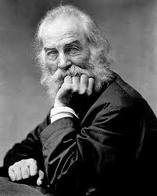
This is a prophetic excerpt from Walt Whitman’s Collected Prose on the future of American poetry. Right on the mark, for me, when I think of my two favorite poets, Gary Snyder and Jim Harrison, who have just published a new book, The Etiquette of Freedom, a conversation between two writers filled with vitalism.
POETRY TODAY IN AMERICA—THE FUTURE
walt whitman
The poetry of the future, (a phrase open to sharp criticism, and not satisfactory to me, but significant, and I will use it)—the poetry of the future aims at the free expression of emotion, (which means far, far more than appears at first,) and to arouse and initiate, more than to define or finish. Like all modern tendencies, it has direct or indirect reference continually to the reader, to you or me, to the central identity of everything, the mighty Ego. It is more akin, likewise, to outside life and landscape, (returning mainly to the antique feeling,) real sun and gale, and woods and shores—to the elements themselves—not sitting at ease in parlor or library listening to a good tale of them, told in good rhyme. Character, a feature far above style or polish—a feature not absent at any time, but now first brought to the fore—gives predominant stamp to advancing poetry.
William Empson on Chinese poetry
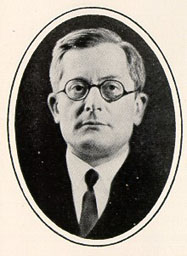
Posted: September 12, 2010 Filed under: articles, people, poetry 2 CommentsThe selection below is from William Empson’s Seven Types of Ambiguity. He’s writing about comparative adjectives which do not say what their noun is to be compared with, and he uses two lines of Chinese poetry in his explication which not only captures the precision of Empson’s writing and critical sense, but offers one of the best primers on how to approach the concision of Asian poetical use of ordinary language pushed to heighten meaning. Empson taught in Japan, Beijing and Kunming, before spending the rest of his teaching career in Britain.
william empson
“Not unlike the use of a comparison which does not say in virtue of what the two things are to be compared is the use of a comparative adjective which does not say what its noun is to be compared with; since all adjectives are in a sense comparative, this source of ambiguity is a sufficiently general one. In particular, it is the chief source of euphuistic conceits and the paradoxes cultivated in the 1890s, which give a noun two contradictory adjectives and leave it to the reader to see how the adjectives are used. I shall give an example from one of Mr. Waley’s Chinese translations, to insist upon the profundity of feeling which such a device may enshrine.
‘Swiftly the years, beyond recall.
‘Solemn the stillness of this spring morning.’
“The human mind has two main scales on which to measure time. The large one takes the length of a human life as its unit, so that there is nothing to be done about life, it is of an animal dignity and simplicity, and must be regarded from a peaceable and fatalistic point of view. The small one takes as its unit the conscious moment, and it is from this that you consider the neighboring space, an activity of the will, delicacies of social tone, and your personality. The scales are so far apart as almost to give the effect of defining two dimensions ; they do not come into contact because what is too large to be conceived by the one is still too small to be conceived by the other. Thus, taking the units as a century and the quarter of a second, their ratio is ten to the tenth and their mean is the standard working day ; or taking the smaller one as five minutes, their mean is the whole of summer. The re pose and self-command given by the use of the first are contrasted with the speed at which it shows the years to be passing from you, and therefore with the fear of death; the fever and multiplicity of life, as known by the use of the second, are contrasted with the calm of the external space of which it gives consciousness, with the absolute or extra-temporal value attached to the brief moments of self-knowledge with which it is concerned, and with a sense of security in that it makes death so far off.
“Both these time-scales and their contrasts are included by these two lines in a single act of apprehension, because of the words swift and still. Being contradictory as they stand, they demand to be conceived in different ways ; we are enabled, therefore, to meet the open skies with an answering stability of self-knowledge ; to meet the brevity of human life with an ironical sense that it is morning and spring time, that there is a whole summer before winter, a whole day before night.
“I call swift and still here ambiguous, though each is meant to be referred to one particular time-scale, because between them they put two time-scales into the reader’s mind in a single act of apprehension. But these scales, being both present, are in some degree used for each adjective, so that the words are ambiguous in a more direct sense ; the years of a man’s life seem swift even on the small scale, like the mist from the mountains which gathers a moment, then scatters; the morning seems still even on the large scale, so that this moment is apocalyptic and a type of heaven.
“Lacking rhyme, meter, and any overt device such as comparison, these lines are what we should normally call poetry only by virtue of their compactness; two statements are made as if they were connected, and the reader is forced to consider their relations for himself. The reason why these facts should have been selected for a poem is left for him to invent; he will invent a variety of reasons and order them in his own mind. This, I think, is the essential fact about the poetical use of language.”
Bloom: the American religion
Posted: September 6, 2010 Filed under: articles, books, people, poetry Leave a comment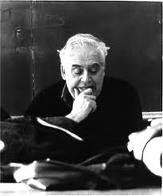
harold bloom
I’m again reading Agon by Harold Bloom. All I can say is Bloom’s early books are the deep roots of his present day flowering, his burst of books on religion and poetry. His contribution to the world of critical thought, so broad and connective, is original and hardly equaled, as far as I can tell. Agon, with its cold subtitle, Towards a Theory of Revisionism (which is too academic sounding), goes through and around Gnosticism, Kaballah, Freud, Emerson, Carlyle, Whitman, Stevens, Hart Crane, American pragmatism, etc. But what I most love is his capturing of “the American difference” in poetry and criticism. Frequently, in Bloom’s writing you can read “poetry” for “religion” and “religion” for “poetry.” Again, the pivotal heart of the book beats in the essay “Emerson: The American Religion.” I want to quote a passage that begins six sentences into the essay: It now reads like an anthem to me, and never fails to carry me away:
“The lengthened shadow of American culture is Emerson’s, and Emerson indeed saw everything is everything, and spoke with the tongue of a daemon. His truest achievement was to invent the American religion, and my reverie intends to a spiraling out from his center in order to track the circumference of that religion in a broad selection of those who emanated out from him, directly and evasively, celebratory of or in negation to his Gnosis. Starting from Emerson we came to where we are, and from that impasse, which he prophesied, we will go by a path that most likely he marked out also. The mind of Emerson is the mind of America, for worse and for glory, and the central concern of that mind was the American religion, which most memorably was named “self-reliance.”
For “self-reliance” read gnosis. After decades of reading Emerson and Bloom, I think I’m at last beginning to understand truly why America appears throughout its history to be verging toward crisis or collapse, while always moving forward.
For a list of Bloom’s books and selected articles, click here.
Red Pine: language, poetry, translation
Posted: August 14, 2010 Filed under: articles, buddhism, people, poetry, writing Leave a commentThis essay by Red Pine was first presented as part of the Simmons College International Chinese Poetry Conference, Oct. 8-10, 2004. For more on him, see the On the Record postings.
Dancing with the Dead: Language, Poetry and the Art of Translation
By Red Pine
Every time I translate a book of poems, I learn a new way of dancing. The people with whom I dance, though, are the dead, not the recently departed, but people who have been dead a long time. A thousand years or so seems about right. And the music has to be Chinese. It’s the only music I’ve learned to dance to.
I’m not sure what led me to this conclusion, that translation is like dancing. Buddhist meditation. Language theory. Cognitive psychology. Drugs. Sex. Rock and Roll. My ruminations on the subject go back more than twenty-five years to when I was first living in Taiwan. One day I was browsing through the pirated editions at Caves Bookstore in Taipei, and I picked up a copy of Alan Ginsberg’s Howl. It was like trying to make sense of hieroglyphics. I put it back down and looked for something else. Then a friend loaned me a video of Ginsberg reading Howl. What a difference. In Ginsberg’s voice, I heard the energy and rhythm, the sound and the silence, the vision, the poetry. The same thing happened when I read some of Gary Snyder’s poems then heard him read. The words on a page, I concluded, are not the poem. They are the recipe, not the meal, steps drawn on a dance floor, not the dance.
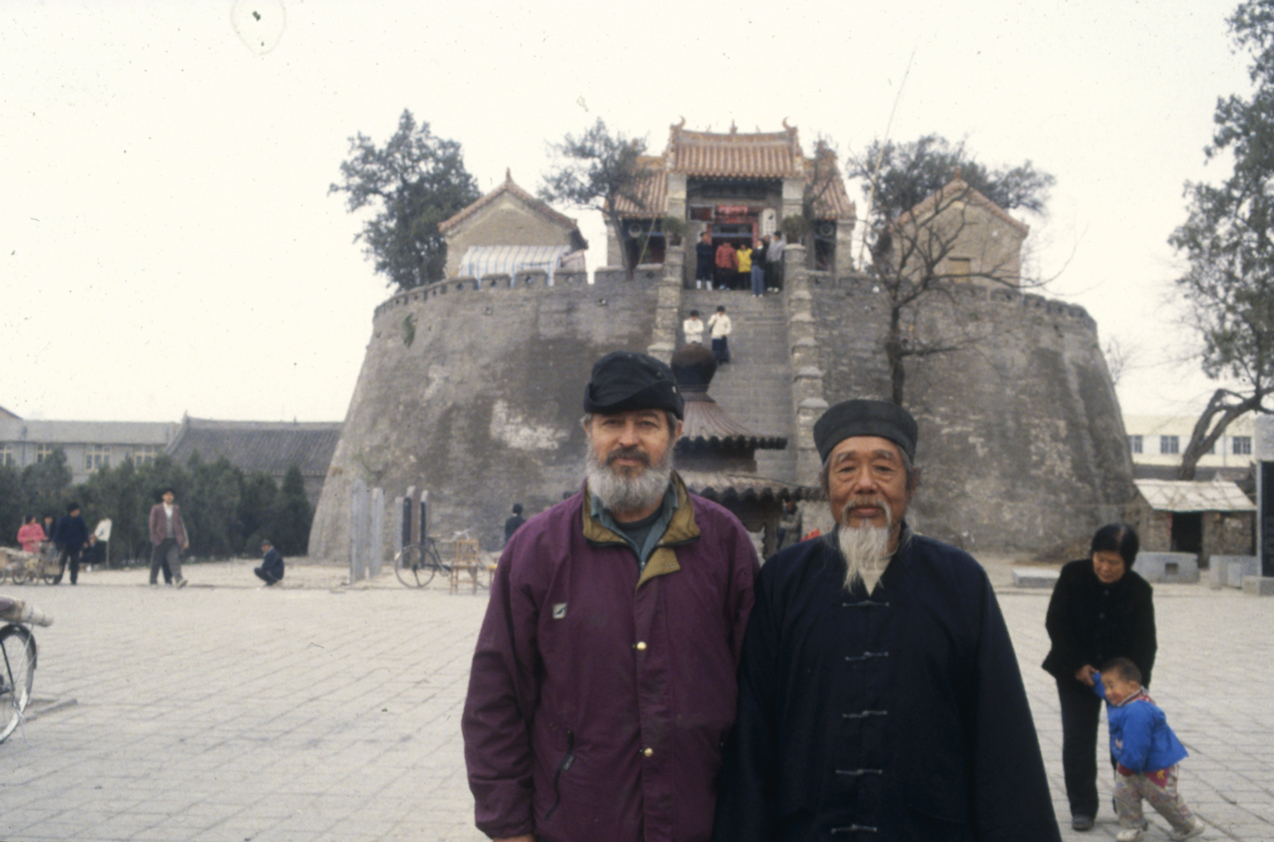
Red Pine with Taoist priest at Lao-tzu's observatory (photograph: Red Pine)
For the past hundred thousand years or so, we human beings have developed language as our primary means of communication—first spoken language and more recently written language. We have used language to convey information to each other, to communicate. But there are a set of questions just below the surface that we prefer not to address. How well does language do what we think it does? And what does it do? The reason we prefer not to address such questions is because language is so mercurial. We can never quite pin it down. It is forever in flux. And it is forever in flux, because we, its speakers and writers and translators, are forever in flux. We can’t step into the same thought twice. We might use or read or hear the same word twice, but how can it mean the same thing if the person who uses or reads or hears that word is not the same person? We speak of language, as if it was a fixed phenomenon, and we teach it and learn it, as if it was carved in stone. But it is more like water, because we are more like water. Language is at the surface of the much deeper flux that is our riverine minds. Thus, if we approach translation by focusing on language alone, we mistake the waves for the river, the tracks for the journey.
But this isn’t all. Many linguists and anthropologists are of the opinion that language was developed by early humans not simply for the purpose of communication but for deception. All beings communicate with each other, but at least on this planet only humans deceive each other. And for such deception, we rely primarily on language. It isn’t easy for us to hide our feelings and intentions in our facial or bodily expressions, but language offers ready and endless opportunities for altering and manipulating the truth. Thus, the question for a translator is not only the efficiency of language, but its truthfulness. That is, does it actually do what we think it does, and does what it does have any basis other than in fiction?
We live in worlds of linguistic fabrication. Pine trees do not grow with the word “pine” hanging from their branches. Nor does a pine tree “welcome” anyone to its shade. It is we who decide what words to use, and, like Alice, what they mean. And what they mean does not necessarily have anything to do with reality. They are sleights of the mind as well as the hand and the lips. And if we mistake words for reality, they are no longer simply sleights but lies. And yet, if we can see them for what they are, if we can see beyond their deception, they are like so many crows on the wing, disappearing with the setting sun into the trees beyond our home. This is what poetry does. It brings us closer to the truth. Not to the truth, for language wilts in such light, but close enough to feel the heat.
According to the Great Preface to the Book of Odes, the Chinese character for poetry means “words from the heart.” This would seem to be a characteristic of poetry in other cultures as well—that it comes from the heart, unlike prose, which comes from the head. Thus, prose retains the deceptive quality of language, while poetry is our ancient and ongoing attempt to transcend language, to overcome its deceptive nature by exploring and exposing the deeper levels of our consciousness and our emotions. Though poetry is still mediated by language, it involves a minimal use of words, and it also weakens the dominance of language through such elements as sound and silence, rhythm and harmony, elements more common to music than logic. In poetry, we come as close as we are likely to get to the meaning and to the heart of another.
This, too, isn’t all. Poetry is not simply “words from the heart.” A poet doesn’t make a poem so much as discover a poem, maybe in a garden or a ghetto, maybe in a garbage dump or a government corridor, or in a galaxy of stars. In poetry, we go beyond ourselves to the heart of the universe, where we might be moved by something as small as a grain of sand or as great as the Ganges.
So what does all this mean for the translator? For me it means that I cannot simply limit myself to the words I find on the page. I have to go deeper, to dive into the river. If language is our greatest collective lie, poetry is our attempt to undo that deception. When I translate a poem, I don’t think of the Chinese on the page as the poem, only evidence of the existence of a poem. Poetry shows itself in words, and words are how we know it. But words are only the surface. Even after poets give their discoveries expression in language, they continue to discover a poem’s deeper nuances, and they make changes: maybe a few words, maybe a few lines, maybe much more. The poem, as I see it, is a never-ending process of discovery. And it isn’t just language. It’s the unspoken vision that impels a poet and to which the poet tries to give expression. But the poet never gives complete expression to that vision, only a few fragments from a kaleidoscopic insight, a few steps on the dance floor impelled by music even the poet hears only imperfectly.
Then a translator comes along, and things change. It is only then that the poet no longer dances alone but with a partner. And together they manifest a deeper insight into the poem, into the music that motivates the dance. Thus, I have come to realize that translation is not just another literary art, it is the ultimate literary art, the ultimate challenge in understanding as well as performance. For me, this means a tango with Li Bai, a waltz with Wei Yingwu, a dance with the dead.
copyright@Bill Porter aka Red Pine
New Cormac McCarthy movies
Posted: August 4, 2010 Filed under: articles, books, fiction, people, writing Leave a comment
first edition cover
Good news. Two more Cormac McCarthy novels, Cities of the Plains and Blood Meridian, are scheduled to be filmed in 2012 and 2011, respectively.
This bodes well for his Border trilogy being filmed complete. There hasn’t been a novelist who has had such a string of successful films from his novels in my memory. We can hope these two movies are done as well as All the Pretty Horses, No Country for Old Men and The Road. See the McCarthy website here.
McCarthy wisely decamped from Knoxville in mid-life and hid away in El Paso where he found a city, a landscape and a people, past and present, that were equal to his majestically precise prose.
Chiang Mai’s music scene
Posted: August 1, 2010 Filed under: articles, photography, places 1 Comment

Heaven's Beach is an Asian version of a juke joint in Texas on the Rio Grande. (Iphone photograph)
The New York Times recently ran a story on a neighborhood institution called Heaven’s Beach, a couple of doors away from the Rasta bar that I’ve photographed a few times. The writer noted the Beach’s great, raw rock and roll and other music venues in Chiang Mai, which is a nest of creativity on many fronts.

Art outside in a small bar drinking area
The bar is run by a clan of Issan (northeastern) folks who function as a commune. Issan, the source of the massive people’s demonstrations in Bangkok in recent months, is also the source for much of the country’s musical originality and creativity. Click here for the story in the Times. See the Joe Cummings’ interview for background on Thai music under the On the Record listings.
 the roy hamric journal