
Roxy “Coyote Boy” Gordon, writer-poet-songwriter
Posted: January 16, 2011 Filed under: books, people, poetry, writing Leave a comment
Drawing by Roxy Gordon
This post is long overdue, because in some way I refuse to accept that the Coyote Boy is gone. His life was very intense, but surrounded by a calm circle, a powerful aura that honored the idea of one-of-a-kind. He was a writer, artist and singer-songwriter. Sometimes Breeds, Smaller Circles and other of his books can be found on ABE, the used book website
 I’m reprinting two pieces by Roxy that give a feel for how he saw the world. Later, I’ll publish some of his poetry, which comes from the “Tough School” of poetry.
The West Texas Town of El Paso
by Roxy Gordon
[Edited by Judy Gordon]
This all starts in San Francisco, North Beach, hanging out with famous writers.
In those days I still wore western shirts, couldn’t buy one there. I decided it
was time to go home. We left in a little red Ford full of a dog, cats, two of
our friends and our new born baby. A big rent trailer on behind. Nobody but
me seemed willing to drive. We got lost in some town in Wyoming, middle of
the night. A policeman stopped us, looked into the car and couldn’t believe what
he saw. He figured the best thing to do was help us out of town. Before the sun
was up, I was seeing trees in the middle of the highway. We found Denver,
spent a day recovering and headed over Raton Pass. We made Texas, spent
some time building a fence, and decided to go back to San Francisco. We
stopped south of Santa Fe and had a conversation, decided Albuquerque, but
we couldn’t find anybody we knew there. Judy had never been to El Paso. I was
young and stupid, said let’s go.
We made El Paso middle of the afternoon, bought a newspaper and found a
trailerhouse for rent out on the river road. It was cheap. We moved in two
hours later. The bathroom overflowed. And we were right next to a railroad exchange.
Not good for sleeping.
Judy got a job in a printshop. She had learned typesetting in Austin, when she
worked for Bill Wittliff’s Encino Press. Wittliff wrote the screenplay for
Lonesome Dove. We decided to move out of that trailerhouse, found an ad in
the paper for a house on Blanchard. It was a big, beautiful house just across the
street from the University of Texas at El Paso. It was on a hill; from the side
porch, you could see Juarez and the Franklin Mountains. The old lady who
owned it was from Mexico. She could hardly speak English. She lived in a little
house out back. She spent most of her time in Mexico. She was gone when her
house was broken into. I called the cops and a kid came. He stationed me at the
front door to catch the burglar if the kid could run him out. Like a fool, I
actually stood there. Then Judy set herself on fire – blazing grease on the
kitchen stove.
Judy worked at the printshop and I changed my kid’s diapers. My first book,
Some Things I Did, arrived in the mail. It was published by Bill Wittliff. I set
it on top of the refrigerator. The little TV was on top of the refrigerator. We
watched Ed Sullivan.
My guitar amplifier picked up a radio station. We listened to that and watched
Gunsmoke on TV. One day I called Judy to the window to see a very tall, pretty
girl hitchhiking. She wore black leather shorts. She passed up several cars for a
guy on a motorcycle. One day, I walked across the street to UTEP. I went to the
student union, looked at the students. They looked like students I’d seen from UT
to California to Minnesota. They are all grandparents now. My friend, David
Phillips, called me to say he and his wife, Carol, were about to visit her mother in
El Paso. I drove down to try and find them, found David walking up the street
looking like Kris Kristofferson. Later, we went to Carol’s momma’s house. She
told me my writing informed her generation about what our generation was all
about. Carol and David divorced after that and Carol told me David and I were
too Texan for her to stand. Last I heard, she was in New York writing songs.
The freezeplugs rusted out on the Ford. I let it sit for a couple of days, then
fixed it with some kind of plastic goo. I got a job at an advertising agency,
writing print and TV. Judy got fired from her job because she mixed up pages
on a book. I walked to work in bright El Paso sunshine, got there every morning
for a meeting. Roy Chapman ran the agency. He’d been the host of a kids’ TV
show in El Paso. It was called Uncle Roy. He was not my idea of an uncle. He
was a mean old man, kept telling me to get out of my chair at the meeting so he
could sit down. My co-writer was a middle-age German who lived miles south
in Mexico, but spent the week in El Paso. The agency had two major accounts,
a bank in El Paso and Weaver Scopes. The German and I made up TV
commercials for the bank, had apples and oranges rolling around. I wrote a
piece for Weaver rifle scopes. Somebody rewrote it. Whoever did not
understand how scopes work. I had a fit. That may have been the beginning of
the end of my advertising career.
Judy and I drove the plastic-fixed Ford around El Paso. We saw pretty girls
walking on the streets. We saw cripples. We went to the dollar drive-in movie,
three for a dollar. Went to the A&W Root Beer Drive-in. We walked on El Paso
Street, had beggars after us. One afternoon a young woman tried to sell us her baby.
We left in the wounded Ford and headed north for Albuquerque. Marty Robbins,
I have been to the city of El Paso.
=====================================================
(Published by Coleman Chronicle & DV, 29 December, 1998.)
=====================================================
Why There Were So Many Presidents of the U.S. on The Fort Peck Reservation
by Roxy “First Coyote Boy” Gordon
(With thanks to Walley Cantrell, Edited by Judy Gordon]
About a hundred years ago, the white Bureau of Indian Affairs decided Indian kids
needed to go to what they called boarding school. Those kids, little kids and old,
were taken away from home to live nine months a year at boarding school.
The Indian agent would send his police to round-up all the kids and what some
of the parents did was round-up the kids and head for the hills. But the cops
would catch most and put them into a wagon to head for boarding school.
They deloused these kids and dressed them civilized, cut their hair and took
them off to learn white men’s ways.
One time a bunch of little boys got rounded-up at Fort Peck, Montana. Those
cops put them in a big room at the boarding school. The kids huddled up all
close together and didn’t know what to do.
After awhile, a big boy came by. He’d been at boarding school before. He
decided to play a joke on the little boys. The big boy said, “Listen, if you
don’t tell them your names, then they’ll let you loose and you can all go home.”
The little boys thought that was a good idea.
So the teachers took them into a big room and a man with a big book asked
them, “Tell me your names.” No little boy would say a word. They thought by
being quiet, then they could go on home.
But then the superintendent saw they wouldn’t say anymore, so he locked
the door and went looking for help. The superintendent found a priest and
asked them what they might do. Those little boys needed names. “At least,”
the priest said, “I can name a few.”
The priest said to the little boys, “I’m going to give you big time names. You
will never be ashamed.” “You,” he said, “you over there with the brown hair,
you are George Washington. You with the red shirt, you are Thomas Jefferson.
You with no front teeth, you are Teddy Roosevelt. And you the one with
worn-out cowboy boots, you are Abraham Lincoln. You with the green eyes,
you are Andrew Jackson. You by the window, you are John Adams.” The
priest went on and on.
The little boys didn’t know what to do. They were still named things like
Afraid Of His Tracks and Horse’s Ghost and Ground Squirrel and names like
that. But after they stayed a few years at the school, they got used to their new
names. And they kept on using those names all their lives.
So that’s why, 50 years later, George Washington, Thomas Jefferson, Teddy
Roosevelt, Abraham Lincoln, Andrew Jackson and John Adams all lived up in
Montana on the Fort Peck Reservation.
Quotes from Gary Snyder on nature
Posted: December 24, 2010 Filed under: books, people, states of mind Leave a comment“It comes again to the understanding of the subtle but critical difference of meaning between nature and wild. Nature, they say, is the subject of science. Nature can be deeply probed, as in microbiology. The wild is not to be made subject or object in this manner; to be approached it must be admitted from within, as a quality intrinsic to who we are. Nature is ultimately in no way endangered; wilderness is. The wild is indestructible, but we might not see the wild.” The Practice of the Wild, page 181.
“To know the spirit of a place is to realize that you are a part of a part and that the whole is made of parts, each of which is whole. You start with the part you are whole in.” The Practice of the Wild, page 38.
“The pressures of growing populations and the powers of entrenched (but fragile, confused, and essentially leaderless) economic systems warp the likelihood of any of us seeing clearly. Our perception of how entrenched they are may also be something of a delusion.” The Practice of the Wild, page 36.
Reading Cavell
Posted: October 19, 2010 Filed under: articles, books, people, states of mind, writing Leave a comment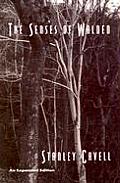 Stanley Cavell has created more ground breaking work on the importance of Thoreau’s and Emerson’s writing than anyone of his generation. Along with Walt Whitman, they are the core of original American thought and literature. Rereading Cavell’s The Senses of Walden, it’s uncanny how these three writers circle each other, while always pushing into new ideas that carry their own marks. Here’s an excerpt that connects Emerson and Thoreau with Heidegger, who was influenced by Emerson’s writing.
“As to the question of what may look like the direction of influence, I am not claiming that Heidegger authenticates the thinking of Emerson and Thoreau; the contrary is, for me, fully as true, that Emerson and Thoreau may authorize our interest in Heidegger… . Emerson’s and Thoreau’s relation to poetry [read writing] is inherently their interest in their own writing…I do not mean their interest in what we may call their poems, but their interest in the fact that what they are building is writing, that their writing is, as it realizes itself daily under their hands, sentence by shunning sentence, the accomplishments of inhabitation, the making of it happen, the poetry of it. Their prose is a battle, using a remark of Nietzsche’s, not to become poetry; a battle specifically to remain in conversation with itself, answerable to itself. Such writing takes the same mode of relating to itself as reading and thinking do, the mode of the self’s relation to itself, call it self-reliance. Then whatever is required in possessing a self will be required in thinking and reading and writing. This possessing is not––it is the reverse of––possessive; I have implied that in being an act of creation, it is the exercise not of power but of reception. Then the question is on what terms is the self received?
“The answer I give for Emerson here is a theme of his thinking that further stands it with the latter Heidegger’s, the thing Emerson calls ‘onward thinking,’ the thing Heidegger means in taking thinking as a matter of getting ourselves ‘on the way.’… . In “Circles,” Emerson invites us to think about the fact, or what the fact symbolizes, that every action admits of being outdone, that around every circle another circle can take its place… . What is the motive, the means of motion of this [constant] movement? How do we go on? (In Wittgenstein’s Philosophical Investigations, knowing how to go on as well as knowing when to stop, is exactly the measure of our knowing, or learning, in certain of its main regions or modes––for example, in the knowledge we have of our words. Onward thinking, on the way, knowing how to go on, are of course inflections or images of the religious idea of The Way, inflections which specifically deny that there is a place at which our ways end…)
“You may imagine the answer to the question how we move as having to do with power. But power seems to be the result…not the cause. I take Emerson’s answer to be what he means by ‘abandonment.’ The idea of abandonment contains what the preacher in Emerson calls ‘enthusiasm’ or the New Englander in him calls ‘forgetting ourselves,’ together with what he calls leaving or relief or quitting or release or shunning or allowing for deliverance, which is freedom (as in ‘Leave your theory as Joseph his coat in the hand of the harlot, and flee’ [Self-Reliance essay], together further with something he means by trusting or suffering (as in the image of the traveler––the conscious intellect, the intellect alone––who has lost his way [throwing] his reins on the horse’s neck, and [trusting] to the instinct of the animal to find his road [The Poet essay]… . Emerson’s perception of the moment is taken in hope, as something to be proven only on the way, by the way. This departure, such setting out, is, in our poverty, what hope consists in, all there is to hope for ; it is the abandoning of despair, which is otherwise our condition. (Quiet desperation Thoreau will call it; Emerson has said, silent melancholy.)
“What the ground of the fixated conflict between solipsism and realism should give way to––or between subjectivity and objectivity, or the private and the public, or the inner and the outer––is the task of onwardness… .
“In Heidegger: ‘The thanc means man’s inmost mind, the heart, the heart’s core, that innermost essence of man which reaches outward most fully and to the outermost limits.'(From What is Called Thinking). In Emerson: ‘To believe your own thought, to believe that what is true for you in your private heart, is true for all men––that is genius. Speak your latent conviction and it shall be the universal sense; for always the inmost becomes the outmost.’ (Self-Reliance)… .
“Then everything depends on your realization of abandonment. For the significance of leaving lies in its discovery that you have settled something, that you have felt enthusiastically what there is to abandon yourself to, that you can treat the others there are as those to whom the inhabitation of the world can now be left.”
New Stanley Cavell autobiography
Posted: October 15, 2010 Filed under: books, people, writing Leave a comment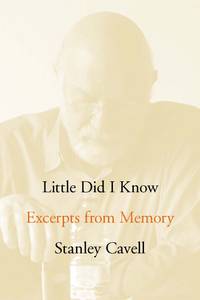 Little Did I Know is the new autobiography by Stanley Cavell, which appears to be loaded with influences from his early life and his close encounters with a host of worthies, as well as his unique nature’s embrace of his main philosophical kin . For a good scene-setting article on the book, click here. To see more from Amazon, click here.
A publisher’s description: “While Cavell’s academic work has often incorporated autobiographical elements, Little Did I Know speaks to the American experience in general. It has much to say about the particularities of growing up in an immigrant family and offers glimpses of lesser known aspects of university life in the second half of the twentieth century. At the same time, Cavell’s interests and career have brought him into contact with a range of influential and unusual people. A number of friends, colleagues, and acquaintances figure prominently or in passing over the course of this book, occasioning engaging portraits. J.L. Austin, Ernest Bloch, Roger Sessions, Thomas Kuhn, Judith Shklar, John Rawls, Bernard Williams, Jean Renoir, W. V. O. Quine, Vicki Hearne, and Jacques Derrida are no longer with us; but Cavell also pays homage to the living: Michael Fried, John Harbison, Jay Cantor, Marc Shell, John Hollander, Hilary Putnam, Toril Moi, Jill Clayburgh, Arnaud Desplechin, and Terrence Malick.
“In keeping with Cavell’s philosophical style, the drift of the narrative registers the decisiveness of the relatively unknown and the purely accidental as well. Cavell has produced a trail of some eighteen published books that range from treatments of individual writers (Wittgenstein, Austin, Emerson, Thoreau, Heidegger, Shakespeare and Beckett) to studies in aesthetics, epistemology, moral and political philosophy, cinema, opera, and religion. Here he accounts for the discovery and scope of his intellectual passions and shares them with his readers.”
Christopher Hitchens: two recent videos
Posted: October 6, 2010 Filed under: books, people Leave a comment
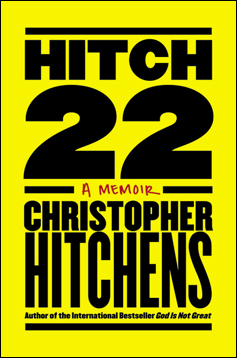
Hitchens' autobiography
Two videos of Christopher Hitchens: the first was taken during his chemotherapy treatment and includes a little with his friend Martin Amis; the second, shows him later, after the chemo and in much better condition, with George Packer of The New Yorker, in a long conversation on Obama’s foreign policy.
Christopher Hitchens on Obama’s foreign policy
New Bloom poetry anthology: Last Poems
Posted: October 1, 2010 Filed under: books, poetry Leave a comment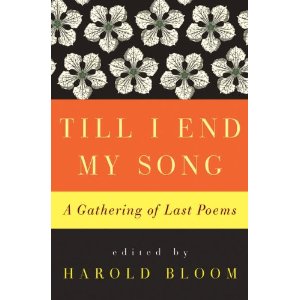 Till I End My Song is Harold Bloom’s latest anthology of poems, in this case “last poems” of one hundred influential poets. The poems are “sometimes the literal end and other times the imagined” conclusion to a poetic career, offering a final view of a poet’s character and the inevitability of death. Bloom is a unique guide to such a collection featuring Eliot, Pope, Yeats, Whitman, Dickinson, and Shakespeare, but also more neglected poets such as Conrad Aiken, William Cowper, Edwin Arlington Robinson, George Meredith and Louis MacNeice. More at Amazon here.
Bloom: the American religion
Posted: September 6, 2010 Filed under: articles, books, people, poetry Leave a comment
harold bloom
I’m again reading Agon by Harold Bloom. All I can say is Bloom’s early books are the deep roots of his present day flowering, his burst of books on religion and poetry. His contribution to the world of critical thought, so broad and connective, is original and hardly equaled, as far as I can tell. Agon, with its cold subtitle, Towards a Theory of Revisionism (which is too academic sounding), goes through and around Gnosticism, Kaballah, Freud, Emerson, Carlyle, Whitman, Stevens, Hart Crane, American pragmatism, etc. But what I most love is his capturing of “the American difference” in poetry and criticism. Frequently, in Bloom’s writing you can read “poetry” for “religion” and “religion” for “poetry.” Again, the pivotal heart of the book beats in the essay “Emerson: The American Religion.” I want to quote a passage that begins six sentences into the essay: It now reads like an anthem to me, and never fails to carry me away:
“The lengthened shadow of American culture is Emerson’s, and Emerson indeed saw everything is everything, and spoke with the tongue of a daemon. His truest achievement was to invent the American religion, and my reverie intends to a spiraling out from his center in order to track the circumference of that religion in a broad selection of those who emanated out from him, directly and evasively, celebratory of or in negation to his Gnosis. Starting from Emerson we came to where we are, and from that impasse, which he prophesied, we will go by a path that most likely he marked out also. The mind of Emerson is the mind of America, for worse and for glory, and the central concern of that mind was the American religion, which most memorably was named “self-reliance.”
For “self-reliance” read gnosis. After decades of reading Emerson and Bloom, I think I’m at last beginning to understand truly why America appears throughout its history to be verging toward crisis or collapse, while always moving forward.
For a list of Bloom’s books and selected articles, click here.
Bedside Books III: Amis, Amis, Hitchens
Posted: August 29, 2010 Filed under: books, people, writing Leave a comment Experience by Martin Amis This high combination autobiography/biography is both a story of Kingsley Amis’s decline and death, and the story of Martin’s life during that period. The novels of father and son are the story of their lives and times cast in art, and Martin’s story here is his “real” life set in dramatic narrative with a cast of real characters as compelling as fictional ones, especially the etchings of his immediate family members, and the roles of various of Martin’s and Kingsley’s friends, which include Philip Larkin, Christopher Hitchens, Julian Barnes, Ian McEwan, Saul Bellow and many other well-known names.
Memoirs by Kingsley Amis I followed up by reading Kingsley’s autobiography, which gave me my first taste of his prose, which is a far cry from Martin’s. Kingsley’s nonfiction prose is arch by comparison, prone to personal mannerism, too concerned with class consciousness. It displays a patented “English” quality, almost a stereotype, though by all signs he was egalitarian (seen through his affection for American culture) and eager to puncture pomposity whenever he could. I gained a deeper insight into the Amis clan, and many of the people limned in Experience, plus a clutch of English writers who were new to me.
Unacknowledged Legislation by Christopher Hitchens
 I put this book of literary criticism on the bedside pile again because during first reading a few years ago I was again overwhelmed by Hitchen’s range and brilliance. There is never a sign in his writing that he is out of his territory, that he is not writing from some uncanny absolute knowledge of his subject, whether it’s Kipling, Warhol, Bellow, Anthony Powell, Vidal, Orwell, Fitzgerald, Patrick O’Brian, Isherwood, Auden, Tom Wolfe, Rushdie, Mencken, Isaiah Berlin, et al. He somehow personifies Blake’s “the road of excess leads to wisdom”––he seemingly can never do too much. His serious illness now must irritate him most because it interrupts his mighty creative flow, his need for intellectual engagement. See his website here, where he writes about his recent illness and other matters.
The War Against Cliché by Martin Amis Will there be a book of letters between Amis and Hitchens? We can hope. This is a collection of Amis literary criticism (1971-2000), which displays his very close reading of texts especially for literary nuance and style. See his pearls on writers such as Updike, Bellow, Elmore Leonard, Mailer (early on a bit of innate distaste there, but by the early 90s, Martin fully realized his importance), Naipaul, Joyce, Nabokov, Roth and many others.
Frank Kermode dies
Posted: August 21, 2010 Filed under: books, people, Uncategorized, writing Leave a comment He died this week at age 90. He published more than 50 books on literature and other matters, 10 of them in the last 10 years. His writing reflected a judicial, gentle nature. His close reading of a work is beyond compare.
Each book is down to earth, written for readers, glowing brilliantly in thought and style. In the mold of Harold Bloom and Edmund Wilson, he was unswayed by fashionable academic trends.
A quote from one of the obituaries: “John Updike said that Kermode’s conclusions seem ‘inarguable – indeed just what we would have argued, had we troubled to know all that, or goaded ourselves to read this closely,’ while Philip Roth admitted that although he dislikes reading reviews, ‘if Frank Kermode reviewed my book I would read it.'” Whatever you see with his name on it, pick it up. For a list of his books, click here.
Bedside books II
Posted: August 7, 2010 Filed under: books, buddhism, poetry, writing Leave a commentBangkok Found: Reflections on the City by Alex Kerr. Thailand’s culture is not as highly defined as Japan, and a reliable guide is essential to take one down the roadmap into the origins and esthetics of the country’s food, architecture, design, dance, etiquette and other unique traits. You finish the book feeling you have seen a new Bangkok, a new Thailand, the same as before but deeper now and still mystifying.
 Inside the Whale and Other Essays by George Orwell. Orwell’s prose is always like a fresh drink of water, not overpowering but deeply affecting. He was an early champion of Henry Miller’s Tropic of Cancer, recognizing him as the embodiment of Whitman, a tramp-philosopher outside the circle of conventional society and literature. Orwell’s Politics Vs Literature and Politics and the English Language must be read by all young writers.
Jack Kerouac: Selected Letters 1957-1969. What’s amazing about this volume is that all–ALL–of his major novels were completed by 1957, before his fame. The letters among all the young writers who made up the Beat movement now constitute an American history of soul and intellect among a group of red-blooded poets who were an antidote to the beginning of America’s loss of heart. The tale of Kerouac’s final days has no silver lining. This volume should be followed by the long essay on Kerouac’s funeral by his old friend John Holmes, one of the finest things ever written about him.
 Saving Daylight by Jim Harrison. It’s hard to pick a favorite book of poems by Harrison, but this may be it for its blend of American and Asian flavors set in a homely scene of everyday urgency, of a unique voice on a moment-to-moment quest for more experiences, more abundance of life. This book should be read with his After Ikkyu.
Sexuality and the Psychology of Love by Sigmund Freud. That Freud is discounted in many circles today misses the point. Bloom rightly tells us that Freud is really writing a form of literature cast as a pseudo science (or theory at least), a literature of consciousness and its imagined affects and effects. For a novelist, he’s indispensable: just put his insights below the surface of your characters and you’re off to the races inside the human soul. For a reader, you may squirm at times, but you’re glued to the page because you recognize the unfolding of life, yours and others.
Ikkyu and The Crazy Cloud Anthology by Sonja Arntzen. Ikkyu was the Billy the Kid Zen poet of Medieval Japan who lived with the outlaws and flowers of the night in between trips to his solitary mountain hut and his occasional stint as abbot of some big Zen monastery. A deliciously split personality, he wasn’t willing to give up any element that reminded him that he was human, at-large in life which is not giving away anything free. He left us his life in poems.
 the roy hamric journal