

Lonn Taylor: a Texas star
Posted: March 17, 2012 Filed under: articles, books, people Leave a comment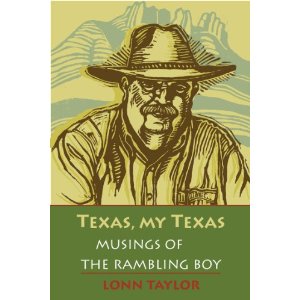
Writer and storyteller Lonn Taylor
Lonn Taylor is one of my Texas heroes for many reasons, some of which he’d never guess. For instance, his love of the southern delicacy called chicken fried steak (as opposed to fried chicken steak). In the 1970s, one night in Dallas at my home, he and I gorged on steel-skillet chicken fried steaks covered in thick grease-filled flour gravy. It was a hot summer night, and I don’t remember anything else on the menu except iced tea. I hope we had fresh biscuits, but I don’t recall for sure. I know we had a lot of chicken fried steaks, a big platter full.
Beyond that, Lonn later wrote a column for me called “The Rambling Boy” when I edited a weekly newspaper in Alpine, Texas. It was a great column, the kind designed to boost circulation and attract dedicated readers, because it was written by someone who loved his subject, largely Texas history and people living and dead. Ranging from the past to the present, this collection recalls the color and precision of Frank Dobie and Roy Bedichek, who would have loved to have had Lonn Taylor sitting with them at the edge of a campfire sharing stories.
Lonn lived in Fort Davis, a short drive over the mountains, having recently retired as a historian and curator at the Smithsonian Institution’s National Museum of American History where he worked for 18 years conducting research and directing and curating exhibits. His work as historian for the Smithsonian’s Star-Spangled Banner Preservation Project led to his 2000 book, “The Star-Spangled Banner: The Flag That Inspired the National Anthem.” He’s also written books on Texas furniture, American cowboys, New Mexican furniture and southwestern history.
When the weekly folded, he took his column to the weekly Big Bend Sentinel and KRTS, the National Public Radio station in Marfa, a nearby former cattle town named after a character in “The Brothers Karamazov” and the location for the filming of the classic modern Western, “Giant.”
Lonn is beloved in the area for his natural charm and for enriching the cultural life of the Big Bend area.
Marfa is anything but a cattle town now. It’s an art town, and with less than 2,000 population, it has a true cast of characters from the art crowd, the literary crowd, the music crowd, the wealthy crowd, the poor crowd, and the born and bred local crowd, along with a steady sprinkling of working cowboys who come in from the sprawling ranches to have a pizza and stock up on whiskey and cases of beer. Get some people from all those crowds together around a turquoise swimming pool at night at a modern mansion out on the lonely desert with Hank Williams’ “Hey, Good Lookin’,’” Roy Orbison’s “Only the Lonely” and Dylan’s “Knockin’ on Heaven’s Door” playing, and you can have a real Texas party. The ghosts of Elizabeth Taylor, Rock Hudson, James Dean and Dennis Hopper glide through the Mexican bars and empty streets of Marfa.
But Lonn Taylor is one of Marfa’s living stars today, and his slow, Texas drawl can be heard weekly drifting through the big-cloud sky and across the empty spaces of the desert and mountains north of the Mexico border. Check out the NPR station and tune in to one of his weekly shows by clicking on Marfa Public Radio in “The Gang” listing on the blog’s homepage. Some of the best old-time cowboy and country and modern music is played on the station too. Eventually, you will hear every record Johnny Cash ever made, and he made some very good records.
A look that opens up thought
Posted: March 11, 2012 Filed under: books, people, photography, states of mind Leave a comment

John Updike the young novelist
This picture of John Updike as a young man has all the qualities that are given to a portrait of a person caught in a “look” that dominates the traditional values of portraiture. The expression seems friendly, but is really closed, which sets off a search on the viewer’s part to understand what’s being shared. Is it satisfaction, is it a secret thought which at that moment the photographer could never grasp, is it pride, is it smugness (“I’m the new American Proust and I know it and the public doesn’t.”), is the photographer a woman bringing out Updike’s sexual curiosity, is he simply lost in a characteristic expression that really means nothing, is he thinking, “This picture will be known as my ‘author smokes a cigarette picture?’,” is it the hyper-curiosity that accompanied Updike’s grasp of the world before him, and we could go on and on. In short, it transcends common portraiture because we can never understand what it is revealing– it raises questions that provide no answers. What it emphatically says is there appears to be a blank piece of paper in the foreground and many books in the background, a worthy metaphor for his life.
Songs of Unreason
Posted: March 5, 2012 Filed under: books, buddhism, people, poetry, states of mind Leave a commentJim Harrison’s newest poetry book, “Songs of Unreason,” is even more moving that his recent “Saving Daylight,” and “In Search of Small Gods.” The poet in winter, yes, but his mind is still on fire, the fire of recurring youth, and a blending of flowing memories of the last moment and moments far past reborn. When I told my friend Red Pine I was getting the book soon, he said, “I think it is his best ever.” Red Pine knows whereof he speaks, being the translator of Cold Mountain and Stonehouse. Harrison is up there with the discursive giants of poetry. He has uncovered himself as few poets can do. A true voyager between the inner and outer world of mind. Here’s a sample:
Back Into Memory
The tears roll up my cheek
and the car backs itself south.
I pull away from the girl and reverse
through the door without looking.
In defiance of the body the mind
does as it wishes, the crushed bones
of life reknit themselves in sunlight.
In the night the body melts itself down
to the void before birth
before you swam the river into being.
Death takes care of itself like a lightning
stroke and the following thunder
is the veil being rent in twain.
The will to live can pass away
like that raven colliding with the Sun.
In age we tilt toward home.
We want to sleep a long time, not forever,
but then to sleep a long time becomes forever.
An Ernest Valentine wish
Posted: February 24, 2012 Filed under: books, people, writing Leave a commentA real Valentine sentiment

A little Emerson
Posted: February 23, 2012 Filed under: buddhism, people, poetry Leave a commentMaia*
Illusion works impenetrable,
Weaving webs innumerable,
Her gay pictures never fail,
Crowd each on the other, veil on veil,
Charmer who will be believed
By man who thirsts to be deceived.
– Ralph Waldo Emerson
*Hindu for illusion.
Some Martin Amis things
Posted: February 19, 2012 Filed under: books, fiction, people Leave a comment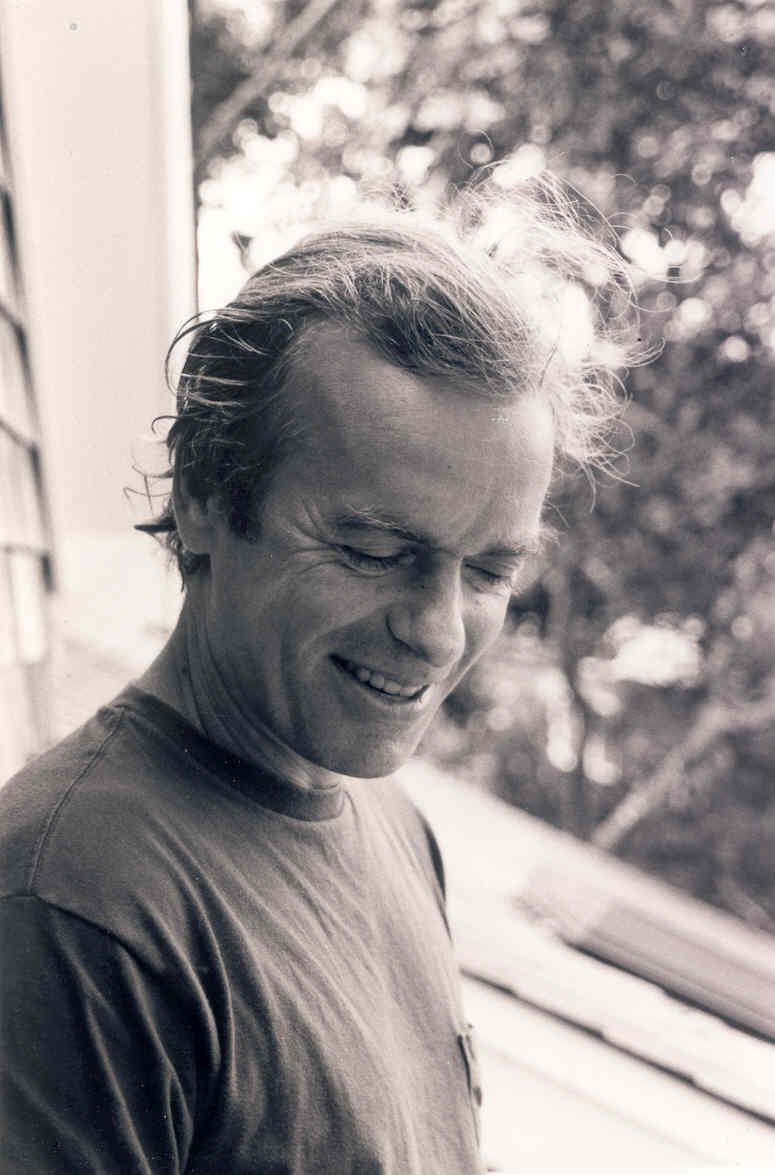
photo by Isabel Fonseca
Here are some links to recent things by or about Martin Amis. The first is an Amis website that is more or less authoritative and comprehensive, and can be found here. The second is an article Amis wrote about the Republican Party candidates out hustling for votes, which can be found here. The third is a Wall Street Journal article that’s a nice look at his marriage to Isabel Fonseca, and contains her description of Amis’ personality, found here. Last is the most recent glimpse of him at the Jaipur Literary Festival in India, located here. He’s jet lagged, but as always his observations wake you up. I haven’t looked at the website thoroughly yet, but apparently he’s moved his family to Brooklyn.
“Style is not neutral, it gives moral direction.” – Martin Amis
Bedside Books
Posted: February 15, 2012 Filed under: books, people, writing Leave a comment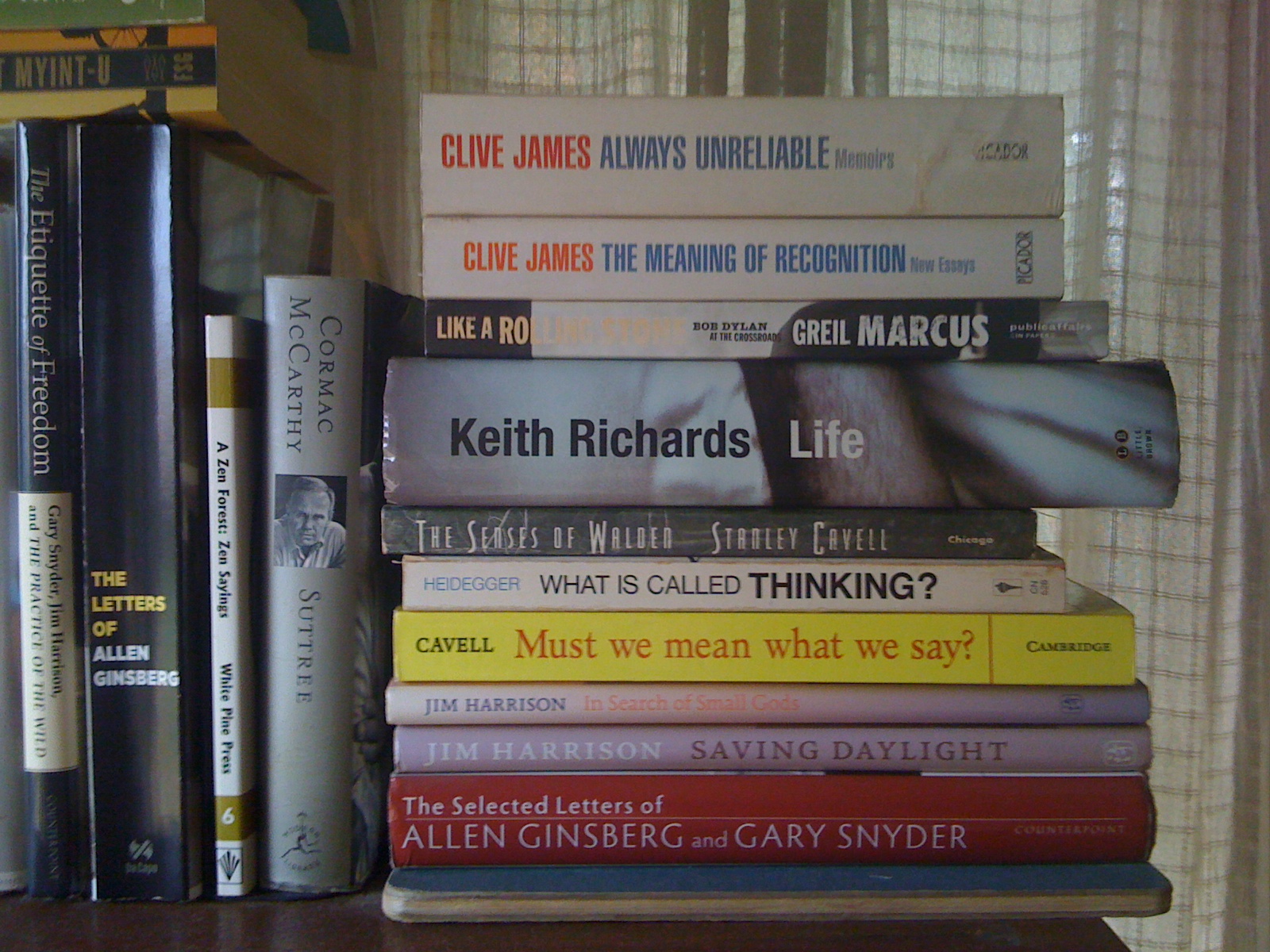 Rome and Italy by Livy: I’m still immersed in Imperial Rome, and now reading the historian Livy for the first time. This volume must be the definitive picture of Roman campaigns and battles, which were nearly ceaseless during the period covered here from 386 B.C. to 293 B.C., requiring Rome to police and maintain its power by defeating upstart states and tribes who resisted the Roman way. The Roman elite, of course, were all military men, that being the only pathway to the highest offices. The battles were hand-fought with spears, javelins and swords by armies ranging from around 5,000 to 30,000 men. This was man-to-man contact. You wonder if the same could happen today? To be safe, I would have to answer yes, simply because 2,800 years isn’t very long. Why should human nature and capabilities change? Battles involved the death of tens of thousands of soldiers and the same sometimes in civilians living in the towns that supplied the enemy soldiers.
Like a Rolling Stone by Greil Marcus: Here’s a nice change of pace. Marcus, who has an extraordinary way of writing deep, majestic prose that enshrines the nature and power of music, has written a hagiography of the making of the Dylan classic “Like a Rolling Stone.” Recorded unpretentiously on June 16, 1965, after a couple of days of getting the music down, it was something new. As always, the new takes time to decipher. It changed the way songs were written, virtually wiping out the traditional sweet Pop sound and replacing it, at least in the hands of the ambitious songwriters, with a powerful allusive poetry, a fractured lyrical impressionism that sprang from the Beat poetry of the day. Few could actually achieve that, of course, but they recognized the territory that Dylan had staked out. Marcus makes you appreciate the studio musicians who wrapped Dylan’s words in sounds that are apparently near impossible to match in live performance because of the extreme jazz-like improvisations that combined to become the perfect accompaniment to his soaring accusatory wailing. This book is especially good for non-musical people like me who love to listen but don’t understand music itself. I respond, wishing I knew how musicians do it. Dylan’s words inspired the musicians and their music inspired Dylan’s delivery. Dylan remains the fey, enigmatic ringmaster, the troubadour leading the flock anxious to be in his moment.
Life by Keith Richards: Here you go. You want something on the dark side? Then don’t read Richards’ excellent book. It’s far too funny and perceptive. Think a rock and roll Marx brother and you’re close. A rock and roll surrealistic Little Boy Blue who wants to be bad, and actually almost gets there, at least bad to himself. For the folks around him, at least in his version, he’s more like a caring scoutmaster, always ready to lead the way and help. I believe him. The early, childhood section is really fine, and the young Richards had a lot of class. Poor childhood, the best kind with interesting people, but he heard what lives inside rock and roll music and the Blues. He heard where it comes from, which is different from knowing where it comes from. He knows how to love women who want to take care of him; he likes a good chat with whoever’s around. He’s one lucky guy to be alive after all the drugs, and that’s one of the things that never gets explained. Why did he do all the drugs? I wonder if he could have answered that, but didn’t? At any rate, he survived, and he’s enjoying his life now, and he and Mick created songs that will always be up there with Dylan and the Beatles. On the tough side. Try Some Girls and “Far Away Eyes” for starters.
Always Unreliable and The Meaning of Recognition by Clive James: I keep saying Clive James is one of the top three essayists of our time, and I mean it. Very unique, a mind one loves to follow, sliding all around from very serious – read relevant – to very funny. The first book is a collection of three of his autobiographies, taking him from childhood in Australia to his conquering of Britain’s world of letters and television, a double that no one has ever achieved in the U.S. the way he has in his career. The autobiography is a slick bit of magic. It’s really a novel of the people and places in his life written in a way that creates a gentle, sympathetic romantic truth with him at center stage. The Australian growing up and Oxford sections are alive with shimmering stories, portraits and wisdom. The other two? Gore Vidal and John Updike. What I like immensely about James is that, unlike Vidal and Updike who are “high” essayist, James is a work-a-day journalist in the great tradition, who switch hits between low and high with verve, brio, deep, dead-eye seriousness and sheer joy of living, of life. That said, his “high” style could not be higher. He’s given me some real wisdom in the areas of European history, Russia, Communism, literary criticism and poetry. Like a lot of smart, literary Brits, he loves America and allows me to see it fresh.
Wallace Stevens
Posted: February 1, 2012 Filed under: people, poetry Leave a comment
There is a project for the sun. The Sun
Must bear no name, gold flourisher,
but be in the difficulty of what it is to be…
It is true. Tonight the lilacs magnify
The easy passion, the every-ready love
Of the lover that lies within us and we breathe…
– From Notes Toward a Supreme Fiction
The Hunter Thompson Bangkok first edition
Posted: December 3, 2011 Filed under: books, people 1 Comment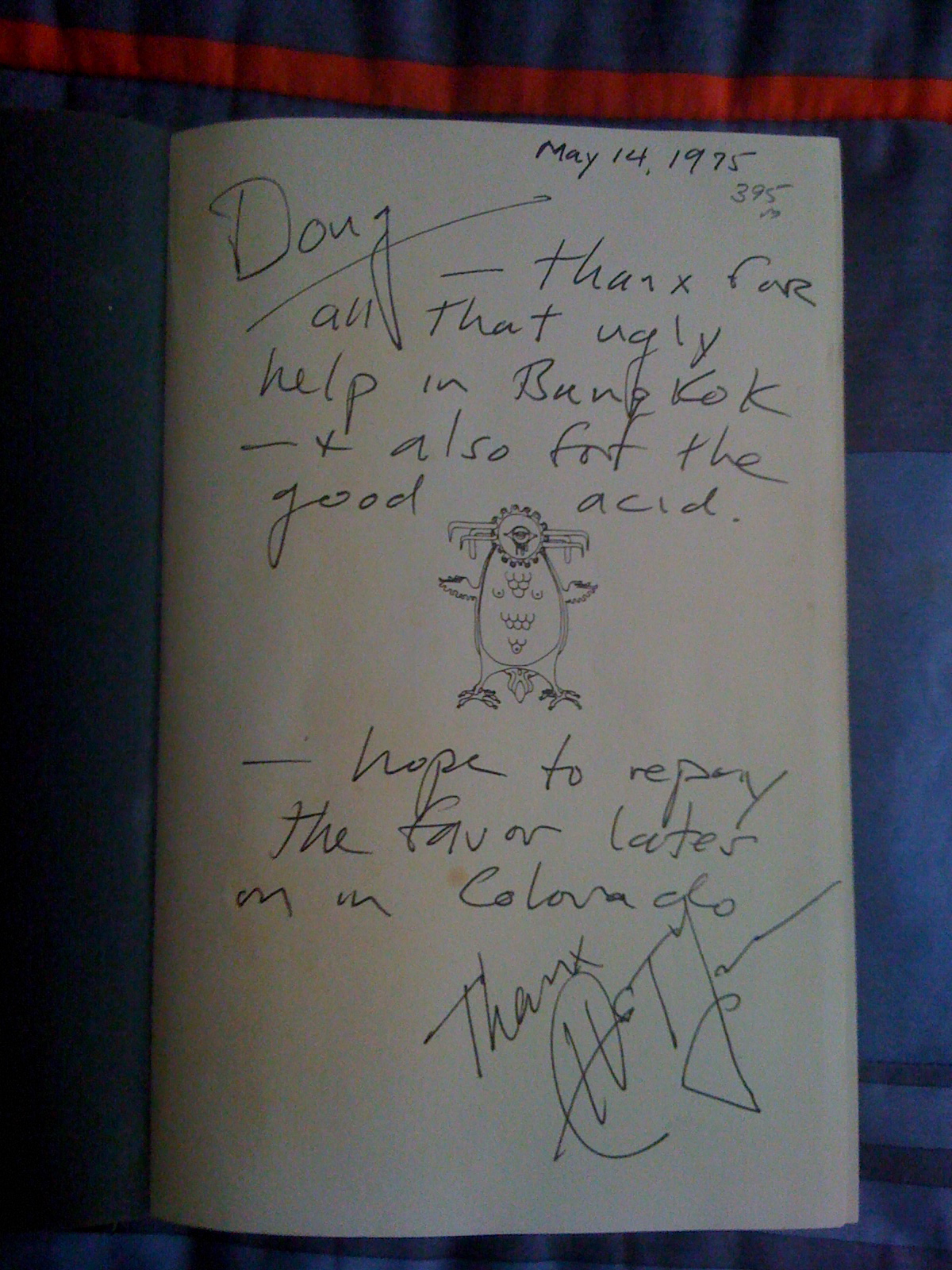
In my book life, a few choice finds have come into my hands. One was a pristine first edition of Dharma Bums, two were the first privately printed translations of Cold Mountain and Stonehouse by Red Pine, a few were signed D.T. Suzuki books, but by far, the best discovery was this Hunter Thompson book, a hardback first edition of Fear and Loathing on the Campaign Trail ’72. That would have been good enough for me, but when I turned to the first page what did I see but a nicely filled out dedication to “Doug” talking about their meeting in Bangkok, an exchange of “acid,” and a promised reunion in Colorado. Ok, I was lucky, but the book found its way to me as it should have––because I had just completed a story about Hunter’s stay in Vientiane, Laos, and the book dedication he wrote came either just before or after his visit there. See “Hunter Thompson in Laos” under my “On the Record” listing. What can I say: luck, yes, but the book found its rightful home resting on my bookshelf, at least for now. After a short while, I will sell it so it can roam the world. If anyone is interested, please get in touch.
 the roy hamric journal