
Name it
Posted: April 8, 2012 Filed under: poetry, states of mind, writing 2 CommentsI call it A Rock in the Cosmos,
a rock on the ground with no name.
But let’s be real. It is a rock,
not a rock-on-the-ground metaphor,
not a descriptive target: a white, porous
igneous outcast atop a scaly wind-blown
nob here in the cowboy Big Bend
in mysterious Springtime. It
stimulates. Does it recognize
something of its firey history
or the bottom of the swaying Sea,
or a bit of a bright Star – its ancestry?
No matter, of itself it is enough.
Ok, let’s be real, it is a rock
on the ground in the Cosmos.
It is white, porous, igneous.
The rock can never know
the rising Sun, the waning Moon,
the ten thousand waves, but there
is this rock in my mind, too,
not on the ground, and this
mysterious non-stop, air-like chorus
accompanying all this and more.
Katy Makes An Entrance
Posted: March 25, 2012 Filed under: poetry Leave a commentKaty Makes An Entrance
 Finally home after a three-day prowl.
Laddawan watched her jump to the top
of the wall along the back of the house
then fly up four feet like a furry bird
onto the roof to tread to the bedroom window.
Images of fangs sinking
into her haunch, blood on the road,
a little girl’s touch calling her away
all disappeared as she walked into our life again
from the Otherwhere – now returned to here,
tongue lapping the water bowl, smelling bits
of dried food, meowing non-stop as she curls
up near my feet. “Where you been, Babe?”
“It’s none of your business, Bud. You wouldn’t
understand anyway,” she said, licking the half-inch,
dried puncture wound on the inside of her right leg
where the skin is pink and hairless.
Songs of Unreason
Posted: March 5, 2012 Filed under: books, buddhism, people, poetry, states of mind Leave a commentJim Harrison’s newest poetry book, “Songs of Unreason,” is even more moving that his recent “Saving Daylight,” and “In Search of Small Gods.” The poet in winter, yes, but his mind is still on fire, the fire of recurring youth, and a blending of flowing memories of the last moment and moments far past reborn. When I told my friend Red Pine I was getting the book soon, he said, “I think it is his best ever.” Red Pine knows whereof he speaks, being the translator of Cold Mountain and Stonehouse. Harrison is up there with the discursive giants of poetry. He has uncovered himself as few poets can do. A true voyager between the inner and outer world of mind. Here’s a sample:
Back Into Memory
The tears roll up my cheek
and the car backs itself south.
I pull away from the girl and reverse
through the door without looking.
In defiance of the body the mind
does as it wishes, the crushed bones
of life reknit themselves in sunlight.
In the night the body melts itself down
to the void before birth
before you swam the river into being.
Death takes care of itself like a lightning
stroke and the following thunder
is the veil being rent in twain.
The will to live can pass away
like that raven colliding with the Sun.
In age we tilt toward home.
We want to sleep a long time, not forever,
but then to sleep a long time becomes forever.
A little Emerson
Posted: February 23, 2012 Filed under: buddhism, people, poetry Leave a commentMaia*
Illusion works impenetrable,
Weaving webs innumerable,
Her gay pictures never fail,
Crowd each on the other, veil on veil,
Charmer who will be believed
By man who thirsts to be deceived.
– Ralph Waldo Emerson
*Hindu for illusion.
Sunday in East Texas
Posted: February 12, 2012 Filed under: buddhism, photography, poetry 1 Comment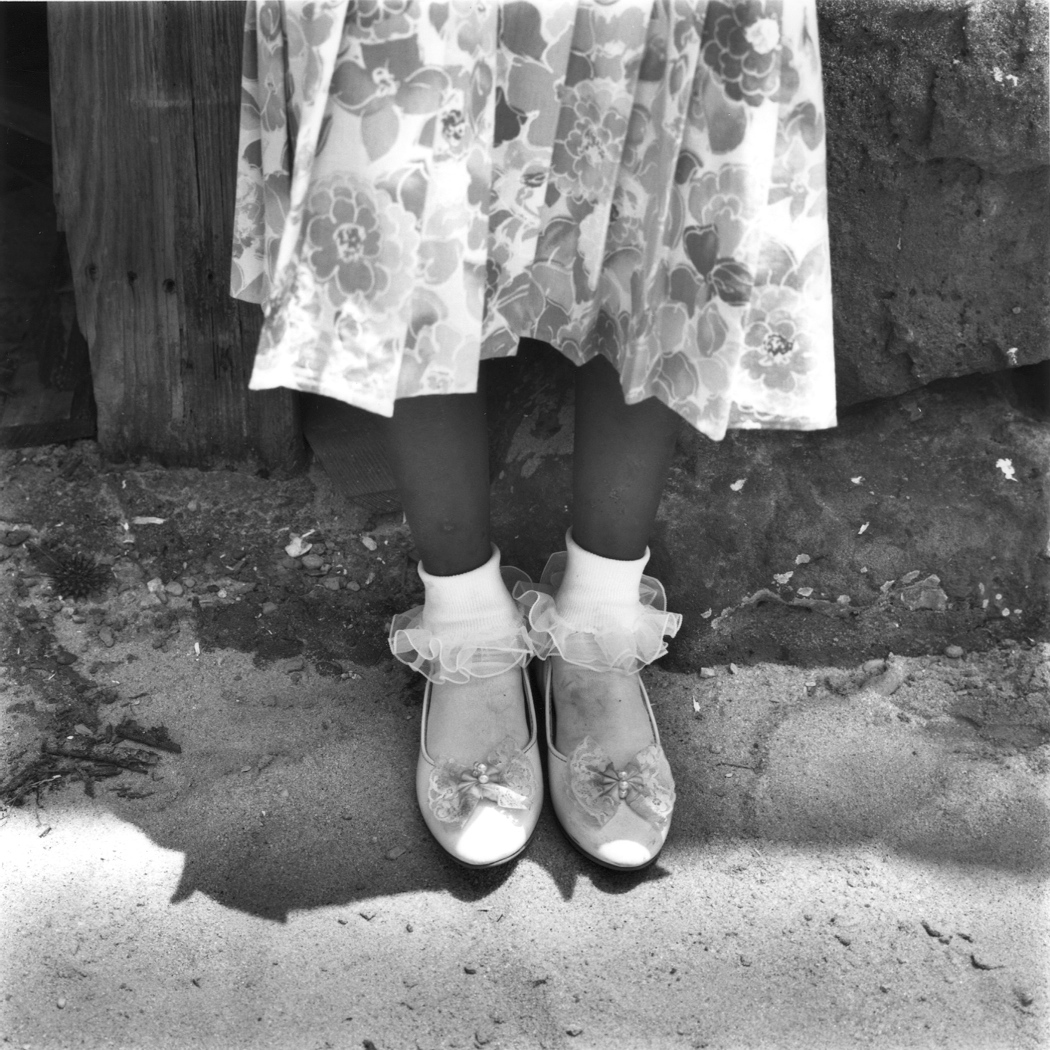
Going to church (photograph by Roy Hamric)
One Encounter:
Once and for all.
–From A Zen Forest
Wallace Stevens
Posted: February 1, 2012 Filed under: people, poetry Leave a comment
There is a project for the sun. The Sun
Must bear no name, gold flourisher,
but be in the difficulty of what it is to be…
It is true. Tonight the lilacs magnify
The easy passion, the every-ready love
Of the lover that lies within us and we breathe…
– From Notes Toward a Supreme Fiction
Sounds like Wittgenstein, but isn’t
Posted: November 22, 2011 Filed under: buddhism, poetry, states of mind Leave a commentNothing Is Always Absolutely So
This came to me today on the Oxford Dictionary’s Word of the Day , and is associated with Theodore H. Sturgeon (1918–85, born Edward Hamilton Waldo), a U.S. science fiction writer.
Very rich in multiple meanings, it speaks in that fine musical way beyond concreteness of language, moving on into another unfixed place in our mind.
Reading Stonehouse
Posted: August 3, 2011 Filed under: books, buddhism, poetry Leave a comment Stonehouse, the Zen hermit poet of 14th century China, writes so simply his wisdom often escapes the reader who is tangled up in the flow of words and images. Translated by Red Pine, the book remains a classic.
Look for the real and it becomes more distant/ try to end delusions and they just increase/ followers of the Way have a place that stays serene/ when the moon is in the sky it’s reflection is in the waves
William Empson, Philip Larkin
Posted: June 25, 2011 Filed under: books, people, poetry 1 Comment This evening I heard Philip Larkin in William Empson’s voice (Larkin followed Empson, of course):
Empson: The heart of standing is you cannot fly.
Harold Bloom talks about this back and forth influence that writer’s share. This is from Empson’s Let It Go:
It is this deep blankness is the real thing strange.
The more things happen to you the more you can’t
Tell or remember even what they were.
Bedside books
Posted: June 9, 2011 Filed under: books, fiction, people, poetry, writing 2 Comments
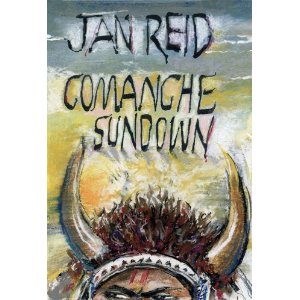 Jan Reid’s Comanche Sundown is a beautifully imagined novel with two real-life quintessential Americans at its core, the Comanche half-blood chief Quanah Parker and a half-blood black named Bose Ikard, the son of his slave-owning father. This book should be a contender for the National Book Award and the Pulitzer Prize. It’s in the ranks of Cormac McCarthy’s All the Pretty Horses, Thomas Berger’s Little Big Man, E.L. Doctorow’s Welcome to Hard Times and Larry McMurtry’s Lonesome Dove. Quanah and Bose are blood brothers engaged in living their lives as men at a pivotal moment in history when Whites are turning the Comanche ranging ground into cattle country. The story is also an intoxicating tale of the Indian women who shared their lives. The novel puts flesh on two real-life figures and their time, not so long ago. Reid’s re-imagining of the Comanche way of life and Quanah’s shamanistic aura and fearlessness is a masterful feat of story-telling. His recent biography of Doug Sahm, the Texas Tex-Mex rocker, is also a good one for the road. His The Bullet Meant for Me defies easy description. It’s an autobiography of a writer who took a pistol shot in the stomach that passed on to lodge against his spine––paralyzing him for months until he regained the partial use of his legs: bracingly tough-minded, inspiring, beautifully written, a portrait of an artist in mid-flight who refused to go down for the count. In Comanche Sundown, he’s written a masterpiece on the richness and tragedy of frontier life.
Clive James’s Cultural Amnesia is encyclopedic in scope, his summing up of a lifetime of reviewing, 851 pages that cover a daunting range of literature with a particular nod to European writers, historical and modern. The more I read James the more I’m reminded of his rare qualities, the mind of a poet blended naturally with the hard-earned wisdom of someone at home on the streets, who can’t and doesn’t want to put literature behind academic walls but keeps it rooted at the forefront of lived life, as it was when it was created by writers struggling with the temper of their time. He writes with the assurance of someone who knows that literature, poetry and the lives of writers can teach truths far beyond the esthetic sublime.
Harold Bloom’s The Anatomy of Influence just came in the mail. What can I say. I love what his critics find irritating about his prose, the quick-wrapped lightning illuminations that fearlessly strike at the quick of a writer’s essence. If they would only accept that Bloom is a Jewish mystic writing not so much from a historical view but from a point of revelation, they wouldn’t be so vexed by his approach. He’s the most inspired, broadly visionary critic in American history, and his books will rest on a shelf reserved for uniquely American writers, close beside the three mentors who gave him the courage to be himself––Emerson, Thoreau and Whitman.
Larry McMurtry’s Hollywood and Literary Life. I always fall for McMurtry’s quirky nonfiction voice. What I like about these two memoirs, the first was Books, is their lack of personal or literary pretension, his tendency to dodge any serious discussion in mid-course and go off to eat a burger and fries or some such ordinary undertaking. I know underneath it all is a reader and storyteller of the first magnitude, but taking himself too seriously in these memoirs isn’t in his nature. At any rate, the memoirs feel honest. They have a diary feel by a diarist who knows pretension is the kiss of death.
 the roy hamric journal