
Henri Cartier-Bresson’s birthday
Posted: August 23, 2012 Filed under: people, photography, sight seeing, states of mind 1 Comment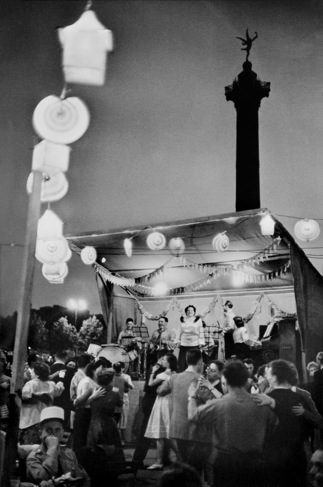
Bastille Day Ball, Place de la Bastille square, Paris, France, 1952. Bresson taught many of us how to see everyday scenes as not so ordinary. It all had to do with his ability not to see the “subject” but the subjects. There’s been no one quite like him. He could do his art in all situations, wherever he found himself. Truly an extraordinary artist.
Jim Harrison poem: River IV
Posted: August 11, 2012 Filed under: people, poetry, states of mind Leave a commentWere it not for the new moon
my sky would collapse tonight
so fed by the waters of memory.
– The last line in River IV from Songs of Unreason by Jim Harrison
– The first five lines of Love from Songs of Unreason by Jim Harrison:
Love is raw as freshly cut meat,
mean as a beetle on the track of dung.
It is the Celtic dog that ate its tail in a dream.
It chooses us as a blizzard chooses a mountain.
It’s seven knocks on the door you pray not to answer.
Clive James on William Empson
Posted: May 26, 2012 Filed under: people, poetry, states of mind, writing Leave a commentHere is a short remembrance by Clive James on William Empson that was posted on Poetry.
What word is this?
Posted: May 5, 2012 Filed under: photography, places, states of mind Leave a comment
Abandoned church near Newton, Texas; photography by Roy Hamric
Minding My Time
Posted: April 11, 2012 Filed under: poetry, states of mind, writing Leave a commentMinding My Time
Awash in mind time.
Mind’s always mattering:
sensations, feelings
always forming.
Words always mattering
in Universe of Matter––
That’s all
(not really for Roy & Laddawan
and the Thai band playing
Eric Clapton).
Not to mind called self
that’s just the go-between
for no-body.
Big Self is every thing.
Knows like the bone in your
eye every thing’s just co-
existing meaning matter
of meaning-ness.
Right now
at 1:18 a.m.
as a tiny candle lantern rises
golden in the night sky
like a star.
Name it
Posted: April 8, 2012 Filed under: poetry, states of mind, writing 2 CommentsI call it A Rock in the Cosmos,
a rock on the ground with no name.
But let’s be real. It is a rock,
not a rock-on-the-ground metaphor,
not a descriptive target: a white, porous
igneous outcast atop a scaly wind-blown
nob here in the cowboy Big Bend
in mysterious Springtime. It
stimulates. Does it recognize
something of its firey history
or the bottom of the swaying Sea,
or a bit of a bright Star – its ancestry?
No matter, of itself it is enough.
Ok, let’s be real, it is a rock
on the ground in the Cosmos.
It is white, porous, igneous.
The rock can never know
the rising Sun, the waning Moon,
the ten thousand waves, but there
is this rock in my mind, too,
not on the ground, and this
mysterious non-stop, air-like chorus
accompanying all this and more.
A look that opens up thought
Posted: March 11, 2012 Filed under: books, people, photography, states of mind Leave a comment

John Updike the young novelist
This picture of John Updike as a young man has all the qualities that are given to a portrait of a person caught in a “look” that dominates the traditional values of portraiture. The expression seems friendly, but is really closed, which sets off a search on the viewer’s part to understand what’s being shared. Is it satisfaction, is it a secret thought which at that moment the photographer could never grasp, is it pride, is it smugness (“I’m the new American Proust and I know it and the public doesn’t.”), is the photographer a woman bringing out Updike’s sexual curiosity, is he simply lost in a characteristic expression that really means nothing, is he thinking, “This picture will be known as my ‘author smokes a cigarette picture?’,” is it the hyper-curiosity that accompanied Updike’s grasp of the world before him, and we could go on and on. In short, it transcends common portraiture because we can never understand what it is revealing– it raises questions that provide no answers. What it emphatically says is there appears to be a blank piece of paper in the foreground and many books in the background, a worthy metaphor for his life.
Songs of Unreason
Posted: March 5, 2012 Filed under: books, buddhism, people, poetry, states of mind Leave a commentJim Harrison’s newest poetry book, “Songs of Unreason,” is even more moving that his recent “Saving Daylight,” and “In Search of Small Gods.” The poet in winter, yes, but his mind is still on fire, the fire of recurring youth, and a blending of flowing memories of the last moment and moments far past reborn. When I told my friend Red Pine I was getting the book soon, he said, “I think it is his best ever.” Red Pine knows whereof he speaks, being the translator of Cold Mountain and Stonehouse. Harrison is up there with the discursive giants of poetry. He has uncovered himself as few poets can do. A true voyager between the inner and outer world of mind. Here’s a sample:
Back Into Memory
The tears roll up my cheek
and the car backs itself south.
I pull away from the girl and reverse
through the door without looking.
In defiance of the body the mind
does as it wishes, the crushed bones
of life reknit themselves in sunlight.
In the night the body melts itself down
to the void before birth
before you swam the river into being.
Death takes care of itself like a lightning
stroke and the following thunder
is the veil being rent in twain.
The will to live can pass away
like that raven colliding with the Sun.
In age we tilt toward home.
We want to sleep a long time, not forever,
but then to sleep a long time becomes forever.
Sounds like Wittgenstein, but isn’t
Posted: November 22, 2011 Filed under: buddhism, poetry, states of mind Leave a commentNothing Is Always Absolutely So
This came to me today on the Oxford Dictionary’s Word of the Day , and is associated with Theodore H. Sturgeon (1918–85, born Edward Hamilton Waldo), a U.S. science fiction writer.
Very rich in multiple meanings, it speaks in that fine musical way beyond concreteness of language, moving on into another unfixed place in our mind.
Clive James on Wittgenstein
Posted: July 17, 2011 Filed under: people, reviews, states of mind 5 Comments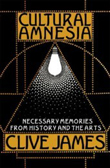 Here’s to Clive James. Call it a herd, a brood, a pack, a platoon, a circle, a gang, but each has a person others look to in order to know where it’s at. Where it is at: what’s really happening, going on. James is one of these people. In his recent essay collection, Cultural Amnesia, he writes about Wittgenstein. You can wade through many books on LW and not find what’s in his seven-page essay. Just one example:
The Wittengenstein that matters to a writer might be mistaken for his meaning by ordinary readers, but he can never be mistaken for his poetic quality, which is apparent even in his plainest statement. The precision of his language we can take for granted, and perhaps he should more often have done the same. His true and unique precision was in registering pre-verbal states of mind. In The Blue and Brown Books (p. 173), he proposes a “noticing, seeing, conceiving” process that happens before it can be described in words. That, indeed, is the only way of describing it. It sounds very like the kind of poetic talent that we are left to deal with after we abandon the notion––as we must––that poetic talent is mere verbal ability. “What we call ‘understanding a statement’ has, in many cases, a much greater similarity to understanding a musical theme than we might be inclined to think” (p. 167). But he doesn’t want us to think about music as a mechanism to convey a feeling: joy, for example. “Music conveys to us itself ” (p. 178). So when we read a sentence as if it were a musical theme, the music doesn’t convey a separate sense that compounds with the written meaning. We get the feeling of a musical theme because the sentence means something. I thought he was getting very close to the treasure chamber when he wrote this. In 1970, reading The Blue and Brown Books every day in the Copper Kettle in Cambridge, I made detailed transcriptions in my journal every few minutes. It didn’t occur to me at the time that his prose was doing to me exactly what he was in the process of analyzing. It sounded like music because he was so exactly right.
 the roy hamric journal