
Reading Cavell
Posted: October 19, 2010 Filed under: articles, books, people, states of mind, writing Leave a comment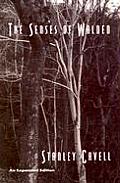 Stanley Cavell has created more ground breaking work on the importance of Thoreau’s and Emerson’s writing than anyone of his generation. Along with Walt Whitman, they are the core of original American thought and literature. Rereading Cavell’s The Senses of Walden, it’s uncanny how these three writers circle each other, while always pushing into new ideas that carry their own marks. Here’s an excerpt that connects Emerson and Thoreau with Heidegger, who was influenced by Emerson’s writing.
“As to the question of what may look like the direction of influence, I am not claiming that Heidegger authenticates the thinking of Emerson and Thoreau; the contrary is, for me, fully as true, that Emerson and Thoreau may authorize our interest in Heidegger… . Emerson’s and Thoreau’s relation to poetry [read writing] is inherently their interest in their own writing…I do not mean their interest in what we may call their poems, but their interest in the fact that what they are building is writing, that their writing is, as it realizes itself daily under their hands, sentence by shunning sentence, the accomplishments of inhabitation, the making of it happen, the poetry of it. Their prose is a battle, using a remark of Nietzsche’s, not to become poetry; a battle specifically to remain in conversation with itself, answerable to itself. Such writing takes the same mode of relating to itself as reading and thinking do, the mode of the self’s relation to itself, call it self-reliance. Then whatever is required in possessing a self will be required in thinking and reading and writing. This possessing is not––it is the reverse of––possessive; I have implied that in being an act of creation, it is the exercise not of power but of reception. Then the question is on what terms is the self received?
“The answer I give for Emerson here is a theme of his thinking that further stands it with the latter Heidegger’s, the thing Emerson calls ‘onward thinking,’ the thing Heidegger means in taking thinking as a matter of getting ourselves ‘on the way.’… . In “Circles,” Emerson invites us to think about the fact, or what the fact symbolizes, that every action admits of being outdone, that around every circle another circle can take its place… . What is the motive, the means of motion of this [constant] movement? How do we go on? (In Wittgenstein’s Philosophical Investigations, knowing how to go on as well as knowing when to stop, is exactly the measure of our knowing, or learning, in certain of its main regions or modes––for example, in the knowledge we have of our words. Onward thinking, on the way, knowing how to go on, are of course inflections or images of the religious idea of The Way, inflections which specifically deny that there is a place at which our ways end…)
“You may imagine the answer to the question how we move as having to do with power. But power seems to be the result…not the cause. I take Emerson’s answer to be what he means by ‘abandonment.’ The idea of abandonment contains what the preacher in Emerson calls ‘enthusiasm’ or the New Englander in him calls ‘forgetting ourselves,’ together with what he calls leaving or relief or quitting or release or shunning or allowing for deliverance, which is freedom (as in ‘Leave your theory as Joseph his coat in the hand of the harlot, and flee’ [Self-Reliance essay], together further with something he means by trusting or suffering (as in the image of the traveler––the conscious intellect, the intellect alone––who has lost his way [throwing] his reins on the horse’s neck, and [trusting] to the instinct of the animal to find his road [The Poet essay]… . Emerson’s perception of the moment is taken in hope, as something to be proven only on the way, by the way. This departure, such setting out, is, in our poverty, what hope consists in, all there is to hope for ; it is the abandoning of despair, which is otherwise our condition. (Quiet desperation Thoreau will call it; Emerson has said, silent melancholy.)
“What the ground of the fixated conflict between solipsism and realism should give way to––or between subjectivity and objectivity, or the private and the public, or the inner and the outer––is the task of onwardness… .
“In Heidegger: ‘The thanc means man’s inmost mind, the heart, the heart’s core, that innermost essence of man which reaches outward most fully and to the outermost limits.'(From What is Called Thinking). In Emerson: ‘To believe your own thought, to believe that what is true for you in your private heart, is true for all men––that is genius. Speak your latent conviction and it shall be the universal sense; for always the inmost becomes the outmost.’ (Self-Reliance)… .
“Then everything depends on your realization of abandonment. For the significance of leaving lies in its discovery that you have settled something, that you have felt enthusiastically what there is to abandon yourself to, that you can treat the others there are as those to whom the inhabitation of the world can now be left.”
The Kyoto Journal biodiversity issue
Posted: October 9, 2010 Filed under: articles, states of mind, writing 1 CommentUnbelievably beautiful
and important, the Kyoto Journal issue No. 75

McLuhan on moral indignation
Posted: October 7, 2010 Filed under: people, states of mind Leave a comment

marshall mcluhan
Serious public discourse is regularly contaminated, interrupted or entirely prevented by people who insist on dictating to their fellow citizens about how to live based on their own biases or prejudices. Extreme conservatives and religious fundamentalists are chronic abusers here. A frequently used tactic, noted by an acute critic of effect and nuance in speech, actions and media:
“Moral indignation is a technique used to endow the idiot with dignity.” ––Marshall McLuhan
Think Fox TV, Newt Gingrich, Tea Party, the Koran-burning minister, homophobes, etc. Interestingly, McLuhan always insisted that TV wasn’t primarily a visual media, but an aural and tactile media, an observation that helps to explain the power of simplified moral indignation (which disrupts the non-emotional routine), so easily misused by charlatans and know-nothings at the expense of thought and complexity.
‘Hear me, I need food.’
Posted: July 19, 2010 Filed under: articles, states of mind 1 CommentFrom the Notebook: Maybe my posting a picture of cats a few days ago brought this memory back.
“Two kinds of dogs on the streets here…one lies flat-out in death-like positions, too tired, hungry or sick to move away from the feet of passersby or the wheels of cars. The second has a wired energy, quick intelligence, their eyes scan people for some aura or transfer of energy. My eyes instinctively avoid contact with these dogs. Yesterday evening, at a bus stop, a dog turned on its heels and trotted toward me––a tattered black coat of matted hair with black-purple patches of flaking skin worn bone thin. He came into pitiful, sharp view and then sat down on its haunches looking up into my eyes. His frightened eyes opened wide, stabbing straight into my heart. His head turned left then right, then jerked upward, once, twice, in a primal body language. I need food. I need food. Yes, hear me, I need food. This is a smart animal, I thought. As if reading my mind, he barked one time. Yes, I’m talking to you right now. Hear me. I need food. I had no food so I turned away quickly, walking away, trying not to look back. When I turned, he was trailing me discretely, plaintively. Take me with you. I’ll come with you. I thought about taking him home and pictured the taxi driver’s face watching me open the door with a sorry city mongrel. When I went outside again the dog had returned to the bus stop. He was prancing in a quick dance, beseeching people getting off the bus with a chorus of discrete barks, high and crisp, talking, not threatening. Then he stopped, knelt back on his haunches like before, and sang his song directly in front of a lady who carried an umbrella and a grocery sack. I’m life too. This is Me-Dog. I need help. Give. He nipped at the woman’s plastic bag. Share something. I was frozen. Another life marker, a slice of life to be buried inside my heart––this dog’s open, plaintive eyes and his language, his need. He was talking directly to people and no one took any action.
The next evening the bus stop was empty, but for that dog curled up into himself, a black mass burrowed into the day’s papers and trash. His head rested on his front paws. His eyes stared straight ahead, and he didn’t look up or speak as I placed food in front of his mouth and walked away.”
Abandonment, ignoring real need, ignoring a chance to do good: That dog haunts me. Still, I stumble out of bed each morning and automatically resurrect psychological walls between me and things that I can help change for the better. I go through each day mostly anesthetized to others’ pain––mothers and children living on the streets, fathers unable to provide, traumatized animals, the war against nature––as if calling myself an adult requires that I accept people and animals in pain and the abuse of the physical world. Ignore it, or risk looking immature, soft hearted, naive or stupid. It’s one thing to worry about things on the other side of the world, and another to walk away from what directly confronts our senses. I’m guilty of voluntarily shutting down my natural responses to do good acts. If our acts are ever totaled up in the ledger of life, we all are. We’re so much smarter than we act. The only minimal response to the pain and abuse in the world is to do as many acts of physical kindness as we can each morning and each evening. That may be too little, but if we keep it in mind and act on it maybe it’s enough to keep us human, to break down the wall.
Enjoy the opportunity to say good night
Posted: July 17, 2010 Filed under: articles, books, people, states of mind Leave a comment
wittgenstein
I don’t much like writing the name Ludwig Wittgenstein because he’s so often trotted out for a quote by people who have little feeling for what was behind his philosophy. That’s not true of a core of people who clearly understand what he was up to. See Stanley Cavell and Norman Malcolm, particularly Malcolm’s Wittgenstein: A Religious View. His life hangs over his work accounting for his legend, but what’s really at stake here is his immense sensitivity to the process of life and thinking and how it fueled his work. A deep longing to break through… He had problems expressing feelings. Was he happy––there are few signs. But his sensitivity, or is it sentimentality––tenderness, sadness––comes through occasionally, particularly in writing about or to his former student and sympathetic friend Drury. Here’s some revealing quotes:
“‘I am not a religious man, but I cannot help seeing every problem from a religious point of view,’ Drury rightly observes.”
“Of one thing I am certain––we are not here in order to have a good time.”
“Enjoy more the opportunity you have to say ‘good night’ to so many people. This alone is a gift from heaven which many people would envy you.”
In 1941, Drury, a doctor, was posted to the Middle East. Wittgenstein came to Liverpool to say goodbye to him, and presented him with a silver drinking cup.
Wittgenstein: “Water tastes so much nicer out of silver. There is only one condition attached to this gift: you are not to worry if it gets lost.”
Earlier, in a 1938 notebook, he wrote: “Whoever is unwilling to descend into himself, because it is too painful, will of course remain superficial in his writing.”
And the following year: “The truth can be spoken only by one who rests in it; not by one who still rests in falsehood, and who reaches out from falsehood to truth just once.”
Lines of thought
Posted: June 7, 2010 Filed under: books, people, states of mind, writing Leave a commentGleanings from reading Pater, Kerouac and Emerson:
“We have an interval, and then our place knows us no more. Some spend this interval in listlessness, some in high passions, the wisest, at least among ‘the children of this world,’ in art and song. For our one chance lies in expanding that interval, in getting as many pulsations as possible into the given time.

burning man, painting in Cafe del Sol, Chiang Mai
“….Great passions may give us this quickened sense of life, ecstasy and sorrow of love, the various forms of enthusiastic activity, disinterested or otherwise, which come naturally to many of us. Only be sure it is passion––that it yields you this fruit of a quickened, multiplied consciousness. Of this wisdom, the poetic passion, the desire for beauty, the love of art for art’s sake, has most; for art comes to you professing frankly to give nothing but the highest quality to your moments as they pass, and simply for those moments’ sake.”––Walter Pater, The Renaissance
“Believe in the holy contour of life.”––Belief & Technique of Modern Prose, Jack Kerouac
Emerson, in his Journal: “The days come and go like muffled and gray figures sent from a distant party, but they say nothing and if we do not use the gifts they bring, they carry them silently away.”
why Stanley Cavell?
Posted: June 5, 2010 Filed under: articles, books, people, states of mind 1 CommentI was first attracted to Stanley Cavell’s study of Thoreau, The Senses of Walden, and his deep probing of Emerson’s ideas in essays throughout his many books. All his books circle around American thought, American originality, while pulling in Wittgenstein, Kirkegarde, J.L. Austin, Heidegger, and others, with a commitment to use ordinary language and works of literature as a common ground of thought through which we all can assess and explore life, not something separate from philosophy but a living part of a philosophy that identifies itself with a deeper sense of experience. I think the passage below from the preface to Must We Mean What We Say?, as well as any, summarizes his intent and purpose:
“I suppose that the idea of the philosopher as guide was formed in me in resistance to the still current idea of the philosopher as guard. So I should perhaps add that at no period in my life has it occurred to me that philosophical problems are unreal, that is, that they could be cured and philosophy thus ended, as if left behind. The problems I was concerned with are better expressed as about the all but unappeasable craving for unreality. Kant’s diagnosis of such perplexities was as “transcendental illusions.
“I had in Must We Mean What We Say? already suggested understanding the philosophical appeal to the ordinary in relation to Kant’s transcendental logic, namely, as the sense of uncovering the necessary conditions of the shared world, but not until the second essay in the book, The Availability of Wittgenstein’s Later Philosophy, was I able to give a certain textuality to this relation to Kant, at the point at which Wittgenstein in Investigations announces that “Our investigation….is directed not toward phenomena, but, as one might say, toward the ‘possibilities’ of phenomena.” And it would not be until the Claim of Reason that I would feel I had secured some significant progress in assessing the difference it makes that Wittgenstein sees illusions of meaning as something to which the finite creature is subject chronically, diurnally, as if in every word beyond the reach of the philosophical system. The idea that there is no absolute escape from (the threat of) illusions and the desires constructed from them says there is no therapy for this, in the sense of a cure for it…[that] was evidently something that captured my fascination halfway through Must We Mean What We Say? with Samuel Beckett’s Engame––in effect a study of the circumstances that say, “You’re on Earth, there is no cure for that.”
marfa public radio
Posted: June 1, 2010 Filed under: places, states of mind 2 Comments
I have to mention Marfa Public Radio because it’s simply one of the best online sources of American music in its most real, widest range. For those who don’t know, Marfa, Texas, is a town of about 1,000 people in the Big Bend region of far west Texas, a land of desert and mountains near the Rio Grande. The town was named for Marfa, a character in a Dostoevsky novel. The town is a comfortable blend of working cowboys, artists, literados, filmmakers, actors and people who devote their lives to making a community interesting. It has great Tex-Mex food and gourmet restaurants. And, of course, a national public radio station with a skeleton staff and many, many dedicated community volunteers who are the key to its success. The locally produced interview programs and the music shows (staffed by volunteers) are pure, right down to the just folks quality of the banter. There’s a handy daily programming guide. Check it out—satisfaction guaranteed.
Asian moments
Posted: May 31, 2010 Filed under: buddhism, people, states of mind Leave a comment

henry david thoreau
1854: The first edition of Thoreau’s Walden appears. On the frontispiece page is an engraving of a leaf from a Banyan tree, the tree under which the Buddha sat when he encountered enlightenment.
1958, November: Jack Kerouac, Allen Ginsberg and Peter Orlovsky call up D.T. Suzuki at his apartment in New York City, just arrived from Japan. His secretary says: “Can you come over right now?”
“You young men sit here quietly and write haikus while I go and make some powdered green tea,” Suzuki says. Sipping the tea, Allen says, “It taste like shrimp.” “It tastes like beef,” says Suzuki. “Don’t forget it’s tea.”
Kerouac’s haiku is:
Three little sparrows on a roof,
Talking quietly, sadly.
Kerouac tells Suzuki that he’s experienced several samadhis lasting “a whole half hour or three seconds.” After the visit, as Kerouac is walking away he realizes that Suzuki was his old father in China, and shouts: “I would like to spend the rest of my life with you.” Suzuki, waving goodbye, says, “Sometime.”
states of mind
Posted: May 29, 2010 Filed under: states of mind Leave a commentThe mere fact that we can talk straight ahead and get the grammar in order shows that we must be doing a lot more rational planning about the process of talk than we have to notice in detail. I do not want to make any holy mystery out the subconscious of the mind. A person may think very badly in those regions. But if we were not thinking there at all we could not even engage in connected speech. ––William Empson in The Complex Structure of Words
 the roy hamric journal