
Bedside Books III: Amis, Amis, Hitchens
Posted: August 29, 2010 Filed under: books, people, writing Leave a comment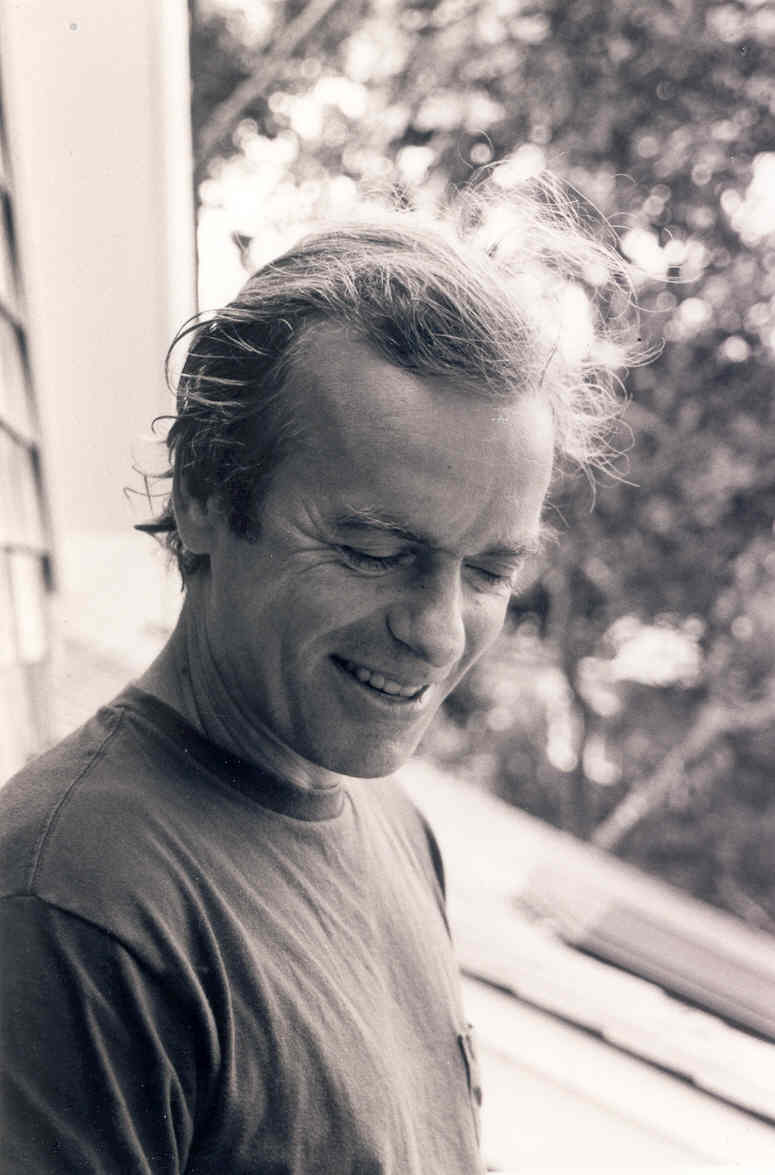 Experience by Martin Amis This high combination autobiography/biography is both a story of Kingsley Amis’s decline and death, and the story of Martin’s life during that period. The novels of father and son are the story of their lives and times cast in art, and Martin’s story here is his “real” life set in dramatic narrative with a cast of real characters as compelling as fictional ones, especially the etchings of his immediate family members, and the roles of various of Martin’s and Kingsley’s friends, which include Philip Larkin, Christopher Hitchens, Julian Barnes, Ian McEwan, Saul Bellow and many other well-known names.
Memoirs by Kingsley Amis I followed up by reading Kingsley’s autobiography, which gave me my first taste of his prose, which is a far cry from Martin’s. Kingsley’s nonfiction prose is arch by comparison, prone to personal mannerism, too concerned with class consciousness. It displays a patented “English” quality, almost a stereotype, though by all signs he was egalitarian (seen through his affection for American culture) and eager to puncture pomposity whenever he could. I gained a deeper insight into the Amis clan, and many of the people limned in Experience, plus a clutch of English writers who were new to me.
Unacknowledged Legislation by Christopher Hitchens
 I put this book of literary criticism on the bedside pile again because during first reading a few years ago I was again overwhelmed by Hitchen’s range and brilliance. There is never a sign in his writing that he is out of his territory, that he is not writing from some uncanny absolute knowledge of his subject, whether it’s Kipling, Warhol, Bellow, Anthony Powell, Vidal, Orwell, Fitzgerald, Patrick O’Brian, Isherwood, Auden, Tom Wolfe, Rushdie, Mencken, Isaiah Berlin, et al. He somehow personifies Blake’s “the road of excess leads to wisdom”––he seemingly can never do too much. His serious illness now must irritate him most because it interrupts his mighty creative flow, his need for intellectual engagement. See his website here, where he writes about his recent illness and other matters.
The War Against Cliché by Martin Amis Will there be a book of letters between Amis and Hitchens? We can hope. This is a collection of Amis literary criticism (1971-2000), which displays his very close reading of texts especially for literary nuance and style. See his pearls on writers such as Updike, Bellow, Elmore Leonard, Mailer (early on a bit of innate distaste there, but by the early 90s, Martin fully realized his importance), Naipaul, Joyce, Nabokov, Roth and many others.
Frank Kermode dies
Posted: August 21, 2010 Filed under: books, people, Uncategorized, writing Leave a comment He died this week at age 90. He published more than 50 books on literature and other matters, 10 of them in the last 10 years. His writing reflected a judicial, gentle nature. His close reading of a work is beyond compare.
Each book is down to earth, written for readers, glowing brilliantly in thought and style. In the mold of Harold Bloom and Edmund Wilson, he was unswayed by fashionable academic trends.
A quote from one of the obituaries: “John Updike said that Kermode’s conclusions seem ‘inarguable – indeed just what we would have argued, had we troubled to know all that, or goaded ourselves to read this closely,’ while Philip Roth admitted that although he dislikes reading reviews, ‘if Frank Kermode reviewed my book I would read it.'” Whatever you see with his name on it, pick it up. For a list of his books, click here.
Red Pine: language, poetry, translation
Posted: August 14, 2010 Filed under: articles, buddhism, people, poetry, writing Leave a commentThis essay by Red Pine was first presented as part of the Simmons College International Chinese Poetry Conference, Oct. 8-10, 2004. For more on him, see the On the Record postings.
Dancing with the Dead: Language, Poetry and the Art of Translation
By Red Pine
Every time I translate a book of poems, I learn a new way of dancing. The people with whom I dance, though, are the dead, not the recently departed, but people who have been dead a long time. A thousand years or so seems about right. And the music has to be Chinese. It’s the only music I’ve learned to dance to.
I’m not sure what led me to this conclusion, that translation is like dancing. Buddhist meditation. Language theory. Cognitive psychology. Drugs. Sex. Rock and Roll. My ruminations on the subject go back more than twenty-five years to when I was first living in Taiwan. One day I was browsing through the pirated editions at Caves Bookstore in Taipei, and I picked up a copy of Alan Ginsberg’s Howl. It was like trying to make sense of hieroglyphics. I put it back down and looked for something else. Then a friend loaned me a video of Ginsberg reading Howl. What a difference. In Ginsberg’s voice, I heard the energy and rhythm, the sound and the silence, the vision, the poetry. The same thing happened when I read some of Gary Snyder’s poems then heard him read. The words on a page, I concluded, are not the poem. They are the recipe, not the meal, steps drawn on a dance floor, not the dance.
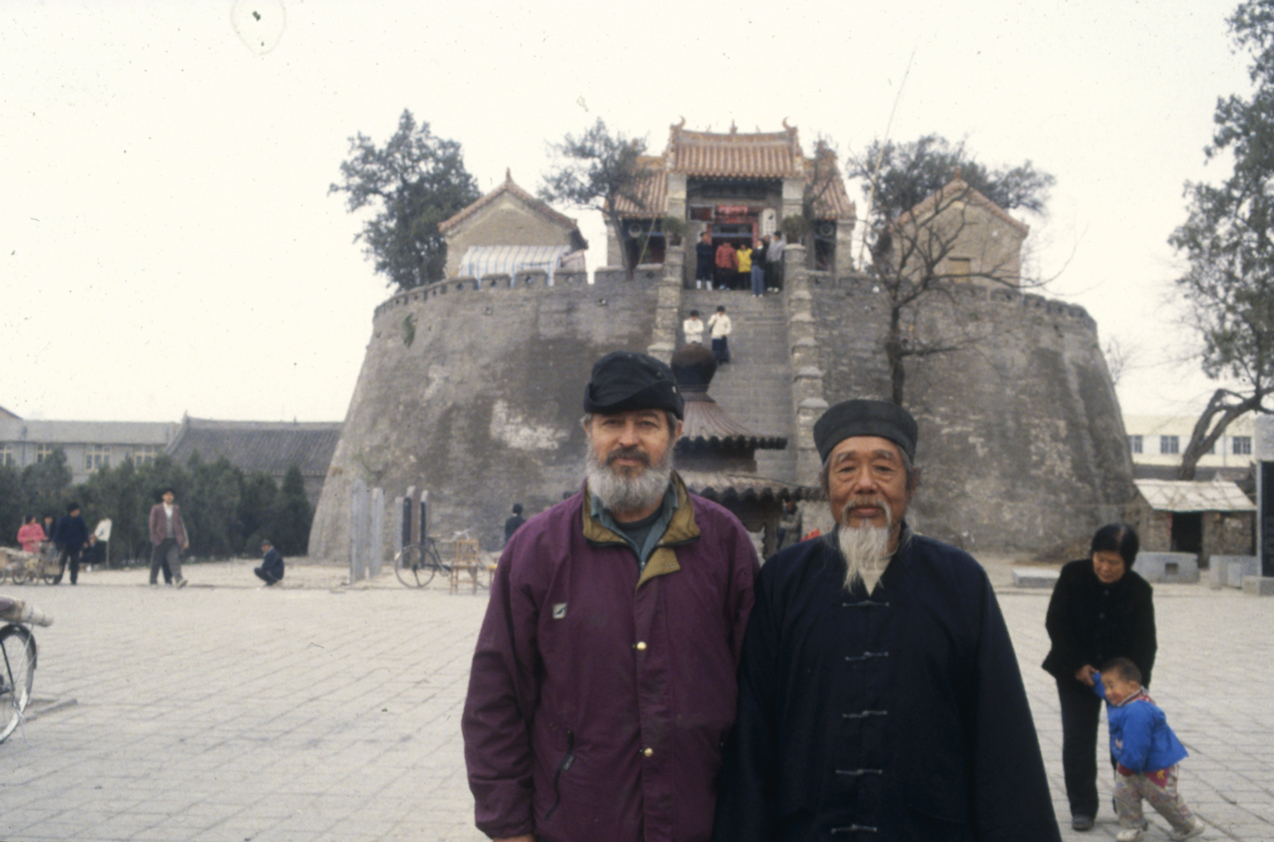
Red Pine with Taoist priest at Lao-tzu's observatory (photograph: Red Pine)
For the past hundred thousand years or so, we human beings have developed language as our primary means of communication—first spoken language and more recently written language. We have used language to convey information to each other, to communicate. But there are a set of questions just below the surface that we prefer not to address. How well does language do what we think it does? And what does it do? The reason we prefer not to address such questions is because language is so mercurial. We can never quite pin it down. It is forever in flux. And it is forever in flux, because we, its speakers and writers and translators, are forever in flux. We can’t step into the same thought twice. We might use or read or hear the same word twice, but how can it mean the same thing if the person who uses or reads or hears that word is not the same person? We speak of language, as if it was a fixed phenomenon, and we teach it and learn it, as if it was carved in stone. But it is more like water, because we are more like water. Language is at the surface of the much deeper flux that is our riverine minds. Thus, if we approach translation by focusing on language alone, we mistake the waves for the river, the tracks for the journey.
But this isn’t all. Many linguists and anthropologists are of the opinion that language was developed by early humans not simply for the purpose of communication but for deception. All beings communicate with each other, but at least on this planet only humans deceive each other. And for such deception, we rely primarily on language. It isn’t easy for us to hide our feelings and intentions in our facial or bodily expressions, but language offers ready and endless opportunities for altering and manipulating the truth. Thus, the question for a translator is not only the efficiency of language, but its truthfulness. That is, does it actually do what we think it does, and does what it does have any basis other than in fiction?
We live in worlds of linguistic fabrication. Pine trees do not grow with the word “pine” hanging from their branches. Nor does a pine tree “welcome” anyone to its shade. It is we who decide what words to use, and, like Alice, what they mean. And what they mean does not necessarily have anything to do with reality. They are sleights of the mind as well as the hand and the lips. And if we mistake words for reality, they are no longer simply sleights but lies. And yet, if we can see them for what they are, if we can see beyond their deception, they are like so many crows on the wing, disappearing with the setting sun into the trees beyond our home. This is what poetry does. It brings us closer to the truth. Not to the truth, for language wilts in such light, but close enough to feel the heat.
According to the Great Preface to the Book of Odes, the Chinese character for poetry means “words from the heart.” This would seem to be a characteristic of poetry in other cultures as well—that it comes from the heart, unlike prose, which comes from the head. Thus, prose retains the deceptive quality of language, while poetry is our ancient and ongoing attempt to transcend language, to overcome its deceptive nature by exploring and exposing the deeper levels of our consciousness and our emotions. Though poetry is still mediated by language, it involves a minimal use of words, and it also weakens the dominance of language through such elements as sound and silence, rhythm and harmony, elements more common to music than logic. In poetry, we come as close as we are likely to get to the meaning and to the heart of another.
This, too, isn’t all. Poetry is not simply “words from the heart.” A poet doesn’t make a poem so much as discover a poem, maybe in a garden or a ghetto, maybe in a garbage dump or a government corridor, or in a galaxy of stars. In poetry, we go beyond ourselves to the heart of the universe, where we might be moved by something as small as a grain of sand or as great as the Ganges.
So what does all this mean for the translator? For me it means that I cannot simply limit myself to the words I find on the page. I have to go deeper, to dive into the river. If language is our greatest collective lie, poetry is our attempt to undo that deception. When I translate a poem, I don’t think of the Chinese on the page as the poem, only evidence of the existence of a poem. Poetry shows itself in words, and words are how we know it. But words are only the surface. Even after poets give their discoveries expression in language, they continue to discover a poem’s deeper nuances, and they make changes: maybe a few words, maybe a few lines, maybe much more. The poem, as I see it, is a never-ending process of discovery. And it isn’t just language. It’s the unspoken vision that impels a poet and to which the poet tries to give expression. But the poet never gives complete expression to that vision, only a few fragments from a kaleidoscopic insight, a few steps on the dance floor impelled by music even the poet hears only imperfectly.
Then a translator comes along, and things change. It is only then that the poet no longer dances alone but with a partner. And together they manifest a deeper insight into the poem, into the music that motivates the dance. Thus, I have come to realize that translation is not just another literary art, it is the ultimate literary art, the ultimate challenge in understanding as well as performance. For me, this means a tango with Li Bai, a waltz with Wei Yingwu, a dance with the dead.
copyright@Bill Porter aka Red Pine
sight seeing
Posted: August 10, 2010 Filed under: photography, places, writing 1 Comment
a shop house in Luang Prabang, Laos
Someone said, in paraphrase, the best literary characters are sometimes more real to us than real people. The same is true in photographs. We seldom see colors as vividly as we do in a photograph.
Bedside books II
Posted: August 7, 2010 Filed under: books, buddhism, poetry, writing Leave a commentBangkok Found: Reflections on the City by Alex Kerr. Thailand’s culture is not as highly defined as Japan, and a reliable guide is essential to take one down the roadmap into the origins and esthetics of the country’s food, architecture, design, dance, etiquette and other unique traits. You finish the book feeling you have seen a new Bangkok, a new Thailand, the same as before but deeper now and still mystifying.
 Inside the Whale and Other Essays by George Orwell. Orwell’s prose is always like a fresh drink of water, not overpowering but deeply affecting. He was an early champion of Henry Miller’s Tropic of Cancer, recognizing him as the embodiment of Whitman, a tramp-philosopher outside the circle of conventional society and literature. Orwell’s Politics Vs Literature and Politics and the English Language must be read by all young writers.
Jack Kerouac: Selected Letters 1957-1969. What’s amazing about this volume is that all–ALL–of his major novels were completed by 1957, before his fame. The letters among all the young writers who made up the Beat movement now constitute an American history of soul and intellect among a group of red-blooded poets who were an antidote to the beginning of America’s loss of heart. The tale of Kerouac’s final days has no silver lining. This volume should be followed by the long essay on Kerouac’s funeral by his old friend John Holmes, one of the finest things ever written about him.
 Saving Daylight by Jim Harrison. It’s hard to pick a favorite book of poems by Harrison, but this may be it for its blend of American and Asian flavors set in a homely scene of everyday urgency, of a unique voice on a moment-to-moment quest for more experiences, more abundance of life. This book should be read with his After Ikkyu.
Sexuality and the Psychology of Love by Sigmund Freud. That Freud is discounted in many circles today misses the point. Bloom rightly tells us that Freud is really writing a form of literature cast as a pseudo science (or theory at least), a literature of consciousness and its imagined affects and effects. For a novelist, he’s indispensable: just put his insights below the surface of your characters and you’re off to the races inside the human soul. For a reader, you may squirm at times, but you’re glued to the page because you recognize the unfolding of life, yours and others.
Ikkyu and The Crazy Cloud Anthology by Sonja Arntzen. Ikkyu was the Billy the Kid Zen poet of Medieval Japan who lived with the outlaws and flowers of the night in between trips to his solitary mountain hut and his occasional stint as abbot of some big Zen monastery. A deliciously split personality, he wasn’t willing to give up any element that reminded him that he was human, at-large in life which is not giving away anything free. He left us his life in poems.
New Cormac McCarthy movies
Posted: August 4, 2010 Filed under: articles, books, fiction, people, writing Leave a comment
first edition cover
Good news. Two more Cormac McCarthy novels, Cities of the Plains and Blood Meridian, are scheduled to be filmed in 2012 and 2011, respectively.
This bodes well for his Border trilogy being filmed complete. There hasn’t been a novelist who has had such a string of successful films from his novels in my memory. We can hope these two movies are done as well as All the Pretty Horses, No Country for Old Men and The Road. See the McCarthy website here.
McCarthy wisely decamped from Knoxville in mid-life and hid away in El Paso where he found a city, a landscape and a people, past and present, that were equal to his majestically precise prose.
happy birthday, Hunter Thompson
Posted: July 18, 2010 Filed under: articles, books, people, writing Leave a comment Born on July 18, 1937; five years dead and still living in the printed word, and in movies, as never before. If you haven’t read HST’s letters, do so, particularly Vol. I which takes him through the beginning of his career to the completion of Hell’s Angels and prior to The Rolling Stone days . I hope the Johnny Depp movie based on The Rum Diary adds a human side to the Gonzo image. Letters Vol. 1 is free of Gonzo babble, and you get a solid picture of Thompson’s energy, anxieties, pleasures and his dream of writing fiction. How that desire to create stories––compelling worlds––and his work in journalism eventually influenced one another is still a story whose pieces are being put together.
  Check out the Hunter S. Thompson Books website for a complete bibliography of the newspaper and magazine stories, information on various editions of his books, links on the Beats, and a very good listing of related sites. Also see the Owl Farm blog by his wife, Anita.
A Zen man in Texas
Posted: July 12, 2010 Filed under: buddhism, people, writing 11 CommentsA Vietnamese Monk in Grand Prairie and a Philipino Zen Master in Dallas
There is nothing either good or bad, but thinking makes it so––William Shakespeare, Hamlet, Act II
Part I
Thich Tre Hien was a small, wiry Vietnamese monk with a wispy, white beard who had studied for nine years in a Zen monastery in Japan. In early 1988, on a hot summer day in Grand Prairie, Texas, he noticed three men and a woman pacing back and forth on the sidewalk opposite his house, which served as a Vietnamese Buddhist Temple. They carried handmade signs with English writing. Tre Hien’s English was simple, but he could read the writing: “No Vietnamese here,” “Buddhism is a godless religion” and “Repent.” A few cars honked horns as they drove past the house in the blue-collar neighborhood, where many people worked on assembly lines for the large aircraft and automotive manufacturing plants.

Ven. Thich Tre Hien died on 8/8/10
Assigned to Texas a few years earlier by his Vietnamese Buddhist order, he opened his home-temple, Chua Phap Quang (Lotus Dharma) in a suburb just beyond the Dallas city limits to servethe large Vietnamese community. Most were recent refugees who were known as “the boat people,” for their commitment to risk it all to get out of Communist-controlled Vietnam. Grand Prairie, with its redneck reputation, is a long downtown strip of commercial stores on US 180 running west out of Dallas. Southern Baptist fundamentalist churches dominate the area.
Stories about the demonstration appeared in the Dallas newspapers. A few days later, I visited Tre Hien to what was going on. The white clapboard house was shaded by towering pecan trees on a spacious lot surrounded by a well-tended garden of roses and native wildflowers in full bloom, offering bursts of color and beauty in an otherwise drab, car-in-the-yard neighborhood. There were ferns and flowering bushes, bird feeders, wind chimes and a rock pathway winding along the side of the house, where several old cars were parked outside a side door. Dozens of shoes were scattered in front of the door.
I peaked through the screen door into a kitchen. A half dozen Vietnamese sitting on the floor turned to look, a silent pause during an evening meal of noodle soup. Tre Hin came to the door, business like, walking in the slightly flat-footed way that comes from years in a Japanese monastery. He motioned for me to take off my shoes and come inside. Tre Hien was the first true Zen man I had ever met. I say that having never heard him give a teisho, or Zen talk, but based on our conversations in simple English, I am sure of it.
“Please sit, have tea,” he said, smiling. I smiled at everyone and took a seat on the kitchen floor beside a low table holding bowls of pungent Asian food. Tre Hin wore brown, baggy pants and a light yellow T-shirt. A white-haired Vietnamese woman silently cut vegetables, her teeth stained dark red from chewing betel nut. I could see Tre Hein’s sleeping mat on the floor in his bedroom. A bookshelf with a Kuan Yin statue was next to his sleeping mat. He said he didn’t teach Americans at his temple because his English was too poor. Yes, I could meditate in the temple room of the house anytime I wished. There were also two Americans who had recently ordained as a monk living in a small room in the back of the house.
Later that evening, after a large bowl of noodles and duck egg soup, and many cups of tea, I meditated for thirty minutes alone in the temple room, the first time I had actually meditated anywhere outside of my house. The living room had been converted into a temple room with a bright red carpet and a three-foot gold Buddha statue surrounded by a display of flowers from the garden. Chalky spirals of pungent incense drifted across the Buddha’s downcast eyes. I was certain it was the biggest Buddha statue ever to appear in Grand Prairie. I was happy to be sitting alone in the room, breathing slower and slower with the muffled sounds of Vietnamese coming from the kitchen. The sound of Tre Hien’s faint voice steadily rose and fell. I felt like a foreigner in another country––a little self-conscious, on-show. But I began to feel at home in a house full of Vietnamese immigrants.
My legs were in the half-lotus position. A few months before, I had started sitting in my home. As my leg muscles relaxed, I felt a comforting strength rise up my spinal column. After a few minutes, my breathing was almost imperceptible, and my back and shoulders grew more erect. My attention focused on the movement of my breath in and out. I felt a bridge opening up between my head and my stomach, air coming in through my nose, slowly expanding my lungs, expanding my stomach slightly, before passing out again, ever more slowly and naturally. My stomach muscles moved like a bellows, drawing in, expanding, and letting go naturally. The space in my mind cleared as my breath and thoughts moved slower and slower. My body, breath and mind settled and, most important, I was aware of the settling and yet removed at the same time. I smiled inside.
I was 46 years old. I sensed that I had finally found a place that I had been moving toward ever since I read a 61-page book on Zen Buddhism published by The Peter Pauper Press in 1959, when I was seventeen. It was a collection of excerpts from books by D.T. Suzuki. The book had found me early, but why had it taken so long for the journey from that little book to meditating in Tre Hien’s house in Grand Prairie?
Sitting in his temple that night instantly connected me to the tradition of formal Buddhist meditation in a practice that is thousands of years old, a structured, practical way to pursue a well-worn path of fulfilling growth, a way to take hold of one’s life. Tre Hien had come from the East to a redneck suburban neighborhood in Texas to offer me a place to experience my breath slowly moving in and out. He had created a place where I could still my thoughts and energize my mind and body. When I meditate now, decades later, I can taste exactly what it was like to meditate that first time in his home-temple. Tre Hien’s journey from the East to Grand Prairie was the reverse of the journey I took West as a young army recruit, assigned to Vietnam in the first wave of a few hundred Americans who entered the country in 1961, and then again as a grown man ready to start a new life in Thailand.
For two years, I sat three or four nights a week in the temple, along with a fellow American, Ananda, aka Steve Emory, a lanky, 6-foot, 4-inch Dallas native in his early thirties who had lived in the temple for the past year. Gentle and soft-spoken, Ananda guided me into a regular meditation practice and brought me along so that within two months I could in the full-lotus position for a two-hour meditation period with three breaks of five minutes walking meditation. Together, we deepened our practice together, usually ending the night with tea in the kitchen.
After meditation, Tre Hien frequently joined us as we sat on the floor at the low kitchen table. I watched him carefully, but nothing ever seemed to happen out of the ordinary. Then I understood that was it. Nothing out of the ordinary. What is is. It’s an amazing teaching to truly absorb and fully practice. We shared simple conversations, but, even more important, we shared time together and we were comfortable sitting in the silent house sipping tea.
One night, he asked, “How is your meditation?”
“Sometimes things feel far away, ” I said.
“You’re always closer than you think,” he said. That became a teaching that has never left me.
Over the next two years, the little home-temple attracted more Vietnamese. A few Americans drifted in and out, but few stayed around long enough to developed a rigorous meditation practice. The temple had many Vietnamese supporters, but few practiced meditation. Eventually, the home-temple expanded into a large, red brick temple constructed in a vacant area behind the house.
It was timer me to find another place where I could meet more people interested in meditation and Zen. Somehow, I came across the name of Sister Pascaline, a Catholic nun who lived at a retreat in Sand Springs, Oklahoma. I wrote her a letter asking if she knew of a meditation group in the Fort Worth-Dallas area. She immediately wrote back: Ruben Habito. He lived in Dallas. I called and he answered. Yes, he had just started sitting with two or three people a few evenings each week in a room in a small house near the Southern Methodist University campus. Bring your zafu, he said, you’re welcome to join us. There’s a Zen saying: When you’re ready, the teacher will appear. I didn’t know it at the time, but an authorized Zen teacher had finally come to Texas. He was ready to organize a zendo, and I had found my second teacher.
asian moments
Posted: July 11, 2010 Filed under: books, buddhism, people, writing Leave a commentA letter from Red Pine recalling the entrance way into the house of writer John Blofeld in Bangkok:
“I have a black and white photograph of John Blofeld’s yin-yang designed doorway, leading into his garden, at his old home in Bangkok.
Over the doorway was written the first part of the last line of a four-line Li Pai poem: There’s another world.
The rest of the line would have added: Beyond the world of man.”
The pen is mightier than the general
Posted: June 25, 2010 Filed under: articles, people, writing Leave a comment Journalism note: The fallout from the Michael Hastings story in Rolling Stone magazine on Lt. Gen. Stanley McChrystal doesn’t surprise me, considering the picture he gave of the general’s character, lifestyle and the personalities that surrounded him. It all came across like one big ego pile-on with the general miscast in the job he was assigned. He’s a warrior, not a diplomat. What I came away with was surprise over how he was chosen for this particular job. He seemed like he didn’t really understand the complexity of the job he was assigned to do, and he probably lacked the essential skills to pull it off. He certainly didn’t understand how to deal with a reporter like Hastings, and that goes double for his staff.

Hastings simply did what any magazine writer would do: He reported what he heard and saw happening around the general in addition to what was said in response to his questions. McCrystal and his staff know all the rules of reporting regarding off the record, background, etc. Hastings’ editor said those rules were followed and honored when they were discussed. On the larger front, as we know from Vietnam, turning a flawed war policy around is seemingly impossible. It takes a courage that almost no politician has ever possessed. For the politician, in Afghanistan it’s better to chart a course that slowly fails that to lead by ending failure. Ten years in Afghanistan is enough, but it will probably drag on for three to five more years, or perhaps longer. The country must find its own way on its own timeline, because we certainly can’t affect or change their culture in time to make much of a difference. Talk, compromise, support. Stop the fighting.
Michael Hastings’ book about Iraq received glowing reviews. See his recent posts on his Rolling Stone blog and on his personal blog at True/Slant. You can read a brief biography and an interesting questionnaire that he filled out.
 the roy hamric journal