
time, space
Posted: June 30, 2010 Filed under: photography, time, space Leave a comment
june 30, 9:44 a.m., a table on Rachawitte Road in Chiang Mai (Iphone photograph)
time, space
Posted: June 26, 2010 Filed under: photography, time, space Leave a comment
june 26, 3:16 p.m., the Rasta Bar in Chiang Mai (Iphone photograph)
The pen is mightier than the general
Posted: June 25, 2010 Filed under: articles, people, writing Leave a comment Journalism note: The fallout from the Michael Hastings story in Rolling Stone magazine on Lt. Gen. Stanley McChrystal doesn’t surprise me, considering the picture he gave of the general’s character, lifestyle and the personalities that surrounded him. It all came across like one big ego pile-on with the general miscast in the job he was assigned. He’s a warrior, not a diplomat. What I came away with was surprise over how he was chosen for this particular job. He seemed like he didn’t really understand the complexity of the job he was assigned to do, and he probably lacked the essential skills to pull it off. He certainly didn’t understand how to deal with a reporter like Hastings, and that goes double for his staff.

Hastings simply did what any magazine writer would do: He reported what he heard and saw happening around the general in addition to what was said in response to his questions. McCrystal and his staff know all the rules of reporting regarding off the record, background, etc. Hastings’ editor said those rules were followed and honored when they were discussed. On the larger front, as we know from Vietnam, turning a flawed war policy around is seemingly impossible. It takes a courage that almost no politician has ever possessed. For the politician, in Afghanistan it’s better to chart a course that slowly fails that to lead by ending failure. Ten years in Afghanistan is enough, but it will probably drag on for three to five more years, or perhaps longer. The country must find its own way on its own timeline, because we certainly can’t affect or change their culture in time to make much of a difference. Talk, compromise, support. Stop the fighting.
Michael Hastings’ book about Iraq received glowing reviews. See his recent posts on his Rolling Stone blog and on his personal blog at True/Slant. You can read a brief biography and an interesting questionnaire that he filled out.
Dylan, Bloom, misreading
Posted: June 20, 2010 Filed under: articles, interviews, people, writing Leave a comment
Christmas in the Heart, Dylan's seasonal holiday songs
I’m a fan of Harold Bloom’s literary criticism, and his theory of misreading. It’s a complicated theory, but it hinges on the idea that most critics and the general public misunderstand the work of really new artists upon inception, and it can take generations for the real meaning/stance to be clearly understood and felt. Nowhere is that more true than with singer-poet Bob Dylan, much of whose work is wildly misunderstood. Chronicles, the autobiography he released a few years ago, was greeted by many who said that Dylan’s memoir was a put-on, loaded with irony, and meant to toy with his public image. Applying Bloom’s theory, which is right on target in this case, it’s the opposite. Dylan was just being himself, honestly and sincerely. The strange thing about Dylan is that a big segment of the public mind has never grown up over the years and figured him out. It continues to misread him and his work. Here’s a small bit from an interview Dylan did on the release of an album of Christmas songs last year (I missed its release entirely). The full interview is worth reading because it brings out the on-going misreading. What is at stake here goes back to Dylan’s emergence as an artist with a larger-than-life image. Why that should be so may take another generation to fully understand. My guess is that his least appreciated, so-called “minor” songs now will become the most appreciated, and most of the popular, so-called classic songs will become less important because they will lack the context of the time in which they were created.
BF: Some critics don’t seem to know what to make of this record. Bloomberg news said, “Some of the songs sound ironic. Does he really mean have yourself a Merry Little Christmas?” Is there any ironic content in these songs?
BD: No not at all. Critics like that are on the outside looking in. They are definitely not fans or the audience that I play to. They would have no gut level understanding of me and my work, what I can and can’t do – the scope of it all. Even at this point in time they still don’t know what to make of me.
BF: Derek Barker in the Independent, compared this record with the shock of you going electric. So many artists have released Christmas records, from Bing Crosby to Huey Piano Smith. Why is it a shock if you do it?
BD: You’ll have to ask them.
time, space
Posted: June 19, 2010 Filed under: photography, time, space Leave a comment
june 19, 8:44 p.m., day-glow art in the Babylon Rasta Bar in Chiang Mai (Iphone photograph)
sight seeing
Posted: June 17, 2010 Filed under: photography, places, sight seeing Leave a comment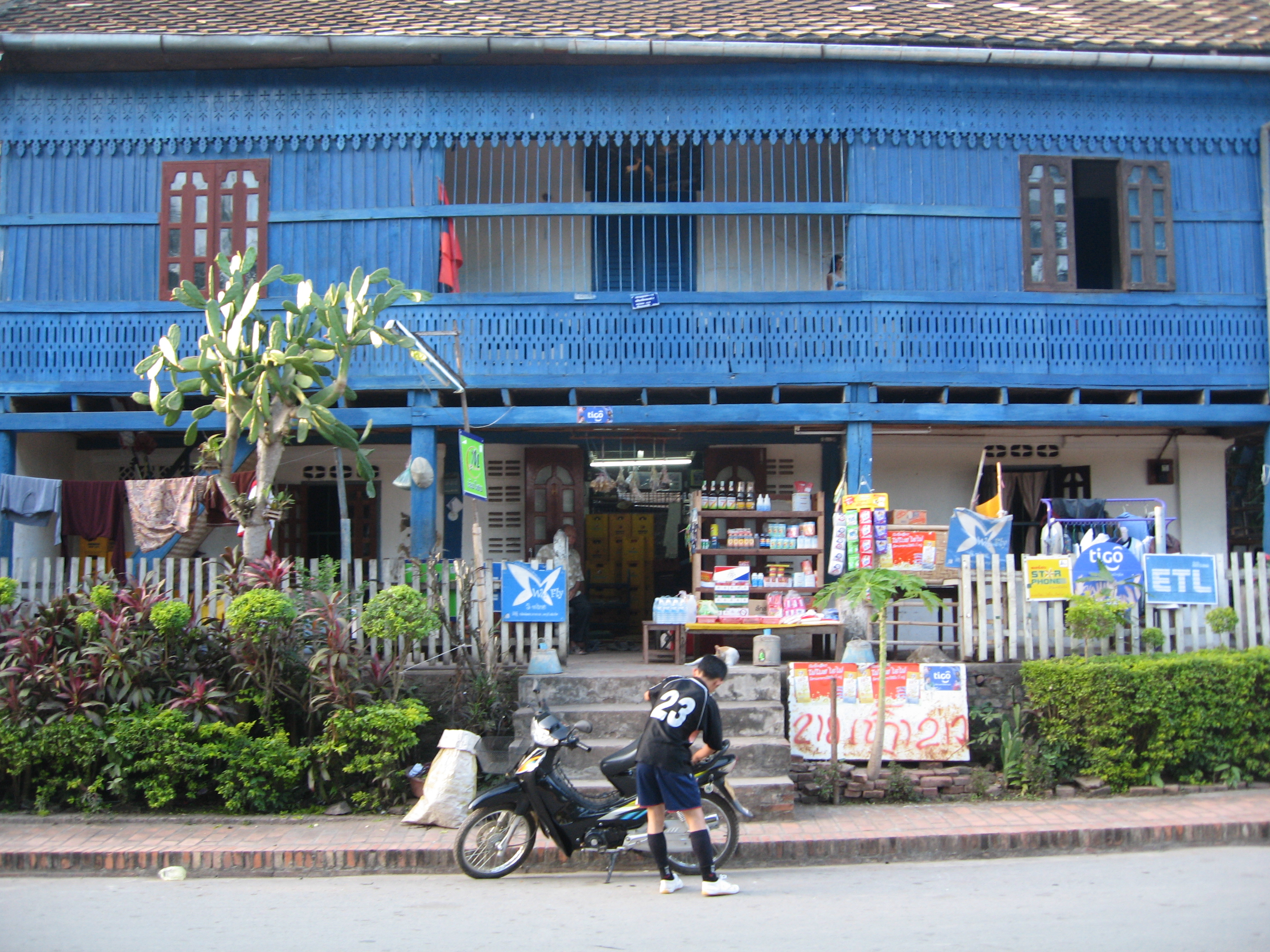
an old blue house in Luang Prabang, Laos, last summer. notice the large cactus at left front.
Thai music: Joe Cummings
Posted: June 17, 2010 Filed under: articles, interviews, people 1 CommentJoe Cummings is one of the best people to talk to about anything Thai. After more than two decades roaming Thailand and Southeast Asia, he sees the scene, high and low, in great detail. In an earlier life, he created the running series of Lonely Planet Thailand guide books. I asked him to talk about the Thai music scene, especially rural music.
Roy Hamric: When farangs first come to Thailand, they eventually hear about look thung music. What is it exactly?
Joe Cummings: The name literally translates as “children of the fields,” but means, in essence, farmers. In many ways, it’s the Thai equivalent of country & western in America in its stories and tightly structured formulae. But just as country western has been moving towards rock and roll, look thung is moving that way from traditional forms. If you’re in a taxi in Bangkok most likely you’ll be listening to look thung. It’s the same kind of lyrics: lost your job, your truck broke down, your wife left you. There are two basic styles, the original suphanburi style, with lyrics in standard Thai, and an Ubon style sung in Issan (northeastern) dialect. Thailand’s most famous look thung singer, Pumpuang Duangjan, rated a royally sponsored cremation when she died in 1992.
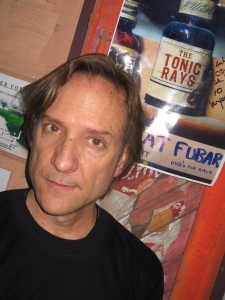
joe cummings
Chai Muang Sing and Siriporn Amphaipong have been the most beloved look thung superstars for several years, with lesser lights coming and going. Other stars include former soap opera star Got Chakraband and Monsit Khamsoi, whose trademark silky vocal style has proved enormously popular.
Look thung has lately been adopted and adapted by long-haired Thai bands such as Carabao, the most popular pop group in Thai history, complete with electric guitars and lots of rock posturing. It’s sort of like redneck rock.
Look thung is popularly heard in the Thai café, which is anything but a coffeeshop in the Western sense, but rather a dark nightclub where a succession of scantily clad female singers take the stage to perform watered-down versions of look thung hits. There are some more grand venues for the music, however, such as the legendary Café Rama 9 in Bangkok.
Q. Some people claim Maw Lam trumps Look Thung for authenticity, originality and a look into the Thai soul.
Arguably the most authentically native strain of Thai music is maw lam which developed in northeastern Thailand and Laos around 100 years ago. Fans in the northeast breath, live and die for this music. The main instrument is still the khaen, a traditional Lao-Thai pan pipe. It has a very dynamic beat, usually a quick 3/8 tempo with a strong bass line reminiscent of Jimi Hendrix’s Third Stone from the Sun. The lyrics are more hard core than in look thung, with more politics, more sex and more violence. It’s almost like Mississippi Delta blues with its rougher language and songs about murder and suicide. Jintara Poonlap and Chalermphol Malaikham continue to reign as queen and king of maw lam.
When you see an authentic maw lam performance live in the northeast (as opposed to on TV in Bangkok), you’ll see how intense the bands can get, with lots of sweat and veins popping out on the forehead. The players really get into it.
It’s most commonly performed at festivals and temple fairs. One of the best festivals for maw lam is the Dok Khoon Siang Khaen Flower Festival in Khon Kaen, also Phi Ta Khon festival in Dan Sai, Loei.
Q. Some groups must have updated both Look Thung and Maw Lam?
Just as Bob Dylan took folk, blues and rock and wove them together with a political outlook in his early to mid-1960s songs, the Thai band Caravan grafted Thai rural folk melodies onto Dylan- and Springsteen-influenced song structures to create a genre of protest-oriented songs called phleng pheua cheewit (Songs for Life), beginning in the late 1970s.
Caravan and their music were banned from public performances throughout the Thai military dictatorship of the 70s and 80s. As Thai politics stablized in the late 80s, the genre was picked up by other groups and commercialized. Much as the sounds of politically oriented Buffalo Springfield were later co-opted by Poco and The Eagles in the USA, Caravan’s musical creation was taken to market by Carabao.
You won’t find much live maw lam in Bangkok or in many clubs even in Issan. Songs For Life can be heard in smaller bars typically decorated with water buffalo skulls and buffalo-cart wheels. Chiang Mai has one of the better venues for Songs For Life (although not exclusively), a bar called Sudsanan.
Q. The Pai music scene is attracting a lot of interest musically, right?
For such a small town, Pai (Mae Hong Son Province) does have an amazing music scene. Be-Bop Bar, which has been around since the late 90s, attracts musicians and bands from all over Thailand, and some from other countries as well. The place is packed with live music lovers every night, and the roster of bands change nightly. Aside from Caravan and Carabao, both of whom have performed there, Be-Bop has recently hosted Mason Ruffner (former guitarist for Bob Dylan), Aussie bluesman Mojo Webb, and New Orleans-style pianist Mitch Woods. The owner, Sucharat Panpai, is an excellent blues and jazz guitarist himself, and he plays there regularly with his own band.
Parking Pai, a branch of Bangkok’s Parking Toys, offers a variety of live music, usually local or Chiang Mai acts playing international and Thai music, sometimes something a little different, including indie bands from Bangkok. Edible Jazz does live jazz and blues in a rustic bambbo-and-wood setting.
Q. What about contemporary Thai music?
Most popular on Thai radio is T-Pop, meaning Thai pop, a borrowing from Japan’s J-Pop. I don’t find it very original-sounding, with its general emphasis on Western 80s New Wave production style, with heavily processed guitars and keyboard washes and lyrics about teen love. The language features a lot of faux naïve lyrics, again influenced by J-Pop.
Singers who are look khreung – half-Thai, half-farang– and sport Western names are particularly popular. For example, Tata Young, Nicole Theriault and the original look khreung heartthrob, Thongchai “Bird” MacIntyre.
Thai mainstream rock is more unique. Although obviously influenced by Western bands like Guns and Roses, Thai rockers have a way of taking the genre and giving it a Thai twist. Just where you might end the chord progression in a typical Western rock song, they’ll tag on a little something, often taking a minor key song back into its relative major. Loso is still the biggest traditional Thai rock band.
In the 1990s an alternative pop scene known as klawng sehrii or “free drum” in Thail, also phleng ta\^i din, “underground music”––grew in Bangkok. Hip-hop/ska artist Joey Boy not only explored new musical frontiers but released lyrics that the Department of Culture banned. Thaitanium have taken over that territory and are currently the number-one hip-hop act in Thailand. Ska seems more popular than ever. Of course the veterans on the scene are T-Bone, who groove equally well in Thai and English. They’re internationally recognized, even scored a small stage at Glastonbury a few years ago. But there are a whole bunch of new ska bands that take it much closer to the roots of the genre.
Modern Dog, a Britpop-inspired band of four Chulalongkorn University graduates, brought independent Thai music into the mainstream, and their success prompted an explosion of similar bands and indie recording labels. Among the most significant indie rock acts in Thailand, from my perspective, were Day Tripper, Silly Fools and Futon. I think Silly Fools still plays but the other two groups are gone. Gene Kasadit from Futon now does his own thing, more outrageous than ever, while other members of Futon have formed Goo, who put on a seriously kickass rock show.
There’s a new generation of indie bands who are really state of the art for Thailand, often composing songs in English or in both English and Thai. Among these, my present favourites include Zero Hero, Abuse The Youth, Revenge of the Cybermen, Class A Cigarettes.
Q. When you visit Bangkok, where do you go to hear good music?
The situation has gotten pretty dire over the last couple of years. A few special venues like Rain Dogs, The Tube and Lullaby have disappeared. Saxophone, at the Victory Circle, is an old holdover from the 80s that’s still good for blues, funk and fusion, with occasional acts from overseas like Eddie Baytos and Mason Ruffner. Ad Here the 13th, on Samsen Road near Soi 1, is a personal fave. I love the house blues band, led by owner Pong. Common Ground on Samsen Rd occasionally has a good lineup of indie bands, as does Bangkok Rocks on Sukhumvit Soi 19. Club Culture recently re-located to a spot near the Democracy Monument but has gone mostly DJ, with the occasional live show. DJ culture has just about taken over the city. Parking Toys off Kaset Nawamin Rd has a nightly line-up of bands playing rock, latin and funk, occasionally something more modern. Stu-Fe, near the Nam Kluay Thai intersection of Rama 4, is run by a musicians collective called Monotone, and on the weekends the jams can be pretty good. I’ve become a big fan of Belgian accordionist Matthieu Ha, who has played there. Overtone Music Cave, in the RCA area, has a state-of-the-art sound system and will become a popular spot for fusion and prog rock. I’m living in Bangkok now, but sometimes I have to fly to Chiang Mai to hear good live music at Guitarman.
Q. And what about classical Thai music?
Classical Thai music, known as peepat (the name of the ensemble itself), is based on styles of music imported from the Cambodian royal court during the Ayuthaya era, so it can be argued that it’s not particularly Thai. It’s also not very popular and is for the most part reserved for ceremonial performances, tourist dinner shows and occasional Thai cinema.
Classical Thai music received a huge boost in 2004 when the film Hom Rong (The Overture) was released. Based on the life story of Thai maestro Luang Pradit Phairoh (1881-1954), the film chronicles an era when Thai political leaders were trying to suppress traditional Thai music in favour of Western classical music in order to prove to would-be colonisers that Thais were “civilized.” In the first few months after the film’s opening, new students were practically standing in line to learn ranaat ehk (classical wooden xylophone) at Bangkok music schools.
Q. It seems your music life is picking up and your travel writing life is slowing down. Talk about the music…
I actually started playing in rock bands when I was 15, and by the time I was 20, I was touring with a band called The Fog that opened for the likes of Blue Oyster Cult, Uriah Heep and Edgar Winter’s White Trash. I came to Thailand shortly after that period and have been jamming around Bangkok since dinosaurs roamed Sukhumvit Road.
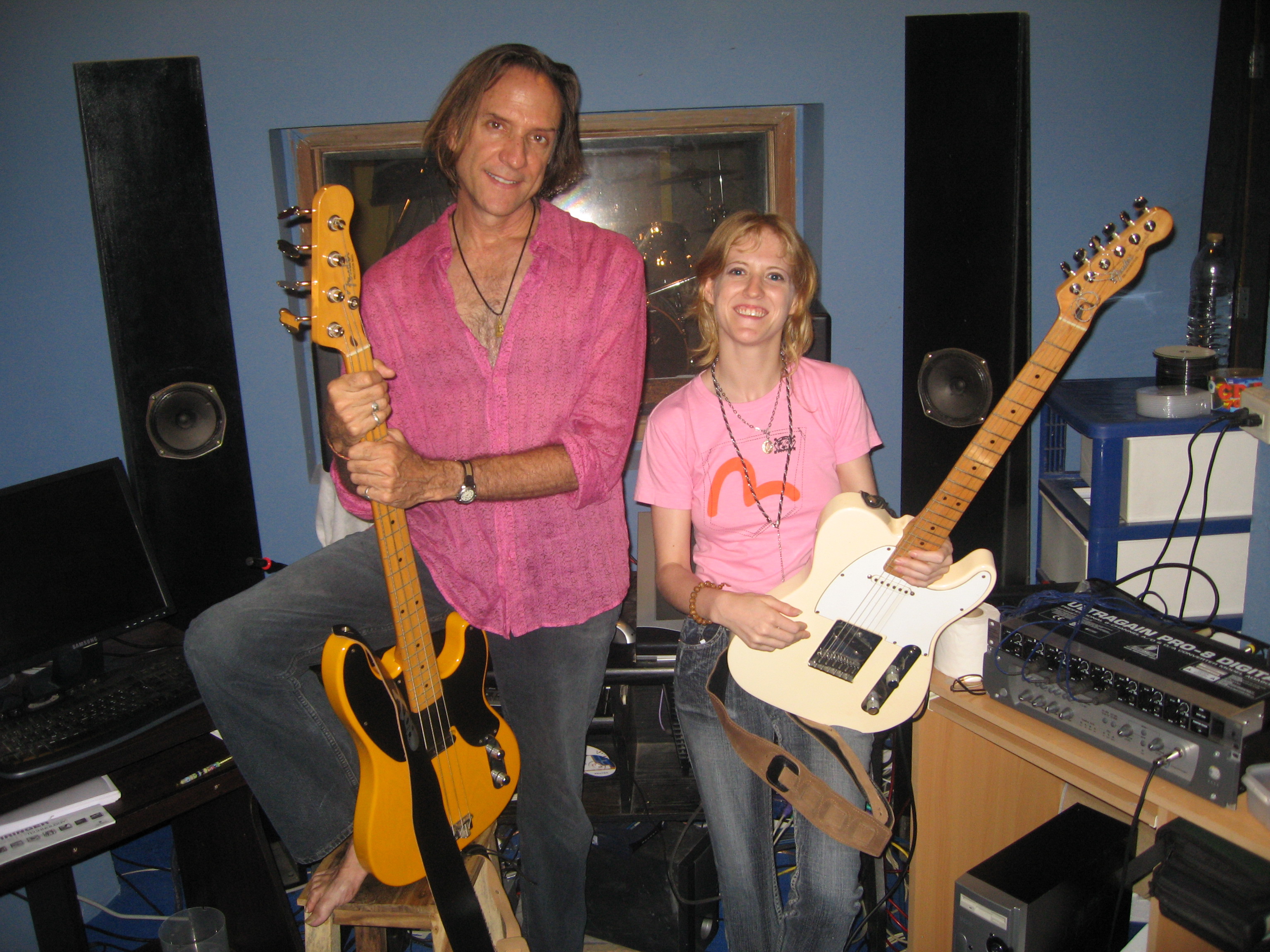
joe cummings and marie dance in a Chiang Mai recording studio
A few years ago I met Marie Dance, a talented singer-songwriter-guitarist from England. We played together a few times with a band called The Jackalans, based in Pai, and as we got more serious about writing and performing originals, we changed the name to The Tonic Rays. We recorded one album, which miraculously made the Billboard Critics Top 10 Albums of 2008, courtesy of rock critic Chuck Eddy. You can download the tunes at Amazon, Rhapsody, iTunes, and CDBaby. You can also hear a few tracks at www.myspace.com/tonicrays. We were based in Chiang Mai and played a lot there (at Babylon, Drunken Flower and Guitarman) and in Pai (Be-Bop and now-defunct Phu Pai), but we also played in Bangkok, Pattaya and Ko Phi Phi. Marie is out of the picture for now, but I may start another band soon. I’ve been jamming with Cannonball here in Bangkok and also in Saigon last year at a music fest. Mason Ruffner is coming back to Thailand in August, and so I’ll join him for a spell. I was in Berlin recently and really stoked by the scene there.
Q. So is Joe Cummings still in the travel writing business?
I guess you could say I have a dual life. My day job now is writing about art, culture, architecture and people for The Magazine of The Bangkok Post. Also, on my own I do mostly large format books like Lanna Renaisance, Chiang Mai Style and Buddhist Temples of Thailand, rather than guidebooks. At night, I still play music. Sometimes it feels like there’s two of me in one tired body!
Q. Now we fade to silence.
Drum roll…
searching for Orwell
Posted: June 17, 2010 Filed under: articles, people, reviews Leave a commentThis is a revised version of a review published in The Kyoto Journal prior to the 2010 national election which led to the creation of a parliament and the opening up of Burma to democracy.
Secret Histories: Finding George Orwell in a Burmese Teashop by Emma Larkin
“Who controls the past controls the future: who controls the present controls the past.”––Nineteen Eighty-Four
By Roy Hamric
Early into Emma Larkin’s extended stay in Burma while she was gathering material for Secret Histories, she visited a Burmese scholar and brought up George Orwell’s name.
“You mean the prophet!” the man exclaimed.
In Burma today, rechristened Myanmar in 1989 by a military junta that has methodically repressed the country and turned it into a pariah state, there is a joke that Orwell wrote not just one book about the country, Burmese Days, but two more: Animal Farm, the tale of a socialist revolution in which pigs overthrow human farmers and set about to destroy the farm, and Nineteen Eighty-Four, the story of a heartless dystopia. The trilogy depicts a before-and-after picture of Burma-Myanmar.
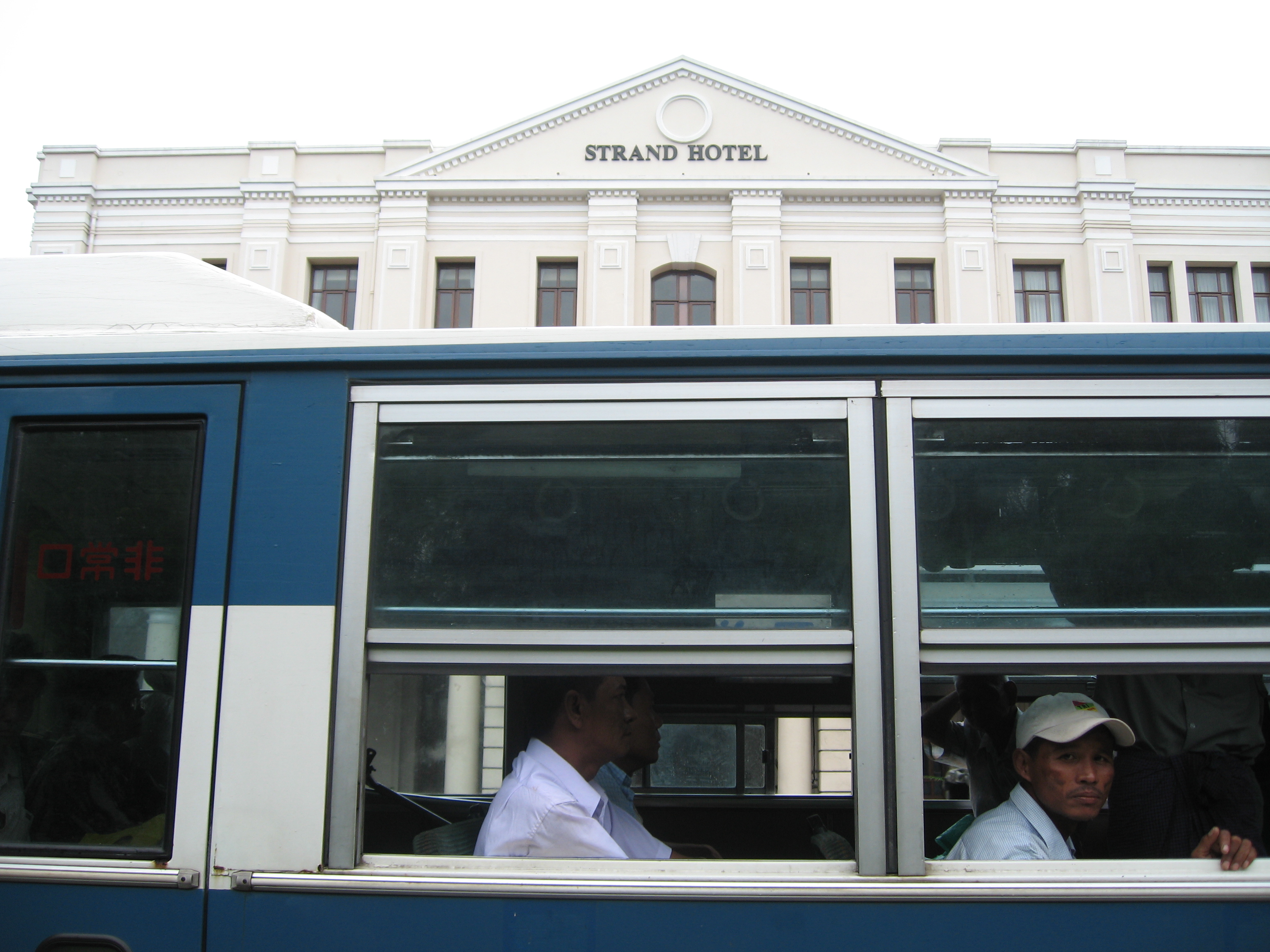
Emma Larkin is the pseudonym of an American journalist, born in Asia, who has spent long stretches of time living in Burma, a rarity for Western writers these days. Her book has added luster now because Burma is has undergone profound changes since the 2010 elections, in which the junta handed over power to a parliament and began a rapid move to establish a democracy, a normal civil society and open up its closed culture to foreign investment and businesses.
Larkin’s book is now a time capsule on what Burma was like under a bloody totalitarian military regime, which massacred many students and other in demonstrations over a two decade period. She wisely steered clear of the tourist trail, preferring quiet visits with ordinary Burmese in the former capital of Rangoon or in towns and villages in the north and south. The result is unsurprisingly a book that feels Orwellian, a sad testament to the fact that Burma hasn’t progressed much in nearly 90 years, when Orwell was serving unhappily as a policeman for the British crown, in the waning days of its Asian empire. The Burmese eventually threw the British out, but what they got in return has been a dismal chronicle of brutal, incompetent, repressive military dictatorships which have driven the country into the ground.
Reading about life in Burma in the hands of Larkin is a pleasure on many levels. She writes a gentle prose which, largely free of polemical arguments, lets the Burmese people speak for themselves. For those who are unaware of Burma’s recent history, the book is a primer on the woeful battering suffered by its citizens at the hands of cold, ruthless military regimes that first took power in the 1950s, and is known most recently for the 1988 massacre of an estimated 3,000 people–– students, monks, citizens and children––who took to the streets to protest nearly three decades of military rule and neglect. Burma, during the time of Larkin’s book, was the same Burma of long ago. It had undergone little change. The infrastructure is still in shambles, electricity was non-existent or rationed, the press was censored, individual initiative was discouraged, political speech was repressed and pro-democracy activists were routinely rounded up and sentenced to prison on draconian charges grounded on state control. Commodities were scarce, but mostly just non-existent. Jobs were scarcer. Reliable information couldn’t be found. An ever-present fear of informers hovered over all conversations, especially with foreigners, and the fear was captured in the expression pasien yo, literally “the handle of the ax”––signifying the tool used to chop down a tree is made from the wood of the tree itself. The people are kept in line through fear of their fellow citizens.
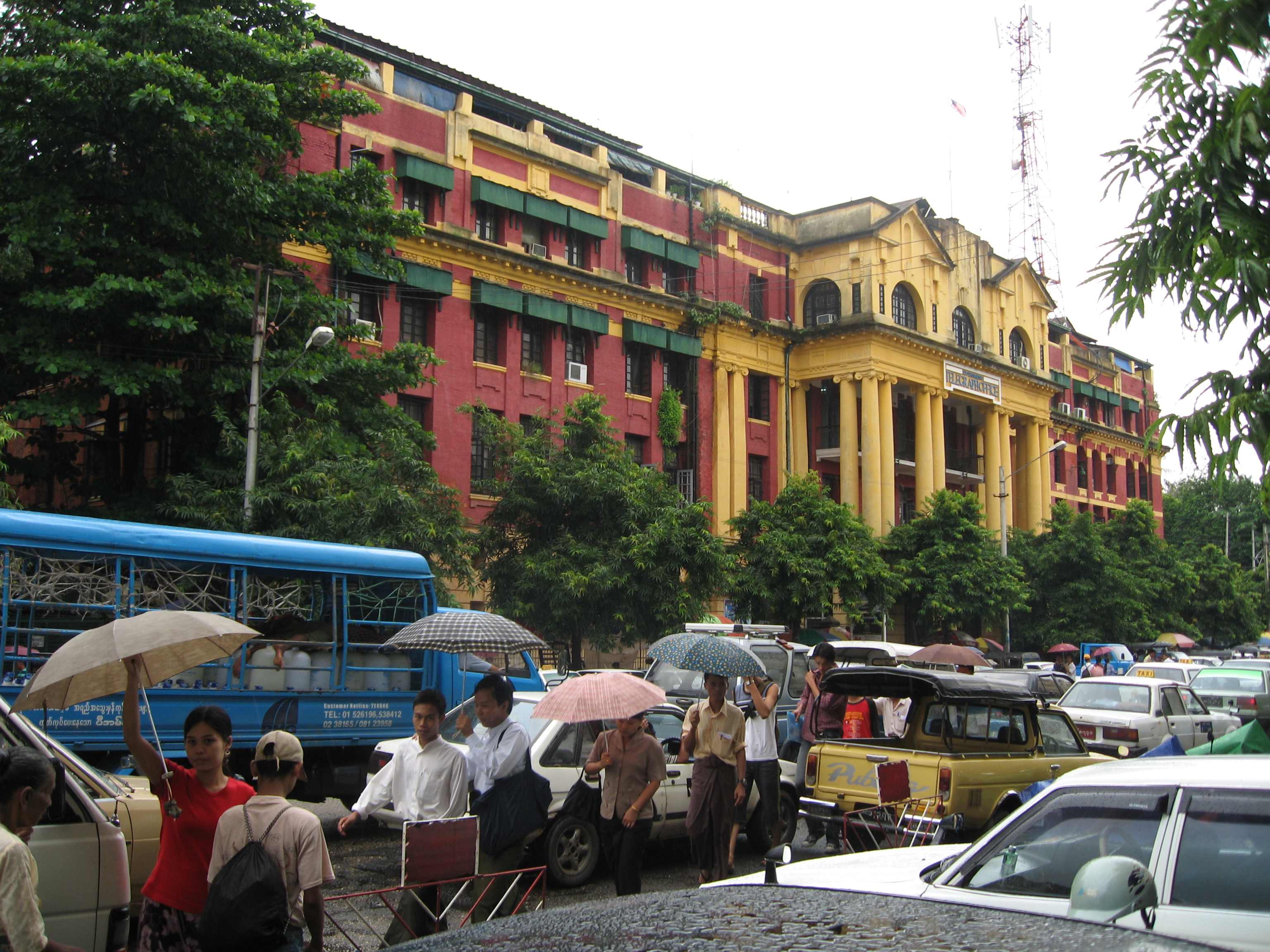
On another level, the book is a detective story, as Larkin searches out the places where Orwell, as a young man, lived and worked. She visits all the towns where he was posted as an officer in the Imperial police force, starting in 1922: Mandalay in the country’s center; Myaungmya and Twante, in the Delta swamplands; the capital of Rangoon (now called Yangon by the junta); Moulmein, on the eastern peninsular; and Katha, in the foothills of northern Burma, which became the fictional setting for Burmese Days.
In her travels, she finds that many of the dwellings and buildings where Orwell lived and worked are still in use or now lie abandoned to dust and weeds. In each town, the people who befriend Larkin are etched in vivid portraits.
Lastly, the book is a chilling picture of what life is like on the Animal Farm in post-Nineteen Eighty-Four. Inertia, gloom, paranoia and absurdity color the days. The country stagnates, a tangible entropy unwinds downward, progress is systematically retarded: ancient taxis, held together with wire and prayers, rattle around potholes, all print and broadcast media are policed, information from the outside world is sketchy, tourists must register passports at hotels and guesthouses and state their next destination (duly recorded by the desk clerk). The Burmese themselves must inform the local authorities if anyone––Burmese or foreigner––stays overnight in their home. In such an environment, the people are expert at reading and decipher rumors, for they are often the most reliable clues to important events the government tries to suppress. Leaders of opposition groups, all brave souls, are routinely spied on, intimidated or jailed, and on and on. In one town, Larkin was required to visit nine governmental agencies to inform them that she had arrived in the town. In spite of the obstacles, the Burmese people somehow struggled on, carving out pockets of happiness in simple pleasures.

Larkin’s sympathies for the Burmese people stand out, but she offers little hope for a better life anytime soon, and recent events confirm her pessimism. China, Russia and South Africa’s recent vetoes of the U.S. and British resolutions to place Burma’s human rights record on the U.N Security Council agenda confirms that brutal regimes have friends in the world. Asean, the organization of Southeast Asian nations, had a dismal record on Burma, defending its timid stance under its “softly, softly” rubric of Asian values and non-interference in a brother state’s internal affairs.
Meanwhile, millions of Burmese were displaced over five decades by a cold-blooded military machine, whose soldiers routinely rape women and burn villages and homes of ethnic citizens, causing them to flee to the safety of the jungle and border areas.
Burma under the bloody military regime was almost beyond belief, but then again, no. In colonial Burma, George Orwell first glimpsed the dark shadows where greed, lies and governmental repression can lead. Larkin takes us farther down that totalitarian road and deep into Burma’s darkness under the military regimes which turned Orwell’s prophetic nightmare into a frightening, daily reality.
time, space
Posted: June 16, 2010 Filed under: photography, time, space Leave a comment
June 14, 6 p.m., flower vendor on Rachawitte Road. eyes of hope and eyes of trust. (Iphone photograph)
Global Portraits 2
Posted: June 15, 2010 Filed under: fiction, people, writing Leave a commentNo. 2 in a series of short fiction sketches that say something about the cultural mix that’s going on in Asia. To see all the fiction pieces, go to “Categories” and click on the “fiction” link.
2
The guy has a chicken neck, soft rolls of fat under his chin, wispy white hair. He’s like a boy in front of the most beautiful girl in the village. His eyes never leave me. He says go out, go to room. I think: Go out with this old animal again? I tell myself––Pai, if pay enough, go. I test his money. A little bar-fly girl in a black and white school uniform walks by in her white sneakers, bouncing up and down, like this, to Proud Mary.
“I see that little girl likes you,” I say, using my best smile. “I help you. You want her? Only $60.”
He said the name of Jesus, the God. “No, honey. I like you. Don’t you want to go with me?” he says.
“I want to go,” I say, “but I have to ask for a lot of money. I have to pay rent. I have two children.”
“I seen the scar,” he says.
My head was a broken plate from tequila the night before. All the dancers went to Mr. Spicy’s after work. Men went crazy buying us drinks. We had a lot of fun. Now I feel like somebody kick me in the head. He says again, “Don’t you like me, darlin’? I need another tequila.”
“Me, too,” I say. I start to feel better because that was my 74th drink this month. I made 65 drinks before the twelfth day. Now the mamasan knows I work hard to make money. $1 a drink for me. $3 for the bar. Then the old animal who is covered in tatoos says he needs another tequila to make his carrot grow. When I don’t understand, I smile and laugh. “Me too,” I said. One more dollar. He smiles and nods. Momasan walks around the dance floor, “Tomorrow, everything 50 percent off,” she says. “Not me,” says Blue.
The old animal says it’s time to put up or shut up. I know shut up means to keep quiet. Finally, he says, “Well? Let’s go, honey…”
I say, “You give me $100, Ok? We go now.” That’s how I got $30 to send to my mom yesterday. My mom’s in jail in Burma. Two more years. I want her with me. I need her close. I’m a baby too, really. I want to cry all the time.
Tomorrow night Blue and I go to the temple for Macha Bucha––about the Buddha talks to people. I will pray to take care of my mom and to live to be old with my children.
The next night all the temples in the town filled with people. The moon rose big and red like millions of nights before on this night in May. Pai and her two children prayed for her mother, and she prayed to be a good mother and to have a good heart.
 the roy hamric journal