
William Empson on Chinese poetry
Posted: September 12, 2010 Filed under: articles, people, poetry 2 CommentsThe selection below is from William Empson’s Seven Types of Ambiguity. He’s writing about comparative adjectives which do not say what their noun is to be compared with, and he uses two lines of Chinese poetry in his explication which not only captures the precision of Empson’s writing and critical sense, but offers one of the best primers on how to approach the concision of Asian poetical use of ordinary language pushed to heighten meaning. Empson taught in Japan, Beijing and Kunming, before spending the rest of his teaching career in Britain.
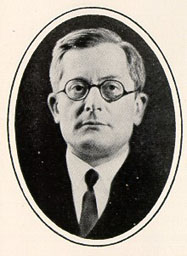
william empson
“Not unlike the use of a comparison which does not say in virtue of what the two things are to be compared is the use of a comparative adjective which does not say what its noun is to be compared with; since all adjectives are in a sense comparative, this source of ambiguity is a sufficiently general one. In particular, it is the chief source of euphuistic conceits and the paradoxes cultivated in the 1890s, which give a noun two contradictory adjectives and leave it to the reader to see how the adjectives are used. I shall give an example from one of Mr. Waley’s Chinese translations, to insist upon the profundity of feeling which such a device may enshrine.
‘Swiftly the years, beyond recall.
‘Solemn the stillness of this spring morning.’
“The human mind has two main scales on which to measure time. The large one takes the length of a human life as its unit, so that there is nothing to be done about life, it is of an animal dignity and simplicity, and must be regarded from a peaceable and fatalistic point of view. The small one takes as its unit the conscious moment, and it is from this that you consider the neighboring space, an activity of the will, delicacies of social tone, and your personality. The scales are so far apart as almost to give the effect of defining two dimensions ; they do not come into contact because what is too large to be conceived by the one is still too small to be conceived by the other. Thus, taking the units as a century and the quarter of a second, their ratio is ten to the tenth and their mean is the standard working day ; or taking the smaller one as five minutes, their mean is the whole of summer. The re pose and self-command given by the use of the first are contrasted with the speed at which it shows the years to be passing from you, and therefore with the fear of death; the fever and multiplicity of life, as known by the use of the second, are contrasted with the calm of the external space of which it gives consciousness, with the absolute or extra-temporal value attached to the brief moments of self-knowledge with which it is concerned, and with a sense of security in that it makes death so far off.
“Both these time-scales and their contrasts are included by these two lines in a single act of apprehension, because of the words swift and still. Being contradictory as they stand, they demand to be conceived in different ways ; we are enabled, therefore, to meet the open skies with an answering stability of self-knowledge ; to meet the brevity of human life with an ironical sense that it is morning and spring time, that there is a whole summer before winter, a whole day before night.
“I call swift and still here ambiguous, though each is meant to be referred to one particular time-scale, because between them they put two time-scales into the reader’s mind in a single act of apprehension. But these scales, being both present, are in some degree used for each adjective, so that the words are ambiguous in a more direct sense ; the years of a man’s life seem swift even on the small scale, like the mist from the mountains which gathers a moment, then scatters; the morning seems still even on the large scale, so that this moment is apocalyptic and a type of heaven.
“Lacking rhyme, meter, and any overt device such as comparison, these lines are what we should normally call poetry only by virtue of their compactness; two statements are made as if they were connected, and the reader is forced to consider their relations for himself. The reason why these facts should have been selected for a poem is left for him to invent; he will invent a variety of reasons and order them in his own mind. This, I think, is the essential fact about the poetical use of language.”
time, space
Posted: September 11, 2010 Filed under: photography, time, space 1 Comment
Saturday, Sept. 11, two leaves (Iphone photograph)
Bloom: the American religion
Posted: September 6, 2010 Filed under: articles, books, people, poetry Leave a comment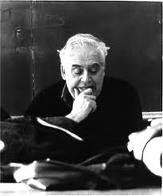
harold bloom
I’m again reading Agon by Harold Bloom. All I can say is Bloom’s early books are the deep roots of his present day flowering, his burst of books on religion and poetry. His contribution to the world of critical thought, so broad and connective, is original and hardly equaled, as far as I can tell. Agon, with its cold subtitle, Towards a Theory of Revisionism (which is too academic sounding), goes through and around Gnosticism, Kaballah, Freud, Emerson, Carlyle, Whitman, Stevens, Hart Crane, American pragmatism, etc. But what I most love is his capturing of “the American difference” in poetry and criticism. Frequently, in Bloom’s writing you can read “poetry” for “religion” and “religion” for “poetry.” Again, the pivotal heart of the book beats in the essay “Emerson: The American Religion.” I want to quote a passage that begins six sentences into the essay: It now reads like an anthem to me, and never fails to carry me away:
“The lengthened shadow of American culture is Emerson’s, and Emerson indeed saw everything is everything, and spoke with the tongue of a daemon. His truest achievement was to invent the American religion, and my reverie intends to a spiraling out from his center in order to track the circumference of that religion in a broad selection of those who emanated out from him, directly and evasively, celebratory of or in negation to his Gnosis. Starting from Emerson we came to where we are, and from that impasse, which he prophesied, we will go by a path that most likely he marked out also. The mind of Emerson is the mind of America, for worse and for glory, and the central concern of that mind was the American religion, which most memorably was named “self-reliance.”
For “self-reliance” read gnosis. After decades of reading Emerson and Bloom, I think I’m at last beginning to understand truly why America appears throughout its history to be verging toward crisis or collapse, while always moving forward.
For a list of Bloom’s books and selected articles, click here.
time, space
Posted: September 5, 2010 Filed under: buddhism, photography Leave a comment
Sept. 4, 11 a.m., small Thai figurines performing the Khon dance in a spirit house (Iphone photograph)
Bedside Books III: Amis, Amis, Hitchens
Posted: August 29, 2010 Filed under: books, people, writing Leave a comment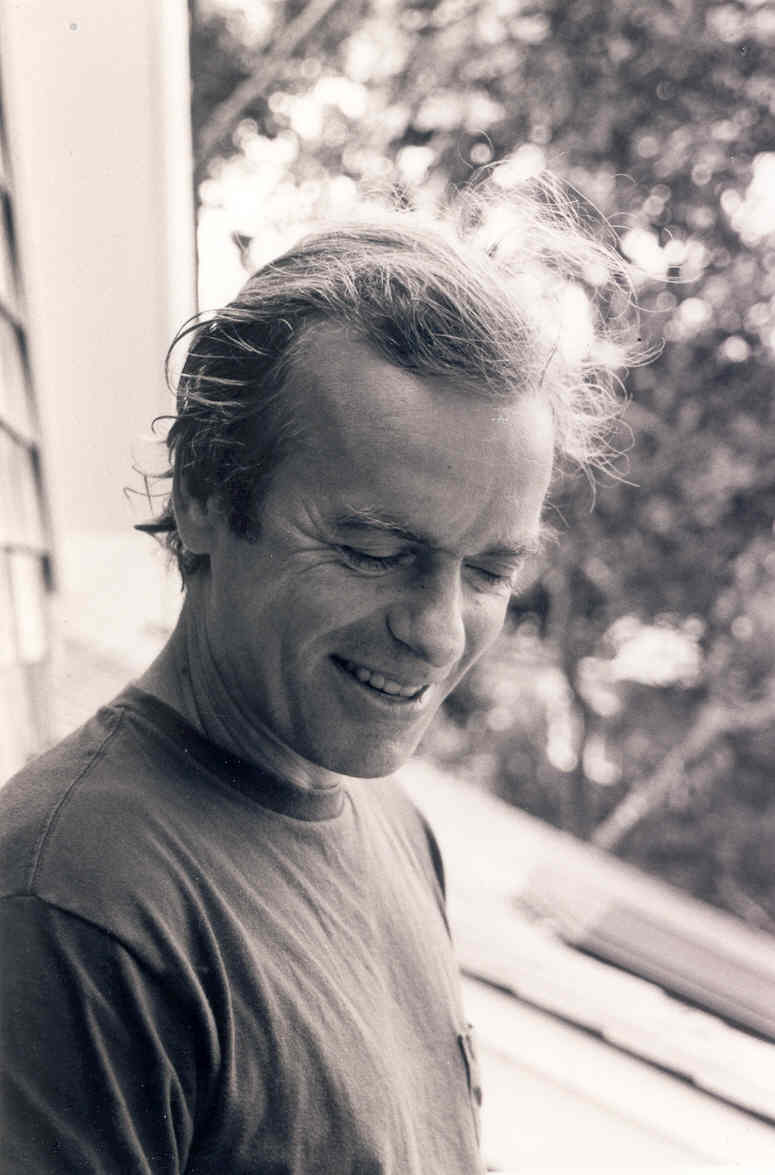 Experience by Martin Amis This high combination autobiography/biography is both a story of Kingsley Amis’s decline and death, and the story of Martin’s life during that period. The novels of father and son are the story of their lives and times cast in art, and Martin’s story here is his “real” life set in dramatic narrative with a cast of real characters as compelling as fictional ones, especially the etchings of his immediate family members, and the roles of various of Martin’s and Kingsley’s friends, which include Philip Larkin, Christopher Hitchens, Julian Barnes, Ian McEwan, Saul Bellow and many other well-known names.
Memoirs by Kingsley Amis I followed up by reading Kingsley’s autobiography, which gave me my first taste of his prose, which is a far cry from Martin’s. Kingsley’s nonfiction prose is arch by comparison, prone to personal mannerism, too concerned with class consciousness. It displays a patented “English” quality, almost a stereotype, though by all signs he was egalitarian (seen through his affection for American culture) and eager to puncture pomposity whenever he could. I gained a deeper insight into the Amis clan, and many of the people limned in Experience, plus a clutch of English writers who were new to me.
Unacknowledged Legislation by Christopher Hitchens
 I put this book of literary criticism on the bedside pile again because during first reading a few years ago I was again overwhelmed by Hitchen’s range and brilliance. There is never a sign in his writing that he is out of his territory, that he is not writing from some uncanny absolute knowledge of his subject, whether it’s Kipling, Warhol, Bellow, Anthony Powell, Vidal, Orwell, Fitzgerald, Patrick O’Brian, Isherwood, Auden, Tom Wolfe, Rushdie, Mencken, Isaiah Berlin, et al. He somehow personifies Blake’s “the road of excess leads to wisdom”––he seemingly can never do too much. His serious illness now must irritate him most because it interrupts his mighty creative flow, his need for intellectual engagement. See his website here, where he writes about his recent illness and other matters.
The War Against Cliché by Martin Amis Will there be a book of letters between Amis and Hitchens? We can hope. This is a collection of Amis literary criticism (1971-2000), which displays his very close reading of texts especially for literary nuance and style. See his pearls on writers such as Updike, Bellow, Elmore Leonard, Mailer (early on a bit of innate distaste there, but by the early 90s, Martin fully realized his importance), Naipaul, Joyce, Nabokov, Roth and many others.
Frank Kermode dies
Posted: August 21, 2010 Filed under: books, people, Uncategorized, writing Leave a comment He died this week at age 90. He published more than 50 books on literature and other matters, 10 of them in the last 10 years. His writing reflected a judicial, gentle nature. His close reading of a work is beyond compare.
Each book is down to earth, written for readers, glowing brilliantly in thought and style. In the mold of Harold Bloom and Edmund Wilson, he was unswayed by fashionable academic trends.
A quote from one of the obituaries: “John Updike said that Kermode’s conclusions seem ‘inarguable – indeed just what we would have argued, had we troubled to know all that, or goaded ourselves to read this closely,’ while Philip Roth admitted that although he dislikes reading reviews, ‘if Frank Kermode reviewed my book I would read it.'” Whatever you see with his name on it, pick it up. For a list of his books, click here.
Red Pine: language, poetry, translation
Posted: August 14, 2010 Filed under: articles, buddhism, people, poetry, writing Leave a commentThis essay by Red Pine was first presented as part of the Simmons College International Chinese Poetry Conference, Oct. 8-10, 2004. For more on him, see the On the Record postings.
Dancing with the Dead: Language, Poetry and the Art of Translation
By Red Pine
Every time I translate a book of poems, I learn a new way of dancing. The people with whom I dance, though, are the dead, not the recently departed, but people who have been dead a long time. A thousand years or so seems about right. And the music has to be Chinese. It’s the only music I’ve learned to dance to.
I’m not sure what led me to this conclusion, that translation is like dancing. Buddhist meditation. Language theory. Cognitive psychology. Drugs. Sex. Rock and Roll. My ruminations on the subject go back more than twenty-five years to when I was first living in Taiwan. One day I was browsing through the pirated editions at Caves Bookstore in Taipei, and I picked up a copy of Alan Ginsberg’s Howl. It was like trying to make sense of hieroglyphics. I put it back down and looked for something else. Then a friend loaned me a video of Ginsberg reading Howl. What a difference. In Ginsberg’s voice, I heard the energy and rhythm, the sound and the silence, the vision, the poetry. The same thing happened when I read some of Gary Snyder’s poems then heard him read. The words on a page, I concluded, are not the poem. They are the recipe, not the meal, steps drawn on a dance floor, not the dance.
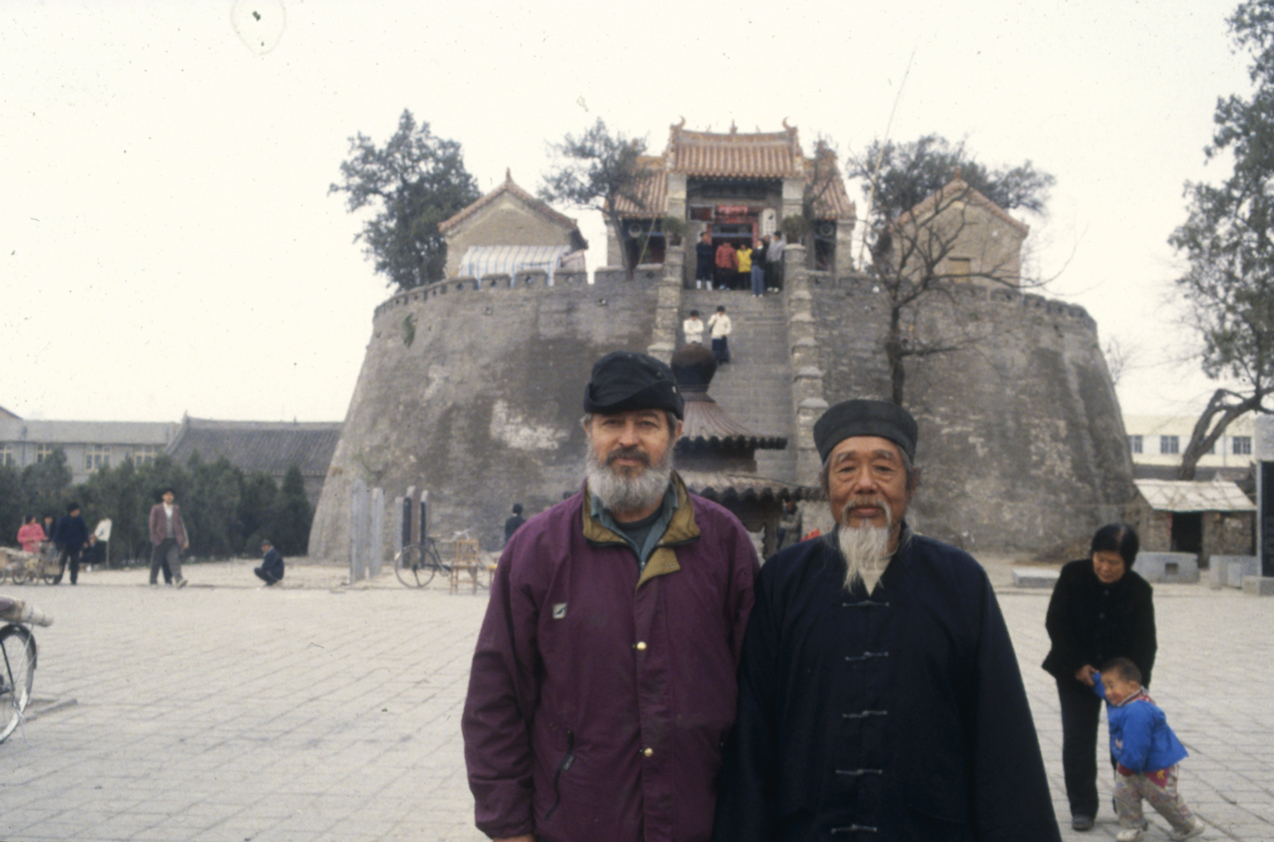
Red Pine with Taoist priest at Lao-tzu's observatory (photograph: Red Pine)
For the past hundred thousand years or so, we human beings have developed language as our primary means of communication—first spoken language and more recently written language. We have used language to convey information to each other, to communicate. But there are a set of questions just below the surface that we prefer not to address. How well does language do what we think it does? And what does it do? The reason we prefer not to address such questions is because language is so mercurial. We can never quite pin it down. It is forever in flux. And it is forever in flux, because we, its speakers and writers and translators, are forever in flux. We can’t step into the same thought twice. We might use or read or hear the same word twice, but how can it mean the same thing if the person who uses or reads or hears that word is not the same person? We speak of language, as if it was a fixed phenomenon, and we teach it and learn it, as if it was carved in stone. But it is more like water, because we are more like water. Language is at the surface of the much deeper flux that is our riverine minds. Thus, if we approach translation by focusing on language alone, we mistake the waves for the river, the tracks for the journey.
But this isn’t all. Many linguists and anthropologists are of the opinion that language was developed by early humans not simply for the purpose of communication but for deception. All beings communicate with each other, but at least on this planet only humans deceive each other. And for such deception, we rely primarily on language. It isn’t easy for us to hide our feelings and intentions in our facial or bodily expressions, but language offers ready and endless opportunities for altering and manipulating the truth. Thus, the question for a translator is not only the efficiency of language, but its truthfulness. That is, does it actually do what we think it does, and does what it does have any basis other than in fiction?
We live in worlds of linguistic fabrication. Pine trees do not grow with the word “pine” hanging from their branches. Nor does a pine tree “welcome” anyone to its shade. It is we who decide what words to use, and, like Alice, what they mean. And what they mean does not necessarily have anything to do with reality. They are sleights of the mind as well as the hand and the lips. And if we mistake words for reality, they are no longer simply sleights but lies. And yet, if we can see them for what they are, if we can see beyond their deception, they are like so many crows on the wing, disappearing with the setting sun into the trees beyond our home. This is what poetry does. It brings us closer to the truth. Not to the truth, for language wilts in such light, but close enough to feel the heat.
According to the Great Preface to the Book of Odes, the Chinese character for poetry means “words from the heart.” This would seem to be a characteristic of poetry in other cultures as well—that it comes from the heart, unlike prose, which comes from the head. Thus, prose retains the deceptive quality of language, while poetry is our ancient and ongoing attempt to transcend language, to overcome its deceptive nature by exploring and exposing the deeper levels of our consciousness and our emotions. Though poetry is still mediated by language, it involves a minimal use of words, and it also weakens the dominance of language through such elements as sound and silence, rhythm and harmony, elements more common to music than logic. In poetry, we come as close as we are likely to get to the meaning and to the heart of another.
This, too, isn’t all. Poetry is not simply “words from the heart.” A poet doesn’t make a poem so much as discover a poem, maybe in a garden or a ghetto, maybe in a garbage dump or a government corridor, or in a galaxy of stars. In poetry, we go beyond ourselves to the heart of the universe, where we might be moved by something as small as a grain of sand or as great as the Ganges.
So what does all this mean for the translator? For me it means that I cannot simply limit myself to the words I find on the page. I have to go deeper, to dive into the river. If language is our greatest collective lie, poetry is our attempt to undo that deception. When I translate a poem, I don’t think of the Chinese on the page as the poem, only evidence of the existence of a poem. Poetry shows itself in words, and words are how we know it. But words are only the surface. Even after poets give their discoveries expression in language, they continue to discover a poem’s deeper nuances, and they make changes: maybe a few words, maybe a few lines, maybe much more. The poem, as I see it, is a never-ending process of discovery. And it isn’t just language. It’s the unspoken vision that impels a poet and to which the poet tries to give expression. But the poet never gives complete expression to that vision, only a few fragments from a kaleidoscopic insight, a few steps on the dance floor impelled by music even the poet hears only imperfectly.
Then a translator comes along, and things change. It is only then that the poet no longer dances alone but with a partner. And together they manifest a deeper insight into the poem, into the music that motivates the dance. Thus, I have come to realize that translation is not just another literary art, it is the ultimate literary art, the ultimate challenge in understanding as well as performance. For me, this means a tango with Li Bai, a waltz with Wei Yingwu, a dance with the dead.
copyright@Bill Porter aka Red Pine
sight seeing
Posted: August 10, 2010 Filed under: photography, places, writing 1 Comment
a shop house in Luang Prabang, Laos
Someone said, in paraphrase, the best literary characters are sometimes more real to us than real people. The same is true in photographs. We seldom see colors as vividly as we do in a photograph.
Bedside books II
Posted: August 7, 2010 Filed under: books, buddhism, poetry, writing Leave a commentBangkok Found: Reflections on the City by Alex Kerr. Thailand’s culture is not as highly defined as Japan, and a reliable guide is essential to take one down the roadmap into the origins and esthetics of the country’s food, architecture, design, dance, etiquette and other unique traits. You finish the book feeling you have seen a new Bangkok, a new Thailand, the same as before but deeper now and still mystifying.
 Inside the Whale and Other Essays by George Orwell. Orwell’s prose is always like a fresh drink of water, not overpowering but deeply affecting. He was an early champion of Henry Miller’s Tropic of Cancer, recognizing him as the embodiment of Whitman, a tramp-philosopher outside the circle of conventional society and literature. Orwell’s Politics Vs Literature and Politics and the English Language must be read by all young writers.
Jack Kerouac: Selected Letters 1957-1969. What’s amazing about this volume is that all–ALL–of his major novels were completed by 1957, before his fame. The letters among all the young writers who made up the Beat movement now constitute an American history of soul and intellect among a group of red-blooded poets who were an antidote to the beginning of America’s loss of heart. The tale of Kerouac’s final days has no silver lining. This volume should be followed by the long essay on Kerouac’s funeral by his old friend John Holmes, one of the finest things ever written about him.
 Saving Daylight by Jim Harrison. It’s hard to pick a favorite book of poems by Harrison, but this may be it for its blend of American and Asian flavors set in a homely scene of everyday urgency, of a unique voice on a moment-to-moment quest for more experiences, more abundance of life. This book should be read with his After Ikkyu.
Sexuality and the Psychology of Love by Sigmund Freud. That Freud is discounted in many circles today misses the point. Bloom rightly tells us that Freud is really writing a form of literature cast as a pseudo science (or theory at least), a literature of consciousness and its imagined affects and effects. For a novelist, he’s indispensable: just put his insights below the surface of your characters and you’re off to the races inside the human soul. For a reader, you may squirm at times, but you’re glued to the page because you recognize the unfolding of life, yours and others.
Ikkyu and The Crazy Cloud Anthology by Sonja Arntzen. Ikkyu was the Billy the Kid Zen poet of Medieval Japan who lived with the outlaws and flowers of the night in between trips to his solitary mountain hut and his occasional stint as abbot of some big Zen monastery. A deliciously split personality, he wasn’t willing to give up any element that reminded him that he was human, at-large in life which is not giving away anything free. He left us his life in poems.
New Cormac McCarthy movies
Posted: August 4, 2010 Filed under: articles, books, fiction, people, writing Leave a comment
first edition cover
Good news. Two more Cormac McCarthy novels, Cities of the Plains and Blood Meridian, are scheduled to be filmed in 2012 and 2011, respectively.
This bodes well for his Border trilogy being filmed complete. There hasn’t been a novelist who has had such a string of successful films from his novels in my memory. We can hope these two movies are done as well as All the Pretty Horses, No Country for Old Men and The Road. See the McCarthy website here.
McCarthy wisely decamped from Knoxville in mid-life and hid away in El Paso where he found a city, a landscape and a people, past and present, that were equal to his majestically precise prose.

