
Time, space
Posted: October 23, 2010 Filed under: photography, time, space Leave a comment
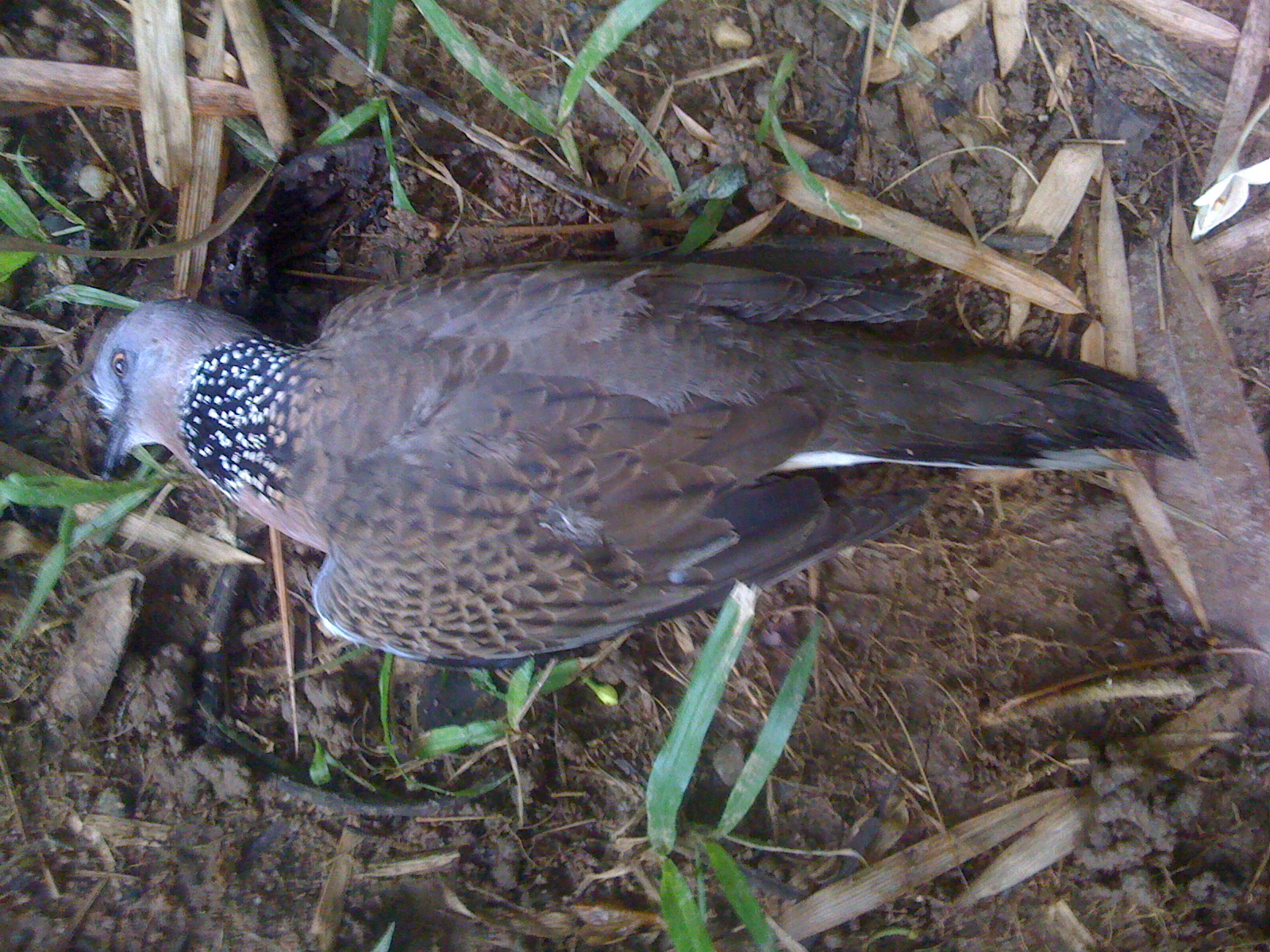
Saturday, 9:05 a.m.: A Spotted Dove flies no more. (Iphone photograph)
Reading Cavell
Posted: October 19, 2010 Filed under: articles, books, people, states of mind, writing Leave a comment Stanley Cavell has created more ground breaking work on the importance of Thoreau’s and Emerson’s writing than anyone of his generation. Along with Walt Whitman, they are the core of original American thought and literature. Rereading Cavell’s The Senses of Walden, it’s uncanny how these three writers circle each other, while always pushing into new ideas that carry their own marks. Here’s an excerpt that connects Emerson and Thoreau with Heidegger, who was influenced by Emerson’s writing.
“As to the question of what may look like the direction of influence, I am not claiming that Heidegger authenticates the thinking of Emerson and Thoreau; the contrary is, for me, fully as true, that Emerson and Thoreau may authorize our interest in Heidegger… . Emerson’s and Thoreau’s relation to poetry [read writing] is inherently their interest in their own writing…I do not mean their interest in what we may call their poems, but their interest in the fact that what they are building is writing, that their writing is, as it realizes itself daily under their hands, sentence by shunning sentence, the accomplishments of inhabitation, the making of it happen, the poetry of it. Their prose is a battle, using a remark of Nietzsche’s, not to become poetry; a battle specifically to remain in conversation with itself, answerable to itself. Such writing takes the same mode of relating to itself as reading and thinking do, the mode of the self’s relation to itself, call it self-reliance. Then whatever is required in possessing a self will be required in thinking and reading and writing. This possessing is not––it is the reverse of––possessive; I have implied that in being an act of creation, it is the exercise not of power but of reception. Then the question is on what terms is the self received?
“The answer I give for Emerson here is a theme of his thinking that further stands it with the latter Heidegger’s, the thing Emerson calls ‘onward thinking,’ the thing Heidegger means in taking thinking as a matter of getting ourselves ‘on the way.’… . In “Circles,” Emerson invites us to think about the fact, or what the fact symbolizes, that every action admits of being outdone, that around every circle another circle can take its place… . What is the motive, the means of motion of this [constant] movement? How do we go on? (In Wittgenstein’s Philosophical Investigations, knowing how to go on as well as knowing when to stop, is exactly the measure of our knowing, or learning, in certain of its main regions or modes––for example, in the knowledge we have of our words. Onward thinking, on the way, knowing how to go on, are of course inflections or images of the religious idea of The Way, inflections which specifically deny that there is a place at which our ways end…)
“You may imagine the answer to the question how we move as having to do with power. But power seems to be the result…not the cause. I take Emerson’s answer to be what he means by ‘abandonment.’ The idea of abandonment contains what the preacher in Emerson calls ‘enthusiasm’ or the New Englander in him calls ‘forgetting ourselves,’ together with what he calls leaving or relief or quitting or release or shunning or allowing for deliverance, which is freedom (as in ‘Leave your theory as Joseph his coat in the hand of the harlot, and flee’ [Self-Reliance essay], together further with something he means by trusting or suffering (as in the image of the traveler––the conscious intellect, the intellect alone––who has lost his way [throwing] his reins on the horse’s neck, and [trusting] to the instinct of the animal to find his road [The Poet essay]… . Emerson’s perception of the moment is taken in hope, as something to be proven only on the way, by the way. This departure, such setting out, is, in our poverty, what hope consists in, all there is to hope for ; it is the abandoning of despair, which is otherwise our condition. (Quiet desperation Thoreau will call it; Emerson has said, silent melancholy.)
“What the ground of the fixated conflict between solipsism and realism should give way to––or between subjectivity and objectivity, or the private and the public, or the inner and the outer––is the task of onwardness… .
“In Heidegger: ‘The thanc means man’s inmost mind, the heart, the heart’s core, that innermost essence of man which reaches outward most fully and to the outermost limits.'(From What is Called Thinking). In Emerson: ‘To believe your own thought, to believe that what is true for you in your private heart, is true for all men––that is genius. Speak your latent conviction and it shall be the universal sense; for always the inmost becomes the outmost.’ (Self-Reliance)… .
“Then everything depends on your realization of abandonment. For the significance of leaving lies in its discovery that you have settled something, that you have felt enthusiastically what there is to abandon yourself to, that you can treat the others there are as those to whom the inhabitation of the world can now be left.”
New Stanley Cavell autobiography
Posted: October 15, 2010 Filed under: books, people, writing Leave a comment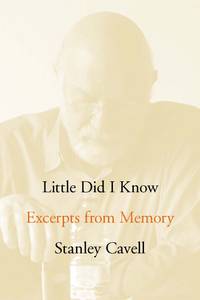 Little Did I Know is the new autobiography by Stanley Cavell, which appears to be loaded with influences from his early life and his close encounters with a host of worthies, as well as his unique nature’s embrace of his main philosophical kin . For a good scene-setting article on the book, click here. To see more from Amazon, click here.
A publisher’s description: “While Cavell’s academic work has often incorporated autobiographical elements, Little Did I Know speaks to the American experience in general. It has much to say about the particularities of growing up in an immigrant family and offers glimpses of lesser known aspects of university life in the second half of the twentieth century. At the same time, Cavell’s interests and career have brought him into contact with a range of influential and unusual people. A number of friends, colleagues, and acquaintances figure prominently or in passing over the course of this book, occasioning engaging portraits. J.L. Austin, Ernest Bloch, Roger Sessions, Thomas Kuhn, Judith Shklar, John Rawls, Bernard Williams, Jean Renoir, W. V. O. Quine, Vicki Hearne, and Jacques Derrida are no longer with us; but Cavell also pays homage to the living: Michael Fried, John Harbison, Jay Cantor, Marc Shell, John Hollander, Hilary Putnam, Toril Moi, Jill Clayburgh, Arnaud Desplechin, and Terrence Malick.
“In keeping with Cavell’s philosophical style, the drift of the narrative registers the decisiveness of the relatively unknown and the purely accidental as well. Cavell has produced a trail of some eighteen published books that range from treatments of individual writers (Wittgenstein, Austin, Emerson, Thoreau, Heidegger, Shakespeare and Beckett) to studies in aesthetics, epistemology, moral and political philosophy, cinema, opera, and religion. Here he accounts for the discovery and scope of his intellectual passions and shares them with his readers.”
Kyoto Journal’s biodiversity articles
Posted: October 11, 2010 Filed under: articles Leave a commentHere’s 10 take-away ideas from the inspiring Kyoto Journal issue No. 75, which focuses on the UN Convention on Biological Diversity to be held this Fall in Nagoya, Japan.
1. David Kubiak’s introductory article notes the probable lack of really meaningful actions from this meeting (impacted by the global economic downturn and the current “corporate conciliatory” stance of governments), but overall he’s optimistic about the impact that grass roots activists around the world can have locally and collectively, with new innovative theories and concepts of cross-organizational efforts forming as we speak which can increase the impact on public opinion and special interests, while drawing more average people into the fray with focused information about flora and fauna having a right to co-exist and not just be identified as “property” by whoever owns the habitat.
2. A paleontologist, Anthony Barnosky, writes about the five previous eras of Earth history, when at least 75 percent of species went extinct, and how we’re conceivably approaching a similar condition because of our way of living in a “me first” mentality. Some numbers: mammals, already up to 45 percent “too low” (another 21 percent endangered); amphibians, up to 43 percent endangered; reptiles, up to 28 percent endangered; birds, at least 12 percent endangered; 75 percent of genetic diversity of agricultural crops has been lost; 75 percent of the world’s fisheries are over-exploited; 23 percent of plant species are threatened with extinction, and the list goes on….
3. Some good news: 48 species of plants or animals which were at the brink of extinction have been reclaimed back and are now being successfully nurtured to survive. Reading about their individual stories is akin perhaps to the feeling of giving birth to life. Fulfilling, rewarding, makes you proud of people and what they can do at the individual and governmental level.
4. For a sophisticated look at what really goes on at a huge UN international conference on the environment, see Eric Johnson’s primer on who attends, what to expect, and how delegates and participants can actually make a difference.
5. Twenty-five pages of the magazine explore “Satoyama,” a Japanese word that means “mountain village,” but which stands for an ancient way of blending human’s footprints into the web of Nature rather than altering it. The concept and practices personify the smaller-is-better approach to a sustainable relationship with flora and fauna, while recognizing that Nature is always feeding off itself, as do humans feed off nature. The articles are precise and detailed, taking the reader into the minds of the villagers who have timbered the forests, fished the lakes and rivers, burned the meadows and preserved the habitats for centuries.
6. The Millennium Ecosystem Assessment article explores the findings of a UN-mandated study to assess the consequences of ecosystem change and to map out a scientific basis for actions to enhance the conservation and sustainable use of ecosystems. Sounds technical, and it is, but it’s the level of scientific analysis that is required in order to bring governmental bodies into the same boat. For the report, click here
7. Pavan Sukhdev (www.tinyurl.com/pavan-sukhdev) looks at the “The nature of value and the value of nature,” a concept first discussed by economist Adam Smith. Practical, utilitarian and philosophical issues are at the heart of the role played by humans within their home in Nature, and this article redresses the balance while making one feel that Nature, and man’s relationship to it, was far better understood by people before the scientific revolution than now. Yes, we understand more about Nature’s workings, but the practical distance between humans and Nature has grown so that people feel less individual responsibility.
8. The Ecozoic Era article by Thomas Berry is a refreshing exploration of what might go right in the next era if humans can reorient themselves to celebrate and nurture Nature and our place in the matrix or life.
9. In 10 Challenges for the Next Decade, Quentin Wheeler notes how many species are still unaccounted for, and he calls for a systematic inventory of known and unknown species of plants and animals.
10. Poet and activist Gary Snyder calls for more self reliance, the cultivation of each person’s role and responsibility in understanding their place in the environment, in exercising a personal role in keeping Nature and local culture alive and entwined within one’s daily life and home ground.
Some relevant websites:
On endangered fisheries: www.bloomassociation.org
A new visual PR effort: www.2020v.org
You can read all the articles above and many more online at
www.kyotojournal.org/biodiversity
The Kyoto Journal biodiversity issue
Posted: October 9, 2010 Filed under: articles, states of mind, writing 1 CommentUnbelievably beautiful
and important, the Kyoto Journal issue No. 75

McLuhan on moral indignation
Posted: October 7, 2010 Filed under: people, states of mind Leave a comment

marshall mcluhan
Serious public discourse is regularly contaminated, interrupted or entirely prevented by people who insist on dictating to their fellow citizens about how to live based on their own biases or prejudices. Extreme conservatives and religious fundamentalists are chronic abusers here. A frequently used tactic, noted by an acute critic of effect and nuance in speech, actions and media:
“Moral indignation is a technique used to endow the idiot with dignity.” ––Marshall McLuhan
Think Fox TV, Newt Gingrich, Tea Party, the Koran-burning minister, homophobes, etc. Interestingly, McLuhan always insisted that TV wasn’t primarily a visual media, but an aural and tactile media, an observation that helps to explain the power of simplified moral indignation (which disrupts the non-emotional routine), so easily misused by charlatans and know-nothings at the expense of thought and complexity.
Christopher Hitchens: two recent videos
Posted: October 6, 2010 Filed under: books, people Leave a comment
Hitchens' autobiography
Two videos of Christopher Hitchens: the first was taken during his chemotherapy treatment and includes a little with his friend Martin Amis; the second, shows him later, after the chemo and in much better condition, with George Packer of The New Yorker, in a long conversation on Obama’s foreign policy.
Christopher Hitchens on Obama’s foreign policy
New Bloom poetry anthology: Last Poems
Posted: October 1, 2010 Filed under: books, poetry Leave a comment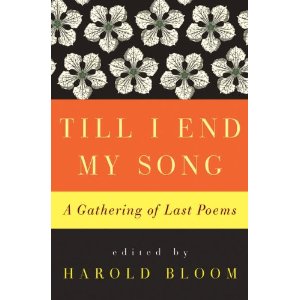 Till I End My Song is Harold Bloom’s latest anthology of poems, in this case “last poems” of one hundred influential poets. The poems are “sometimes the literal end and other times the imagined” conclusion to a poetic career, offering a final view of a poet’s character and the inevitability of death. Bloom is a unique guide to such a collection featuring Eliot, Pope, Yeats, Whitman, Dickinson, and Shakespeare, but also more neglected poets such as Conrad Aiken, William Cowper, Edwin Arlington Robinson, George Meredith and Louis MacNeice. More at Amazon here.
Walt Whitman on modern American poetry
Posted: September 19, 2010 Filed under: articles, people, poetry, writing 1 Comment
This is a prophetic excerpt from Walt Whitman’s Collected Prose on the future of American poetry. Right on the mark, for me, when I think of my two favorite poets, Gary Snyder and Jim Harrison, who have just published a new book, The Etiquette of Freedom, a conversation between two writers filled with vitalism.
POETRY TODAY IN AMERICA—THE FUTURE
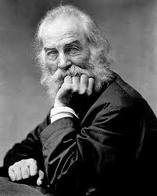
walt whitman
The poetry of the future, (a phrase open to sharp criticism, and not satisfactory to me, but significant, and I will use it)—the poetry of the future aims at the free expression of emotion, (which means far, far more than appears at first,) and to arouse and initiate, more than to define or finish. Like all modern tendencies, it has direct or indirect reference continually to the reader, to you or me, to the central identity of everything, the mighty Ego. It is more akin, likewise, to outside life and landscape, (returning mainly to the antique feeling,) real sun and gale, and woods and shores—to the elements themselves—not sitting at ease in parlor or library listening to a good tale of them, told in good rhyme. Character, a feature far above style or polish—a feature not absent at any time, but now first brought to the fore—gives predominant stamp to advancing poetry.
time, space, Khema Kat
Posted: September 13, 2010 Filed under: photography Leave a comment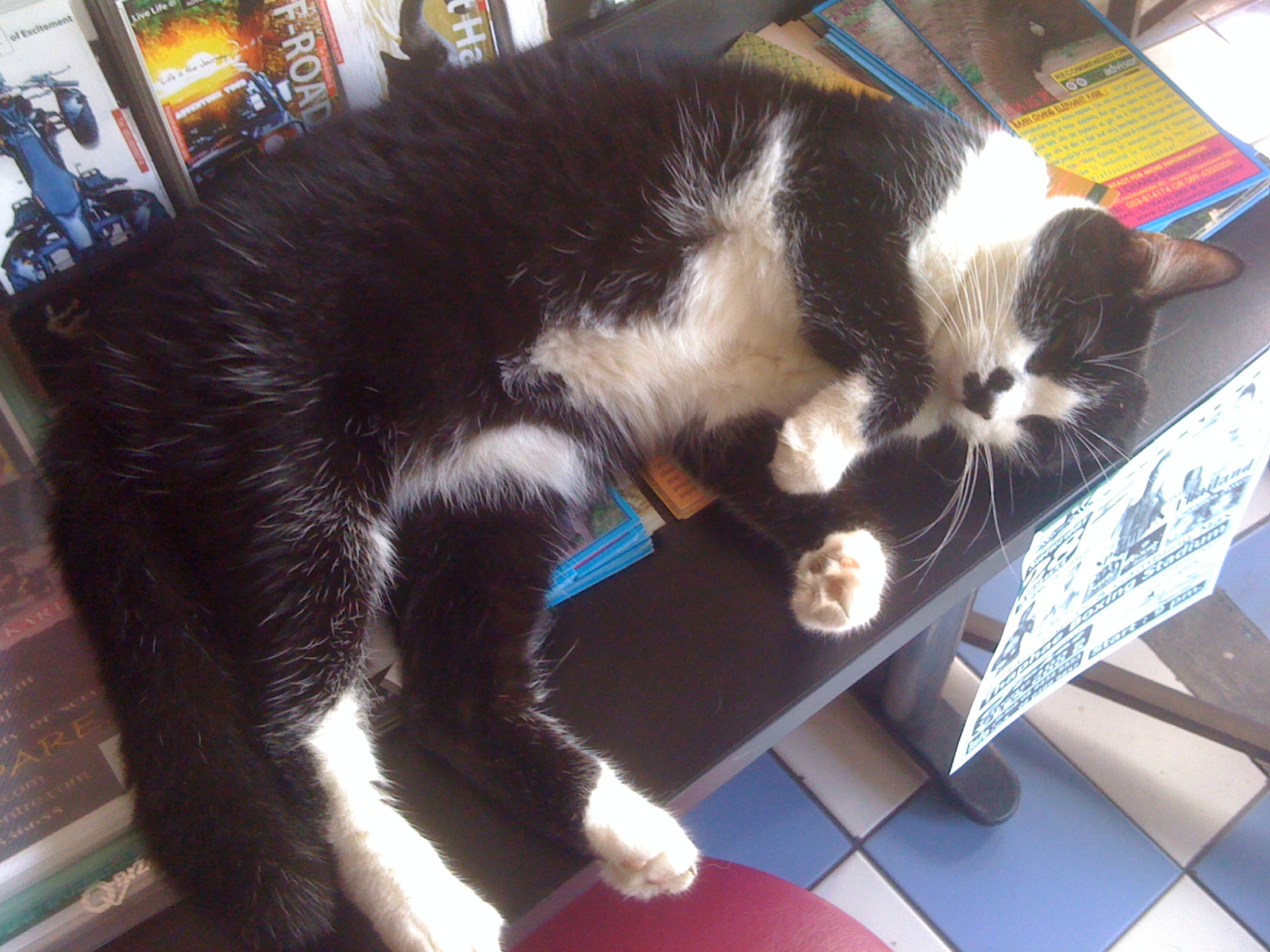
Sept. 13, 3:30 p.m.: Khema, my cat of 16 years. (Iphone photograph)

