
Bedside Books
Posted: January 29, 2017 Filed under: Uncategorized Leave a comment
Space & Time, 8:07 a.m., Jan. 29
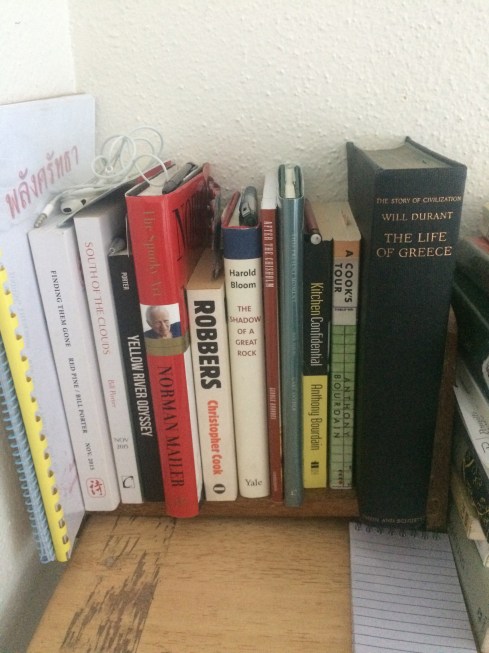
Bedside Books
Year of the Rooster
Posted: December 31, 2016 Filed under: Uncategorized Leave a comment
The Year of the Rooster, Rise and Shine!
Plurality By Louis MacNeice
Posted: November 23, 2016 Filed under: people, poetry, religion, states of mind Leave a commentPlurality
By Louis MacNeice
It is patent to the eye that cannot face the sun
The smug philosophers lie who say the world is one;
World is other and other, world is here and there,
Parmenides would smother life for lack of air
Precluding birth and death; his crystal never breaks—
No movement and no breath, no progress nor mistakes,
Nothing begins or ends, no one loves or fights,
All your foes are friends and all your days are nights
And all the roads lead round and are not roads at all
And the soul… Click here for this wonderful poem…

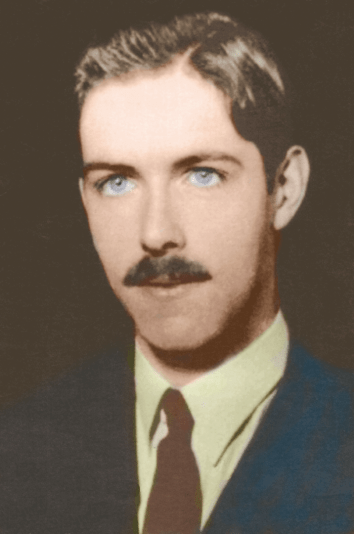
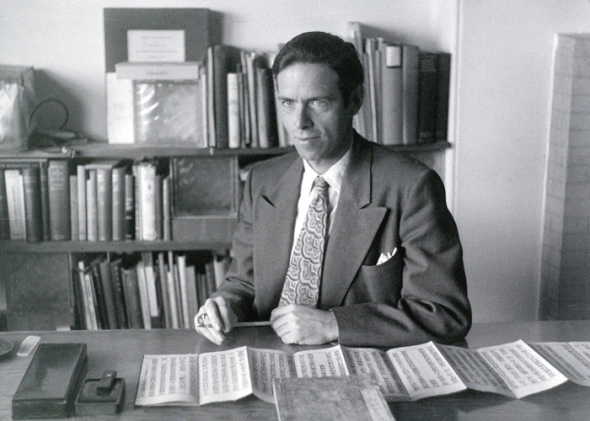
by Rollie McKenna, bromide print, 1954
Ralph Ellison’s Faux Haiku
Posted: November 20, 2016 Filed under: books, people, poetry, writers Leave a commentAlbert Murray, Ralph Ellison’s friend, remembers a short poem, which I will call a haiku, from their days as students together: Murray recalls the author of Invisible Man as the smartest-dressed upperclassman at Tuskegee. Murray was impressed that Ellison always seemed to check out the best books in the library, and he presented a “nascent elegance” in his two-tone shoes, bow tie, contrasting slacks, and whatever else the best haberdasher in Oklahoma had to offer.

“I even remember the poetry Ralph wrote,” Murray said:
“‘Death is nothing, / Life is nothing, / How beautiful these two nothings!’ “
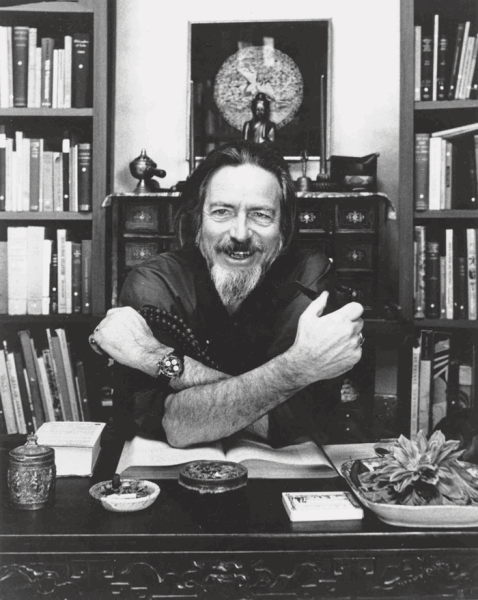
Alan Watts At 101
Posted: November 17, 2016 Filed under: articles, Buddhism Zen, people Leave a commentSee here for a deep appreciation of Alan Watts written by David Chadwick:
“This January, the English-born Watts would have been 101 old. He’s best known for his important role in the popularization of Zen in the West. His twenty-six books, and his popular radio and television broadcasts, introduced Americans of the 1950s and 1960s to a Zen that was authentic yet contemporary and accessible. In the hundreds of interviews I’ve conducted with practitioners from the early Zen Center days, Watts was the most frequently cited inspiration.
“Yet he was no sectarian. Watts wrote of the perennial philosophy—the unifying core of religion and profound inquiry in all quarters and eras. His approach to wisdom was curious and inclusive, embracing psychology, the natural sciences, art, music, dance, humor, and the enjoyment of nature, of sex, of life.”
Epictetus on the senses
Posted: October 29, 2016 Filed under: people, states of mind, time and space, writers Leave a comment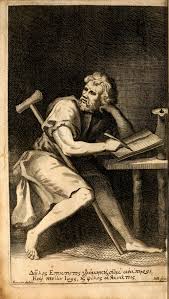
“For as the carpenter’s material is wood, and that of the statuary is copper, so the matter of the art of living is each man’s life…
“The question at stake,” said Epictetus, “is no common one; it is this:—Are we in our senses, or are we not?”
– Excerpt From: Epictetus. “A Selection from the Discourses of Epictetus with the Encheiridion.”
Ring Them Bells, brothers and sisters
Posted: October 13, 2016 Filed under: music, poetry Leave a commentRing Them Bells
BY: BOB DYLAN

Ring them bells, ye heathen
From the city that dreams
Ring them bells from the sanctuaries
’Cross the valleys and streams
For they’re deep and they’re wide
And the world’s on its side
And time is running backwards
And so is the bride
Ring them bells St. Peter
Where the four winds blow
Ring them bells with an iron hand
So the people will know
Oh it’s rush hour now
On the wheel and the plow
And the sun is going down
Upon the sacred cow
Ring them bells Sweet Martha
For the poor man’s son
Ring them bells so the world will know
That God is one
Oh the shepherd is asleep
Where the willows weep
And the mountains are filled
With lost sheep
Ring them bells for the blind and the deaf
Ring them bells for all of us who are left
Ring them bells for the chosen few
Who will judge the many when the game is through
Ring them bells, for the time that flies
For the child that cries
When innocence dies
Ring them bells St. Catherine
From the top of the room
Ring them from the fortress
For the lilies that bloom
Oh the lines are long
And the fighting is strong
And they’re breaking down the distance
Between right and wrong
Clive James on quality TV shows
Posted: October 10, 2016 Filed under: people, reviews, writing Leave a comment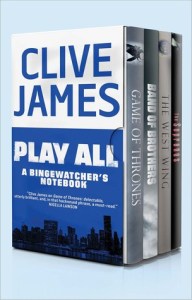
The always readable and enlightening Clive James has given us his musing on TV’s renaissance in a series of “notebooks” wrapped around the idea of “binge watching,” which I translate to passionate appreciation. James is one of the great essayists and critics of our era and TV is lucky to have his interest.
Emerson on books
Posted: September 25, 2016 Filed under: books, people, writers Leave a comment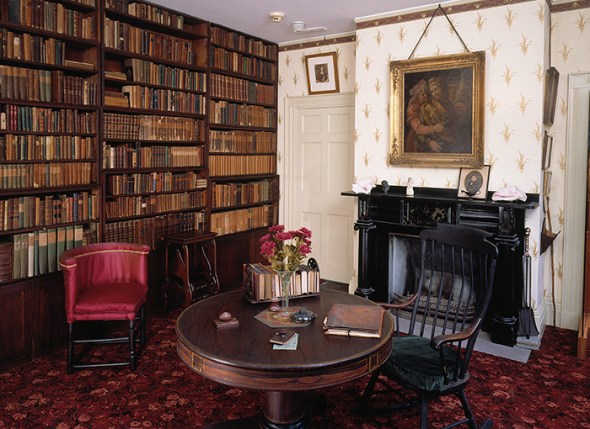
“Books are the best of things, well used; abused, among the worst. What is the right use? What is the one end which all means go to effect? They are for nothing but to inspire.
“I had better never see a book than to be warped by its attraction clean out of my own orbit, and made a satellite instead of a system.” – Ralph Waldo Emerson
Will Durant’s history books
Posted: September 7, 2016 Filed under: Uncategorized Leave a commentI’m nearly finished reading Caesar and Christ, Part III in the estimable Will Durant’s The Story of Civilization. It’s what he termed “synthetic history, which studies all major phases of a people’s life, work and culture in their simultaneous operation.”

“We shall learn more about the nature of man by watching his behavior through sixty centuries than by reading Plato and Aristotle, Spinoza and Kant,” he said. Durant agreed with Nietzsche, “All philosophy has now fallen forfeit to history.”
Durant’s magisterial history (11 volumes) is measured, movingly written and full of distilled wisdom, drawn from the lessons of people’s actions and words, and Durant’s determination to put events in proper context. Above all, he is wise and pragmatic and he sees humankind whole, both the weaknesses and strengths. Written with his wife, Ariel, the books were published between 1935 and 1975, and are an essential read for a seasoned overview of world history.
Here are some gleanings from Caesar and Christ:

“What increases with civilization is not so much immorality of intent as opportunity of expression.”
“The older Romans used temples as their banks, as we use banks as our temples.”
“News reached [a Roman] when it was old, so that his passions could not be stirred everyday by the gathered turmoil of the world.”
“…who could punish robbery among his fellows when half the members of the Senate had joined it violating treaties, robbing allies and despoiling provinces. “He who steals from a citizen,” said Cato, “ends his days in fetters and chains, but he who steals from the community ends them in purple and gold [robes].”
“From the moral standpoint, which is always a window dressing in international politics, …”
“Men begin by seeking happiness and are content at last with peace.”
“…in philosophy all truth is old, and only error is original.”
“Around the immoral hub of any society is a spreading wheel of wholesome life, in which the threads of tradition, the moral imperatives of religion, the economic compulsions of the family, the instinctive love and care of children…suffice to keep us publicly decent and moderately sane.”

