
Time & Space
Posted: January 3, 2014 Filed under: photography, sight seeing, time, space Leave a comment
Friday, 3:07 p.m., January 3; Iphone
2014! Year of the Horse
Posted: January 2, 2014 Filed under: articles, books, people, reviews 3 Comments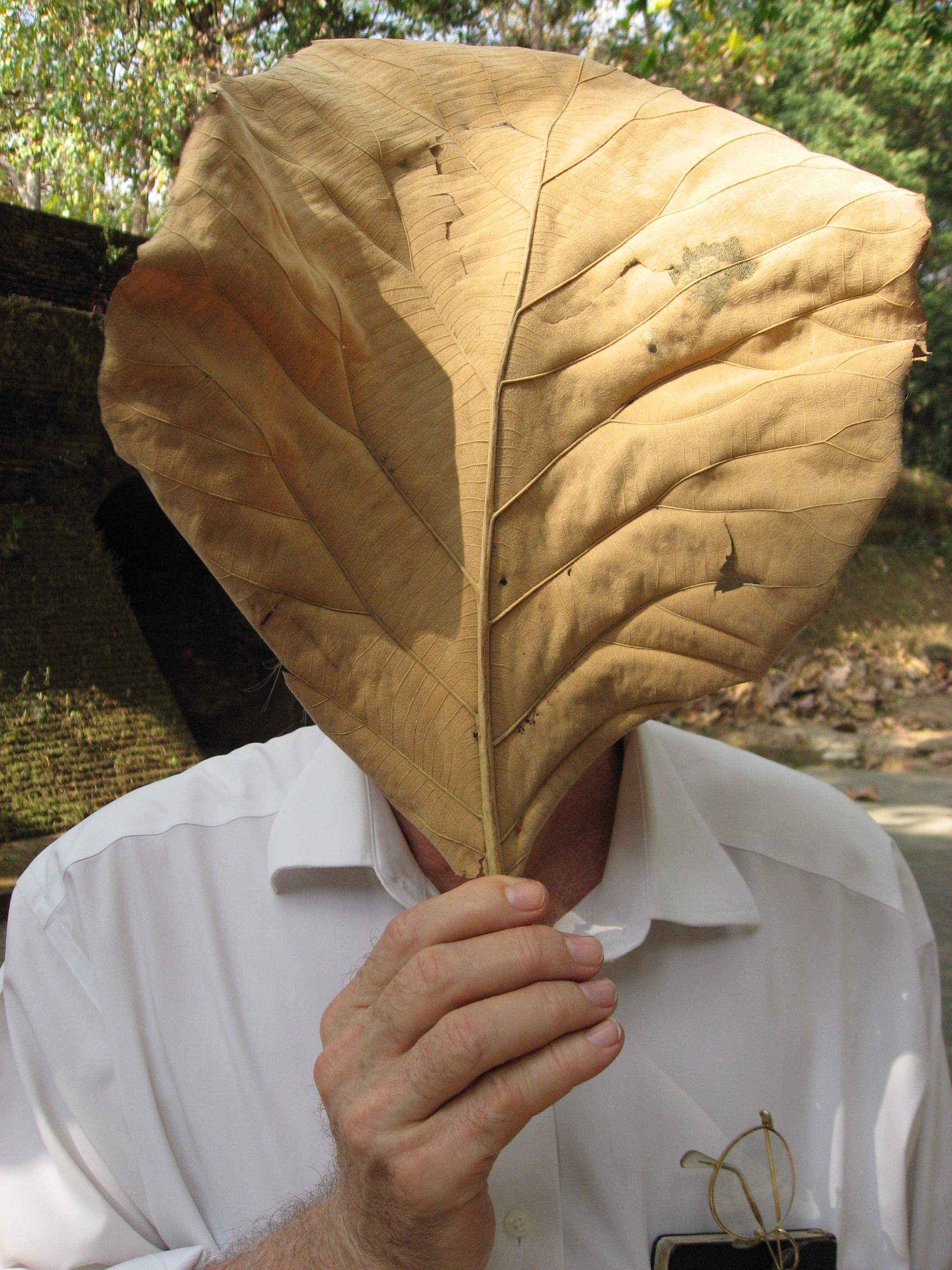
self portrait
Back in business…it’s been a while since I last posted. What’s happened? A lot and not enough. I finished The House of No Mind, my travel-memoir, tried to get an agent/publisher, etc., and hit the “No go” sign, which wasn’t a good way to end the Fall season but there it is. I like the book, but you know the story. I had a range of feedback, but no takers. I don’t have the energy or the brilliant idea right now about what to do to make it work (other than find an agent/publisher who would take it on as is…), so I’ll let it rest for now and come back to it later. If you know of a good small press that might like a vivid travel/memoir that ranges across Vietnam, Laos, Thailand and Myanmar, drop me a line.  Meanwhile, I’ve read a score of books in the past six months. Right now I’ll mention only one: Philip Larkin’s Jazz Writings. It’s a great education on the transition from the old-time jazz to the modern jazz that most people know today. The great Louis Armstrong is the key symbol of the transition (and a Larkin idol). Of course, he was one of the original giants, but his great experimentation, freshness and techne was left behind as he slipped into the image that became the later day, worldwide iconic image of American jazz. Larkin knew his jazz, and he couldn’t comfortably ride the Coltrane/Davis/et al dominance over older, original masters who created the art form (and languished in later life, forgotten). The moderns took jazz to more abstract levels with greater individuality. The crazy spontaneity that Larkin cherished had disappeared: the feeling that makes you tap your feet and snap your fingers when a big jazz band or ensemble cranks it up. Check out these tunes on Youtube, one slow and one fast. If you have one hour, listen to this compilation track featuring Armstrong with notables such as Sinatra, Jackie Gleason and others. Rare and wonderful…
M. H. Abrams celebrates 100th birthday
Posted: May 26, 2013 Filed under: articles, books, people Leave a comment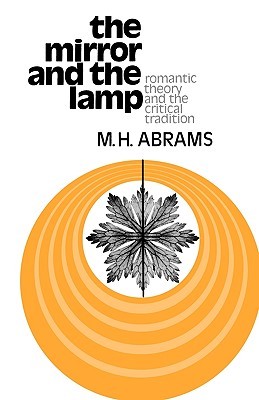
Here is a revealing birthday profile of M.H. Abrams, who turned 100 years old, peer of Lionel Trilling, teacher of Harold Bloom, and editor of the Norton Anthology. The article, here, appeared in The Tablet.
A quote from the article by Adam Kirsch:
“What he demonstrates in The Mirror and the Lamp is that the intellectual lenses through which we understand the world and ourselves are always changing; what he shows in Natural Supernaturalism is that our deep longings for transformation and redemption are constant. The combination of these two insights naturally leads to a certain tolerance, a forgiving kind of relativism, when it comes to ideas and theories, none of which is allowed to have a monopoly on truth.”
Travel book still in rewriting
Posted: May 8, 2013 Filed under: books, fiction, writing Leave a comment
I haven’t returned to posting anything lately because I’m still rewriting my travel book, after helpful advice from several friends. However, to break the grind of copyediting, rewriting and adding new material, I’ve been reading again and before long I’ll catch up on my Bedside Books post.
Lately, between daily bouts with the travel book, I’ve read There and Then by James Salter, a classy travel book by a beautiful writer who I hadn’t read before. I was attracted to his writing by a review of All That Is, his latest novel. I ordered his autobiography, Burning the Days, which I’m reading now.
In the unread stack of books are Love Songs from the Grave, the ninth in Colin Cotterill’s Dr. Siri crime series set in Laos, and The Great Leader by Jim Harrison.
Nearly back in the game…
Posted: March 14, 2013 Filed under: photography Leave a comment
I haven’t posted regularly lately because I’m in the final stages of finishing a long overdue travel book. I’m printing out some paper copies for final copy editing now and should be back in the game in another week or so.
New Woody Guthrie novel
Posted: February 5, 2013 Filed under: books, people, places, writing Leave a comment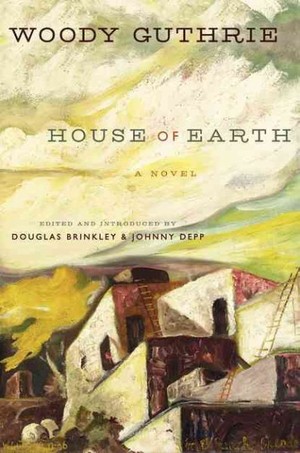 A new Woody Guthrie novel, set in Pampa, Texas, has been uncovered and will be published by actor Johnny Depp’s new imprint, which he says will be devoted to worthy, hard-to-publish works. You can find good reviews and information on the book at the following sites:
http://www.npr.org/2013/02/05/170496691/woodie-guthries-house-of-earth-calls-this-land-home
 Ttitled House of Earth, the novel takes a close up look at a couple engaged in a serious, sexual love affair who spend a lot of time arguing and making love. A theme is the main character’s belief in adobe construction methods as a way for the poor to have decent, quality homes.
Depp would make a good Woody in a movie (surely he’s working on that), and we need stories like Woody’s to be told. He spent a year or so in the Big Bend area of Texas and decades later produced a good novel set there based on some of his experiences, The Seeds of Man. This synopsis is an excerpt from moneyblows.blogspotcom:
Woody Guthrie’s Seeds of Man was inspired by a 1931 trip the author remembered…. or mis-remembered… in 1947-8. The novel wasn’t published until 1976.
By evidence of this rambling tome, Woody Guthrie wrote more about his 1931 trip to Big Bend, than about any other single topic. Although, that may be unfairly comparing songs to prose.
A visitor to the mysterious border wilderness known as Big Bend, where Seeds of Man is set, will not quickly grasp how formative was Guthrie’s own visit. He was an impressionable young man in 1931 whose travels thus far had been limited to Oklahoma and Texas. Woodrow Wilson Guthrie took his family gift of music and optimism farther than any Guthrie had before. It some ways, it could be said this magical trip started it all.
In 1941 he was part of the propaganda effort for the Coulee and Bonneville dams on the Columbia River. 26 ballads in 30 days, he had so much creativity coming out of him. His autobiographical novel Bound for Glory came in 1943. As he began to feel the curse of Huntington’s Disease in the late 1940’s, he typed like a madman on a novel he originally titled Study Butte,calling it “An Experience Lived and Dreamed,” the chronicle of a search to look for his family’s lost silver claim in the Christmas Mountains.
Study Butte is the name of a crossroads settlement in the Big Bend, near Terlingua, a stone’s throw from Mexico, which had an active mercury mine. It was very wild country at the time of Woody’s visit. Guthrie’s vision of America was inspired, and his themes were the same ones that get so little traction today, in spite of the bankers and big shots running roughshod over the governing system the same way today as they did during the Depression and the Dustbowl days.
James Wood profile
Posted: December 22, 2012 Filed under: books Leave a comment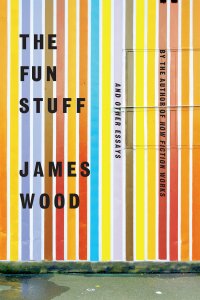
Here is a profile of James Wood. The piece compares him to Edmund Wilson, talks about his new collection of essays and reviews and explores his early childhood and literary life. Wood is a staff writer at The New Yorker and a visiting lecturer at Harvard University. His books include How Fiction Works, as well as two essay collections, The Broken Estate and The Irresponsible Self, and a novel, The Book Against God, all published by FSG.
Mae Salong, a Thai tea village
Posted: December 17, 2012 Filed under: articles, people, places 1 CommentBy Roy Hamric

This story originally appeared in The Boston Globe in 2007.
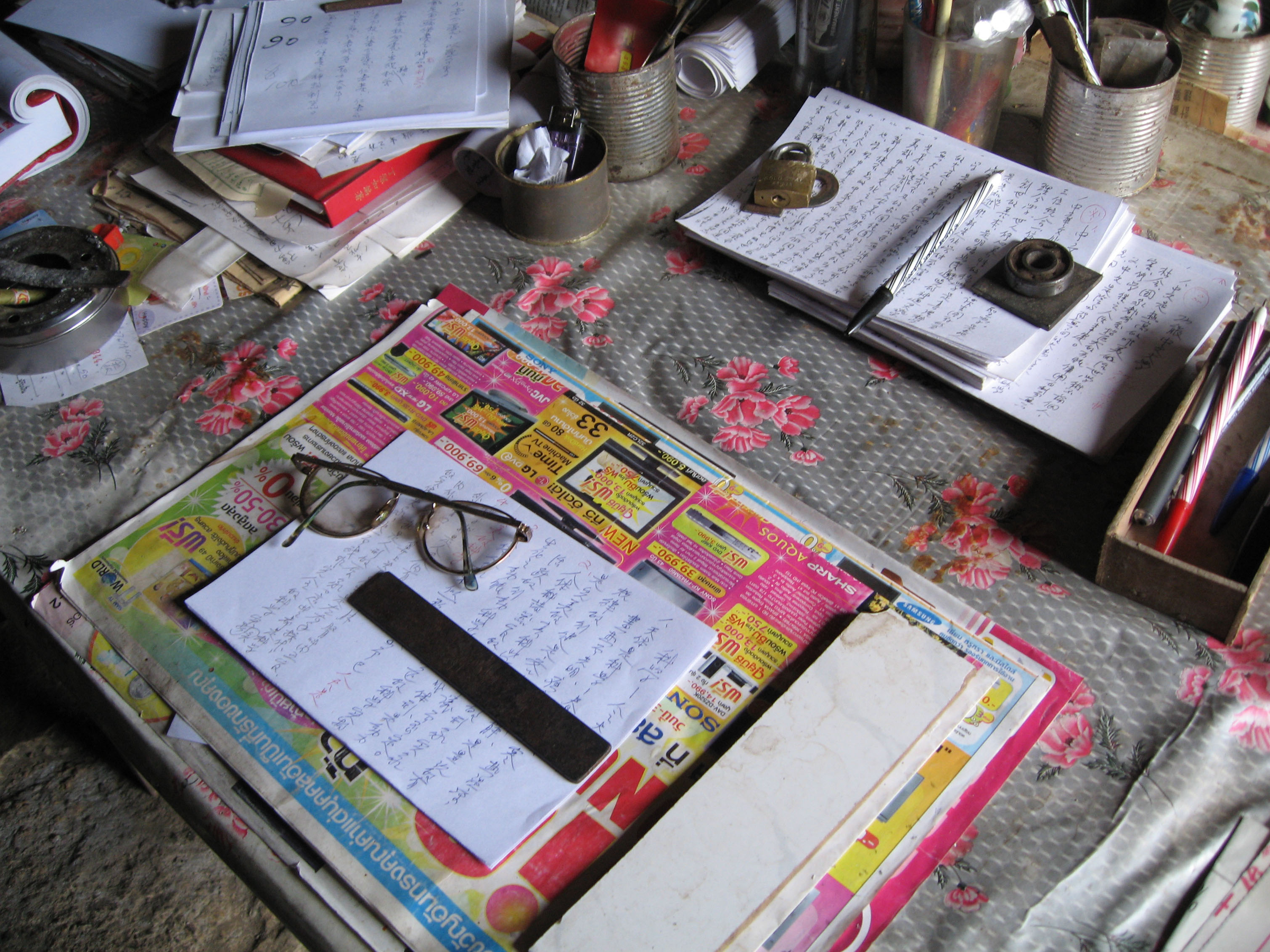
MAE SALONG, Thailand – Uncle Soo, sporting a San Francisco Giants cap and a frayed US Army field jacket, sat on a wood stump at his neatly arranged desk. A classic Chinese herbal doctor, he has his pharmacy of plants, herbs and roots arrayed on the concrete floor in plastic bags.
He carefully poured me a cup of green tea, as puffs of white smoke spiraled around his head from the thin, brown cheroot dangling from his lip. Yellowed pages of old newspapers glued to the interior walls of the shop covered open spaces between the wooden planks.
“Green tea was one of the first medicines in old China,” he said. “Opium is a medicine, too, to heal pain.”
 When talking about tea or opium, Soo, 91, is an expert. He served as an herbal doctor in the Kuomintang’s 39th Regiment shortly after it had retreated into Burma in 1949 following General Chiang Kai-shek’s defeat and exile. The battle-hardened Chinese carved out a fiefdom in the rugged mountains of Burma’s Shan State near the Thailand border and the regiment soon cornered a large portion of the poppy growing trade.
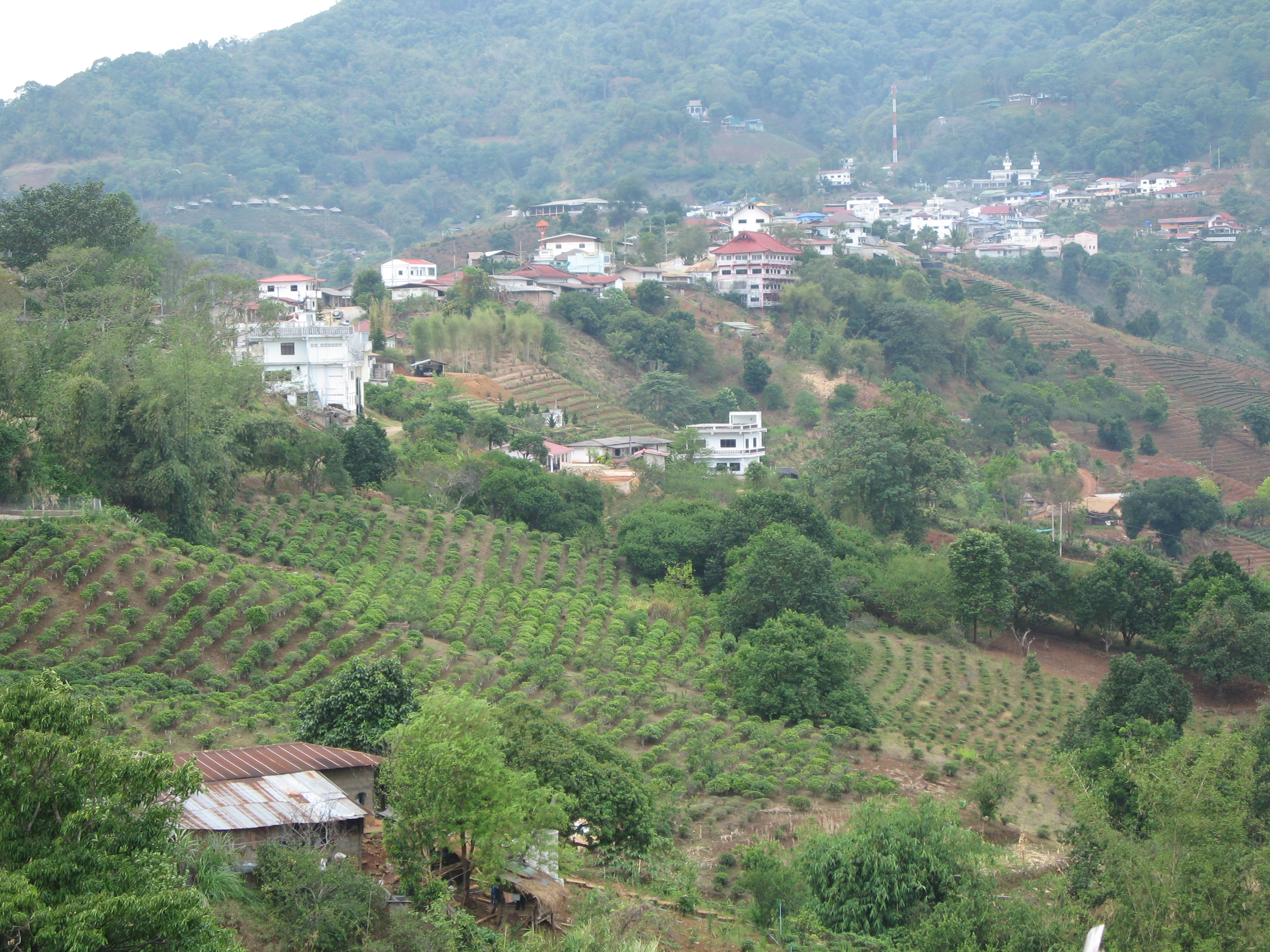
Led by General Ma Tuan, the army moved its base here in 1961, and the soldiers and their families created a Chinese way of life along this 3,800-foot mountain ridge. With more than 80 inches of rain a year, humid days and cool nights, the mountains provided a perfect location for tea plantations. By the 1980s, the community’s involvement in opium had subsided and almost all the Chinese in Mae Salong cultivated tea plants, which now cover the surrounding hills, or they operate businesses devoted to tea.
 Fortified with the lingering taste of Soo’s green tea, I walked out to the main road in search of the real reason I had come here: to taste the town’s specialty, fine oolong tea. I wanted to learn how to appreciate fine tea, and this was the place to do it.
Today, the town has about 10,000 residents, and almost all the shops have something to do with tea: processing, tasting, selling, or promoting it. Some are elaborate, open-air structures devoted to a Zen-like presentation of the drink. Others are tiny street stalls with a single counter.
Of the many teas grown here, oolong, or Camellia sinensis, is a favorite variety that connoisseurs compare to fine wine. Seedlings were brought here from Taiwan decades ago. With some of the finest tea in Asia, the village, though remote, attracts hardy tea lovers who love the village rhythm, the nearby hill tribes and the mountain atmosphere.
I walked down the main road where Chinese characters on shop signs outnumber Thai script. As the Lisu and Mong traders began filling up the town’s market, the village felt more like China than Thailand.
I spotted a nondescript tea shop with only two wood tables and a few squat stools. A picture of the Great Wall of China adorned one wall. An elderly lady, her hair neatly pulled back in a bun, said in broken English her name was Madame Ming, and she offered to give me a short course in tea tasting.
“What kind of tea do you like?” she asked.
“Oolong.”
“There are many varieties,” she said, smiling. “What kind?”
“Please serve the one you like best,” I said.
She opened a plastic bag bulging with tea buds.
“Oolong has been used as a medicine for thousands of years,” she said, selecting three or four small buds. “Tea stimulates blood circulation and calms the mind.”
In scientific terms, it’s all about polyphenols and catechins, organic chemicals found in all tea leaves. The trick is how much oxidation to allow in the processing.
Silently, Ming prepared a pot of tea, pouring hot water into a small, unglazed, clay teapot. Such pots are said to improve with age and bring out the flavor in the leaves. After it had steeped for a few minutes, she poured the tea through a fine strainer into two cups. Then she picked one up and motioned for me to do the same, all the while inhaling the aroma.
It was Dong Fang Mei Ren, or Oriental Beauty oolong tea, which she said she saved for special occasions. Its color, light red, is one of its gifts.
With the first sip, it was as if I had never tasted tea before. There were hints of honey, peaches, and oranges on my tongue. I sought the flavors again with each sip, smiling at Ming in appreciation.
The tea’s color, its smell and its flavor signaled subtle pleasures. Each demanded attention and anticipation, or they passed unnoticed. It was another lesson in how to live – and how to travel.
Bedside books
Posted: December 2, 2012 Filed under: articles, books, people Leave a comment The Woman of Andros: This third novel by Thornton Wilder, following his first, The Cabala, and the second, The Bridge of San Luis Ray, seems more inspired than either of the first two, as brilliant as they are. Wilder stands separate from the other great artists of his era: Fitzgerald, Hemingway, Faulkner, etc., as if Wilder himself was from another era, a time not so much American as universal.
I’ve read his first four novels now and his selected letters (the fourth novel: The Ides of March). It’s uncanny how Wilder produced so many good novels (not to mention America’s greatest play, Our Town) with so little visible struggle; they rolled off his pen while he was holding down significant teaching jobs. They seemed to come from the clouds rather than from underneath his feet.
The Woman of Andros, Chrysis, is a hetaera (prostitute) on a backwater Greek island several centuries before the Christian era begins. She is one of the educated, artistic, deeply spiritual hetaerae who served as mentors or companions to the leading men of the times and as a muse or inspiration to educated youth. She is officially ostracized by the women on the island because of the all-male banquets she holds in her house, where men are introduced to the works of the leading Greek poets and playwrights, as well as the arts of love, but at the same time she dominates the community’s attention because of her beauty, independence and commanding physical presence.
She has turned a part of her home into a refuge for outcasts – the sick and the strays of life. She dreams of being a part of a living community of love and compassion at the highest planes of selflessness. Pamphilus, the only son of a prominent villager, fathers a baby out of wedlock with Chrysis’s younger sister. The questions faced by Pamphilus, his family and the other “respectable” citizens of the island expose the imprisoning strictures of culture and social class.
Like the lives of many people in those times, Chrysis’ journey is suddenly cut short, but it lives on briefly in the life of her sister whose own life is then stopped cold with little warning.
A handful of otherwise anonymous lives are made flesh and brought to a fullness, reflecting the soul’s search to find higher meaning and safety in our chaotic world of chance and suffering.
Wilder wrote with full confidence from a place accessible to very few artists.
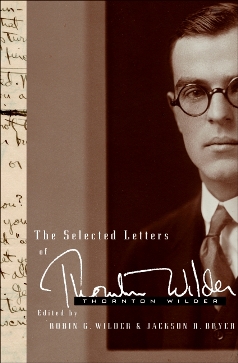 The Selected Letters of Thornton Wilder: I think it’s possible to make a case that Wilder learned to observe life and to write by writing letters; he came out of a milieu and a family that saw letter writing as essential to keep the family closely bound together. Letter writing was seen as a mark of seriousness and discipline. The book’s first letter was written to his grandmother at age 12 in 1909. It wasn’t unusual for Wilder to write dozens of letters each day from his earliest years, each one particular and well crafted. Letter writing was a must for Wilder’s large family, who seldom lived all together at the same place.
His letters are wide ranging and with Wilder’s early worldwide fame, he had easy access to the elite in literature, the theater and other arts. Early correspondents included Fitzgerald, Hemingway, Gertrude Stein (with whom he shared a close bond), a host of actors, directors and theater people, and perhaps most importantly his parents and siblings with whom he kept in constant touch throughout his life, offering glimpses of his inner life and travels. Wilder was a constant traveler who needed new places where he could work. He was constantly searching out different locales – France, Italy, Germany, Mexico, New Mexico, Arizona, the Texas coast, East Coast spas during off season, as a passenger on a freighter or ocean liner – places where he felt some kinship or charged freedom that allowed his writing to flow.
What comes out of the letters is Wilder’s well-balanced life and the seeming ease in which he created his novels and plays. He experienced almost no inner turmoil or wrenching emotional setbacks. He must be at the top of the list of the least affected creative artists that America has ever produced. Amazingly, none of his work rings hallow. It was written to last – grounded in compassion and hope – serious books written to help lighten the burden of life’s struggles.
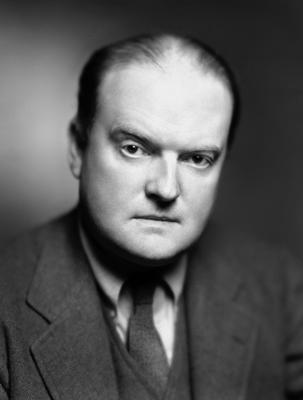 The Shores of Light and Classics and Commercials: By Edmund Wilson. Clive James, in an essay on Edmund Wilson, said something to the affect that as America’s pre-eminent, creative literary critic, Wilson was still new and it is still impossible to assess his greatness and impact on his times. However, it is possible to say these two collections which cover the Golden Years of modern American letters from the 1920s, 30s to 40s are essential to any judgment. Wilson, unlike a Harold Bloom, was a working journalist-critic (for much of his life for The New Republic and The New Yorker) and as such his influence was cumulative and immediate. For a real understanding of America’s radicalism and workers’ movement and how the literature of the times was affected, Wilson is essential.
His highest art is found in The Wound and The Bow and Axel’s Castle, yet both sprang from honing his ideas in magazine work, much like Clive James’ own career as a critic-journalist of the highest order. At the same time, this collection is a running commentary on the artists who illuminated the first half of the century and who to some extent have passed out of the scene except among specialists: Cummings, Upton Sinclair, Elinor Wylie, Firbank, Mencken, Dos Passos, Wilder, Strachey, Stein, Bernard De Voto, Edna St. Vincent Millay and others. It’s easy to forget or to have never known their value and impact, but going back and reading Wilson’s verdicts is charged with the vibrancy of those hugely creative decades of the 20s and 30s. From the 40s, one can feel the power of Van Wyck Brooks, John O’Hara, Saroyan, Steinbeck, Alexander Woolcott, Katherine Anne Porter, Paul Rosenfeld, Glenway Wescott and so many others. Reading Wilson on Hemingway and Fitzgerald is to understand their uniqueness and immediacy in ways now often closed from view.
Wilson was able to write so intelligently about the contemporary writers of his day because of his deep grounding in Early Greek and European works, and the collections include assessments of earlier masters.
James’ essay centers on Wilson’s own poetry and creative writing. You can see it here. But for Wilson’s true value as a critic, see these two collections and a third, The Bit Between My Teeth, which covers the 1950s and 60s.
New Harrison essay
Posted: December 2, 2012 Filed under: Uncategorized Leave a commentJim Harrison has a new novella, The River Swimmer, to be released in January, while at the same time he is experiencing a series of health issues that he writes about extensively in this essay in Brick magazine.
 the roy hamric journal