
New Stanley Cavell autobiography
Posted: October 15, 2010 Filed under: books, people, writing Leave a comment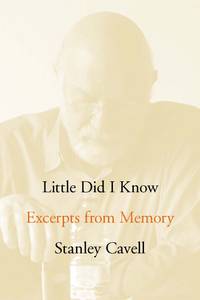 Little Did I Know is the new autobiography by Stanley Cavell, which appears to be loaded with influences from his early life and his close encounters with a host of worthies, as well as his unique nature’s embrace of his main philosophical kin . For a good scene-setting article on the book, click here. To see more from Amazon, click here.
A publisher’s description: “While Cavell’s academic work has often incorporated autobiographical elements, Little Did I Know speaks to the American experience in general. It has much to say about the particularities of growing up in an immigrant family and offers glimpses of lesser known aspects of university life in the second half of the twentieth century. At the same time, Cavell’s interests and career have brought him into contact with a range of influential and unusual people. A number of friends, colleagues, and acquaintances figure prominently or in passing over the course of this book, occasioning engaging portraits. J.L. Austin, Ernest Bloch, Roger Sessions, Thomas Kuhn, Judith Shklar, John Rawls, Bernard Williams, Jean Renoir, W. V. O. Quine, Vicki Hearne, and Jacques Derrida are no longer with us; but Cavell also pays homage to the living: Michael Fried, John Harbison, Jay Cantor, Marc Shell, John Hollander, Hilary Putnam, Toril Moi, Jill Clayburgh, Arnaud Desplechin, and Terrence Malick.
“In keeping with Cavell’s philosophical style, the drift of the narrative registers the decisiveness of the relatively unknown and the purely accidental as well. Cavell has produced a trail of some eighteen published books that range from treatments of individual writers (Wittgenstein, Austin, Emerson, Thoreau, Heidegger, Shakespeare and Beckett) to studies in aesthetics, epistemology, moral and political philosophy, cinema, opera, and religion. Here he accounts for the discovery and scope of his intellectual passions and shares them with his readers.”
Kyoto Journal’s biodiversity articles
Posted: October 11, 2010 Filed under: articles Leave a commentHere’s 10 take-away ideas from the inspiring Kyoto Journal issue No. 75, which focuses on the UN Convention on Biological Diversity to be held this Fall in Nagoya, Japan.
1. David Kubiak’s introductory article notes the probable lack of really meaningful actions from this meeting (impacted by the global economic downturn and the current “corporate conciliatory” stance of governments), but overall he’s optimistic about the impact that grass roots activists around the world can have locally and collectively, with new innovative theories and concepts of cross-organizational efforts forming as we speak which can increase the impact on public opinion and special interests, while drawing more average people into the fray with focused information about flora and fauna having a right to co-exist and not just be identified as “property” by whoever owns the habitat.
2. A paleontologist, Anthony Barnosky, writes about the five previous eras of Earth history, when at least 75 percent of species went extinct, and how we’re conceivably approaching a similar condition because of our way of living in a “me first” mentality. Some numbers: mammals, already up to 45 percent “too low” (another 21 percent endangered); amphibians, up to 43 percent endangered; reptiles, up to 28 percent endangered; birds, at least 12 percent endangered; 75 percent of genetic diversity of agricultural crops has been lost; 75 percent of the world’s fisheries are over-exploited; 23 percent of plant species are threatened with extinction, and the list goes on….
3. Some good news: 48 species of plants or animals which were at the brink of extinction have been reclaimed back and are now being successfully nurtured to survive. Reading about their individual stories is akin perhaps to the feeling of giving birth to life. Fulfilling, rewarding, makes you proud of people and what they can do at the individual and governmental level.
4. For a sophisticated look at what really goes on at a huge UN international conference on the environment, see Eric Johnson’s primer on who attends, what to expect, and how delegates and participants can actually make a difference.
5. Twenty-five pages of the magazine explore “Satoyama,” a Japanese word that means “mountain village,” but which stands for an ancient way of blending human’s footprints into the web of Nature rather than altering it. The concept and practices personify the smaller-is-better approach to a sustainable relationship with flora and fauna, while recognizing that Nature is always feeding off itself, as do humans feed off nature. The articles are precise and detailed, taking the reader into the minds of the villagers who have timbered the forests, fished the lakes and rivers, burned the meadows and preserved the habitats for centuries.
6. The Millennium Ecosystem Assessment article explores the findings of a UN-mandated study to assess the consequences of ecosystem change and to map out a scientific basis for actions to enhance the conservation and sustainable use of ecosystems. Sounds technical, and it is, but it’s the level of scientific analysis that is required in order to bring governmental bodies into the same boat. For the report, click here
7. Pavan Sukhdev (www.tinyurl.com/pavan-sukhdev) looks at the “The nature of value and the value of nature,” a concept first discussed by economist Adam Smith. Practical, utilitarian and philosophical issues are at the heart of the role played by humans within their home in Nature, and this article redresses the balance while making one feel that Nature, and man’s relationship to it, was far better understood by people before the scientific revolution than now. Yes, we understand more about Nature’s workings, but the practical distance between humans and Nature has grown so that people feel less individual responsibility.
8. The Ecozoic Era article by Thomas Berry is a refreshing exploration of what might go right in the next era if humans can reorient themselves to celebrate and nurture Nature and our place in the matrix or life.
9. In 10 Challenges for the Next Decade, Quentin Wheeler notes how many species are still unaccounted for, and he calls for a systematic inventory of known and unknown species of plants and animals.
10. Poet and activist Gary Snyder calls for more self reliance, the cultivation of each person’s role and responsibility in understanding their place in the environment, in exercising a personal role in keeping Nature and local culture alive and entwined within one’s daily life and home ground.
Some relevant websites:
On endangered fisheries: www.bloomassociation.org
A new visual PR effort: www.2020v.org
You can read all the articles above and many more online at
www.kyotojournal.org/biodiversity
The Kyoto Journal biodiversity issue
Posted: October 9, 2010 Filed under: articles, states of mind, writing 1 CommentUnbelievably beautiful
and important, the Kyoto Journal issue No. 75
McLuhan on moral indignation
Posted: October 7, 2010 Filed under: people, states of mind Leave a comment

marshall mcluhan
Serious public discourse is regularly contaminated, interrupted or entirely prevented by people who insist on dictating to their fellow citizens about how to live based on their own biases or prejudices. Extreme conservatives and religious fundamentalists are chronic abusers here. A frequently used tactic, noted by an acute critic of effect and nuance in speech, actions and media:
“Moral indignation is a technique used to endow the idiot with dignity.” ––Marshall McLuhan
Think Fox TV, Newt Gingrich, Tea Party, the Koran-burning minister, homophobes, etc. Interestingly, McLuhan always insisted that TV wasn’t primarily a visual media, but an aural and tactile media, an observation that helps to explain the power of simplified moral indignation (which disrupts the non-emotional routine), so easily misused by charlatans and know-nothings at the expense of thought and complexity.
Christopher Hitchens: two recent videos
Posted: October 6, 2010 Filed under: books, people Leave a comment
Hitchens' autobiography
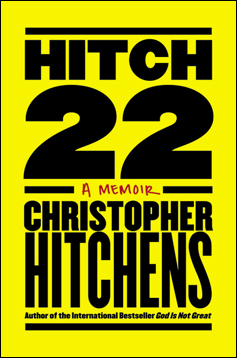
Two videos of Christopher Hitchens: the first was taken during his chemotherapy treatment and includes a little with his friend Martin Amis; the second, shows him later, after the chemo and in much better condition, with George Packer of The New Yorker, in a long conversation on Obama’s foreign policy.
Christopher Hitchens on Obama’s foreign policy
New Bloom poetry anthology: Last Poems
Posted: October 1, 2010 Filed under: books, poetry Leave a comment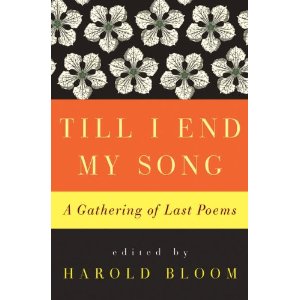 Till I End My Song is Harold Bloom’s latest anthology of poems, in this case “last poems” of one hundred influential poets. The poems are “sometimes the literal end and other times the imagined” conclusion to a poetic career, offering a final view of a poet’s character and the inevitability of death. Bloom is a unique guide to such a collection featuring Eliot, Pope, Yeats, Whitman, Dickinson, and Shakespeare, but also more neglected poets such as Conrad Aiken, William Cowper, Edwin Arlington Robinson, George Meredith and Louis MacNeice. More at Amazon here.
Walt Whitman on modern American poetry
Posted: September 19, 2010 Filed under: articles, people, poetry, writing 1 Comment
This is a prophetic excerpt from Walt Whitman’s Collected Prose on the future of American poetry. Right on the mark, for me, when I think of my two favorite poets, Gary Snyder and Jim Harrison, who have just published a new book, The Etiquette of Freedom, a conversation between two writers filled with vitalism.
POETRY TODAY IN AMERICA—THE FUTURE
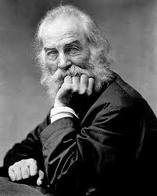
walt whitman
The poetry of the future, (a phrase open to sharp criticism, and not satisfactory to me, but significant, and I will use it)—the poetry of the future aims at the free expression of emotion, (which means far, far more than appears at first,) and to arouse and initiate, more than to define or finish. Like all modern tendencies, it has direct or indirect reference continually to the reader, to you or me, to the central identity of everything, the mighty Ego. It is more akin, likewise, to outside life and landscape, (returning mainly to the antique feeling,) real sun and gale, and woods and shores—to the elements themselves—not sitting at ease in parlor or library listening to a good tale of them, told in good rhyme. Character, a feature far above style or polish—a feature not absent at any time, but now first brought to the fore—gives predominant stamp to advancing poetry.
time, space, Khema Kat
Posted: September 13, 2010 Filed under: photography Leave a comment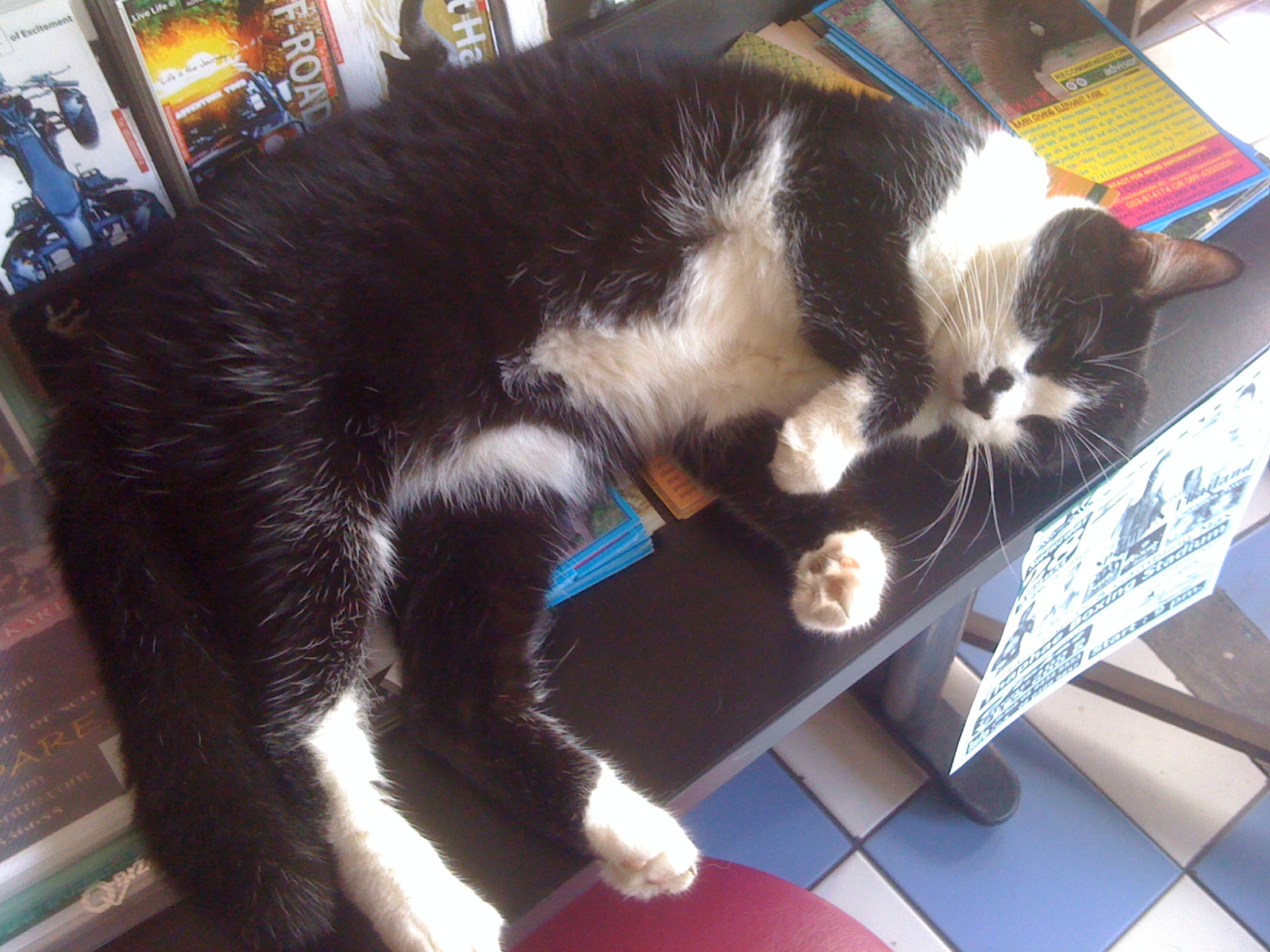
Sept. 13, 3:30 p.m.: Khema, my cat of 16 years. (Iphone photograph)
William Empson on Chinese poetry
Posted: September 12, 2010 Filed under: articles, people, poetry 2 CommentsThe selection below is from William Empson’s Seven Types of Ambiguity. He’s writing about comparative adjectives which do not say what their noun is to be compared with, and he uses two lines of Chinese poetry in his explication which not only captures the precision of Empson’s writing and critical sense, but offers one of the best primers on how to approach the concision of Asian poetical use of ordinary language pushed to heighten meaning. Empson taught in Japan, Beijing and Kunming, before spending the rest of his teaching career in Britain.
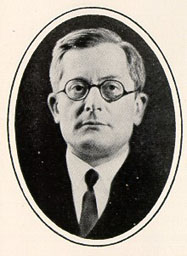
william empson
“Not unlike the use of a comparison which does not say in virtue of what the two things are to be compared is the use of a comparative adjective which does not say what its noun is to be compared with; since all adjectives are in a sense comparative, this source of ambiguity is a sufficiently general one. In particular, it is the chief source of euphuistic conceits and the paradoxes cultivated in the 1890s, which give a noun two contradictory adjectives and leave it to the reader to see how the adjectives are used. I shall give an example from one of Mr. Waley’s Chinese translations, to insist upon the profundity of feeling which such a device may enshrine.
‘Swiftly the years, beyond recall.
‘Solemn the stillness of this spring morning.’
“The human mind has two main scales on which to measure time. The large one takes the length of a human life as its unit, so that there is nothing to be done about life, it is of an animal dignity and simplicity, and must be regarded from a peaceable and fatalistic point of view. The small one takes as its unit the conscious moment, and it is from this that you consider the neighboring space, an activity of the will, delicacies of social tone, and your personality. The scales are so far apart as almost to give the effect of defining two dimensions ; they do not come into contact because what is too large to be conceived by the one is still too small to be conceived by the other. Thus, taking the units as a century and the quarter of a second, their ratio is ten to the tenth and their mean is the standard working day ; or taking the smaller one as five minutes, their mean is the whole of summer. The re pose and self-command given by the use of the first are contrasted with the speed at which it shows the years to be passing from you, and therefore with the fear of death; the fever and multiplicity of life, as known by the use of the second, are contrasted with the calm of the external space of which it gives consciousness, with the absolute or extra-temporal value attached to the brief moments of self-knowledge with which it is concerned, and with a sense of security in that it makes death so far off.
“Both these time-scales and their contrasts are included by these two lines in a single act of apprehension, because of the words swift and still. Being contradictory as they stand, they demand to be conceived in different ways ; we are enabled, therefore, to meet the open skies with an answering stability of self-knowledge ; to meet the brevity of human life with an ironical sense that it is morning and spring time, that there is a whole summer before winter, a whole day before night.
“I call swift and still here ambiguous, though each is meant to be referred to one particular time-scale, because between them they put two time-scales into the reader’s mind in a single act of apprehension. But these scales, being both present, are in some degree used for each adjective, so that the words are ambiguous in a more direct sense ; the years of a man’s life seem swift even on the small scale, like the mist from the mountains which gathers a moment, then scatters; the morning seems still even on the large scale, so that this moment is apocalyptic and a type of heaven.
“Lacking rhyme, meter, and any overt device such as comparison, these lines are what we should normally call poetry only by virtue of their compactness; two statements are made as if they were connected, and the reader is forced to consider their relations for himself. The reason why these facts should have been selected for a poem is left for him to invent; he will invent a variety of reasons and order them in his own mind. This, I think, is the essential fact about the poetical use of language.”
time, space
Posted: September 11, 2010 Filed under: photography, time, space 1 Comment
Saturday, Sept. 11, two leaves (Iphone photograph)
 the roy hamric journal