
Roxy “Coyote Boy” Gordon, writer-poet-songwriter
Posted: January 16, 2011 Filed under: books, people, poetry, writing Leave a comment
Drawing by Roxy Gordon
This post is long overdue, because in some way I refuse to accept that the Coyote Boy is gone. His life was very intense, but surrounded by a calm circle, a powerful aura that honored the idea of one-of-a-kind. He was a writer, artist and singer-songwriter. Sometimes Breeds, Smaller Circles and other of his books can be found on ABE, the used book website
 I’m reprinting two pieces by Roxy that give a feel for how he saw the world. Later, I’ll publish some of his poetry, which comes from the “Tough School” of poetry.
The West Texas Town of El Paso
by Roxy Gordon
[Edited by Judy Gordon]
This all starts in San Francisco, North Beach, hanging out with famous writers.
In those days I still wore western shirts, couldn’t buy one there. I decided it
was time to go home. We left in a little red Ford full of a dog, cats, two of
our friends and our new born baby. A big rent trailer on behind. Nobody but
me seemed willing to drive. We got lost in some town in Wyoming, middle of
the night. A policeman stopped us, looked into the car and couldn’t believe what
he saw. He figured the best thing to do was help us out of town. Before the sun
was up, I was seeing trees in the middle of the highway. We found Denver,
spent a day recovering and headed over Raton Pass. We made Texas, spent
some time building a fence, and decided to go back to San Francisco. We
stopped south of Santa Fe and had a conversation, decided Albuquerque, but
we couldn’t find anybody we knew there. Judy had never been to El Paso. I was
young and stupid, said let’s go.
We made El Paso middle of the afternoon, bought a newspaper and found a
trailerhouse for rent out on the river road. It was cheap. We moved in two
hours later. The bathroom overflowed. And we were right next to a railroad exchange.
Not good for sleeping.
Judy got a job in a printshop. She had learned typesetting in Austin, when she
worked for Bill Wittliff’s Encino Press. Wittliff wrote the screenplay for
Lonesome Dove. We decided to move out of that trailerhouse, found an ad in
the paper for a house on Blanchard. It was a big, beautiful house just across the
street from the University of Texas at El Paso. It was on a hill; from the side
porch, you could see Juarez and the Franklin Mountains. The old lady who
owned it was from Mexico. She could hardly speak English. She lived in a little
house out back. She spent most of her time in Mexico. She was gone when her
house was broken into. I called the cops and a kid came. He stationed me at the
front door to catch the burglar if the kid could run him out. Like a fool, I
actually stood there. Then Judy set herself on fire – blazing grease on the
kitchen stove.
Judy worked at the printshop and I changed my kid’s diapers. My first book,
Some Things I Did, arrived in the mail. It was published by Bill Wittliff. I set
it on top of the refrigerator. The little TV was on top of the refrigerator. We
watched Ed Sullivan.
My guitar amplifier picked up a radio station. We listened to that and watched
Gunsmoke on TV. One day I called Judy to the window to see a very tall, pretty
girl hitchhiking. She wore black leather shorts. She passed up several cars for a
guy on a motorcycle. One day, I walked across the street to UTEP. I went to the
student union, looked at the students. They looked like students I’d seen from UT
to California to Minnesota. They are all grandparents now. My friend, David
Phillips, called me to say he and his wife, Carol, were about to visit her mother in
El Paso. I drove down to try and find them, found David walking up the street
looking like Kris Kristofferson. Later, we went to Carol’s momma’s house. She
told me my writing informed her generation about what our generation was all
about. Carol and David divorced after that and Carol told me David and I were
too Texan for her to stand. Last I heard, she was in New York writing songs.
The freezeplugs rusted out on the Ford. I let it sit for a couple of days, then
fixed it with some kind of plastic goo. I got a job at an advertising agency,
writing print and TV. Judy got fired from her job because she mixed up pages
on a book. I walked to work in bright El Paso sunshine, got there every morning
for a meeting. Roy Chapman ran the agency. He’d been the host of a kids’ TV
show in El Paso. It was called Uncle Roy. He was not my idea of an uncle. He
was a mean old man, kept telling me to get out of my chair at the meeting so he
could sit down. My co-writer was a middle-age German who lived miles south
in Mexico, but spent the week in El Paso. The agency had two major accounts,
a bank in El Paso and Weaver Scopes. The German and I made up TV
commercials for the bank, had apples and oranges rolling around. I wrote a
piece for Weaver rifle scopes. Somebody rewrote it. Whoever did not
understand how scopes work. I had a fit. That may have been the beginning of
the end of my advertising career.
Judy and I drove the plastic-fixed Ford around El Paso. We saw pretty girls
walking on the streets. We saw cripples. We went to the dollar drive-in movie,
three for a dollar. Went to the A&W Root Beer Drive-in. We walked on El Paso
Street, had beggars after us. One afternoon a young woman tried to sell us her baby.
We left in the wounded Ford and headed north for Albuquerque. Marty Robbins,
I have been to the city of El Paso.
=====================================================
(Published by Coleman Chronicle & DV, 29 December, 1998.)
=====================================================
Why There Were So Many Presidents of the U.S. on The Fort Peck Reservation
by Roxy “First Coyote Boy” Gordon
(With thanks to Walley Cantrell, Edited by Judy Gordon]
About a hundred years ago, the white Bureau of Indian Affairs decided Indian kids
needed to go to what they called boarding school. Those kids, little kids and old,
were taken away from home to live nine months a year at boarding school.
The Indian agent would send his police to round-up all the kids and what some
of the parents did was round-up the kids and head for the hills. But the cops
would catch most and put them into a wagon to head for boarding school.
They deloused these kids and dressed them civilized, cut their hair and took
them off to learn white men’s ways.
One time a bunch of little boys got rounded-up at Fort Peck, Montana. Those
cops put them in a big room at the boarding school. The kids huddled up all
close together and didn’t know what to do.
After awhile, a big boy came by. He’d been at boarding school before. He
decided to play a joke on the little boys. The big boy said, “Listen, if you
don’t tell them your names, then they’ll let you loose and you can all go home.”
The little boys thought that was a good idea.
So the teachers took them into a big room and a man with a big book asked
them, “Tell me your names.” No little boy would say a word. They thought by
being quiet, then they could go on home.
But then the superintendent saw they wouldn’t say anymore, so he locked
the door and went looking for help. The superintendent found a priest and
asked them what they might do. Those little boys needed names. “At least,”
the priest said, “I can name a few.”
The priest said to the little boys, “I’m going to give you big time names. You
will never be ashamed.” “You,” he said, “you over there with the brown hair,
you are George Washington. You with the red shirt, you are Thomas Jefferson.
You with no front teeth, you are Teddy Roosevelt. And you the one with
worn-out cowboy boots, you are Abraham Lincoln. You with the green eyes,
you are Andrew Jackson. You by the window, you are John Adams.” The
priest went on and on.
The little boys didn’t know what to do. They were still named things like
Afraid Of His Tracks and Horse’s Ghost and Ground Squirrel and names like
that. But after they stayed a few years at the school, they got used to their new
names. And they kept on using those names all their lives.
So that’s why, 50 years later, George Washington, Thomas Jefferson, Teddy
Roosevelt, Abraham Lincoln, Andrew Jackson and John Adams all lived up in
Montana on the Fort Peck Reservation.
100 Best Novels: Really ?
Posted: January 14, 2011 Filed under: Uncategorized Leave a commentHere’s the Modern Library Association list of 100 best novels. You have to chuckle at how this list would change if given to you, or to him or to her, or to me.
100. Booth Tarkington, The Magnificent Ambersons
99. J.P. Donleavy, The Ginger Man
98. James M. Cain, The Postman Always Rings Twice
97. Paul Bowles, The Sheltering Sky
96. William Styron, Sophie’s Choice
95. Iris Murdoch, Under the Net
94. Jean Rhys, Wide Sargasso Sea
93. John Fowles, The Magus
92. William Kennedy, Ironweed
91. Erskine Caldwell, Tobacco Road
90. Salman Rushdie, Midnight’s Children
89. Henry Green, Loving
88. Jack London, The Call of the Wild
87. Arnold Bennett, The Old Wives’ Tale
86. E.L. Doctorow, Ragtime
85. Joseph Conrad, Lord Jim
84. Elizabeth Bowen, The Death of the Heart
83. V.S. Naipaul, A Bend in the River
82. Wallace Stegner, Angle of Repose
81. Saul Bellow, The Adventures of Augie March
80. Evelyn Waugh, Brideshead Revisited
79. E.M. Forster, A Room with a View
78. Rudyard Kipling, Kim
77. James Joyce, Finnegans Wake
76. Muriel Spark, The Prime of Miss Jean Brodie
75. Evelyn Waugh, Scoop
74. Ernest Hemingway, A Farewell to Arms
73. Nathaniel West, The Day of the Locust
72. V.S. Naipaul, A House for Mr. Biswas
71. Richard Hughes, A High Wind in Jamaica
70. Lawrence Durrell, The Alexandra Quartet (Four books: Justine, Balthazar, Mountolive, Clea)
69. Edith Wharton, The House of Mirth
68. Sinclair Lewis, Main Street
67. Joseph Conrad, Heart of Darkness
66. W. Somerset Maugham, Of Human Bondage
65. Anthony Burgess, A Clockwork Orange
64. J.D. Salinger, A Catcher in the Rye
63. John Cheever, The Wapshot Chronicle
62. James Jones, From Here to Eternity
61. Wilia Cather, Death Comes for the Archbishop
60. Walker Percy, The Moviegoer
59. Max Beerbohm, Zulieka Dobson
58. Edith Wharton, The Age of Innocence
57. Ford Maddox Ford, Parade’s End (Four books: Some Do Not…, No More Parades, A Man Could Stand Up…, and Last Post)
56. Dashiell Hammett, The Maltese Falcon
55. Jack Kerouac, On the Road
54. William Faulkner, Light in August
53. Vladimir Nabokov, Pale Fire
52. Phillip Roth, Portnoy’s Complaint
51. Norman Mailer, The Naked and the Dead
50. Henry Miller, Tropic of Cancer
49. D.H. Lawrence, Women in Love
48. D.H. Lawrence, The Rainbow
47. Joseph Conrad, Nostromo
46. Joseph Conrad, The Secret Agent
45. Ernest Hemingway, The Sun Also Rises
44. Aldous Huxley, Point Counter Point
43. Anthony Powell, A Dance to the Music of Time (12 novels: A Question of Upbringing., A Buyer’s Market, The Acceptance World, At Lady Molly’s, Casanova’s Chinese Restaurant, The Kindly Ones, The Valley of Bones, The Soldier’s Art, The Military Philosophers, Books Do Furnish a Room, Temporary Kings, and Hearing Secret Harmonies)
42. James Dickey, Deliverance
41. William Golding, Lord of the Flies
40. Graham Greene, The Heart of the Matter
39. James Baldwin, Go Tell It On the Mountain
38. E.M. Forster, Howards End
37. Thornton Wilder, The Bridge of San Luis Rey
36. Robert Penn Warren, All the King’s Men
35. William Faulkner, As I Lay Dying
34. Evelyn Waugh, A Handful of Dust
33. Theodore Dreiser, Sister Carrie
32. Henry James, The Golden Bowl
31. George Orwell, Animal Farm
30. Ford Maddox Ford, The Good Soldier
29. James T. Farrell, Studs Lonigan (Three books: Young Lonigan, The Young Manhood of Studs Lonigan, and Judgment Day)
28. F. Scott Fitzgerald, Tender is the Night
27. Henry James, The Ambassadors
26. Henry James, The Wings of the Dove
25. E.M. Forster, A Passage to India
24. Sherwood Anderson, Winesburg, Ohio
23. John Dos Passos, USA Trilogy (Three books: The 42nd Parallel, 1919, and The Big Money)
22. John O’Hara, Appointment in Samarra
21. Saul Bellow, Henderson the Rain King
20. Richard Wright, Native Son
19. Ralph Ellison, Invisible Man
18. Kurt Vonnegut, Slaughterhouse-Five
17. Carson McCullers, The Heart is a Lonely Hunter
16. Theodore Dreiser, An American Tragedy
15. Virginia Woolf, To the Lighthouse
14. Robert Graves, I, Claudius
13. George Orwell, 1984
12. Samuel Butler, The Way of All Flesh
11. Malcolm Lowry, Under the Volcano
10. John Steinbeck, The Grapes of Wrath
9. D.H. Lawrence, Sons and Lovers
8. Arthur Koestler, Darkness at Noon
7. Joseph Heller, Catch-22
6. William Faulkner, The Sound and the Fury
5. Aldous Huxley, Brave New World
4. Vladimir Nabokov, Lolita
3. James Joyce, A Portrait of the Artist as a Young Man
2. F. Scott Fitzgerald, The Great Gatsby
1. James Joyce, Ulysses
Alex Kerr interview
Posted: January 14, 2011 Filed under: interviews, people, places, Uncategorized, writing 1 Comment
 Alex Kerr is a writer-educator who is well known for several books about Japan, including Lost Japan and Dogs and Demons, and his most recent book on Thailand, Bangkok Found, where he has lived since 1997. Noted as a perceptive cultural critic of Asian arts, he heads Origin, an educational program that offers special classes on the fine arts of Japan and Thailand. His books on Japan have had a cultural impact in the area of the arts and environment. Currently, he’s working on Kyoto Found, which looks at the city’s unique cultural heritage.
For a short Q&A interview about Bangkok Found click here.
Interesting journal on politics, culture, literature
Posted: January 2, 2011 Filed under: writing 1 Comment
Check out this journal. Everything in it is in the game.
Happy New Year
Posted: December 31, 2010 Filed under: photography Leave a comment
May the Year of the Rabbit be gentle and kind (Iphone photograph)
Quotes from Gary Snyder on nature
Posted: December 24, 2010 Filed under: books, people, states of mind Leave a comment“It comes again to the understanding of the subtle but critical difference of meaning between nature and wild. Nature, they say, is the subject of science. Nature can be deeply probed, as in microbiology. The wild is not to be made subject or object in this manner; to be approached it must be admitted from within, as a quality intrinsic to who we are. Nature is ultimately in no way endangered; wilderness is. The wild is indestructible, but we might not see the wild.” The Practice of the Wild, page 181.
“To know the spirit of a place is to realize that you are a part of a part and that the whole is made of parts, each of which is whole. You start with the part you are whole in.” The Practice of the Wild, page 38.
“The pressures of growing populations and the powers of entrenched (but fragile, confused, and essentially leaderless) economic systems warp the likelihood of any of us seeing clearly. Our perception of how entrenched they are may also be something of a delusion.” The Practice of the Wild, page 36.
time, space
Posted: November 12, 2010 Filed under: photography, time, space Leave a comment
friday, 1:08 p.m., a Bird of Paradise in flower (Iphone photograph)
time, space
Posted: November 8, 2010 Filed under: photography, time, space Leave a comment
Sunday, 3:45 p.m., a withered plant in the city (Iphone photograph)
Time, space
Posted: October 23, 2010 Filed under: photography, time, space Leave a comment

Saturday, 9:05 a.m.: A Spotted Dove flies no more. (Iphone photograph)
Reading Cavell
Posted: October 19, 2010 Filed under: articles, books, people, states of mind, writing Leave a comment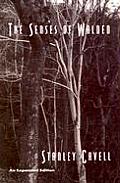 Stanley Cavell has created more ground breaking work on the importance of Thoreau’s and Emerson’s writing than anyone of his generation. Along with Walt Whitman, they are the core of original American thought and literature. Rereading Cavell’s The Senses of Walden, it’s uncanny how these three writers circle each other, while always pushing into new ideas that carry their own marks. Here’s an excerpt that connects Emerson and Thoreau with Heidegger, who was influenced by Emerson’s writing.
“As to the question of what may look like the direction of influence, I am not claiming that Heidegger authenticates the thinking of Emerson and Thoreau; the contrary is, for me, fully as true, that Emerson and Thoreau may authorize our interest in Heidegger… . Emerson’s and Thoreau’s relation to poetry [read writing] is inherently their interest in their own writing…I do not mean their interest in what we may call their poems, but their interest in the fact that what they are building is writing, that their writing is, as it realizes itself daily under their hands, sentence by shunning sentence, the accomplishments of inhabitation, the making of it happen, the poetry of it. Their prose is a battle, using a remark of Nietzsche’s, not to become poetry; a battle specifically to remain in conversation with itself, answerable to itself. Such writing takes the same mode of relating to itself as reading and thinking do, the mode of the self’s relation to itself, call it self-reliance. Then whatever is required in possessing a self will be required in thinking and reading and writing. This possessing is not––it is the reverse of––possessive; I have implied that in being an act of creation, it is the exercise not of power but of reception. Then the question is on what terms is the self received?
“The answer I give for Emerson here is a theme of his thinking that further stands it with the latter Heidegger’s, the thing Emerson calls ‘onward thinking,’ the thing Heidegger means in taking thinking as a matter of getting ourselves ‘on the way.’… . In “Circles,” Emerson invites us to think about the fact, or what the fact symbolizes, that every action admits of being outdone, that around every circle another circle can take its place… . What is the motive, the means of motion of this [constant] movement? How do we go on? (In Wittgenstein’s Philosophical Investigations, knowing how to go on as well as knowing when to stop, is exactly the measure of our knowing, or learning, in certain of its main regions or modes––for example, in the knowledge we have of our words. Onward thinking, on the way, knowing how to go on, are of course inflections or images of the religious idea of The Way, inflections which specifically deny that there is a place at which our ways end…)
“You may imagine the answer to the question how we move as having to do with power. But power seems to be the result…not the cause. I take Emerson’s answer to be what he means by ‘abandonment.’ The idea of abandonment contains what the preacher in Emerson calls ‘enthusiasm’ or the New Englander in him calls ‘forgetting ourselves,’ together with what he calls leaving or relief or quitting or release or shunning or allowing for deliverance, which is freedom (as in ‘Leave your theory as Joseph his coat in the hand of the harlot, and flee’ [Self-Reliance essay], together further with something he means by trusting or suffering (as in the image of the traveler––the conscious intellect, the intellect alone––who has lost his way [throwing] his reins on the horse’s neck, and [trusting] to the instinct of the animal to find his road [The Poet essay]… . Emerson’s perception of the moment is taken in hope, as something to be proven only on the way, by the way. This departure, such setting out, is, in our poverty, what hope consists in, all there is to hope for ; it is the abandoning of despair, which is otherwise our condition. (Quiet desperation Thoreau will call it; Emerson has said, silent melancholy.)
“What the ground of the fixated conflict between solipsism and realism should give way to––or between subjectivity and objectivity, or the private and the public, or the inner and the outer––is the task of onwardness… .
“In Heidegger: ‘The thanc means man’s inmost mind, the heart, the heart’s core, that innermost essence of man which reaches outward most fully and to the outermost limits.'(From What is Called Thinking). In Emerson: ‘To believe your own thought, to believe that what is true for you in your private heart, is true for all men––that is genius. Speak your latent conviction and it shall be the universal sense; for always the inmost becomes the outmost.’ (Self-Reliance)… .
“Then everything depends on your realization of abandonment. For the significance of leaving lies in its discovery that you have settled something, that you have felt enthusiastically what there is to abandon yourself to, that you can treat the others there are as those to whom the inhabitation of the world can now be left.”
 the roy hamric journal
