
2014! Year of the Horse
Posted: January 2, 2014 Filed under: articles, books, people, reviews 3 Comments
self portrait
Back in business…it’s been a while since I last posted. What’s happened? A lot and not enough. I finished The House of No Mind, my travel-memoir, tried to get an agent/publisher, etc., and hit the “No go” sign, which wasn’t a good way to end the Fall season but there it is. I like the book, but you know the story. I had a range of feedback, but no takers. I don’t have the energy or the brilliant idea right now about what to do to make it work (other than find an agent/publisher who would take it on as is…), so I’ll let it rest for now and come back to it later. If you know of a good small press that might like a vivid travel/memoir that ranges across Vietnam, Laos, Thailand and Myanmar, drop me a line.  Meanwhile, I’ve read a score of books in the past six months. Right now I’ll mention only one: Philip Larkin’s Jazz Writings. It’s a great education on the transition from the old-time jazz to the modern jazz that most people know today. The great Louis Armstrong is the key symbol of the transition (and a Larkin idol). Of course, he was one of the original giants, but his great experimentation, freshness and techne was left behind as he slipped into the image that became the later day, worldwide iconic image of American jazz. Larkin knew his jazz, and he couldn’t comfortably ride the Coltrane/Davis/et al dominance over older, original masters who created the art form (and languished in later life, forgotten). The moderns took jazz to more abstract levels with greater individuality. The crazy spontaneity that Larkin cherished had disappeared: the feeling that makes you tap your feet and snap your fingers when a big jazz band or ensemble cranks it up. Check out these tunes on Youtube, one slow and one fast. If you have one hour, listen to this compilation track featuring Armstrong with notables such as Sinatra, Jackie Gleason and others. Rare and wonderful…
M. H. Abrams celebrates 100th birthday
Posted: May 26, 2013 Filed under: articles, books, people Leave a comment
Here is a revealing birthday profile of M.H. Abrams, who turned 100 years old, peer of Lionel Trilling, teacher of Harold Bloom, and editor of the Norton Anthology. The article, here, appeared in The Tablet.
A quote from the article by Adam Kirsch:
“What he demonstrates in The Mirror and the Lamp is that the intellectual lenses through which we understand the world and ourselves are always changing; what he shows in Natural Supernaturalism is that our deep longings for transformation and redemption are constant. The combination of these two insights naturally leads to a certain tolerance, a forgiving kind of relativism, when it comes to ideas and theories, none of which is allowed to have a monopoly on truth.”
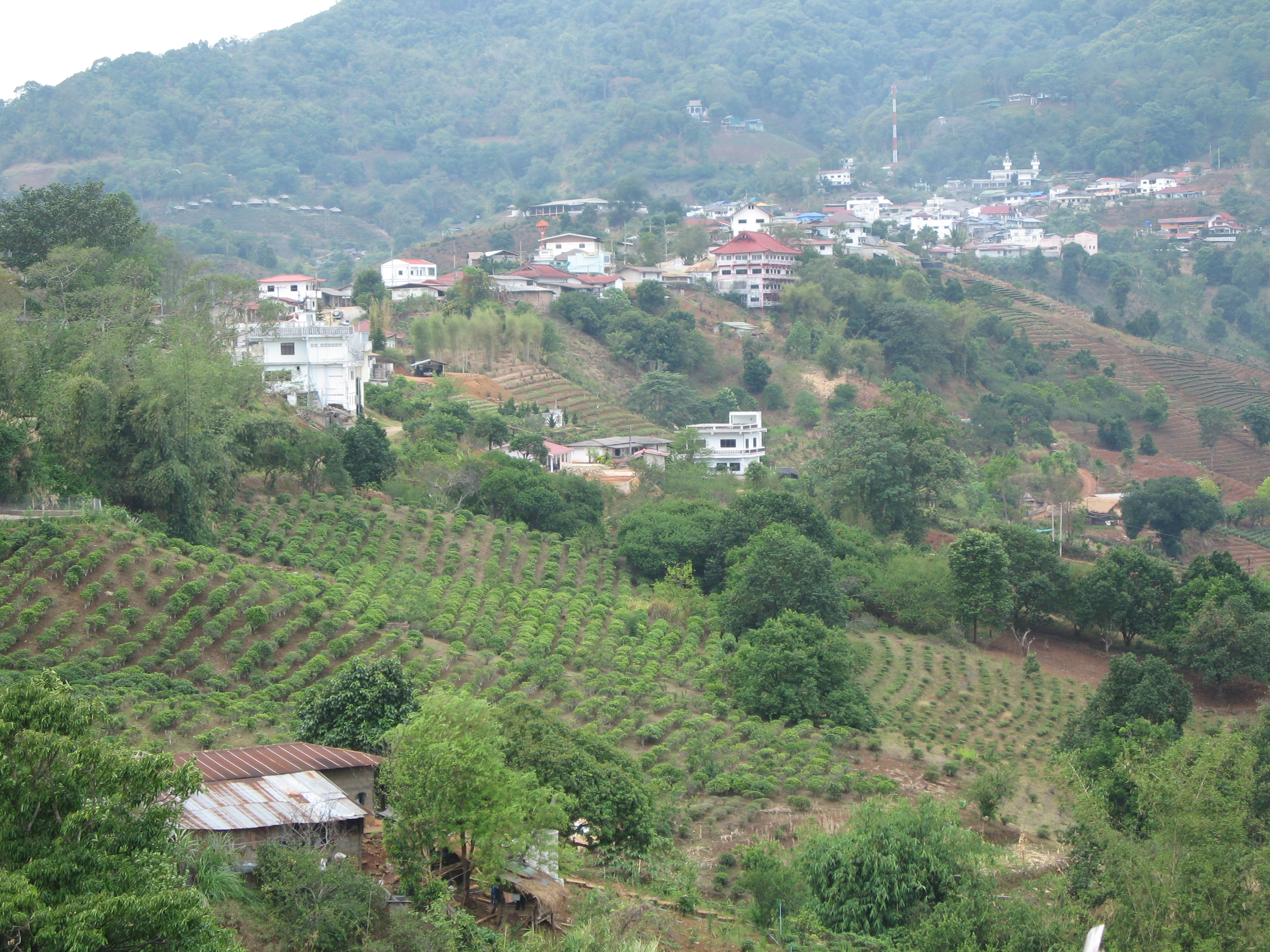
Mae Salong, a Thai tea village
Posted: December 17, 2012 Filed under: articles, people, places 1 CommentBy Roy Hamric

This story originally appeared in The Boston Globe in 2007.
MAE SALONG, Thailand – Uncle Soo, sporting a San Francisco Giants cap and a frayed US Army field jacket, sat on a wood stump at his neatly arranged desk. A classic Chinese herbal doctor, he has his pharmacy of plants, herbs and roots arrayed on the concrete floor in plastic bags.
He carefully poured me a cup of green tea, as puffs of white smoke spiraled around his head from the thin, brown cheroot dangling from his lip. Yellowed pages of old newspapers glued to the interior walls of the shop covered open spaces between the wooden planks.
“Green tea was one of the first medicines in old China,” he said. “Opium is a medicine, too, to heal pain.”
 When talking about tea or opium, Soo, 91, is an expert. He served as an herbal doctor in the Kuomintang’s 39th Regiment shortly after it had retreated into Burma in 1949 following General Chiang Kai-shek’s defeat and exile. The battle-hardened Chinese carved out a fiefdom in the rugged mountains of Burma’s Shan State near the Thailand border and the regiment soon cornered a large portion of the poppy growing trade.
Led by General Ma Tuan, the army moved its base here in 1961, and the soldiers and their families created a Chinese way of life along this 3,800-foot mountain ridge. With more than 80 inches of rain a year, humid days and cool nights, the mountains provided a perfect location for tea plantations. By the 1980s, the community’s involvement in opium had subsided and almost all the Chinese in Mae Salong cultivated tea plants, which now cover the surrounding hills, or they operate businesses devoted to tea.
 Fortified with the lingering taste of Soo’s green tea, I walked out to the main road in search of the real reason I had come here: to taste the town’s specialty, fine oolong tea. I wanted to learn how to appreciate fine tea, and this was the place to do it.
Today, the town has about 10,000 residents, and almost all the shops have something to do with tea: processing, tasting, selling, or promoting it. Some are elaborate, open-air structures devoted to a Zen-like presentation of the drink. Others are tiny street stalls with a single counter.
Of the many teas grown here, oolong, or Camellia sinensis, is a favorite variety that connoisseurs compare to fine wine. Seedlings were brought here from Taiwan decades ago. With some of the finest tea in Asia, the village, though remote, attracts hardy tea lovers who love the village rhythm, the nearby hill tribes and the mountain atmosphere.
I walked down the main road where Chinese characters on shop signs outnumber Thai script. As the Lisu and Mong traders began filling up the town’s market, the village felt more like China than Thailand.
I spotted a nondescript tea shop with only two wood tables and a few squat stools. A picture of the Great Wall of China adorned one wall. An elderly lady, her hair neatly pulled back in a bun, said in broken English her name was Madame Ming, and she offered to give me a short course in tea tasting.
“What kind of tea do you like?” she asked.
“Oolong.”
“There are many varieties,” she said, smiling. “What kind?”
“Please serve the one you like best,” I said.
She opened a plastic bag bulging with tea buds.
“Oolong has been used as a medicine for thousands of years,” she said, selecting three or four small buds. “Tea stimulates blood circulation and calms the mind.”
In scientific terms, it’s all about polyphenols and catechins, organic chemicals found in all tea leaves. The trick is how much oxidation to allow in the processing.
Silently, Ming prepared a pot of tea, pouring hot water into a small, unglazed, clay teapot. Such pots are said to improve with age and bring out the flavor in the leaves. After it had steeped for a few minutes, she poured the tea through a fine strainer into two cups. Then she picked one up and motioned for me to do the same, all the while inhaling the aroma.
It was Dong Fang Mei Ren, or Oriental Beauty oolong tea, which she said she saved for special occasions. Its color, light red, is one of its gifts.
With the first sip, it was as if I had never tasted tea before. There were hints of honey, peaches, and oranges on my tongue. I sought the flavors again with each sip, smiling at Ming in appreciation.
The tea’s color, its smell and its flavor signaled subtle pleasures. Each demanded attention and anticipation, or they passed unnoticed. It was another lesson in how to live – and how to travel.
Bedside books
Posted: December 2, 2012 Filed under: articles, books, people Leave a comment The Woman of Andros: This third novel by Thornton Wilder, following his first, The Cabala, and the second, The Bridge of San Luis Ray, seems more inspired than either of the first two, as brilliant as they are. Wilder stands separate from the other great artists of his era: Fitzgerald, Hemingway, Faulkner, etc., as if Wilder himself was from another era, a time not so much American as universal.
I’ve read his first four novels now and his selected letters (the fourth novel: The Ides of March). It’s uncanny how Wilder produced so many good novels (not to mention America’s greatest play, Our Town) with so little visible struggle; they rolled off his pen while he was holding down significant teaching jobs. They seemed to come from the clouds rather than from underneath his feet.
The Woman of Andros, Chrysis, is a hetaera (prostitute) on a backwater Greek island several centuries before the Christian era begins. She is one of the educated, artistic, deeply spiritual hetaerae who served as mentors or companions to the leading men of the times and as a muse or inspiration to educated youth. She is officially ostracized by the women on the island because of the all-male banquets she holds in her house, where men are introduced to the works of the leading Greek poets and playwrights, as well as the arts of love, but at the same time she dominates the community’s attention because of her beauty, independence and commanding physical presence.
She has turned a part of her home into a refuge for outcasts – the sick and the strays of life. She dreams of being a part of a living community of love and compassion at the highest planes of selflessness. Pamphilus, the only son of a prominent villager, fathers a baby out of wedlock with Chrysis’s younger sister. The questions faced by Pamphilus, his family and the other “respectable” citizens of the island expose the imprisoning strictures of culture and social class.
Like the lives of many people in those times, Chrysis’ journey is suddenly cut short, but it lives on briefly in the life of her sister whose own life is then stopped cold with little warning.
A handful of otherwise anonymous lives are made flesh and brought to a fullness, reflecting the soul’s search to find higher meaning and safety in our chaotic world of chance and suffering.
Wilder wrote with full confidence from a place accessible to very few artists.
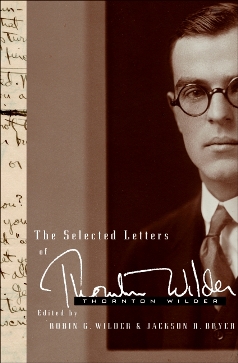 The Selected Letters of Thornton Wilder: I think it’s possible to make a case that Wilder learned to observe life and to write by writing letters; he came out of a milieu and a family that saw letter writing as essential to keep the family closely bound together. Letter writing was seen as a mark of seriousness and discipline. The book’s first letter was written to his grandmother at age 12 in 1909. It wasn’t unusual for Wilder to write dozens of letters each day from his earliest years, each one particular and well crafted. Letter writing was a must for Wilder’s large family, who seldom lived all together at the same place.
His letters are wide ranging and with Wilder’s early worldwide fame, he had easy access to the elite in literature, the theater and other arts. Early correspondents included Fitzgerald, Hemingway, Gertrude Stein (with whom he shared a close bond), a host of actors, directors and theater people, and perhaps most importantly his parents and siblings with whom he kept in constant touch throughout his life, offering glimpses of his inner life and travels. Wilder was a constant traveler who needed new places where he could work. He was constantly searching out different locales – France, Italy, Germany, Mexico, New Mexico, Arizona, the Texas coast, East Coast spas during off season, as a passenger on a freighter or ocean liner – places where he felt some kinship or charged freedom that allowed his writing to flow.
What comes out of the letters is Wilder’s well-balanced life and the seeming ease in which he created his novels and plays. He experienced almost no inner turmoil or wrenching emotional setbacks. He must be at the top of the list of the least affected creative artists that America has ever produced. Amazingly, none of his work rings hallow. It was written to last – grounded in compassion and hope – serious books written to help lighten the burden of life’s struggles.
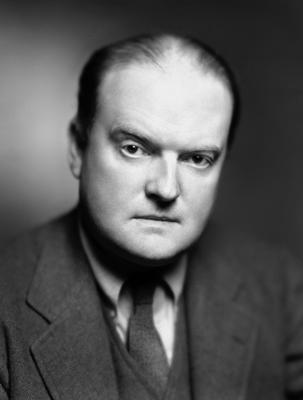 The Shores of Light and Classics and Commercials: By Edmund Wilson. Clive James, in an essay on Edmund Wilson, said something to the affect that as America’s pre-eminent, creative literary critic, Wilson was still new and it is still impossible to assess his greatness and impact on his times. However, it is possible to say these two collections which cover the Golden Years of modern American letters from the 1920s, 30s to 40s are essential to any judgment. Wilson, unlike a Harold Bloom, was a working journalist-critic (for much of his life for The New Republic and The New Yorker) and as such his influence was cumulative and immediate. For a real understanding of America’s radicalism and workers’ movement and how the literature of the times was affected, Wilson is essential.
His highest art is found in The Wound and The Bow and Axel’s Castle, yet both sprang from honing his ideas in magazine work, much like Clive James’ own career as a critic-journalist of the highest order. At the same time, this collection is a running commentary on the artists who illuminated the first half of the century and who to some extent have passed out of the scene except among specialists: Cummings, Upton Sinclair, Elinor Wylie, Firbank, Mencken, Dos Passos, Wilder, Strachey, Stein, Bernard De Voto, Edna St. Vincent Millay and others. It’s easy to forget or to have never known their value and impact, but going back and reading Wilson’s verdicts is charged with the vibrancy of those hugely creative decades of the 20s and 30s. From the 40s, one can feel the power of Van Wyck Brooks, John O’Hara, Saroyan, Steinbeck, Alexander Woolcott, Katherine Anne Porter, Paul Rosenfeld, Glenway Wescott and so many others. Reading Wilson on Hemingway and Fitzgerald is to understand their uniqueness and immediacy in ways now often closed from view.
Wilson was able to write so intelligently about the contemporary writers of his day because of his deep grounding in Early Greek and European works, and the collections include assessments of earlier masters.
James’ essay centers on Wilson’s own poetry and creative writing. You can see it here. But for Wilson’s true value as a critic, see these two collections and a third, The Bit Between My Teeth, which covers the 1950s and 60s.
More dream poetry
Posted: October 27, 2012 Filed under: articles, books, people, poetry, writing Leave a commentAfter posting my dream poem (below this post), I was reading in Edmund Wilson’s The Shores of Light and enjoying immensely his hard edged judgements and wise takes on the likes of Hemingway, Thornton Wilder, Gertrude Stein, H.L. Mencken, Sherwood Anderson, W. H. Auden, Elinor Wylie, Edna S. Vincent Mallay, E.E. Cummings, Henry Miller, D.H. Lawrence and other writers of that era when American letters were finding a new footing. Wilson, besides his literary critcism, was a prolific writer on cultural life for The New Republic, and he captured the fleeting fervor surrounding communism and its prominence in American life during that era, which now seems the musings of a different civilization entirely.
Anyway, in the book I was surprised to see an essay on Dream Poetry.
Wilson wrote about dreams that produced poetry, citing examples, the most prominent of course was Coleridge’s Kubla Khan, which is said to have come to him in an opium-induced dream state. Most dream poetry is not high art, of course, and is in fact touched by an other wordly whimsy.
Wilson recorded one of his dream poems:
The human heart if full of leaks;
The human head is full of vapors.
The crows disband: the mandrake shrieks;
The scandal was in all the papers.
And this from an anonymous poet:
It’s white to be snow,
It’s cold to be ice,
It’s windy to blow,
And it’s nice to be nice.
And one by E.M. Forster:
I will put down Hastings, you shall see
Companion to India as a boat gnawed.
Forster’s is closer to most dream poetry, I think, in which the dreamer feels that the “as a boat gnawed” is touched by genius, only to awaken, recall the words, and shake his head in wonderment.
I wish Wittgenstein would have taken an interest in this phenomenon of language produced in a dream, rather than action stories, states of feelings, fantasies, etc.
Lester Bangs was one great writer
Posted: September 5, 2012 Filed under: articles, books, people Leave a comment
Lester Bangs
I just finished Lester Bang’s Psychotic Reactions and Carburetor Dung, which I’ve heard touted for years, and – well – tout away folks, because it’s one fine piece of rock ‘n roll literature. Edited by Greil Marcus, the sub-title is probably Marcus’: “The work of a legendary critic: Rock ‘n roll as literature and literature as rock ‘n roll”– it couldn’t be said any better than that. Lester died young, age 33, in 1982. Fundamentalist upbringing. Then became a student of excess, or at least obsession with creativity and giving people a way forward through the fog. One thing he knew how to do in spades – keep it real, and at all cost don’t fall for fan claptrap or think that gifted performers were different from the average person. They just had a particular talent. How he knew what he knew at such a young age is also the sign of a particular talent.
He wrote for Cream, the Village Voice and other publications. This collection covers his favorite bands (he couldn’t write about anything else, but things he liked ferociously): Elvis, Sun Records, Lou Reed, the Clash, the Blues, bands and singers I’d never heard of, and much, much more. What’s best is that he’s never writing just about music, he’s always writing about creativity, the Muse, artistic integrity, the scummy nature of most big rock stars and bands, the miracle of creative integrity, and himself, surely the most vivid writer-self to come through in a long, long time. He surveyed the field and he told himself, seriously, I think, he was the best of the breed writing for magazines during his time. I think he was close, very close.
Surely, Hunter Thompson’s early writing trumped Lester’s output by far, both in seriousness of topics and literary style. Lester stopped writing too early to really compare the two, certainly, but Lester’s seminal talent was the search for where the Muse lives, the ability to root for seriousness of purpose (even among the deranged), a concern for moral values, the ability to thrash away for more abundance in life. He knew how the lives of musicians were honey to the young. His music was his politics as politics was Hunter’s music.
Anyway, you can’t compare geniuses – they both were, so let’s just say we’re dealing with two of the finest social critic-reporters we had at the end of the last century.
Bedside Books
Posted: August 18, 2012 Filed under: articles, books Leave a comment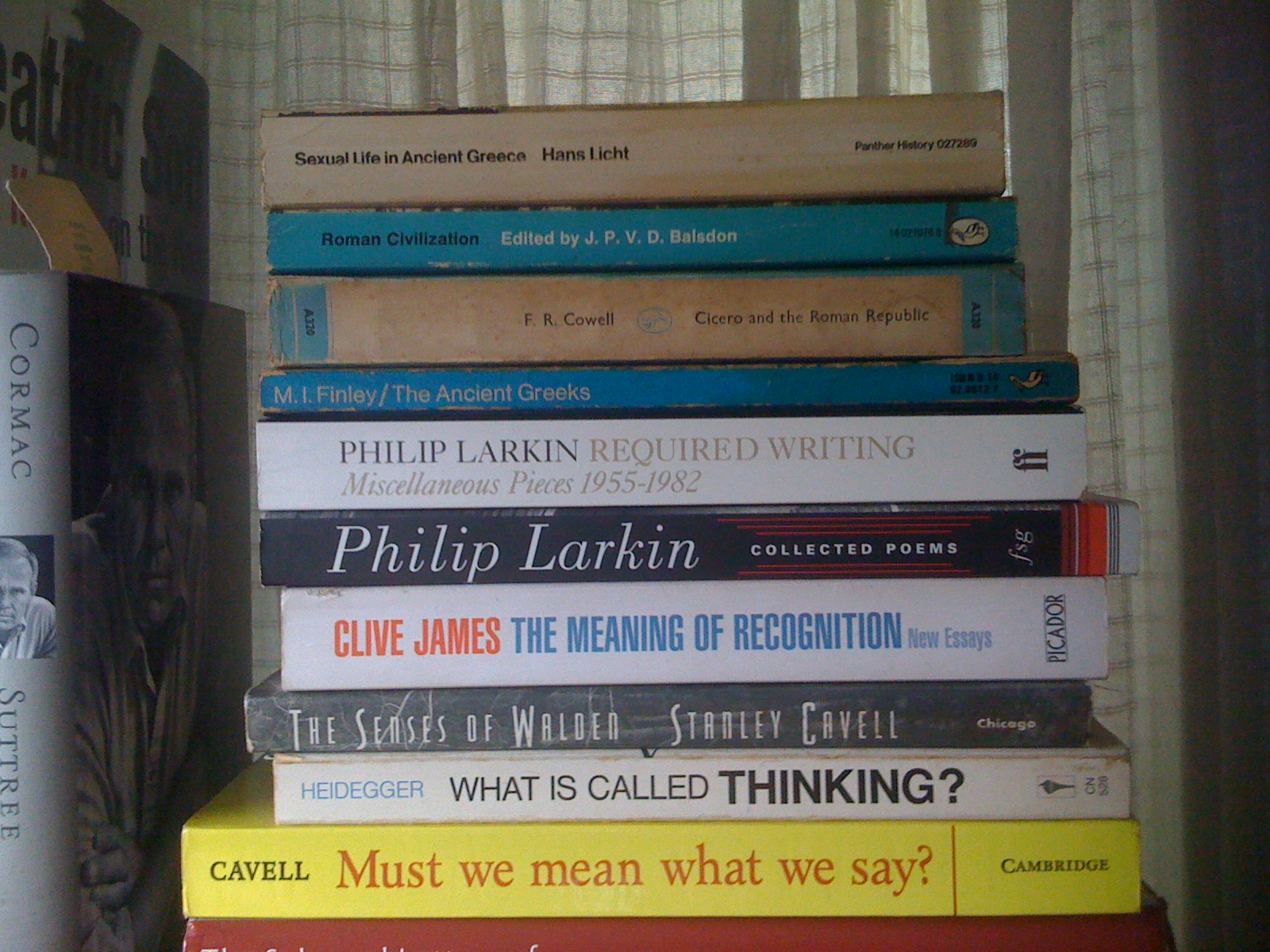
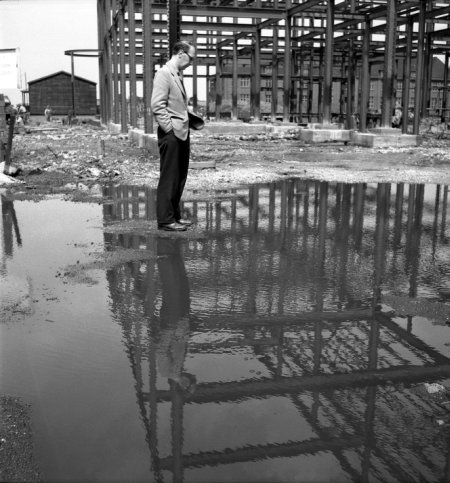
Philip Larkin took this self-portrait using the camera’s timer.
Required Reading by Philip Larkin: This collection of essays on poetry and literature, memories of his early life, and a sampling of his jazz writing clearly, in my mind at least, yokes Larkin with William Empson, or at least one aspect of Empson – their closely shared hard-minded approach to literary criticism. While they shared a fundamental view about naturalism and literary value, they expressed themselves totally differently and yet somehow, in the end, one comes out feeling the same about both men as writers and thinkers. Empson builds his cases on detailed exegesis while Larkin springs to the same spot without strewing a trail of literary shavings. What would have been the chemistry had they been in the same room? Would Larkin’s stoical nature have shrunk before Empson’s bizarre mental gymnastics? Would it have been a stoical and epicurean stand-off, or would they have smiled at the circularity of their approach, declaring a truce at some ground-zero level? Larkin covers a surprising amount of personal ground in these essays: Oxford, his days as a small town librarian, a great range of poetic esthetics, a surprising amount about Hardy (one of his favorites); it also includes his Paris Review interview and a long Guardian interview; all in all, very satisfying for a Larkin fan.
Roman Civilization edited by J.P.V.D. Balsdon: This collection of topics by scholars in the field underscores the profound influence of Roman law, administration and engineering on the modern world. While the Romans created little in the fields of literature, theater, philosophy or science, because of the earlier overdetermined brilliance of the Greeks, they did leave the world with a monumental gift: for a few golden centuries they were able to hold the competing forces of society together enough to show the world that the lower strata of society could be organized in such a way to benefit society at large without the two extremes and the middle wrecking the system. How much the daily openness of Rome itself and the intermingling of all classes of people contributed to the essence of Roman sensibilities is an interesting question. It was the antithesis of what’s happening in the US now, as partisans pollute the public discourse, which too often is in the hands of short-sighted nitwits with no practical sense. Classical Rome surely had its rogues, partisans, revolutionaries, privateers, all ready to raid the public coffers, or topple a government, but it also had exceptionally great legal minds, some military geniuses, and, more importantly, some great practical minds adroit in the art of compromise.
Cicero and the Roman Republic by F.R. Cowell: This is the book to read for an insight into how a great civilization unravels slowly over centuries. Cicero was, of course, an emblematic legal and literary figure in Rome. Cicero was profoundly influenced by the Golden Age of Rome two hundred years prior to his birth. A contemporary of Caesar, he clearly saw the loss of the Republic coming, he tried to stave it off, he acquiesced in many ways (a victim of his personality), and finally he paid for the failures of both Rome and himself with his life at the hands of assassins. He was an advocate of the sensible management of economic and political affairs to benefit the grand idea of “the people,” a belief that opens itself up to specious attacks from opportunistic figures on both the left and the right, the one-eyed partisans. Cowell is very wise. He pinned the tail on the donkey here, revealing what’s happening right now in the US political system and society. He probes the serious questions: were the defects in the faulty machinery of government, an unsound economic system, were the laws and courts unjust, all producing discontent, “or did the trouble spring from some deeper cause, traceable perhaps to some fundamental change in men’s attitudes toward life.? If so, was it a matter of alteration of social relationships between one class and another, between rich and poor, between the old families and fashionable society on the one hand and the unknown ‘common man’ on the other…Beyond all these possible sources of weakness was there a failure of old religious and moral beliefs and a decay of old habits that had in the last resort been the true source of the vitality of the State?” It’s been said repeatedly in history, Rome fell not because of an external enemy but to internal forces it had once subdued but could no longer control.
The Ancient Greeks by M. I. Finley: From whence did Rome spring? In many ways, from Greece, the civilization that was the other side of the Roman coin. In some ways, this book parallels the work of Cowell, taking you deep into the internals of Greek society, culture and the essence of the lives of emblematic figures. You are left with the knowledge that Greece was simply many countries trying to act as one, something it could only obtain with an exceptionally strong leader, such as Alexander, who was a Macedonian, and who relied primarily on his own generals rather than surrounding himself with Greeks. Finley is wonderful on Greek philosophy, Socrates, science, sculpture, Athens, Sparta and stoicism. In spite of its brevity, this work should be read last in any study of Greek life, because its insights and conclusions carry such great weight. I am already eager to reread it.
Sexual Life in Ancient Greece by Hans Licht: What an education you receive about Greece by looking at the role of the human figure in Greek culture, marriage, sex, prostitutes, religion, the role of love between men, women and various combinations thereof. Never has a country had such a wide open sexual culture; sex was a component of so much of Greece’s religious life, if not on the surface, then embedded in the ritualistic practices. Simply put, there were almost no taboos in Greek sexual life, and the higher courtesans offered intellectual companionship as well as physical pleasure to their client/s. The elite courtesans rose to the highest ranks as close associates of political leaders, scientists, philosophers and the artists of the day. Licht was a prodigious researcher with an encyclopedic grasp of Greek literature and visual arts, and he uses his skills so thoroughly that you receive a detailed survey of the literary and visual arts and how sexuality was used by writers and artisans in portraying Greek life. This book can’t be ignored; its exacting scholarship is far from prurient. If equal studies were done for other major civilizations, history would make more sense, but such a corrective is unlikely to come at this late date. One shivers at the prudery of most Western countries today. One sees how Freud mined Greek thought and scholarship in assembling his theories of sexuality. The role of hetairae, or female prostitutes, through the scholarly skills of Licht, are given a well-deserved central place in Greek society, a place they have rarely shared in societies before or since.
gary snyder interview: know nature
Posted: July 29, 2012 Filed under: articles, books, buddhism, people Leave a comment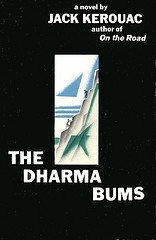
A Gary Snyder interview I did more than a year ago that appeared in the The Kyoto Journal #76 issue in July 2012 is here.
Lonn Taylor: a Texas star
Posted: March 17, 2012 Filed under: articles, books, people Leave a comment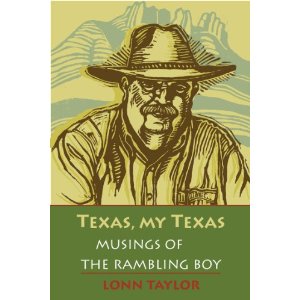
Writer and storyteller Lonn Taylor
Lonn Taylor is one of my Texas heroes for many reasons, some of which he’d never guess. For instance, his love of the southern delicacy called chicken fried steak (as opposed to fried chicken steak). In the 1970s, one night in Dallas at my home, he and I gorged on steel-skillet chicken fried steaks covered in thick grease-filled flour gravy. It was a hot summer night, and I don’t remember anything else on the menu except iced tea. I hope we had fresh biscuits, but I don’t recall for sure. I know we had a lot of chicken fried steaks, a big platter full.
Beyond that, Lonn later wrote a column for me called “The Rambling Boy” when I edited a weekly newspaper in Alpine, Texas. It was a great column, the kind designed to boost circulation and attract dedicated readers, because it was written by someone who loved his subject, largely Texas history and people living and dead. Ranging from the past to the present, this collection recalls the color and precision of Frank Dobie and Roy Bedichek, who would have loved to have had Lonn Taylor sitting with them at the edge of a campfire sharing stories.
Lonn lived in Fort Davis, a short drive over the mountains, having recently retired as a historian and curator at the Smithsonian Institution’s National Museum of American History where he worked for 18 years conducting research and directing and curating exhibits. His work as historian for the Smithsonian’s Star-Spangled Banner Preservation Project led to his 2000 book, “The Star-Spangled Banner: The Flag That Inspired the National Anthem.” He’s also written books on Texas furniture, American cowboys, New Mexican furniture and southwestern history.
When the weekly folded, he took his column to the weekly Big Bend Sentinel and KRTS, the National Public Radio station in Marfa, a nearby former cattle town named after a character in “The Brothers Karamazov” and the location for the filming of the classic modern Western, “Giant.”
Lonn is beloved in the area for his natural charm and for enriching the cultural life of the Big Bend area.
Marfa is anything but a cattle town now. It’s an art town, and with less than 2,000 population, it has a true cast of characters from the art crowd, the literary crowd, the music crowd, the wealthy crowd, the poor crowd, and the born and bred local crowd, along with a steady sprinkling of working cowboys who come in from the sprawling ranches to have a pizza and stock up on whiskey and cases of beer. Get some people from all those crowds together around a turquoise swimming pool at night at a modern mansion out on the lonely desert with Hank Williams’ “Hey, Good Lookin’,’” Roy Orbison’s “Only the Lonely” and Dylan’s “Knockin’ on Heaven’s Door” playing, and you can have a real Texas party. The ghosts of Elizabeth Taylor, Rock Hudson, James Dean and Dennis Hopper glide through the Mexican bars and empty streets of Marfa.
But Lonn Taylor is one of Marfa’s living stars today, and his slow, Texas drawl can be heard weekly drifting through the big-cloud sky and across the empty spaces of the desert and mountains north of the Mexico border. Check out the NPR station and tune in to one of his weekly shows by clicking on Marfa Public Radio in “The Gang” listing on the blog’s homepage. Some of the best old-time cowboy and country and modern music is played on the station too. Eventually, you will hear every record Johnny Cash ever made, and he made some very good records.
Oval Dreams on the Dirt Track
Posted: September 22, 2011 Filed under: articles, writing 1 CommentThe drivers who race on Texas’ oval dirt tracks don’t get the glory or the purses of Le Mans but that’s not what it’s about. It’s about winning.
By Roy Hamric
(This article was first published in the Houston Chronicle’s Texas Magazine in 2002.)
Henry Witt Jr. is holding court in the pit area for drivers and crew at Heart o’ Texas Speedway in Elm Mott, north of Waco. The evening Texas sun floats orange on the horizon. Witt’s yellow and red open-wheel race car, No. 701, basks in a mellow Technicolor glow. The pit area is a heady brew of dust motes, down-home jokes and barbs, maneuvered avoidances, carefully voiced respect and an occasional fistfight.
But the fights have to be done just right. If a race promoter sees a fight, a driver can be stripped of his points, barred from racing for 30 days and fined $1,000. “It’s usually the unprofessional suckers who fight,” Witt says. “Usually, I don’t like it.” Over his 22-year career, he has had four or five fistfights – one last year. “If they have time to think, most people cool down after a race,” he says. “I try to be cool.”
Witt won the title of IMCA modified national champion for 2000, and he’s in the hunt to repeat this year. The International Motor Contest Association, or IMCA, has about 150 sanctioned dirt tracks around the country that offer weekly “affordable racing,” with a race class for everyone who wants to compete, from kids with a few thousand dollars to high rollers. Organized in 1915, IMCA represents the lowest level of nationally sanctioned racing and has the most member drivers. Drivers race for points and purses of a few hundred dollars. At year’s end, local champions are determined by total points earned at the same sanctioned track in a season; regional and national champions are determined by the best 30 finishes at sanctioned tracks in their regions.
With an estimated 2,000 dirt-track drivers and 19 IMCA-sanctioned tracks, Texas has more tracks than any other state in the nation.
Witt sometimes races three or four times a week, averaging around 90 races a year. For a purse of just a few hundred bucks, he and 15 to 20 other drivers hurl their juiced-up, finely tuned cars around an oval dirt track for 20 laps, collectively roaring like a NASA engine test. Fans ask him why he does it. He wishes he had a good answer. He knows his stock response isn’t good enough. “I just like winning,” he says sheepishly.
If you win often enough, as Witt does, the small purses can add up. And there are endorsements and free contributions in the form of car parts from various companies. But Witt doesn’t race for money or merchandise, although they don’t hurt.
In dirt-track racing, he’s discovered what it’s like to be inside a manmade tornado, a sonic fury racing around and around in a tight, roaring circle. When he rides through the whirling chaos unscathed – it takes only a few minutes to race 20 laps – and shuts off the engine to sounds of “Way to go, Henry, thataway, Henry,” and starry-eyed kids rush to his side and an amplified voice says, “The No. 1 winner,” it’s a feeling beyond words, something he can’t find in hobbies like poker or golf.
Most dirt-track drivers look fairly average outside their cars. But looks deceive. You’re either very physical or you don’t race on dirt. It takes sensitive hands, sensitive eyes and a steady stomach. You have to synchronize mind and body in inches-apart racing at nearly 100 mph on a short, banked oval track. Given the right education and some computer skills, some of these guys might qualify to become jet fighter pilots.
At 42, Witt is still very physical. He lives in Waco, where he owns an auto glass business, works his 800-acre farm, raises four children with his wife, Kayren- and races every chance he gets. He exudes youthful charm. His trim, full-shouldered body moves with the catlike smoothness of a linebacker. His deep tan comes from outdoor work. He’s friendly, and he likes to encourage good young drivers. But better than that, he likes to beat them all – young and old.
In his mind, he’s already running his private movie of tonight’s race. The stars will be Chris and Chase Glick of Buffalo, Texas, two hot young drivers; veteran driver Keith Green, 47, of Waco; and Witt. Green, a near neighbor of Witt’s, is the Waco track’s No. 1 modified point leader this season. Green won the NASCAR-Winston Sunbelt Region title in ’97, and he’s raced with legends like A.J. Foyt.
During this year’s IMCA racing season, Witt and his crew drove to distant tracks in Louisiana, Oklahoma and New Mexico to race as many nights as they could. Their goal is to win No. 1 in as many races as possible. Whoever has the most No. 1 wins in a season is national champion. Witt and his crew are like gunfighters, pulling into distant towns with the goal of leaving No. 1. Nothing else will do. If No. 1 looks beyond Witt’s grasp, he will pull out of a race and wait for the next one. By withdrawing and not finishing in the top four positions, he’s assured a higher starting position for the next race. It’s a tactic used by a few select drivers across the nation – all trying to be the national winner. Second-, third- and fourth-place finishes don’t mean anything to Witt. He wants The Big One.
With 30 IMCA modified wins this year, Witt is ranked second nationally. He has a shot at the national No. 1 modified title, but he needs a string of back-to-back wins in the next three weeks. It’s not uncommon for him to enter four races in four cities in four days.
“What you have here,” Witt says, “is some of the most competitive people in the world. Winning isn’t everything, but second place is nothing – nobody ever asks, `Who placed second?’
“But if you win too much on one track, they’re going to hate you, and they’ll `claim’ you.”
A claim refers to an IMCA rule that allows a driver who places second, third or fourth to “claim” a winner’s engine. If a winner is claimed, he must give up his engine block in return for a $525 payment. The rule helps keep drivers from putting too much money into modifying their engines, thus keeping races competitive.
It also keeps costs down for most racers. The economics of “affordable racing” attract drivers ranging from those who might spend $1,000 a season to those who spend more than $100,000, including the cost of free merchandise. Most tracks offer a broad range of racing in one night. At the Waco track, competition classes include sprint, modified, hot stock, street stock, pure stock (all IMCA-sanctioned), cruisers and mini-stock (drivers 12-16 years old).
Witt has been claimed four times this year. “When they claim us, we’re ready the next night,” he says. “We always have one engine in reserve ready to go.”
His longtime, devoted mechanic, Glenn Wilson, nods his head. “One time we changed an engine in 28 minutes,” he says.
IMCA modified race cars start out as simple frames. Racers add support bars to protect the driver, special suspension and shocks, minimal sheet-body covering and open racing wheels. Most of the engines cost around $2,500 – and up.
Witt’s No. 701 has a JR Motor Sports “400 Claimer” engine (a 406-cubic-inch Chevy block with a flat tappet cam). It has a Gaerte 750 cfm four-barrel carburetor, an Ernie slide transmission (low, high and reverse), General Motors brakes and 5-by-16-inch coiled racing springs.
“I ain’t never claimed, myself,” Witt says. “Kind of an honor deal. You got a guy making $400 a week, and to put a guy like that out of business – that’s bad.”
Witt and Wilson take a break to walk through the pit area and look at some of the competition. Witt chuckles at the crews frantically changing engine parts. “You win by working on your car during the week,” he says, “not by working on it at the race.”
When they return to their own car, a few fans are staring at the left rear wheel of No. 701, which looks flat, although it’s not – quite. “You know you got a flat tire?” one man asks.
“You got a bicycle pump?” Witt snaps back. “Naw,” he goes on, “we always let the air out of the left rear so it don’t grow, keeps it shrunk – makes it smaller, gives you more roll and bite on the turns.”
As other drivers walk past his crew area, Witt quietly offers a running commentary on the talent. “Guy right there will push you on the turns,” he says. “Guy right there, he’ll spin out by the fourth lap. Guy right there, he might slam you.”
Slamming is a common occurrence in modified racing. Some drivers use it as a tactic to bump past cars. It keeps IMCA racing on the wild side, and often it causes festering grudges, if not outright fistfights. “You slam a guy, most of ’em will slam you back,” Witt says. “It’s an unwritten rule – you spin a guy out, they spin you back. I don’t drive dirty myself. Maybe I should, but I don’t. Sometimes a young kid will spin you and not mean it. You go over and have a friendly talk. But an older driver . . . you get ’em back.”
IMCA racing, while wilder than high-speed NASCAR competition, has slower speeds and fewer serious crashes and injuries than you would expect. Speeds hit 85-100 mph on the quarter mile, and the action on the turns is fiercely competitive. Witt flips his car about once a year. “I flipped in Odessa,” he says. “Car hit me, and I spun like a top.”
The drivers begin moving to their starting positions. Wilson, whose day job is being Waco’s assistant fire chief, makes a last-minute measurement of the distance between Witt’s chassis and the dirt. He wants the car to be exactly 6 3/4 inches above the ground on the right side and 6 1/4 inches above on the left. He adjusts a large bolt, pulling the body weight off the right side of the chassis.
Witt slips his helmet on. “Now I’ve just got to watch the X’s and O’s,” he says, referring to slams and spins.
Witt starts in the seventh position. Green is 17th. By the ninth lap, Witt has passed inside to take the lead. The earlier leader, trying to adjust, has spun out. Green moves from 17th to second, right behind Witt. Green was “lovin’ on ’em,” Witt says after the race, meaning his car was rubbing and bumping its way through. A yellow caution flag comes up on the 16th lap, putting Witt and Green bumper to bumper, one and two, with a near-even start for the remaining four laps. When racing resumes, Green’s car dives to the bottom of the first turn and bumps the lap car. Witt pulls ahead three car lengths, and barring car failure, he won’t be passed.
Within minutes Witt is standing in the winner’s circle, clutching the No. 1 trophy and a microphone, surrounded by kids who run out of the stands to share the brief moment that Witt lives for – feeling what the word “winning” can’t really describe.
The purse is $450. A photographer snaps the official photograph, and a voice announces the next race. Both Witt and Green enter the crew area happy. Green, with a second-place finish, is still ahead in local track points. Witt has his track win, boosting his national point wins to 31, only two behind the national leader, Jonathan Thompson of Superior, Neb.
On the next Friday, big trucks pull into the Heart o’ Texas crew area as the sun pauses above the tree line on the flat western horizon. There are a few tractor-trailer rigs capable of carrying two race cars and a rolling mechanic’s garage, but most modified race cars arrive on flatbed trailers pulled by big pickups.
Country girls with Farah Fawcett hairdos and tight Wrangler jeans prance about. Some seem pumped up and wild-eyed, ready for their 10 minutes on the Jerry Springer show. Many of their teenage male counterparts sport mullet haircuts.
In the far corner of the pit area, Charles Robinson of Waco, a rookie driver, works at setting up car No. 7, his cruiser-class ’76 Chevy Monte Carlo. On the side of the car is his handpainted logo, cribbed from Elvis: “Taking Care of Business.” A small figure of the King is lodged next to the passenger’s window. About nine months ago, Robinson’s car had rested, and rusted away, in a farm field. Robinson gave the owner $100 and, surprisingly, drove the car out of the field. Three months later, after spending $300 on safety bars and $2,500 on engine repairs and tires, he was a race driver. Three months later he had his first track win. Tonight is his 96th race.
He remembers the first race. “It was awesome,” he says. “Terrifying. This is the most exciting hobby I’ve every had, and I’ve had ’em all. Now I can’t get racing out of my blood.”
He points to the rippled indentations that pockmark the roof of his car. “Those dents on the top I made myself, jumpin’ up and down on the top of the car after my first win.”
Unlike the modified class, the cruiser class is pure stock car racing, with cars right off the street, a popular way for drivers to break in. It’s “bumping and grinding” racing, but most of the knocks are unintentional.
Tonight will not go well for Robinson. After a good start, he will pull out of the race with a flat tire.
Over in his crew area, Witt mulls his odds for the remaining two weeks of the season. With his 31 national points, he is still two points behind the national leader. Witt plans to race five more times.
“I got a shot at it,” he says, but he doesn’t sound happy. “In Texas, there’s maybe seven drivers who could win on any night. But there’s always some guy who comes out of nowhere and can beat you. Maybe they’ve never won a race, but on that night they’re unbeatable. Anybody can have their night and nobody can beat them.”
Before the qualifying heat, which determines the starting order of the racers, Witt worries that the dirt is too wet and sticky. A thunderstorm had passed through the day before, and water stands in low spots on the track. He and Wilson had talked on the phone all week, finally deciding to switch to a heavier 25-pound spring on the right rear and to install new brakes. Wilson had told Witt, “I got all week to think about what to do. You got one turn.”
Freddy Bottoms, one of Witt’s volunteer crew of four to five members, has sprayed the car with “mud-off,” a liquid that prevents mud from sticking to the frame and body and adding weight and air drag.
Witt looks tired. His week has been routine. He worked at his glass business. He worked on his farm and looked after his cattle. “It’s always a hustle-bustle deal,” he says. But there’s one piece of time in his hurried life when time seems to slow: “When you’re leadin’ the race, it seems like time is going really, really slow,” he says.
A full yellow moon is rising, looking like somebody punched a hole in an ink-blue curtain. As starting time nears, Witt’s crew attaches 40 pounds of lead bars to the back of the chassis to push the frame down. Chris Glick’s car roars up and stops next to Witt.
“Wait up on me, kid!” Witt shouts.
“Come and get it,” Glick says.
Witt glides to the passenger window, leans in and smiles. “Now, don’t get your pretty car banged up,” he says.
“I know, I hate that,” Chris says, and they both beam.
At the last minute, Witt’s crew makes adjustments to the “bleeder” attached to each tire, a device that lets air out as a tire heats up, keeping the air pressure constant. The bleeders are set very low, at 6 pounds for the left rear and 10 pounds for the right rear, and 10 pounds for the left front and 12 pounds for the right front.
Witt slips into his fireproof, red racing suit and gloves. He wears Simpson “Power Shoe” fireproof boots with soft rubber soles, and a neck brace under his helmet. As he settles behind the steering wheel, he attaches two shoulder straps designed to keep the driver’s arms inside the car and to prevent his body from being tossed out during a wreck. It’s time to roll.
By the second lap of the race, Keith Green has pulled from 12th to sixth. Witt is fourth. Two cars crash on the fifth lap. When racing restarts, Witt is second and Green fourth. At the start of lap 18, Green and Witt restart at numbers one and two with two laps to go. Green shoots ahead. Witt moves up to within three car lengths of Green on the 19th lap, but Green holds and crosses the finish line three lengths ahead.
In the crew area, Witt is unhappy. He stands slope-shouldered. The new brakes grabbed, and he couldn’t drive smoothly on the turns, he says. “You can’t win ’em all, but you can want to, and it hurts to lose when I could’ve won. Ah, well, we’ll get ’em tomorrow.”
Green is happy. With one week left in the season, he knows he’s got the local track’s modified title in his pocket right now. “I just had to get through there,” he says. “It was a tricky track tonight – one of the hardest. When I got the lead, I told myself don’t make a mistake. The competition was there, but whoever got through Turn 4 best had the advantage.”
A friend walks up, shakes Green’s hand and says, “Good drivin’, old man.” “I survived it,” Green says, smiling.
Within minutes, Witt’s 350-horsepower, twin-wheeled pickup is hauling out his 30-foot trailer with car No. 701 inside, engine still hot. As he rolls past car No. 52, Green and his crew are still celebrating.
On the last Friday night of the racing season, Witt has the No. 2 national ranking in IMCA modified competition wrapped up. He also won his fifth South Central regional championship. But he was too far behind to catch the national leader for first place. “I ain’t real proud of that,” he says, “but it’s still pretty good.”
The No. 2 position ensures he’ll receive an $8,700 national purse and maybe $30,000 in endorsements or merchandise certificates. Although Witt is already thinking about next year, he’s not quite through with this one. He’ll race this month at non-IMCA races where bigger purses are offered, ranging from $5,000 to $25,000. Then he’ll take December off. In January he’ll start preparing No. 701 for the next IMCA season.
He and his crew have run in more than 90 races during the season and won 32, a 3-to-1 average. (During his 2000 national championship year, he won 47 races, or almost one win for every loss – a sweet ratio.) He’s also pulled in around $100,000 in material contributions from auto-related companies and pocketed about $35,000 in winnings.
In the crew area, mechanic Wilson works at setting up No. 701. The banter flows.
“Track don’t look as sloppy tonight,” Witt allows.
“Yeah, maybe it will hang,” says Wilson.
The past week Wilson had changed the shocks and the springs and adjusted the panhard bar, which controls how the rear weight of the car is placed. He also changed the engine, estimating it was about the 20th engine change of the season. “We spend maybe 60 to 80 hours a week working on it.”
His hands constantly work over the parts. He adjusts the chassis based on Witt’s running description of how the car feels. Wilson says his work really is about mathematics and physics. “All the angles of the bars in the chassis need to come together like they’re supposed to, to get optimum traction,” he says. It’s also about the condition of the dirt – information the driver supplies.
“Henry has to tell me what the car feels like,” he says. “I got to get it from Henry.”
Witt and Wilson both look tired. They’ve driven about 60,000 miles to tracks this season. The daily grind is both exciting and exhausting. “But we’re jealous of what we got, and we don’t want to give it up,” Wilson says. “We’ve spent many a dang hour getting where we are.”
Witt nods. “Winning’s a big part of it, but it’s also some of the other drivers. It’s the fellowship, the cuttin’ up. But other nights you go home and you got people mad at you if there was bumpin’ and rubbin’.”
Both worry about being “claimed” on their engine. “We’d give up the motor for a win, but not for a second, third or fourth place,” Witt says. When the checkered flag falls on the last modified race of the season at Heart o’ Texas Speedway, the race ends, in its way, a picture perfect for almost everyone. Keith Green wins the race flat out and becomes track-modified champion. Chase Glick finishes at No. 2, ending the season in eighth place in the competition for national rookie of the year.
Witt never worked his way up from his fifth starting position. On lap 7, his car started shooting sprays of white sparks from the inside right rear brake, not three feet from the 32-gallon tank of methanol racing fuel.
The race had eight yellow flags and numerous wrecks. Witt drove through the wrecks unscathed. But on lap 12 he drove No. 701 over the high bank into his crew area. He switched off the ignition. The piston roar faded into an eerie stillness. He felt a trickle of small consolations. He had lost, but he had avoided an engine claim. The sparking brake hadn’t caused a fire. Most important, “anybody” didn’t win. First and second place went to skilled dirt drivers.
Witt ends the season national No. 2 in the modified class, three wins behind the champion. He knows nobody ever asks, “Did you win No. 2?” But there is next season. Witt is eager for it. He plans to race around that earth-scented oval in hot pursuit of that feeling he can’t describe.
“You find out you’re good at something and you like it,” he says. “It makes it kinda hard to quit.”
 the roy hamric journal