
d.h. lawrence
Posted: February 20, 2011 Filed under: people, photography, states of mind, writing 1 Comment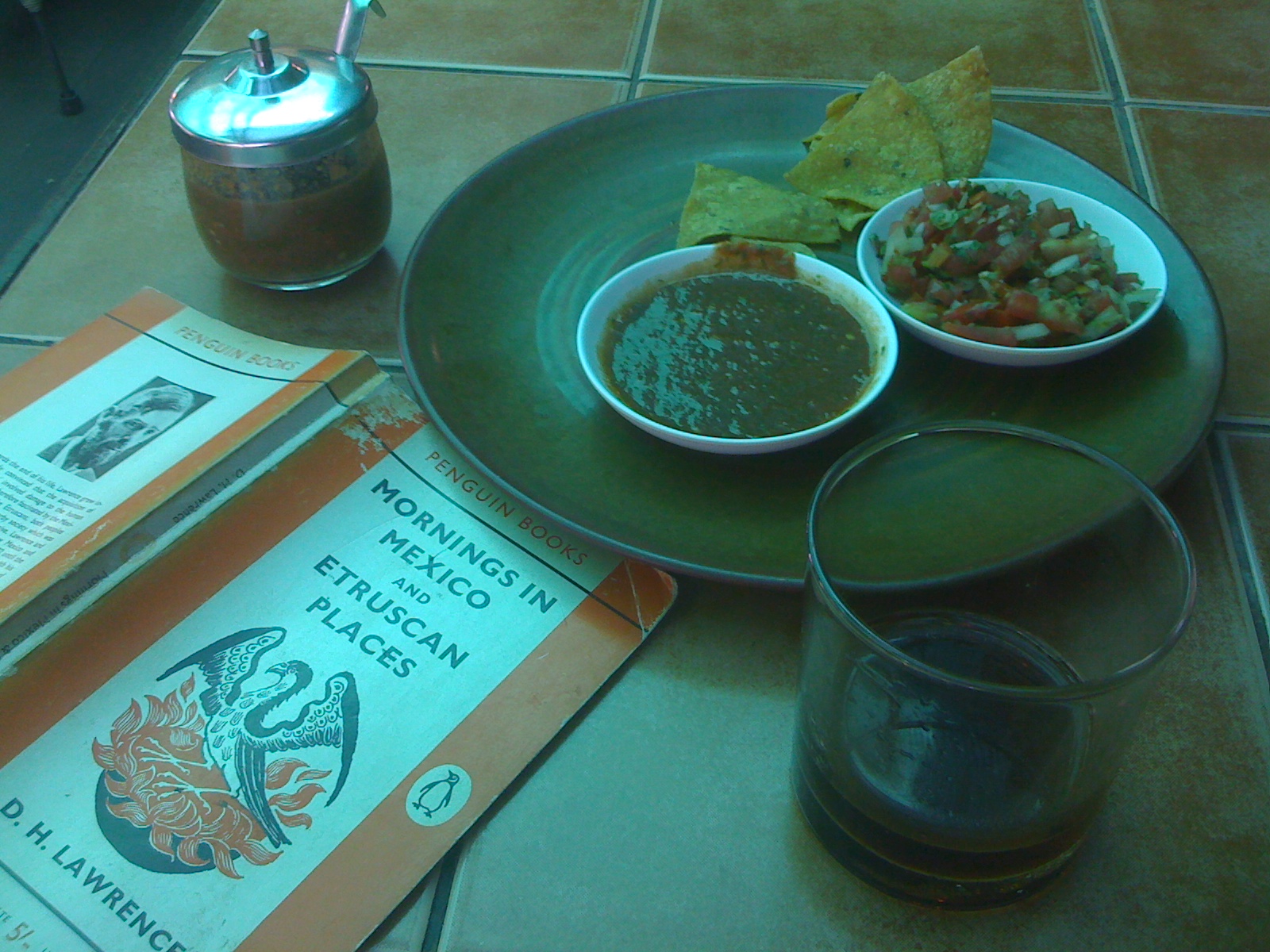
the phoenix on this Penguin cover makes it a classic (Iphone photograph)
I love dictionaries:
phoenix |ˈfēniks|noun (in classical mythology) a unique bird that lived for five or six centuries in the Arabian desert, after this time burning itself on a funeral pyre and rising from the ashes with renewed youth to live through another cycle.• a person or thing regarded as uniquely remarkable in some respect.
PHRASES rise like a phoenix from the ashes emerge renewed after apparent disaster or destruction.
ORIGIN from Old French fenix, via Latin from Greek phoinix ‘Phoenician, reddish purple, or phoenix.’ Phoenix 1 |ˈfēniks| |ˈfinɪks| |ˈfiːnɪks| Astronomya southern constellation (the Phoenix), west of Grus.• [as genitive ] ( Phoenicis |fēˈnīsis; -ˈnē-| |fɪˈniːsɪs|) used with a preceding letter or numeral to designate a star in this constellation :the star Delta Phoenicis.
ORIGIN Latin.Phoenix 2 |ˈfinɪks| |ˈfiːnɪks|the capital of Arizona; pop. 1,321,045. Its warm dry climate makes it a popular winter resort.
Zen sayings
Posted: February 7, 2011 Filed under: buddhism, photography, poetry, states of mind, writing 2 Comments
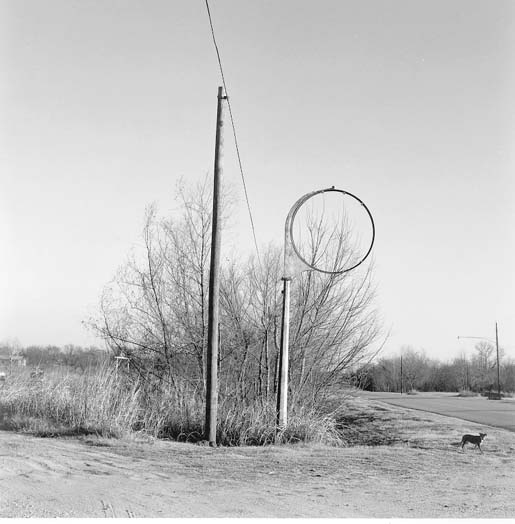
empty circle & dog (photograph Roy Hamric)
Looking
forward only,
Not knowing how
to look back.
– from A Zen Forest
The Etiquette of Freedom
Posted: February 6, 2011 Filed under: articles, books, buddhism, people, reviews, writing Leave a comment This essay originally appeared in The Kyoto Journal, issue No. 76.
The conversation between poets Gary Snyder and Jim Harrison in The Etiquette of Freedom, based on several days spent together while walking over the hills of southern coastal California, is a rare meeting of minds and personalities. A DVD film, The Practice of the Wild, co-produced by Will Hearst and Harrison, accompanies the book, which also contains a generous selection of poems that illustrate Snyder’s ideas. What we have here is a treasure: a rambling conversation between two of America’s most original poets––clear-eyed, unsentimental outsiders, both outdoors men who have spent their life probing the nature of nature.
In Asian terms, Snyder, 80, is the host of the book and film, and Harrison, 73, is the guest. A lifelong fan of Snyder’s work, Harrison assumes a dual role of interviewer—drawing Snyder out, opening up themes, offering him a stage to hold forth, which he does in his usual sharp, light and clear way. We know this encounter is the real thing when Harrison tosses out one of his favorite quotes of D. H. Lawrence that he frequently uses on his own interlocutors: “The only aristocracy is that of consciousness.” It’s easily passed over, but Snyder bites into the moment and their two minds engage:
GS: What do you think he meant by that?
JH: I think he meant that the person who is most conscious lives the most intensely––if “intensity” is the real pecking order, since life is so limited in length, as we are both aware of vividly––
GS: The most vividly. I’m not sure I agree with how he meant that, but that’s a good question.
JH: Why do you disagree?
GS: Oh, because it’s too spectacular, too romantic.
JH: Well, so was he.
GS: Of course. At any rate, you could set that beside an East Asian idea of the aristocracy of consciousness, and a Chinese or Korean idea of that would be much calmer, much cooler. Not like a hard glowing gem-like flame, not like a flaming candle burning out––
JH: That’s what Kobun Chino Sensei said; they criticized his friend Deshimaru because he said, “You must pay attention as if you had a fire burning in your hair.” And Kobun said, “You must pay attention as if you were drawing a glass of water.
GS: Oh, that’s better.
JH: The concept of the divine ordinary.
The title, The Etiquette of Freedom, comes from one of his early seminal essays, at the heart of The Practice of the Wild (1990), which explores his ideas behind the terms Nature, the Wild and Wilderness. In their fullness, the three terms are meant to encompass all aspects of phenomenal life, the whole of creation, a process in which humans are one part (though vastly threatening to the other parts). He wrote: “The lessons we learn from the wild become the etiquette of freedom [for humans].” Approaching Nature from the largest perspective, says Snyder, has sometimes caused him to be misunderstood.
GS: People, including environmentalists, have not taken well to the distinctions I tried to make between Nature, the wild and wilderness. You know, I want to say again, the way I want to use the word “Nature” would mean the whole universe.
JH: Truly.
GS: Yes, like in physics.
JH: Right, exactly.
GS: So not the outdoors.
JH: No. That’s a false dichotomy.
GS: Yes.
JH: –or a dualism.
GS: Yes, Nature is what we’re in.

gary snyder
The term “wild,” as used by Snyder, is a metaphor for the natural processes within Nature when least affected by man’s disproportionately heavy hand (but even our destructive, consumptive role is part of the natural process, as Nature, in the broadest sense, is constantly engaged in a vastly complicated destruction, consumption and renewal). Fully understanding these terms is conjoined by the role of time as measured in hundreds of thousands and millions of years and not at the rate of humankind’s anthropocentric perspective. For more on these terms, see The Practice of the Wild, where he wrote, “Nature is not a place to visit, it is home,” and, in a prophetic stroke: “It is the present time, the 12,000 or so years since the ice age and the 12,000 thousand or so years yet to come, that is our territory. We will be judged or judge ourselves by how we have lived with each other and the world during these two decamillennia.” For more on his ideas on bioregionalism and environmental issues, see Turtle Island(1974), his homage to North America, and his other essay collections and talks: The Real Work (1980),A Place in Space (1995) and Back on the Fire (2007). All of Snyder’s essays are gems. Those on Buddhist themes are filled with poetic prose rising to the level of inspired teishos.
The title, The Etiquette of Freedom, functions as a loaded metaphor, speaking of the importance of living in Nature with a humbleness that reflects humans’ disproportionate role—and responsibility—within the natural processes of creation and life and death. Etiquette means to show respect to a person or occasion. We see this attitude reflected worldwide in ancient cultures when someone asks for understanding before taking a creature’s life or before felling a tree for a home. By exercising an “etiquette” relationship with Nature, we can realign our sense of place and in turn, we experience a greater correctness in a more responsible relationship with Nature. Snyder himself has come to personify a meme which evolved out of the counterculture movment and has been absorbed into mainstream culture: the way to a richer life is to settle in, to reinhabit a rural area, to learn the names of the plants and animals, the geology, the history of the indigenous people, to study the folklore, to engage in civic life, to pay attention to the schools, to deepen one’s sense of self, to live life fully as a thoughtful member of a bioregion in which one strives to play a grateful and productive role. It is a meme for a practical, reality-based approach to life, and one which he played a major role in creating.

Poets Snyder and Harrison with Snyder’s dog Emi
The interplay between the individual and Nature has been Snyder’s subject since his first translations of Cold Mountain (Han-shan) poems as a student at Berkeley. For more than 50 years, he has been the American poet who has most fully embraced the subject of Nature, and the nature of consciousness. In 1955, he left America for Japan to study Zen. His public life began, in a way, as a fictional character in the novel Dharma Bums (1958), in which Jack Kerouac created a charismatic, heroic character named Japhy Ryder (Gary Snyder)—a young, self-assured American poet and outdoors man. In the late-60s, when he returned from Japan to live in America again, he immediately became a central figure in the evolving counterculture. His influence was based on his poetry and his practical ideas of returning to the land, which were embraced as a rallying cry by many young people, and canny elders. His approach was an extension of Emerson’s and Thoreau’s ideas on self-reliance and nature, and Buddhist philosophy. Wary of becoming a counterculture spokesperson, he quickly retreated to live in the isolated Sierra foothills near Nevada City, where he worked on his craft. After Turtle Island, he assumed a role of poet and environmental social critic. In his late period, he taught at the University of California at Davis, while continuing to publish poems and essays. Since then, the mythology surrounding him as a teacher has deepened. Over the coming decades, his work will travel well beyond America’s shores, and one feels the mythology has only just begun.
Snyder’s work has always been aligned with his commitment to Zen. Looking back now, his poetry and essays fan out like one long scroll of his life, a record of what he’s seen and felt and learned. To throw him together here with Jim Harrison’s highly refined Ikkyu-like spirit is a gift—two American poets who have extended the lineage of Emerson and Thoreau (Dogen and Han-shan)—two old men, well-seasoned and free, walking and talking, and turning the wheel.
Review photographs copyrighted San Simeon Films.
Roxy “Coyote Boy” Gordon, writer-poet-songwriter
Posted: January 16, 2011 Filed under: books, people, poetry, writing Leave a comment
Drawing by Roxy Gordon
This post is long overdue, because in some way I refuse to accept that the Coyote Boy is gone. His life was very intense, but surrounded by a calm circle, a powerful aura that honored the idea of one-of-a-kind. He was a writer, artist and singer-songwriter. Sometimes Breeds, Smaller Circles and other of his books can be found on ABE, the used book website
 I’m reprinting two pieces by Roxy that give a feel for how he saw the world. Later, I’ll publish some of his poetry, which comes from the “Tough School” of poetry.
The West Texas Town of El Paso
by Roxy Gordon
[Edited by Judy Gordon]
This all starts in San Francisco, North Beach, hanging out with famous writers.
In those days I still wore western shirts, couldn’t buy one there. I decided it
was time to go home. We left in a little red Ford full of a dog, cats, two of
our friends and our new born baby. A big rent trailer on behind. Nobody but
me seemed willing to drive. We got lost in some town in Wyoming, middle of
the night. A policeman stopped us, looked into the car and couldn’t believe what
he saw. He figured the best thing to do was help us out of town. Before the sun
was up, I was seeing trees in the middle of the highway. We found Denver,
spent a day recovering and headed over Raton Pass. We made Texas, spent
some time building a fence, and decided to go back to San Francisco. We
stopped south of Santa Fe and had a conversation, decided Albuquerque, but
we couldn’t find anybody we knew there. Judy had never been to El Paso. I was
young and stupid, said let’s go.
We made El Paso middle of the afternoon, bought a newspaper and found a
trailerhouse for rent out on the river road. It was cheap. We moved in two
hours later. The bathroom overflowed. And we were right next to a railroad exchange.
Not good for sleeping.
Judy got a job in a printshop. She had learned typesetting in Austin, when she
worked for Bill Wittliff’s Encino Press. Wittliff wrote the screenplay for
Lonesome Dove. We decided to move out of that trailerhouse, found an ad in
the paper for a house on Blanchard. It was a big, beautiful house just across the
street from the University of Texas at El Paso. It was on a hill; from the side
porch, you could see Juarez and the Franklin Mountains. The old lady who
owned it was from Mexico. She could hardly speak English. She lived in a little
house out back. She spent most of her time in Mexico. She was gone when her
house was broken into. I called the cops and a kid came. He stationed me at the
front door to catch the burglar if the kid could run him out. Like a fool, I
actually stood there. Then Judy set herself on fire – blazing grease on the
kitchen stove.
Judy worked at the printshop and I changed my kid’s diapers. My first book,
Some Things I Did, arrived in the mail. It was published by Bill Wittliff. I set
it on top of the refrigerator. The little TV was on top of the refrigerator. We
watched Ed Sullivan.
My guitar amplifier picked up a radio station. We listened to that and watched
Gunsmoke on TV. One day I called Judy to the window to see a very tall, pretty
girl hitchhiking. She wore black leather shorts. She passed up several cars for a
guy on a motorcycle. One day, I walked across the street to UTEP. I went to the
student union, looked at the students. They looked like students I’d seen from UT
to California to Minnesota. They are all grandparents now. My friend, David
Phillips, called me to say he and his wife, Carol, were about to visit her mother in
El Paso. I drove down to try and find them, found David walking up the street
looking like Kris Kristofferson. Later, we went to Carol’s momma’s house. She
told me my writing informed her generation about what our generation was all
about. Carol and David divorced after that and Carol told me David and I were
too Texan for her to stand. Last I heard, she was in New York writing songs.
The freezeplugs rusted out on the Ford. I let it sit for a couple of days, then
fixed it with some kind of plastic goo. I got a job at an advertising agency,
writing print and TV. Judy got fired from her job because she mixed up pages
on a book. I walked to work in bright El Paso sunshine, got there every morning
for a meeting. Roy Chapman ran the agency. He’d been the host of a kids’ TV
show in El Paso. It was called Uncle Roy. He was not my idea of an uncle. He
was a mean old man, kept telling me to get out of my chair at the meeting so he
could sit down. My co-writer was a middle-age German who lived miles south
in Mexico, but spent the week in El Paso. The agency had two major accounts,
a bank in El Paso and Weaver Scopes. The German and I made up TV
commercials for the bank, had apples and oranges rolling around. I wrote a
piece for Weaver rifle scopes. Somebody rewrote it. Whoever did not
understand how scopes work. I had a fit. That may have been the beginning of
the end of my advertising career.
Judy and I drove the plastic-fixed Ford around El Paso. We saw pretty girls
walking on the streets. We saw cripples. We went to the dollar drive-in movie,
three for a dollar. Went to the A&W Root Beer Drive-in. We walked on El Paso
Street, had beggars after us. One afternoon a young woman tried to sell us her baby.
We left in the wounded Ford and headed north for Albuquerque. Marty Robbins,
I have been to the city of El Paso.
=====================================================
(Published by Coleman Chronicle & DV, 29 December, 1998.)
=====================================================
Why There Were So Many Presidents of the U.S. on The Fort Peck Reservation
by Roxy “First Coyote Boy” Gordon
(With thanks to Walley Cantrell, Edited by Judy Gordon]
About a hundred years ago, the white Bureau of Indian Affairs decided Indian kids
needed to go to what they called boarding school. Those kids, little kids and old,
were taken away from home to live nine months a year at boarding school.
The Indian agent would send his police to round-up all the kids and what some
of the parents did was round-up the kids and head for the hills. But the cops
would catch most and put them into a wagon to head for boarding school.
They deloused these kids and dressed them civilized, cut their hair and took
them off to learn white men’s ways.
One time a bunch of little boys got rounded-up at Fort Peck, Montana. Those
cops put them in a big room at the boarding school. The kids huddled up all
close together and didn’t know what to do.
After awhile, a big boy came by. He’d been at boarding school before. He
decided to play a joke on the little boys. The big boy said, “Listen, if you
don’t tell them your names, then they’ll let you loose and you can all go home.”
The little boys thought that was a good idea.
So the teachers took them into a big room and a man with a big book asked
them, “Tell me your names.” No little boy would say a word. They thought by
being quiet, then they could go on home.
But then the superintendent saw they wouldn’t say anymore, so he locked
the door and went looking for help. The superintendent found a priest and
asked them what they might do. Those little boys needed names. “At least,”
the priest said, “I can name a few.”
The priest said to the little boys, “I’m going to give you big time names. You
will never be ashamed.” “You,” he said, “you over there with the brown hair,
you are George Washington. You with the red shirt, you are Thomas Jefferson.
You with no front teeth, you are Teddy Roosevelt. And you the one with
worn-out cowboy boots, you are Abraham Lincoln. You with the green eyes,
you are Andrew Jackson. You by the window, you are John Adams.” The
priest went on and on.
The little boys didn’t know what to do. They were still named things like
Afraid Of His Tracks and Horse’s Ghost and Ground Squirrel and names like
that. But after they stayed a few years at the school, they got used to their new
names. And they kept on using those names all their lives.
So that’s why, 50 years later, George Washington, Thomas Jefferson, Teddy
Roosevelt, Abraham Lincoln, Andrew Jackson and John Adams all lived up in
Montana on the Fort Peck Reservation.
Alex Kerr interview
Posted: January 14, 2011 Filed under: interviews, people, places, Uncategorized, writing 1 Comment
 Alex Kerr is a writer-educator who is well known for several books about Japan, including Lost Japan and Dogs and Demons, and his most recent book on Thailand, Bangkok Found, where he has lived since 1997. Noted as a perceptive cultural critic of Asian arts, he heads Origin, an educational program that offers special classes on the fine arts of Japan and Thailand. His books on Japan have had a cultural impact in the area of the arts and environment. Currently, he’s working on Kyoto Found, which looks at the city’s unique cultural heritage.
For a short Q&A interview about Bangkok Found click here.
Interesting journal on politics, culture, literature
Posted: January 2, 2011 Filed under: writing 1 Comment
Check out this journal. Everything in it is in the game.
Reading Cavell
Posted: October 19, 2010 Filed under: articles, books, people, states of mind, writing Leave a comment Stanley Cavell has created more ground breaking work on the importance of Thoreau’s and Emerson’s writing than anyone of his generation. Along with Walt Whitman, they are the core of original American thought and literature. Rereading Cavell’s The Senses of Walden, it’s uncanny how these three writers circle each other, while always pushing into new ideas that carry their own marks. Here’s an excerpt that connects Emerson and Thoreau with Heidegger, who was influenced by Emerson’s writing.
“As to the question of what may look like the direction of influence, I am not claiming that Heidegger authenticates the thinking of Emerson and Thoreau; the contrary is, for me, fully as true, that Emerson and Thoreau may authorize our interest in Heidegger… . Emerson’s and Thoreau’s relation to poetry [read writing] is inherently their interest in their own writing…I do not mean their interest in what we may call their poems, but their interest in the fact that what they are building is writing, that their writing is, as it realizes itself daily under their hands, sentence by shunning sentence, the accomplishments of inhabitation, the making of it happen, the poetry of it. Their prose is a battle, using a remark of Nietzsche’s, not to become poetry; a battle specifically to remain in conversation with itself, answerable to itself. Such writing takes the same mode of relating to itself as reading and thinking do, the mode of the self’s relation to itself, call it self-reliance. Then whatever is required in possessing a self will be required in thinking and reading and writing. This possessing is not––it is the reverse of––possessive; I have implied that in being an act of creation, it is the exercise not of power but of reception. Then the question is on what terms is the self received?
“The answer I give for Emerson here is a theme of his thinking that further stands it with the latter Heidegger’s, the thing Emerson calls ‘onward thinking,’ the thing Heidegger means in taking thinking as a matter of getting ourselves ‘on the way.’… . In “Circles,” Emerson invites us to think about the fact, or what the fact symbolizes, that every action admits of being outdone, that around every circle another circle can take its place… . What is the motive, the means of motion of this [constant] movement? How do we go on? (In Wittgenstein’s Philosophical Investigations, knowing how to go on as well as knowing when to stop, is exactly the measure of our knowing, or learning, in certain of its main regions or modes––for example, in the knowledge we have of our words. Onward thinking, on the way, knowing how to go on, are of course inflections or images of the religious idea of The Way, inflections which specifically deny that there is a place at which our ways end…)
“You may imagine the answer to the question how we move as having to do with power. But power seems to be the result…not the cause. I take Emerson’s answer to be what he means by ‘abandonment.’ The idea of abandonment contains what the preacher in Emerson calls ‘enthusiasm’ or the New Englander in him calls ‘forgetting ourselves,’ together with what he calls leaving or relief or quitting or release or shunning or allowing for deliverance, which is freedom (as in ‘Leave your theory as Joseph his coat in the hand of the harlot, and flee’ [Self-Reliance essay], together further with something he means by trusting or suffering (as in the image of the traveler––the conscious intellect, the intellect alone––who has lost his way [throwing] his reins on the horse’s neck, and [trusting] to the instinct of the animal to find his road [The Poet essay]… . Emerson’s perception of the moment is taken in hope, as something to be proven only on the way, by the way. This departure, such setting out, is, in our poverty, what hope consists in, all there is to hope for ; it is the abandoning of despair, which is otherwise our condition. (Quiet desperation Thoreau will call it; Emerson has said, silent melancholy.)
“What the ground of the fixated conflict between solipsism and realism should give way to––or between subjectivity and objectivity, or the private and the public, or the inner and the outer––is the task of onwardness… .
“In Heidegger: ‘The thanc means man’s inmost mind, the heart, the heart’s core, that innermost essence of man which reaches outward most fully and to the outermost limits.'(From What is Called Thinking). In Emerson: ‘To believe your own thought, to believe that what is true for you in your private heart, is true for all men––that is genius. Speak your latent conviction and it shall be the universal sense; for always the inmost becomes the outmost.’ (Self-Reliance)… .
“Then everything depends on your realization of abandonment. For the significance of leaving lies in its discovery that you have settled something, that you have felt enthusiastically what there is to abandon yourself to, that you can treat the others there are as those to whom the inhabitation of the world can now be left.”
New Stanley Cavell autobiography
Posted: October 15, 2010 Filed under: books, people, writing Leave a comment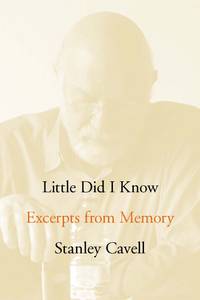 Little Did I Know is the new autobiography by Stanley Cavell, which appears to be loaded with influences from his early life and his close encounters with a host of worthies, as well as his unique nature’s embrace of his main philosophical kin . For a good scene-setting article on the book, click here. To see more from Amazon, click here.
A publisher’s description: “While Cavell’s academic work has often incorporated autobiographical elements, Little Did I Know speaks to the American experience in general. It has much to say about the particularities of growing up in an immigrant family and offers glimpses of lesser known aspects of university life in the second half of the twentieth century. At the same time, Cavell’s interests and career have brought him into contact with a range of influential and unusual people. A number of friends, colleagues, and acquaintances figure prominently or in passing over the course of this book, occasioning engaging portraits. J.L. Austin, Ernest Bloch, Roger Sessions, Thomas Kuhn, Judith Shklar, John Rawls, Bernard Williams, Jean Renoir, W. V. O. Quine, Vicki Hearne, and Jacques Derrida are no longer with us; but Cavell also pays homage to the living: Michael Fried, John Harbison, Jay Cantor, Marc Shell, John Hollander, Hilary Putnam, Toril Moi, Jill Clayburgh, Arnaud Desplechin, and Terrence Malick.
“In keeping with Cavell’s philosophical style, the drift of the narrative registers the decisiveness of the relatively unknown and the purely accidental as well. Cavell has produced a trail of some eighteen published books that range from treatments of individual writers (Wittgenstein, Austin, Emerson, Thoreau, Heidegger, Shakespeare and Beckett) to studies in aesthetics, epistemology, moral and political philosophy, cinema, opera, and religion. Here he accounts for the discovery and scope of his intellectual passions and shares them with his readers.”
The Kyoto Journal biodiversity issue
Posted: October 9, 2010 Filed under: articles, states of mind, writing 1 CommentUnbelievably beautiful
and important, the Kyoto Journal issue No. 75

Walt Whitman on modern American poetry
Posted: September 19, 2010 Filed under: articles, people, poetry, writing 1 Comment
This is a prophetic excerpt from Walt Whitman’s Collected Prose on the future of American poetry. Right on the mark, for me, when I think of my two favorite poets, Gary Snyder and Jim Harrison, who have just published a new book, The Etiquette of Freedom, a conversation between two writers filled with vitalism.
POETRY TODAY IN AMERICA—THE FUTURE
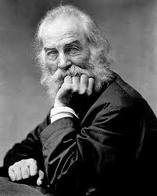
walt whitman
The poetry of the future, (a phrase open to sharp criticism, and not satisfactory to me, but significant, and I will use it)—the poetry of the future aims at the free expression of emotion, (which means far, far more than appears at first,) and to arouse and initiate, more than to define or finish. Like all modern tendencies, it has direct or indirect reference continually to the reader, to you or me, to the central identity of everything, the mighty Ego. It is more akin, likewise, to outside life and landscape, (returning mainly to the antique feeling,) real sun and gale, and woods and shores—to the elements themselves—not sitting at ease in parlor or library listening to a good tale of them, told in good rhyme. Character, a feature far above style or polish—a feature not absent at any time, but now first brought to the fore—gives predominant stamp to advancing poetry.
 the roy hamric journal
