
bedside books
Posted: June 3, 2010 Filed under: books, reviews, writing Leave a commentNovels and Novelist by Harold Bloom; his essay connecting Hemingway to Emerson, Whitman and Stevens, and to Pater’s theme that we have an interval and then our place knows us no more, sums up why Hemingway’s stories and several novels are quintessentially American. Bloom writes judicial estimations of virtually all of the Western canon in this and another complementary volume.
Must We Mean What We Say by Stanley Cavell; his first book, written in a burst of manic philosophical creativity shortly after his doctoral dissertation and before his The Claim of Reason; his essay on Lear’s avoidance of love makes a nice bookend to Empson’s essay on Lear seen as renunciation of responsibility (see below). I like one review that said this work “reintroduced the book [literature] to philosophy.”
The Renaissance by Walter Pather; beautiful, well-carved prose in the service of the fully tasted, lived life through the prism of Europe’s intellectual and artistic flowering.
From the Land of Shadows by Clive James; I’m fascinated by his prosecutorial technique of finding a moral or intellectual opening and building the opposite case. The very high end of personal journalism/essays.
How the Swans Came to the Lake by Rick Fields; a history of Buddhism in America; affirms an Asiatic bedrock in American culture, especially as literary influence.
Pieces of My Mind by Frank Kermode; finely seasoned and reasoned literary essays.
Pleasing Myself by Frank Kermode; refreshing for nuanced judgment and lack of critical malice.
Emerson’s Fall by B. L. Packer; a dissection of the arc of Emerson’s heroic intellectual packaging of an American mind.
Back to the Sources edited by Harry W. Holtz; a thorough guide into the Kaballah, Talmud, Midrash, Hasidic masters, Biblical narrative and poetry, and more.
The Books in My Life by Henry Miller; personal, unbounded prose energy focused on a search for kindred spirits in print.
The Gary Snyder Reader by Gary Snyder; a sure-footed, pure American spirit in service to literature and community.
A Moveable Feast by Ernest Hemingway; pent-up revenge, traces of fear, defensiveness and edenic loss; a sad song to consciousness in the spirit of the Romantic poets by a writer who places emotion beneath the surface of his prose.
The Structure of Complex Words by William Empson; a down-to-earth linguistic, literary criticism, bracing for the attention it demands; I’ve already downloaded free copies of Seven Types of Ambiguity and Some Versions of Pastoral; such an original sensibility.
marfa public radio
Posted: June 1, 2010 Filed under: places, states of mind 2 Comments
I have to mention Marfa Public Radio because it’s simply one of the best online sources of American music in its most real, widest range. For those who don’t know, Marfa, Texas, is a town of about 1,000 people in the Big Bend region of far west Texas, a land of desert and mountains near the Rio Grande. The town was named for Marfa, a character in a Dostoevsky novel. The town is a comfortable blend of working cowboys, artists, literados, filmmakers, actors and people who devote their lives to making a community interesting. It has great Tex-Mex food and gourmet restaurants. And, of course, a national public radio station with a skeleton staff and many, many dedicated community volunteers who are the key to its success. The locally produced interview programs and the music shows (staffed by volunteers) are pure, right down to the just folks quality of the banter. There’s a handy daily programming guide. Check it out—satisfaction guaranteed.
Asian moments
Posted: May 31, 2010 Filed under: buddhism, people, states of mind Leave a comment

henry david thoreau
1854: The first edition of Thoreau’s Walden appears. On the frontispiece page is an engraving of a leaf from a Banyan tree, the tree under which the Buddha sat when he encountered enlightenment.
1958, November: Jack Kerouac, Allen Ginsberg and Peter Orlovsky call up D.T. Suzuki at his apartment in New York City, just arrived from Japan. His secretary says: “Can you come over right now?”
“You young men sit here quietly and write haikus while I go and make some powdered green tea,” Suzuki says. Sipping the tea, Allen says, “It taste like shrimp.” “It tastes like beef,” says Suzuki. “Don’t forget it’s tea.”
Kerouac’s haiku is:
Three little sparrows on a roof,
Talking quietly, sadly.
Kerouac tells Suzuki that he’s experienced several samadhis lasting “a whole half hour or three seconds.” After the visit, as Kerouac is walking away he realizes that Suzuki was his old father in China, and shouts: “I would like to spend the rest of my life with you.” Suzuki, waving goodbye, says, “Sometime.”
time, space
Posted: May 29, 2010 Filed under: photography, time, space Leave a comment
May 29 at 12:35 p.m.: these four school girls questioned me about Chiang Mai in very good English for a school survey. (Iphone photograph)
states of mind
Posted: May 29, 2010 Filed under: states of mind Leave a commentThe mere fact that we can talk straight ahead and get the grammar in order shows that we must be doing a lot more rational planning about the process of talk than we have to notice in detail. I do not want to make any holy mystery out the subconscious of the mind. A person may think very badly in those regions. But if we were not thinking there at all we could not even engage in connected speech. ––William Empson in The Complex Structure of Words
meditation retreats in Chiang Mai
Posted: May 28, 2010 Filed under: articles, buddhism, states of mind 2 Comments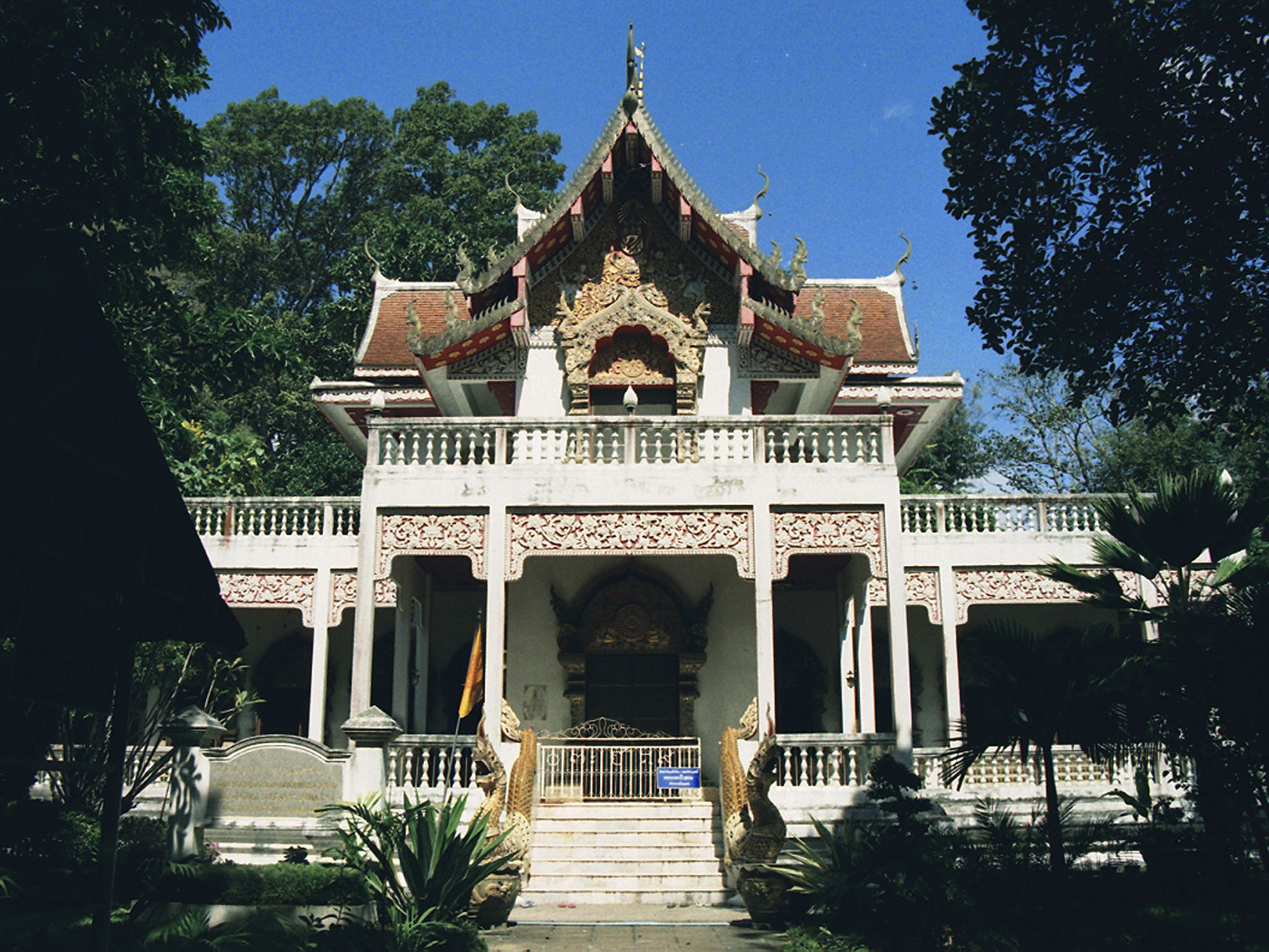
wat ram poeng in Chiang Mai
This article originally appeared in The Boston Globe.
By Roy Hamric
Foreigners first began visiting Chiang Mai in the late 19th century when the British opened a mountain station to extract teak and other timber. During the Vietnam War, Americans found it to be the most beautiful and sleepy of Thailand’s mountain cities. Today, it’s ranked among the top of Asia’s most livable cities list and an increasing number of Chiang Mai’s Buddhist wats, or temples, are drawing more and more Westerners seeking meditation retreats.
Many falangs (foreigners) are forsaking the more traditional spas and venues that offer massage, Thai cooking and yoga classes for Buddhist studies classes in English and Thai-style meditation retreats from one to 21-days or longer.
A popular temple among Westerners is Wat Umong, one of Chiang Mai’s 300 wats, located in the foothills of Mount Doi Suthep, which rises 5,478 feet above the 1,000-year-old city. “Wat” is a Thai word from the Pali-Sanskrit word meaning “dwelling for pupils and ascetics.” Wat Umong’s history goes back to the 14th century.
On the densely wooded temple grounds, moss-covered limestone sculptures of the Buddha are scattered over the grounds, some nearly completely covered by climbing vines. Small kutis–– self-sufficient huts that house one monk each––are bathed in yellow sunbeams filtering through the leafy canopy. The deep murmuring sound of monks’ chanting sutras filled the evening air. Blue signs with white lettering offered helpful aphorisms: “Today Is Better Than Two Tomorrows.” “I have not failed––I found ways that don’t work.”
One Sunday afternoon, I joined sixteen foreigners who sat quietly in a red-roofed Chinese Pavilion area near a two-acre pond. Green algae circled the pond’s edge extending out almost to its center, leaving a circle of water where large turtles poked their snouts into the air.
Nirodho Bikkhu, an Australian monk who lives in a nearby kuti, walked into the pavilion and sat down. He adjusted his brown robe and smiled.
“I would rather answer your questions and just talk. Does anyone have a question?” he asked. Moments of silence. Finally, a young girl with bronze skin from days on the road asked: “Is reality real?”
The monk smiled. Speaking slowly, he explained what the Buddha said about objective and subjective views. He talked about meditation as a way to experience the mind, the senses and the body. He talked about a concept in Vipassana Buddhism of small, discreet divisions of mental activity that can take years of meditation to fully distinguish. “They pass by unnoticed by most people,” he said.
More silence. Then an American lady asked: “What about bardos,” the different stages of the death-journey found in Tibetan Buddhism.
“I speak only about what the Buddha said,” Norodho Bikkhu answered. “bardos are concepts found only in the Tibetan Book of the Dead.”
A young American woman, Laura Robbins, listened quietly to the monk, and stayed the full two hours. After everyone left, she had a private conversation with Nirodho Bikkhu.
Later, walking beside the pond, she said she was starting a 21-day meditation retreat in two days at a nearby monastery.
“A little serendipity got me to this point,” she said. While on vacation, she had a conversation with the owner of a Thai restaurant who gave her the name of an American woman who teaches meditation at a wat outside Chiang Mai.
“I choose that temple,” she said, “because of what the woman teacher said, and I liked it that there were a lot of nuns there.”
In the past, it took a lot of effort for Westerners to find a wat where they could receive introductory lectures on Buddhism or go on short or long meditation retreats. Like many temples, Wat Umong is rapidly expanding its offerings to Westerners.
“We will be a friend to anyone who wants to know more about Buddhism,” said Songserm Bikkhu, the teaching monk who directs Wat Umong’s newly opened International Buddhist Education and Meditation Practice Center, which has 17 rooms for foreigners, who can choose from one to four-day retreats. The cost is a personal donation. Many Westerners give $4 to $6 a day.
“If people would like to take a retreat or to ordain as a monk and practice here, they can,” Songserm Bikkhu said. “If they would just like to come, learn and go and practice on their own, they can.”
Most Chiang Mai wats teach Vipasanna meditation, a system based on meditation and attention to the four foundations of mindfulness. Exercises are based on mindfulness of body and movement, mindfulness of feelings, mindfulness of mind and mindfulness of objects. In Pali, Vipasanna means “to see clearly.”
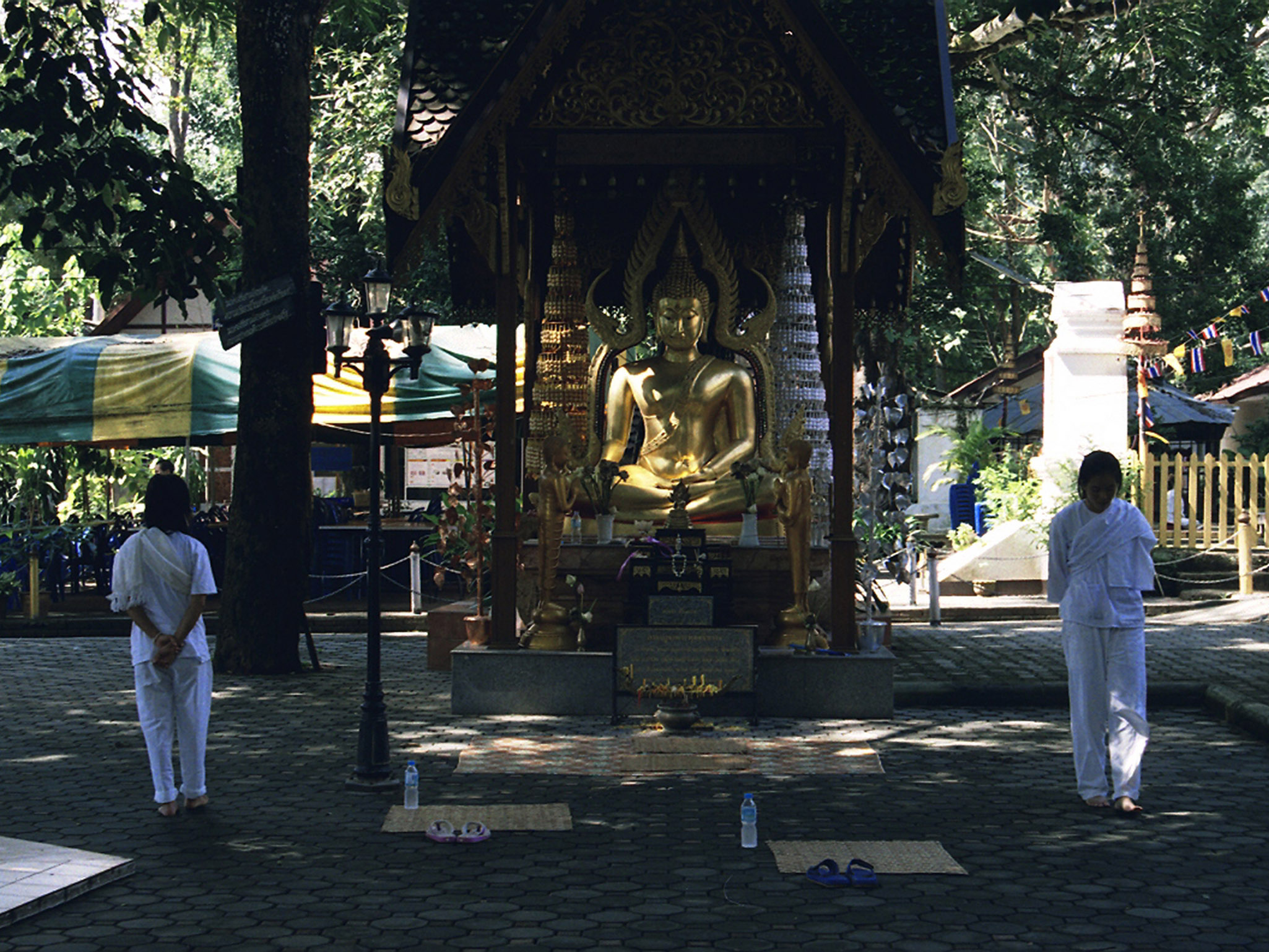
walking meditation at wat ram poeng
The retreat schedule is the same at most wats: rise at 4 a.m. followed by morning chanting and mediation, breakfast, dharma study, followed by lunch, afternoon walking and sitting meditation, a one-on-one talk with the supervising monk, rest time and evening chanting, concluded by more sitting and walking meditation. Students are encouraged to do sitting and walking meditation up to 12 hours a day, but few can or even try.
A short distance down the road from Wat Umong is Wat Ram Poeng, built in 1451, with touches of Burmese Buddhist architecture. A popular meditation center with Asians and foreigners alike, the wat is home to the Northern Insight Vipasanna Mediation Center.
Eric Stirnweis of Fort Collins, Colo., was in his second week of retreat, along with other Americans and people from Sweden, Canada and France. While waiting for his daily interview with the abbot, he said he had already increased his walking and sitting meditation to about 12 hours a day.
“Here you eat, sleep and meditate—that’s it,” Stirnweis said. “They push you.”
At the end of the retreat period, he said, each student goes through “termination” – a three-day period of very little sleep and constant sitting and walking meditation.
The daily interviews are helpful, he said, but the practice is tough with lots of ups and downs.
“It’s different – no telephone, no e-mail, six hours of sleep a day at most, but it’s a healthy focus,” he said. “The abbot is definitely perceptive. I didn’t even say anything one morning, and he said, ‘Ah, there’s much negativity here.’ He seems to know you without talking to you.”
Wat Ram Poeng is in the process of expanding facilities to house up to 30 foreigners.
Frequently, foreigners who want even longer retreats are sent to Wat Dthat Sri, a sister temple. It also is in the process of creating a foreigner-housing area complete with small cottages outside the wat grounds.
An American, Kathryn Chindaporn, who co-directs the meditation center for foreigners with her Thai husband, remembered her phone conversation with Laura Robbins.
“This is a good place for basic or long-term practice, tailored to individuals,” said Chindaporn, who is from Evervett, Wash. “We use the mental labeling technique. The technique is easy. You think, ‘I’m taking a step with my right foot, or I’m feeling content or sad.’ It’s easy to use, but the practice makes it very deep.”
Chindaporn said she was on her way to India in 1986, but found herself staying on in Chiang Mai to practice full-time at Wat Ram Poeng, where she took classes in Buddhist studies, learned Thai and has since translated early Thai meditation texts into English.
Meanwhile, Laura Robbins had started her retreat at the wat and had begun daily interviews with Thanat Chindaporn.
“It’s going fine,” she said, while in her second day of the retreat. Ten days later, she took a two-day break, but planned to return the next day for another 10-day stay.
“It was very difficult,” she said. “I wanted to leave at least three times. I was surprised how hard it was––the simplicity of it was frustrating.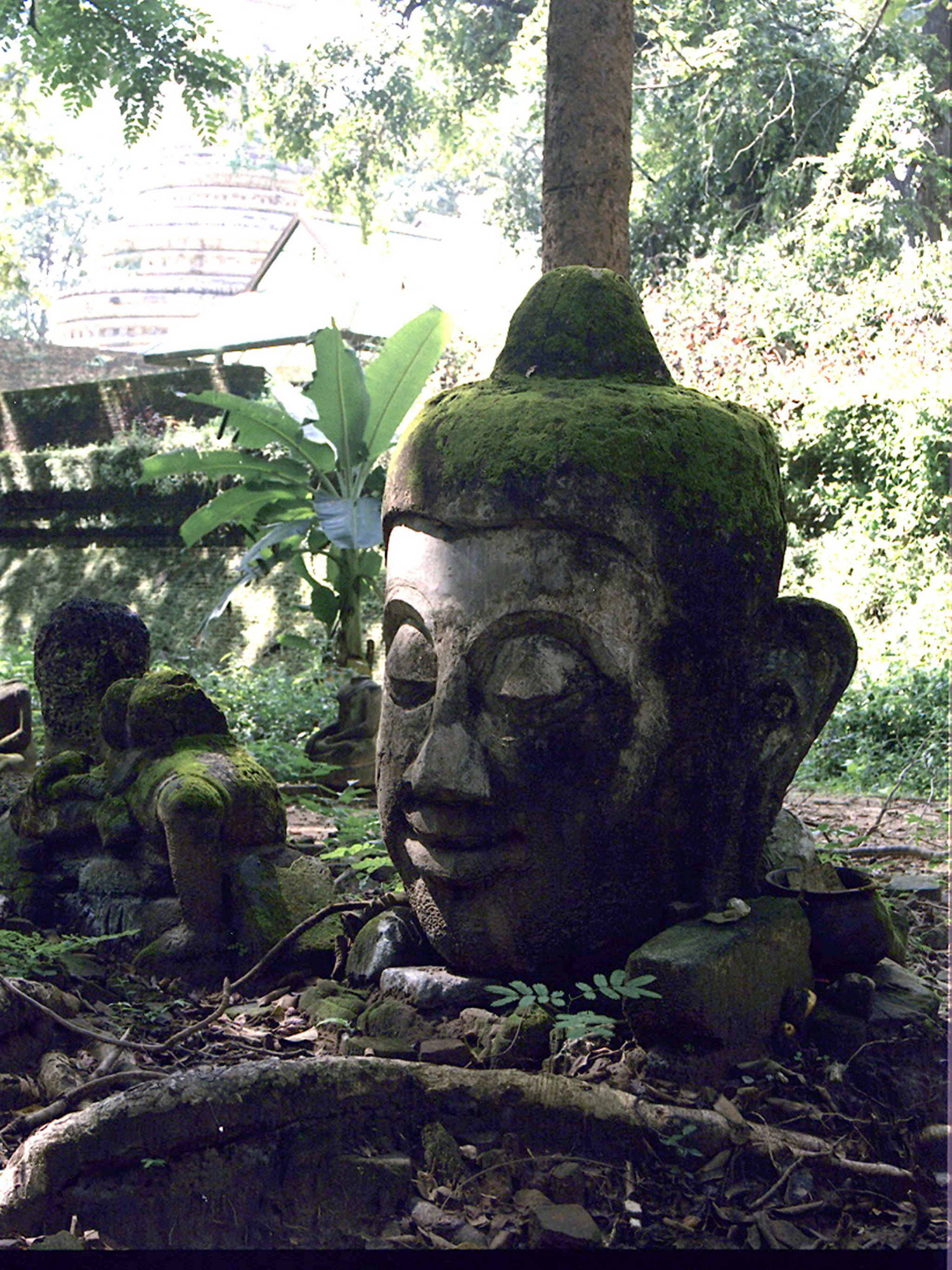
“My mind was running everywhere,” she said. “At the end we tried to practice for 72 hours straight. I had some very set ideas about who I am. I found that by pushing past that I’ve come out being much more gentle with myself.”
You can’t ask for much more than that in life.
______________
Contact Information
Wat Umong, 135 Moo 10, T. Suthep, Chiang Mai, 50200, Thailand; Open lectures in English on Mondays, Wednesdays and Fridays from 4 to 6 p.m. and on Saturdays from 2 to 5 p.m. Telephone: 011.66. 53. 810. 965; email: phrasongserm@watumong.org or www.watumong.org.
Wat Ram Poeng, Northern Insight Meditation Center; Tambol Suthep, Amphur Muang, Chiang Mai, 50200, Thailand. Telephone: 011.66.53. 278.620; email: watrampoeng@hotmail.com or www. watrampoenghi5.com
Wat Dhat Sri, Northern Insight Meditation Center, Tambon San Luang, Amphur Chomtong, Chiang Mai, 50160, Thailand. Telephone: 011.66.53.826.180. Email: kathrynchindaporn@yahoo.com
Zen koans
Posted: May 26, 2010 Filed under: buddhism, people, poetry, reviews Leave a comment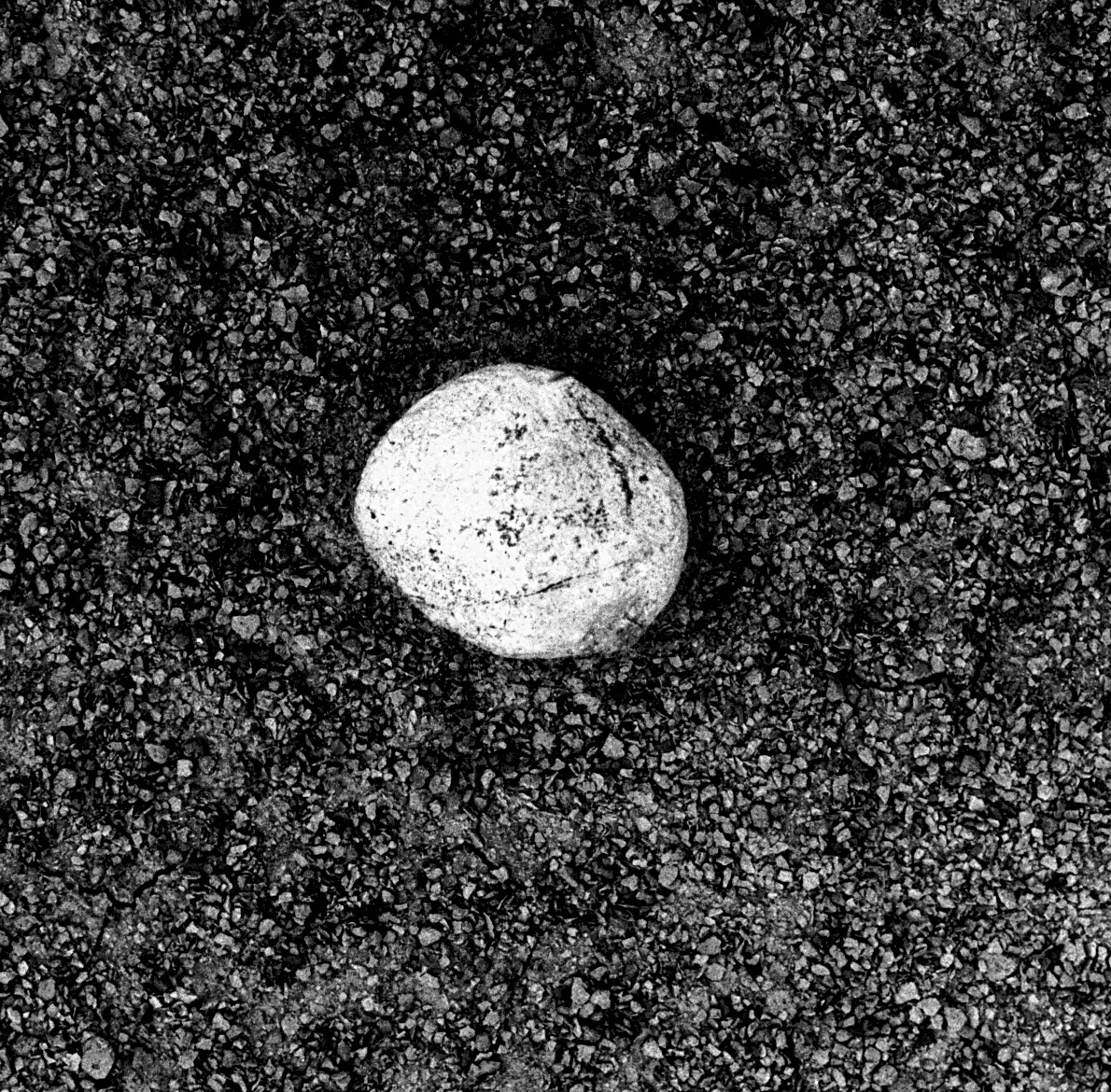
a rock on the ground in the Big Bend near the Rio Grande (photograph: roy hamric)
An earlier version of this review appeared in The Kyoto Journal.
The Blue Cliff Record: Zen Echoes by David Rothenberg; Codhill Press, 2001
the Zen koan
By Roy Hamric
But the poetry that thinks is in truth the topology of being.—Martin Heidegger
David Rothenberg’s book of poetry is based on his response to “The Blue Cliff Record,” the venerable koan collection, and has been launched with kudos from Sam Hamill, Frederick Franck and Mark Rudman, all esteemed poets.
Rothenberg is a poet and muscian, the author of “Sudden Music” and “Hand’s End,” and he is the founding editor of Terra Nova, a magazine devoted to deep ecology. A contributing editor at Parabola magazine, he also teaches philosophy.
Hamill, the poet and translator, notes in a foreward the long tradition of writers reinterpreting the work of other writers, giving renewed life to key ideas and images. Rothenberg labels his poems “echoes,” and he freely plays with the Blue Cliff Records’ koans and the “pointing” verses, spinning off his own interpretation and images based on his perspective and poetic sense. As students of Zen learn, koan “cases” are presented in a straight forward narrative by the writer, and they’re usually followed by commentary and short verses intended to highlight aspects of the case, a sort of coda that offers the student a breakthrough perception or idea.
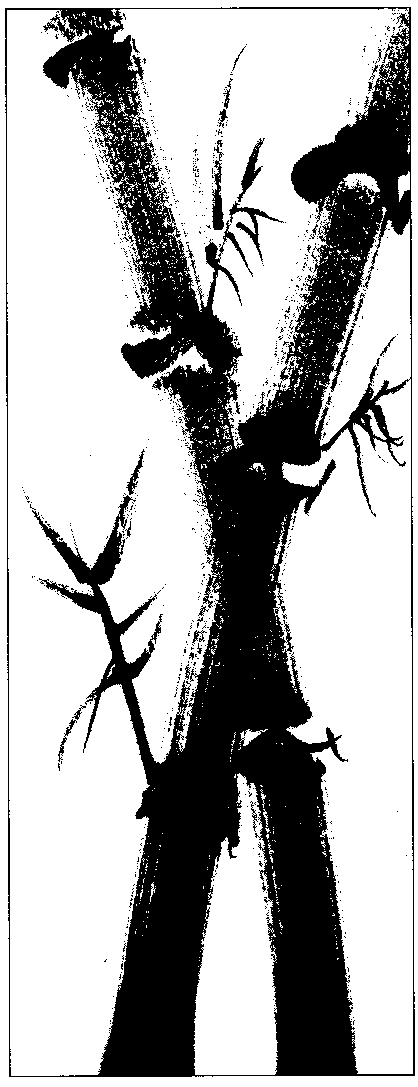
illustration by Jim Crump
Here is Rothenberg’s poem “The Cat Could Have Lived,” based on Case 63:
I took off my sandals, placed them on my head.
If you had been there, you could have saved the cat.
Of like hearts, like minds.
You two on the same road would know that.
You may murder the cat, it’s none of my business.
The sandals don’t purr, and torn they won’t scream.
If someone dies for them these puzzles matter.
You must try to care, if you wish to live.
Cumulatively, this type of Zen verse works something like a waterfall in Nature. We see the surface, and we are sometimes anesthetized by it, but we’re eventually led to wonder what’s behind this flow of words that sparkle inside our mind and endlessly circle around. These poems challenge, cajole, dare and nudge us deeper inside our mind and are worthy esthetic companions to the seemingly impenetrable koans.
Rothenberg knows his Zen esthetics. Slashing directness, grandiose overstatement and sharp minimalism are esthetic staples, and they are frequently used back to back in a line of Zen poetry. He understands the affect and mines this tension––”The great waves rise up a thousand feet”––but ”only a single shout is needed”––leading the reader one way only to be snapped back to simple reality.
Poems based on these fine points of Buddhist esthetics offer glimpses of mind working: mind rooted in a self viewing the world. Koan collections are primers on the affects of language on the mind, on the affects of language as the dancer-magician between our sense of external and internal.
Certainly, the best Zen poetry rests on compression. For that reason, koans and poetry have always had a kinship in the hands of people like Rothenberg, who have something to say beyond mere words.
An excerpt from “It Takes A Word,” based on Case 11:
One right word is all it takes
it can smash the chains and break down he gates
Who knows such words?
––Look around you and see,
What’s the use of today?
shock the country, stir up the crowd
swallow all in one gulp and dwell in the clouds
Look back at that monk who could walk across water
Don’t let him get away with it:
“You smug fellow, if I had known you could conjure up wonders,
I would have broken your legs!”
Then he who speaks disappears
(he has said the word).
Zen teaching has always divided its methods between the body and the mind. Break down the body in unrelenting, regular sitting––allow the body to come to silence like a horse to water. Break down the mind in linguistic disjunction––allow the mind to severe the bind of language to meaning; make language revelatory: allow it to reveal the truth of being. Such approaches, throughout Zen history, alternate between using non-sensical language constructions and sublime poetic beauty. Take your pick, either one might do the job.
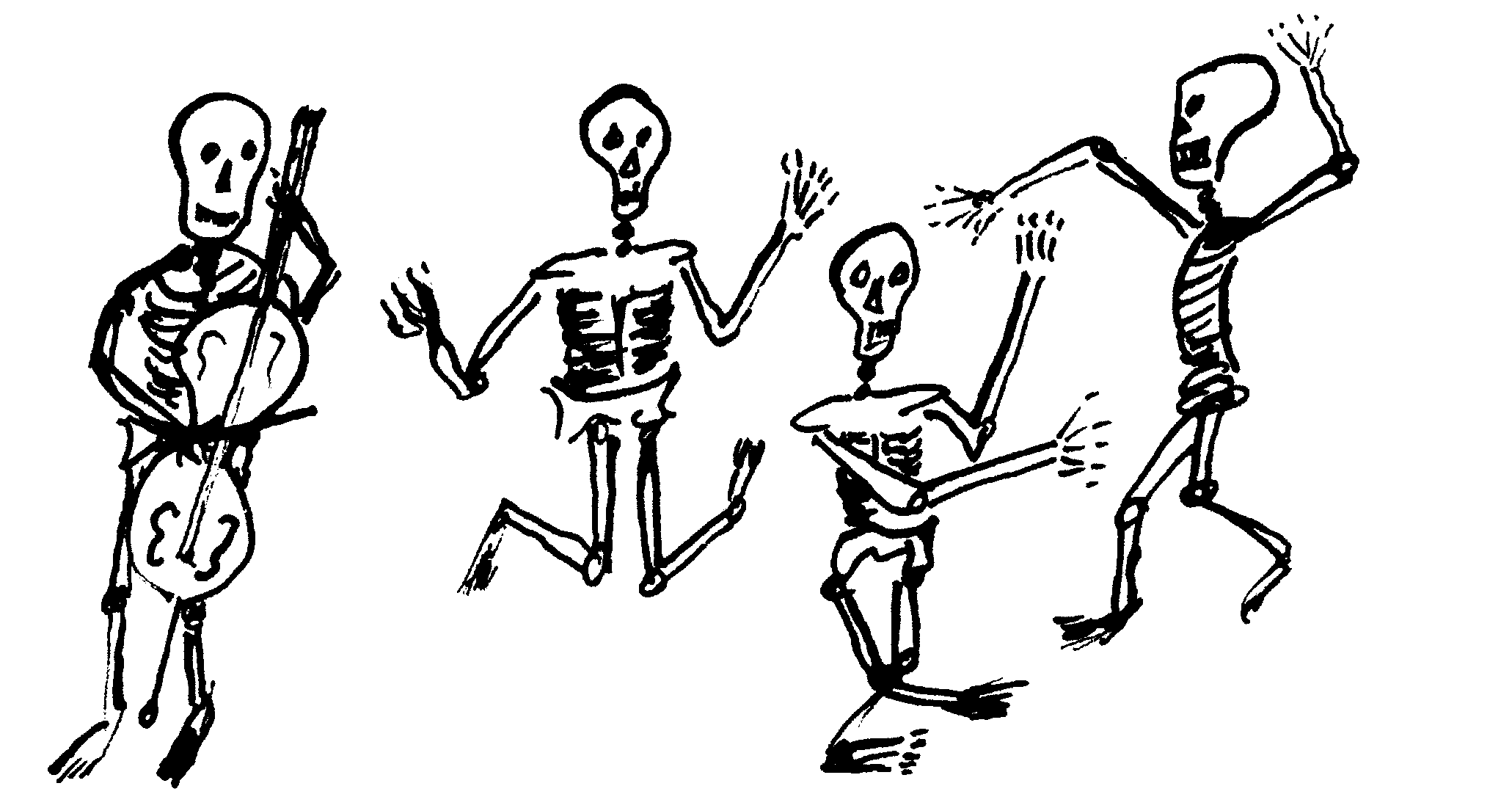
illustration by Jim Crump
Walter Benjamin, the astute critic of culture and mind, saw language itself as the primary subject of interest––and not just its role in creating a subject and object. He preferred to see language as a medium (in his case spiritual) where the absolute and the relative might be/are bridged. Rothenberg’s sense of poetry fits this view.
These poems have a sure, unforced lyrical touch. But they are not about lyricism. They are about our unending mentality, about the mind’s inate naming and circling from the expressible to the inexpressible. They take the reader on an exhilarating ride through knotty koans and Zen poetry.
Their goal is small, to give pleasure, and large, no less than to reach the other side of the river of words run by so many poets over the centuries.
A war story
Posted: May 25, 2010 Filed under: articles, places, reviews 4 CommentsThis review originally appeared in The Journalism Quarterly.
The Cat From Hue: A Vietnam War Story by John Laurence. New York: PublicAffairs, 2002. 851 pages; $30 hbk.
A little War Goes a Long Way
By Roy Hamric

A later cover
John Laurence was among the best, the brightest, and the most unique of all the American war correspondents who reported from Vietnam. He arrived in Vietnam in 1965, in his early ‘20s, and he went on to work as a correspondent for CBS and ABC News. Laurence looked frail, more like a graduate student than a war correspondent, but few journalists took more risks or covered Vietnam longer–Peter Arnett and Horst Fass come to mind. Very few covered as many of the well-known battles, and–just as important–the deadly, daily skirmishes.
Covering so much combat, Vietnam-style (from the jungles to the Continental Hotel), cost Laurence dearly in emotional turmoil. His personal view of the war paralleled many of the troops’ attitudes. He began with absolutely no doubt about America’s role and ability to win. Later, both he and large numbers of troops felt differently–shifting from winning to just surviving and coming home. Few works of nonfiction (or fiction) have so much human drama, pathos, bravery and professional and human lessons embedded into the story. We also get an invaluable lesson manual on how war correspondents should, and should not, cover war.
GIs were regularly astounded that TV and print correspondents would voluntarily come in to battlefields while troops were taking fire. The reports Laurence and his team (particularly cameraman Keith Kay and soundman Jim Clevenger) did for CBS television were staples of Walter Cronkite’s evening news broadcasts, riveting a national audience that was experiencing its own anguish over the war’s meaning and costs.
Strewn with laurels comparing this memoir to the war correspondence of Stephen Crane and Ernest Hemingway, the book is more artistic and powerful than one would expect. It is likely to become a classic in Vietnam War literature. A seasoned storyteller, Laurence’s story was backed up by hundreds of sound tapes and film reports which he has used to reconstruct vivid prose scenes that carry a descriptive punch that pays homage to what the camera and recorder can capture, and memory and emotions can recreate.
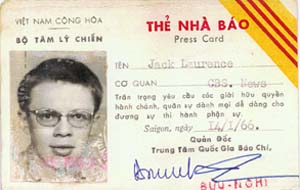 Few memoirs rise to such clarity in conveying the exhilaration, fears and rewards of war reportage, or the uplifting and heartbreaking memories many correspondents carried home, only to deal with privately away from the war. Laurence had his peers’ respect, especially the circle known as the “crazies” as opposed to the “straights.” The decompression base for the “crazies” was British photographer Tim Page’s Saigon apartment, known as “Frankie’s Place.”
The later years of the Vietnam War were equal parts marijuana, rock and roll, irony and cynicism for many in the military and press, along with professionalism, loyalty, devotion and bravery. Laurence’s professional and personal life navigated all those shores.
He includes warm sketches of his fellow colleagues: Page, freelancer Michael Herr, CBS correspondent Hughes Rudd, writer Frances Fitzgerald, a contingent of British journalists, and, especially, Look correspondent Sam Castan (who died in combat), and freelance photographers Dana Stone and Sean Flynn (who were killed in Cambodia). Someone in that crowd, at some point, said, “This is our Paris.” They were right, only it was more dangerous.
Some gleanings from Laurence:
–The full truth of the Vietnam War (or any war) is never reported. Just one area: the carnage regularly inflicted on innocent civilians. In spelling out some reasons, Laurence takes you several notches up on the complexity scale of war coverage.
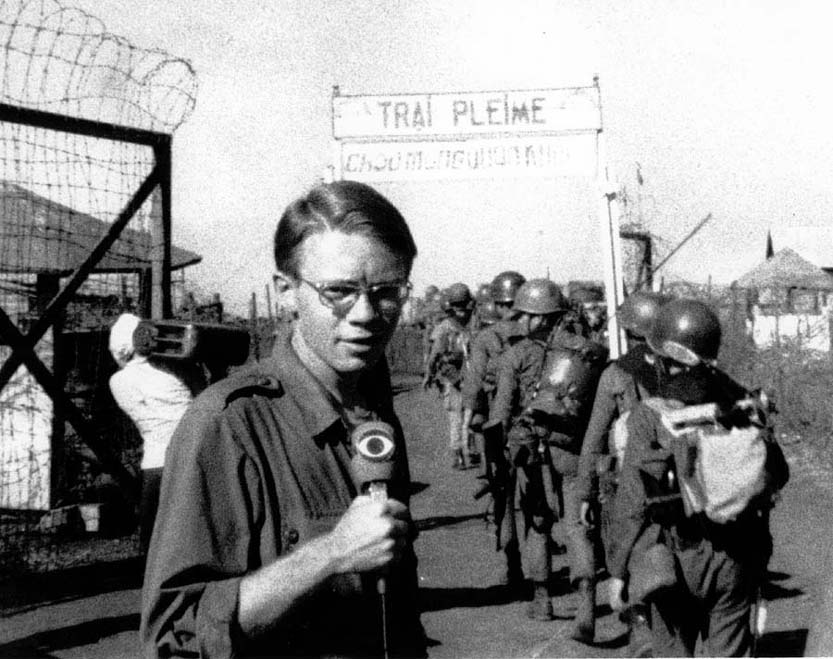
He was young, but older than most of the troops
–“The language of our daily journalism was insufficient,” Laurence says. “For all the facts we poured out of Vietnam, we might better have served the truth by broadcasting some of the letters the GIs wrote to their families.”
–“Of all the media,” he says, “perhaps still photography came closest to showing the truth.The best photographs captured a precise moment, holding it there for inspection, offering each image as a fragmentary symbol of someone’s reality. By the nature of their ambiguity, those pictures gave viewers the privilege of using their imaginations to interpret the reality.”
–Michael Herr’s masterwork “Dispatches” may have benefitted from sound recordings Laurence sent him that were made during a night battle involving a rowdy Army company at “Firebase Jay,” which–symbolically–could stand for “joint,” as in marijuana. To Laurence’s surprise, large numbers of GIs relaxed at night with dope, booze and blaring rock and roll–it was a template for “Apocalypse Now.”
–In times of danger, war correspondents should follow the sergeants–they know what they’re doing. Officers may or may not.
Laurence digs deepest into his three tours in 1965-66, 1967-68 and 1970, but he takes his story up to his 1982 return to Vietnam and the country’s march to renewed prosperity. Students, war colleges, journalists and news organizations’ management can learn immense lessons from Laurence’s story.
If the newest crop of war correspondents read this book, they–and the public–will be well served.
time, space
Posted: May 24, 2010 Filed under: photography, time, space Leave a comment May 24 at 9:04 a.m., the neighborhood junkman sets off for the day (Iphone photograph)

Vietnamese writers
Posted: May 23, 2010 Filed under: places, poetry, reviews Leave a commentThis review originally appeared in The Kyoto Journal.
Manao Journal
TWO RIVERS:
New Vietnamese Writing
from America and Viet Nam
Summer 2002 (vol. 14, no. 1)
186 pages
Two Rivers: Vietnamese writers
By Roy Hamric
Even as more recent wars and conflicts push memories of the Vietnam War farther into the past, the effects, though lessening with time, go on within Vietnam and in the Vietnamese diaspora. “Two Rivers” is an apt title for an issue of Manao, the literary journal published by the University of Hawaii, whose mission is to publish literature from Asia and the Pacific region.
This issue, featuring the work of 23 writers – in poetry, fiction and critical essays – captures the ironies, passions and lifestyles among Vietnamese in the homeland and the United States. Contemporary Vietnamese literature is as varied and complex as the country’s winding history – ranging from classical romantic poems to gritty nonfiction tales of Vietnamese gangs in the industrial suburbs of California.
 The title “Two Rivers” carries multiple symbols: for the past and the present, for the Red River in the north and the Mekong River in the south, and for life today, as lived in Vietnam and in the United States. At its core, literature always carries a political-cultural subtext, and these stories and poems are no exception. Younger Vietnamese today in both countries are less attached to the nostalgia and loss experienced by their parents or grandparents but even so, their lives have been profoundly affected by the war.
Older Vietnamese-Americans were uprooted, fleeing the country in 1973, forcing many intellectuals and educated professionals into new lives, where they worked in menial jobs to survive in a new country. In the late 70s and early 80s, a second wave of “boat people” endured horrific experiences of brutality, rape, starvation, abandonment and long processing in refugee camps. In the late 80s, another wave immigrated, including political prisoners and offspring of American soldiers. Today, there are a little more than one million U.S. Vietnamese, compared to 80 million in Viet Nam, and another one million scattered around the world. The past’s shadow casts a stark dividing line across the work of many of these Vietnamese writers.
The poems of Nguyen Duy, one of Vietnam’s most respected writers, mourn the fading of traditional Vietnamese village culture, the source of so much wisdom and folklore.
 “Viet Nam is, in a way, the name of a poem, not a war,” he writes in an essay, adding that Vietnam, in its rush to forge a more secure future, has itself contributed to cultural erosion while at the same time improving the economy. Traditional family life breaks down , as well as in the new-found homelands in the West, leaving the “deepest imprint on each one of us.”
Lyrical power flows through the work of many of the writers in this collection. The stylistic contrasts are greatest, perhaps, in the poetry of the homeland and the United States. Much of the homeland poetry is imbued with the echoes, imagery, flavor and wisdom-tradition that goes back to the “One Sourced Triple Teaching,” a treatise which united Viet Nam’s Buddhist, Confucian, Taoist, Zen and home-grown wisdom traditions during the Ly Tran dynasties (11th to 15th centuries). Anti-romanticism and a more post-modern tone flavors the US-based poets.
The last stanza from the “Cricket Song” by poet Lam Thi My Da of Hue, who served in a youth brigade engineering unit, reflects elements of the traditional style:
Please just let me be a cricket
Lying down in the green cradle where I began
While the dying day releases a single dewdrop
That trickles into my soul as a kiss, a tear.
 Generally, the poetry and literature of the diaspora is more sardonic and clinically objective. The first stanza of the poem “In the Silicon Valley” by Phan Nhien Hao, who was educated in Saigon and Los Angeles, reflects a more detached, ironic view:
There are climates that can wear out shoes like acid
The view out the window is always cut by rain and sunlight,
And fuzzy calculations on a computer. I live in a valley where people will saw off their own leg to sell to buy a house.
The American poet and translator, Nguyen Ba Chung, in a critical essay surveying the past several decades, notes that overseas Vietnamese have recently acknowledged the blooming of a probing, more critical literature by Viet Nam writers, such as Nguyen Huy Thiep, Bao Ninh, Pham Thi Hoai, Nguyen Duy and Bui Ngoc Tan, dispelling the view held by some that the overseas community was the main hope for an esthetic and critical advance in Vietnamese literature. The younger U.S. generation of writers, such as Barbara Tran, Christian Longworthy, Le Thi Diem Thuy, Mong-Lan, Le Bi, Thuong Quan and Khe Iem, are more focused on writing about their dual-identity lives than the political issues of the past. Both approaches are serving to enrich Vietnamese literature.
Chung points out that the work of both groups, the two rivers, comes together in the overseas Vietnamese journals, such as Hop Luu (Confluence) Van Hoc (Literary Study), Van (Literature) and Tho (Poetry), which publish the work of both homeland and overseas writers plus translations into Vietnamese of essays on Western critical theory, an important source of new ideas for Viet Nam writers.
Manoa editor Frank Stewart and his guest editors, Kevin Bowen and Nguyen Ba Chung, have assembled a rich sample of creative and critical literature that captures the crosscurrents of Vietnamese and Vietnamese-American writers.
The journal itself plays a significant role in putting back together at least some of the pieces of a literary culture that was shattered by decades of war.
Information on Manoa can be found at www.hawaii.edu/mjournal
 the roy hamric journal