
Backwoods Church In East Texas
Posted: September 20, 2015 Filed under: photography, sight seeing | Tags: backwoods churches, photography, southeast texas 5 Comments
Part of a documentary photography project I worked on in the 70s and 80s.
Orchids, Ingenuity & Recycling
Posted: September 4, 2015 Filed under: photography, sight seeing, states of mind, time | Tags: ecology, orchids Leave a comment
IPhone Photograph
Abandoned Backwoods Church in East Texas
Posted: August 21, 2015 Filed under: photography, places, sight seeing, time | Tags: backwoods churches, photography, southeast texas 6 Comments Part of a documentary project on backwoods churches in The Big Thicket country of southeast Texas that I worked on during the ’70s and ’80s.
Forever Fashion
Posted: August 19, 2015 Filed under: people, photography | Tags: art, fashion, hill tribes, mekong river Leave a comment A profusion of textile art on my friend who lives in the mountains on the Mekong River near Laos.
First You Must Last
Posted: August 17, 2015 Filed under: books, sight seeing, writers | Tags: ernest hemingway, writers Leave a comment Ernest Hemingway’s boyhood home in Oak Park, Ill. “Il faut, d’abord, durer.” – (“First of all, one must endure.”) – A saying of Hemingway, from a letter.
Oh, Yeah…Wittgenstein Strikes!
Posted: July 27, 2015 Filed under: Buddhism Zen, states of mind, time, writing | Tags: Wittgenstein, zen humor Leave a comment
The Gang: The tiger is tamed or unleashed?
2.0131 A spatial object must be situated in infinite space. (A spatial point is an argument-point.) – From the Tractatus Logico-Philosophicus.
The Everly Brothers, Chet Atkins, Mark Knopfler, Mark McDonald
Posted: July 6, 2015 Filed under: music, people | Tags: everly brothers, mark knopfler, musicology, why worry 1 Comment My music friend Peter O’Brien of Britain, who edited Omaha Rainbow for many years, posted this video of Why Worry, written by Mark Knopfler and sung by the Everly Brothers, and it’s too good not to pass along. Click here.
Night Out In Mae Salong
Posted: July 4, 2015 Filed under: photography, places, time | Tags: karaoke clubs, mae salong, the color red Leave a comment A karaoke club for teenagers in Mae Salong. iPhone photo.
Wittgenstein Trying to Touch It
Posted: June 15, 2015 Filed under: Uncategorized Leave a comment
Painting on wood by Jack, the departed owner of the former Heaven’s Beach Bar.
3.3421 A particular method of symbolizing may be unimportant, but it
is always important that this is a possible method of symbolizing.
And this happens as a rule in philosophy: The single thing
proves over and over again to be unimportant, but the possibility
of every single thing reveals something about the nature of
the world. – From the Tractatus
Bedside Books: The Lawless Roads
Posted: May 28, 2015 Filed under: books, people, writing | Tags: chiapas and tabasco states, graham greene, green's most self-revealing book, greene's travels in Mexico Leave a comment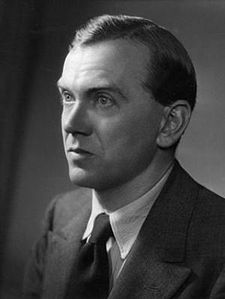 “It is as if everywhere one loses something one had hoped to keep.” “It is awful how things go on when you are not there.” Two sentences, several hundred words apart, on the last two pages of The Lawless Roads by Graham Greene. I read it for the first time 25 years ago. The second reading was a shock, an expansion of my first impression. What I’d read first as an adventurous travel book became a stylistic leap into a more serious immersion in class cruelty and the despair-of-the-world hopelessness that later defined his best novels (Roads was published in 1938). Greene travels through Tabasco and Chiapas, two tropical, backwater Mexican states reeling from a purge of Catholic churches and priests, and he draws on a rich cast of characters that he crosses paths with, many who foreshadow the fictional characters in his best moralistic novels . In those portraits he reveals himself in a way he mostly covers over in his later, more declarative autobiographical books such as A Sort of Life and Reflections. Greene was near the peak of his religious fervour following his conversion to the Catholic Church, and he seems to discover his future moral crossroads and his aesthetic voice in the book. You get Greene as a man in The Lawless Roads – his coldness, distance and cynicism (stoical realism?) encased in a deep religious longing to merge with something that offers salvation – an explanation, a reason – for the moral decay and horrors of humanity found throughout the world. It moves with great force and only in the final few pages did I feel I was, finally, coming up for air at the journey’s end. Greene was a needy young man (see Sherry’s biography), a weak reed who was barely connected to his sense of selfhood. He flirted with the moral and social structure within the Catholic Church, and it captured him in spite of doubts he had from his first encounters. He bought into it with the hope that it would offer him some solid support, but after experiencing the world more broadly and directly (Mexico, Africa) his belief dissolved from a structural/faith connection to a mystical, personal connection. Unlike Greene, I couldn’t accept the story of Christianity as I read and heard it when young, but now, with much deeper reading, I understand the story was crudely simplified to appeal to the broadest numbers of people. The “elect,” as defined by the gnostics, never accepted the New Testament version of Christianity as literal and reinterpreted its dominate themes and symbols. Before and after the New Testament writers, gnostics had their own version of transformative spirituality which followed many Eastern spiritual ideas and techniques. Gnosticism could not survive the rise of the Catholic Church, but many of its texts can be found here. The attraction of Roads is the sustained, long, detailed account of how Greene went through those days that made up the chronology of the trip. It’s a rare, full account of the physicality of travel that couples with a ghastly account of repression and morality turned upside down, a very complicated story when looked at in detail, but one that mirrors the same issues that attracted people to religion and spirituality 2,000 years ago: where is some salvation in this hell on Earth of repression and lack of compassion for the poorest of the poor. Greene found his perfect religon-based story in real life before his eyes, one that might have ensured his own loss of faith eventually. He saw, in real terms, that it is most often the ones with the least who hold most fiercely to faith as a last hope. The whisky priest in his subsequent novel, The Power and The Glory, is about a person much like Greene himself, someone in extremity of belief and faith who wants to be at the center of the religious quest even if he himself doesn’t understand the why or how of it. He was moved by the plight of people who have nothing and yet go on without the benefit of a saving grace. He saw the pattern in many people’s lives everywhere, and he made it one of his great themes. Roads is special because so much converges at this crucial point in Greene’s life.
 the roy hamric journal