
States of mind: Joseph Conrad
Posted: April 11, 2011 Filed under: Uncategorized Leave a comment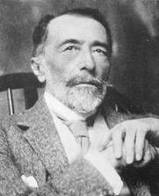
“When once the truth is grasped that one’s own personality is only a ridiculous and aimless masquerade of something hopelessly unknown the attainment of serenity is not very far off.”––Joseph Conrad, letter to Edward Garrett
100 Best Novels: Really ?
Posted: January 14, 2011 Filed under: Uncategorized Leave a commentHere’s the Modern Library Association list of 100 best novels. You have to chuckle at how this list would change if given to you, or to him or to her, or to me.
100. Booth Tarkington, The Magnificent Ambersons
99. J.P. Donleavy, The Ginger Man
98. James M. Cain, The Postman Always Rings Twice
97. Paul Bowles, The Sheltering Sky
96. William Styron, Sophie’s Choice
95. Iris Murdoch, Under the Net
94. Jean Rhys, Wide Sargasso Sea
93. John Fowles, The Magus
92. William Kennedy, Ironweed
91. Erskine Caldwell, Tobacco Road
90. Salman Rushdie, Midnight’s Children
89. Henry Green, Loving
88. Jack London, The Call of the Wild
87. Arnold Bennett, The Old Wives’ Tale
86. E.L. Doctorow, Ragtime
85. Joseph Conrad, Lord Jim
84. Elizabeth Bowen, The Death of the Heart
83. V.S. Naipaul, A Bend in the River
82. Wallace Stegner, Angle of Repose
81. Saul Bellow, The Adventures of Augie March
80. Evelyn Waugh, Brideshead Revisited
79. E.M. Forster, A Room with a View
78. Rudyard Kipling, Kim
77. James Joyce, Finnegans Wake
76. Muriel Spark, The Prime of Miss Jean Brodie
75. Evelyn Waugh, Scoop
74. Ernest Hemingway, A Farewell to Arms
73. Nathaniel West, The Day of the Locust
72. V.S. Naipaul, A House for Mr. Biswas
71. Richard Hughes, A High Wind in Jamaica
70. Lawrence Durrell, The Alexandra Quartet (Four books: Justine, Balthazar, Mountolive, Clea)
69. Edith Wharton, The House of Mirth
68. Sinclair Lewis, Main Street
67. Joseph Conrad, Heart of Darkness
66. W. Somerset Maugham, Of Human Bondage
65. Anthony Burgess, A Clockwork Orange
64. J.D. Salinger, A Catcher in the Rye
63. John Cheever, The Wapshot Chronicle
62. James Jones, From Here to Eternity
61. Wilia Cather, Death Comes for the Archbishop
60. Walker Percy, The Moviegoer
59. Max Beerbohm, Zulieka Dobson
58. Edith Wharton, The Age of Innocence
57. Ford Maddox Ford, Parade’s End (Four books: Some Do Not…, No More Parades, A Man Could Stand Up…, and Last Post)
56. Dashiell Hammett, The Maltese Falcon
55. Jack Kerouac, On the Road
54. William Faulkner, Light in August
53. Vladimir Nabokov, Pale Fire
52. Phillip Roth, Portnoy’s Complaint
51. Norman Mailer, The Naked and the Dead
50. Henry Miller, Tropic of Cancer
49. D.H. Lawrence, Women in Love
48. D.H. Lawrence, The Rainbow
47. Joseph Conrad, Nostromo
46. Joseph Conrad, The Secret Agent
45. Ernest Hemingway, The Sun Also Rises
44. Aldous Huxley, Point Counter Point
43. Anthony Powell, A Dance to the Music of Time (12 novels: A Question of Upbringing., A Buyer’s Market, The Acceptance World, At Lady Molly’s, Casanova’s Chinese Restaurant, The Kindly Ones, The Valley of Bones, The Soldier’s Art, The Military Philosophers, Books Do Furnish a Room, Temporary Kings, and Hearing Secret Harmonies)
42. James Dickey, Deliverance
41. William Golding, Lord of the Flies
40. Graham Greene, The Heart of the Matter
39. James Baldwin, Go Tell It On the Mountain
38. E.M. Forster, Howards End
37. Thornton Wilder, The Bridge of San Luis Rey
36. Robert Penn Warren, All the King’s Men
35. William Faulkner, As I Lay Dying
34. Evelyn Waugh, A Handful of Dust
33. Theodore Dreiser, Sister Carrie
32. Henry James, The Golden Bowl
31. George Orwell, Animal Farm
30. Ford Maddox Ford, The Good Soldier
29. James T. Farrell, Studs Lonigan (Three books: Young Lonigan, The Young Manhood of Studs Lonigan, and Judgment Day)
28. F. Scott Fitzgerald, Tender is the Night
27. Henry James, The Ambassadors
26. Henry James, The Wings of the Dove
25. E.M. Forster, A Passage to India
24. Sherwood Anderson, Winesburg, Ohio
23. John Dos Passos, USA Trilogy (Three books: The 42nd Parallel, 1919, and The Big Money)
22. John O’Hara, Appointment in Samarra
21. Saul Bellow, Henderson the Rain King
20. Richard Wright, Native Son
19. Ralph Ellison, Invisible Man
18. Kurt Vonnegut, Slaughterhouse-Five
17. Carson McCullers, The Heart is a Lonely Hunter
16. Theodore Dreiser, An American Tragedy
15. Virginia Woolf, To the Lighthouse
14. Robert Graves, I, Claudius
13. George Orwell, 1984
12. Samuel Butler, The Way of All Flesh
11. Malcolm Lowry, Under the Volcano
10. John Steinbeck, The Grapes of Wrath
9. D.H. Lawrence, Sons and Lovers
8. Arthur Koestler, Darkness at Noon
7. Joseph Heller, Catch-22
6. William Faulkner, The Sound and the Fury
5. Aldous Huxley, Brave New World
4. Vladimir Nabokov, Lolita
3. James Joyce, A Portrait of the Artist as a Young Man
2. F. Scott Fitzgerald, The Great Gatsby
1. James Joyce, Ulysses
Alex Kerr interview
Posted: January 14, 2011 Filed under: interviews, people, places, Uncategorized, writing 1 Comment
 Alex Kerr is a writer-educator who is well known for several books about Japan, including Lost Japan and Dogs and Demons, and his most recent book on Thailand, Bangkok Found, where he has lived since 1997. Noted as a perceptive cultural critic of Asian arts, he heads Origin, an educational program that offers special classes on the fine arts of Japan and Thailand. His books on Japan have had a cultural impact in the area of the arts and environment. Currently, he’s working on Kyoto Found, which looks at the city’s unique cultural heritage.
For a short Q&A interview about Bangkok Found click here.
Frank Kermode dies
Posted: August 21, 2010 Filed under: books, people, Uncategorized, writing Leave a comment He died this week at age 90. He published more than 50 books on literature and other matters, 10 of them in the last 10 years. His writing reflected a judicial, gentle nature. His close reading of a work is beyond compare.
Each book is down to earth, written for readers, glowing brilliantly in thought and style. In the mold of Harold Bloom and Edmund Wilson, he was unswayed by fashionable academic trends.
A quote from one of the obituaries: “John Updike said that Kermode’s conclusions seem ‘inarguable – indeed just what we would have argued, had we troubled to know all that, or goaded ourselves to read this closely,’ while Philip Roth admitted that although he dislikes reading reviews, ‘if Frank Kermode reviewed my book I would read it.'” Whatever you see with his name on it, pick it up. For a list of his books, click here.
answering the koan
Posted: May 12, 2010 Filed under: buddhism, people, poetry, states of mind, Uncategorized Leave a commentDavid Rothenberg’s Blue Cliff Record: Zen Echoes tries to cut the koan knot in The Blue Cliff Record. My review appeared in The Kyoto Journal.
jungle heat
Posted: April 10, 2010 Filed under: Uncategorized | Tags: places, recalling Leave a commentRuu doo rawn: the hot season in Thailand. The news was bad today, demonstrations in Bangkok with 15 people killed. Darkness offers us a few hours of coolness and the dogs quiet down after the temple bells stop, happy to get some rest. Not so with the people trying to get a fair share of the system. This is a hard land. With the first rays of the sun, the heat starts to rise up from the ground. The sun is relentless this year, and the farmers in the valleys and on the mountain slopes are burning the sere winter grass and shrubs now, sending up clouds of smoke that blends in with more smoke and haze streaming eastward from India, Bangladesh, and Burma, crossing over us here nestled beside the Ping River below Doi Sutep, then drifting onward over Laos and Vietnam, crossing the China Sea, and then up the coast of industrial China. This season the sun brought back a childhood memory of black and white movies and newsreels of soldiers in khaki shorts, shirtless, bone thin, wearing canvas campaign hats, whipping streams of sweat from their face. Sitting in the dark theater, I could feel the sun on that day, the same sun and heat that burns down now. World War II in Southeast Asia was as much a war against the sun and insects as against the enemy. It turned soldiers into killing animals, angry to be in the blazing tropics exposed to the elements. Now everyone walks quickly to the nearest shade beside a building, under a tree or inside a food stall or cafe, searching for a sliver or swath of shade to buffer the sun’s blast on your skin. I remember the biting snow-covered mornings in Alpine in the Big Bend. Each year there, in the Chuhuahuan Desert, we had snow, and then in summer, the bleach-dried cactus and the rocky hard-baked desert ground where the heat rose up through the soles of your boots.
Fifty years ago, most rural Thais were born into a peasantry. They are a hard, tough people who have seen the world grow modern and who have lived under the sun close to the soil, struggling to raise families. They know this heat, this sun.
 the roy hamric journal
